Have you ever wondered where the Garden of Eden is located? This question has puzzled and intrigued people for centuries.
The Garden of Eden isn’t just a biblical tale; it’s a mystery that intertwines with history, geography, and the depths of our curiosity. Imagine a place so perfect that it has captivated imaginations across generations. What if I told you that the clues to its location might be closer than you think?
As you delve into this article, you’ll uncover fascinating theories and surprising facts that could change the way you view this ancient legend. So, are you ready to explore the possibilities and satisfy your curiosity about one of the most enigmatic places ever imagined? Keep reading, and you might just find the answers you’ve been seeking.
Biblical Descriptions
Biblical descriptions suggest the Garden of Eden might be near the Tigris and Euphrates rivers. Many believe it could be in present-day Iraq, but its exact location remains a mystery. The search continues to intrigue scholars and enthusiasts alike.
The Garden of Eden, a symbol of paradise, has fascinated believers and scholars alike for centuries. Biblical descriptions offer intriguing clues about its location, painting vivid images that captivate the imagination. These descriptions provide a foundational understanding of what this mystical garden might have looked like, and where it could be hidden.Geographical Clues From Genesis
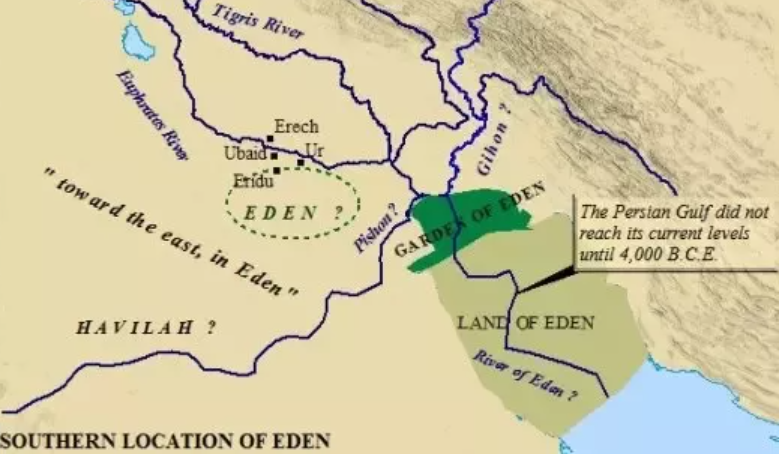
The Book of Genesis offers tantalizing details about Eden’s geography. It mentions four rivers: the Pishon, Gihon, Tigris, and Euphrates. These rivers are described as flowing from Eden, watering the garden before branching into four separate streams. This reference has led many to speculate that Eden was somewhere in the Mesopotamian region, where the Tigris and Euphrates are known to flow. Could Eden be nestled within this ancient cradle of civilization?Rivers And Their Significance
Rivers play a central role in the biblical narrative, often serving as boundaries or sources of sustenance. The significance of naming these rivers could imply a connection to known geographical locations, providing a map of sorts. Consider how rivers have historically supported life and growth. The mention of these rivers might hint at Eden being a fertile, life-sustaining area. What if Eden’s location was strategically chosen for its abundance?Descriptive Imagery Of The Garden
Genesis describes Eden as a lush, verdant paradise filled with every kind of tree pleasing to the eye and good for food. It’s a place where harmony reigns, untouched by the hardships of the outside world. This imagery not only evokes a sense of tranquility but also suggests an environment rich in resources. Imagine standing amidst the vibrant flora, surrounded by the gentle sounds of nature. Could such a place exist today, hidden from modern eyes?Historical And Cultural Interpretations
Various cultures have interpreted the Garden of Eden’s location differently, influenced by their historical and geographical context. While some view Eden as a metaphorical place, others seek a tangible location based on biblical clues. How do these interpretations shape our understanding of Eden? Consider the possibility that Eden’s true essence lies not in its physical presence, but in the values it represents. Could this garden be more about the ideals of peace and abundance rather than a pinpoint on a map? Biblical descriptions of the Garden of Eden offer a fascinating puzzle, intertwining faith, geography, and imagination. They invite you to ponder its mysteries and challenge the boundaries of perception. As you explore these descriptions, what vision of Eden do you see?
Credit: www.youtube.com
Mesopotamian Theories
Mesopotamian theories about the location of the Garden of Eden are as intriguing as they are ancient. Many scholars have looked towards Mesopotamia, a region rich in history and mythology, as a possible site for this legendary paradise. With its fertile lands and historical significance, Mesopotamia offers compelling clues about where the Garden of Eden might be found.
Tigris And Euphrates
Two rivers, the Tigris and Euphrates, frequently appear in discussions about the Garden of Eden’s location. These rivers flow through modern-day Iraq, and their mention in biblical texts has led some to speculate that Eden may lie somewhere along their banks. Could you imagine strolling along these rivers and pondering the ancient stories that have unfolded here?
Their waters have nurtured civilizations for millennia, providing sustenance and facilitating trade routes. If you ever visit, consider how these rivers might have influenced early narratives about a garden filled with life and abundance.
Cradle Of Civilization
Mesopotamia is often referred to as the “Cradle of Civilization,” and this moniker isn’t just a catchy phrase. The region birthed some of the earliest known human societies, including the Sumerians, Akkadians, Babylonians, and Assyrians. What if the Garden of Eden is more than a myth, but a symbol of early human achievements?
As you explore the remnants of these ancient cultures, think about how their innovations—writing, agriculture, and law—shaped our world. Could the Garden of Eden represent the flourishing of human creativity and cooperation? It’s a question worth pondering as you delve into Mesopotamian history.
African Hypotheses
The African Hypotheses suggest that the Garden of Eden might be located in Africa. This theory points to regions like Ethiopia or Tanzania as possible sites, sparking interest and debate among scholars and enthusiasts.
The mystery of the Garden of Eden’s location has intrigued historians and explorers for centuries. While many theories exist, the African Hypotheses present compelling arguments that suggest this biblical paradise might have been located in Africa. These theories often focus on the geographical and historical significance of specific regions within Africa.Ethiopian Highlands
The Ethiopian Highlands are often cited in discussions about the Garden of Eden due to their rich biodiversity and ancient history. Imagine wandering through lush landscapes where unique flora and fauna thrive. This highland region offers a glimpse into what Eden might have been like—an area abundant with life and resources. The ancient agricultural practices here, combined with the natural beauty, make it a worthy candidate. Could this cradle of civilization be the birthplace of the biblical paradise?Nile River Connections
The Nile River has long been associated with life and sustenance in Africa. Its historical significance cannot be overstated. The idea that the Garden of Eden was near this great river stems from its role in nurturing civilizations through fertile lands and abundant water supply. Consider the connections between the river’s life-giving properties and the imagery of a paradise overflowing with resources. The Nile’s vast network of tributaries and fertile banks may align with descriptions of Eden’s life-sustaining environment. How might the Nile’s ancient pathways guide us to the truth about Eden’s location? When exploring these African Hypotheses, you uncover not just geographical possibilities but also historical narratives that challenge conventional beliefs. As you ponder these perspectives, what new insights about Eden’s location might you discover?Persian Gulf Proposals
Exploring the Persian Gulf proposals sparks curiosity about the Garden of Eden’s location. Ancient texts hint at its position near the river-rich landscapes of Mesopotamia. This region, abundant in history and myth, invites endless speculation and intrigue.
The Persian Gulf Proposals offer a fascinating perspective on the possible location of the Garden of Eden. This theory suggests that the legendary paradise may be submerged beneath the waters of the Persian Gulf. Scholars and enthusiasts alike find themselves intrigued by the potential evidence lying beneath the sea, waiting to reveal ancient secrets. Could our modern-day geographical understanding be overlooking something significant?Submerged Landscapes
Imagine a landscape submerged beneath the Persian Gulf, hidden from our daily view. Researchers suggest that thousands of years ago, during the last Ice Age, the area now covered by the Gulf was a fertile land. As the ice melted and sea levels rose, this lush region may have vanished underwater, leaving behind hints of its past existence. The potential for discovering such submerged landscapes raises exciting possibilities. How much of history might be lying beneath the waves, waiting for us to uncover it?Archaeological Discoveries
Archaeological discoveries play a crucial role in supporting the Persian Gulf Proposals. Recent underwater explorations have found ancient human settlements along the Gulf’s edges. These findings include tools, pottery, and remnants of structures, indicating that human life thrived in this region long before it was submerged. Consider the significance of these discoveries. They not only support the idea of a once-thriving land beneath the Gulf but also fuel the imagination about what else could be discovered. Could further exploration reveal more connections to the mythical Garden of Eden? By engaging with this theory, you open yourself to new interpretations of history and myth. Are you ready to dive deeper into these watery mysteries?Cultural Interpretations
The Garden of Eden is a concept that has captivated cultures around the world, each interpreting its story through unique lenses. This mythical paradise often symbolizes a lost utopia, a place untouched by the woes of the world. As you delve into cultural interpretations, you might find yourself pondering its significance in art and mythology, and even wondering how these interpretations shape your own understanding of paradise.
Symbolism In Art
Art has a magical way of bringing the Garden of Eden to life. Throughout history, artists have depicted this paradise as an idyllic landscape filled with lush greenery and serene wildlife. Imagine standing before a painting that invites you into a world where harmony reigns supreme.
Artists like Hieronymus Bosch have used Eden to explore themes of innocence and temptation. The vivid imagery often serves as a mirror to your own desires and moral dilemmas. How do these visual interpretations resonate with your personal view of utopia?
Mythological Significance
Mythology offers a fascinating lens through which to view the Garden of Eden. In various cultures, Eden represents the origin of humanity and a place of divine connection. It’s intriguing to consider how these stories reflect the values and beliefs of different societies.
For example, in Judeo-Christian tradition, Eden is the birthplace of human life, marked by the fall from grace. This narrative raises questions about the inherent struggle between good and evil. Does this mythological backdrop influence your perception of life’s moral complexities?

Credit: grantpiperwriting.medium.com
Scientific Investigations
The quest to locate the Garden of Eden has intrigued scientists for years. Scientific investigations aim to uncover clues about its possible location. Various studies and theories provide insights into this mysterious place.
Geological Studies
Geologists explore ancient landscapes for Eden’s traces. They analyze soil samples and rock formations. Some theories suggest it might be near the Tigris and Euphrates rivers. These rivers are mentioned in ancient texts. By studying river paths and sediment layers, scientists hope to find more evidence. Geological studies provide crucial data for understanding Earth’s past.
Climate Change Impact
Climate change has altered landscapes over time. Scientists study climate patterns to trace Eden’s location. They examine historical climate data and its effects on vegetation. Ancient climates might have supported lush gardens similar to Eden. Understanding climate change helps in predicting how landscapes evolved. It offers insights into regions that could have been fertile in the past.
Modern Speculations
The quest to pinpoint the Garden of Eden’s location has fascinated scholars, theologians, and curious minds for centuries. Modern speculations offer a fresh perspective, combining historical texts with technological advancements. Could the Eden narrative be more than just a myth?
Theoretical Locations
Various theories propose diverse locations for the Garden of Eden. Some suggest it lies in the lush valleys of Mesopotamia, near the Tigris and Euphrates Rivers. Others believe it might be nestled in the mountainous regions of Armenia. Have you ever wondered how these historical narratives influence such speculations?
Interestingly, a school of thought places Eden in the Persian Gulf, now submerged under water. This theory stems from geological studies showing ancient riverbeds that match biblical descriptions. The idea of an underwater paradise adds a layer of intrigue, doesn’t it?
Technological Advancements
Today, technology plays a pivotal role in exploring ancient mysteries. Satellite imagery and geographical mapping offer insights into terrains that were once unreachable. Imagine using these tools to uncover hidden landscapes that might hold clues to Eden’s whereabouts.
Archaeologists employ advanced sonar techniques to explore submerged sites. These methods reveal underwater structures that could potentially be remnants of ancient civilizations. If you had access to such technology, where would you start your search?
Moreover, the rise of virtual reality allows you to experience historical landscapes firsthand. Would you take a digital journey to walk through the theoretical sites of Eden? This fusion of old tales and new tech sparks a fascinating dialogue between history and innovation.

Credit: medium.com
Frequently Asked Questions
Where Is The Biblical Garden Of Eden Located Today?
The exact location of the biblical Garden of Eden remains unknown. Some theories suggest it was in Mesopotamia, near the Tigris and Euphrates rivers. Others propose locations in Africa or the Persian Gulf. No definitive archaeological evidence has been found to confirm its precise location.
Is The Garden Of Eden In Iraq Or Africa?
The Garden of Eden’s location is debated. Some suggest Iraq near the Tigris and Euphrates Rivers. Others believe it’s in Africa, possibly Ethiopia. The exact location remains uncertain.
Which State Is The Garden Of Eden In?
The Garden of Eden’s exact location is unknown and not tied to any modern state. It’s a biblical place. Some believe it might be in the Middle East region, possibly near Mesopotamia, but this is speculative. The garden symbolizes paradise in religious texts.
Was The Garden Of Eden A Real Place On Earth?
The Garden of Eden’s existence as a real place is debated. Some view it as symbolic, others as historical. Its exact location remains unknown, blending myth, religious belief, and historical speculation.
Conclusion
Finding the Garden of Eden’s location remains a mystery. Many theories exist. Some point to Mesopotamia, others to Africa. Stories and beliefs fuel curiosity. Archaeologists and historians continue their search. They study ancient texts and maps. Despite uncertainty, the Garden symbolizes hope.
It represents beginnings and innocence. People are fascinated by its story. Whether real or myth, its legacy endures. It invites us to ponder life’s origins. Nature’s beauty echoes Eden’s allure. The quest for answers persists. A journey into the past and faith.
The Garden of Eden captivates minds worldwide.


