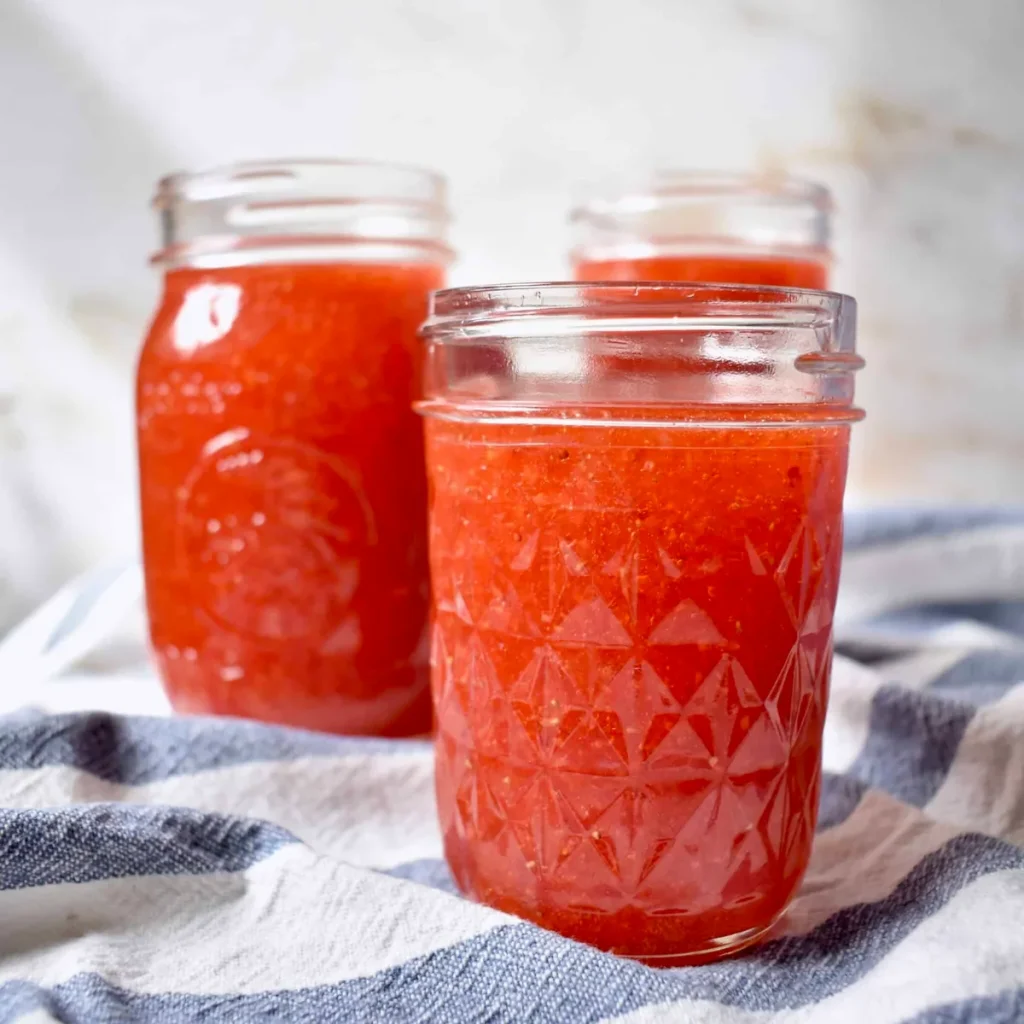
There's nothing more frustrating than spending an afternoon making strawberry jelly, only to have it turn out runny. That's the single most common complaint we hear from home canners. So this strawberry jelly recipe focuses on one thing: getting a perfect set, every single time, whether you're a beginner or a seasoned pro.
Here's the catch. Strawberries are naturally low in pectin and acid, with a pH around 3.3 to 3.5. That means your jelly's success depends on the balance of added pectin, sugar, and lemon juice.
In our research, the method you choose changes that balance. So before you start, you need to pick your path.
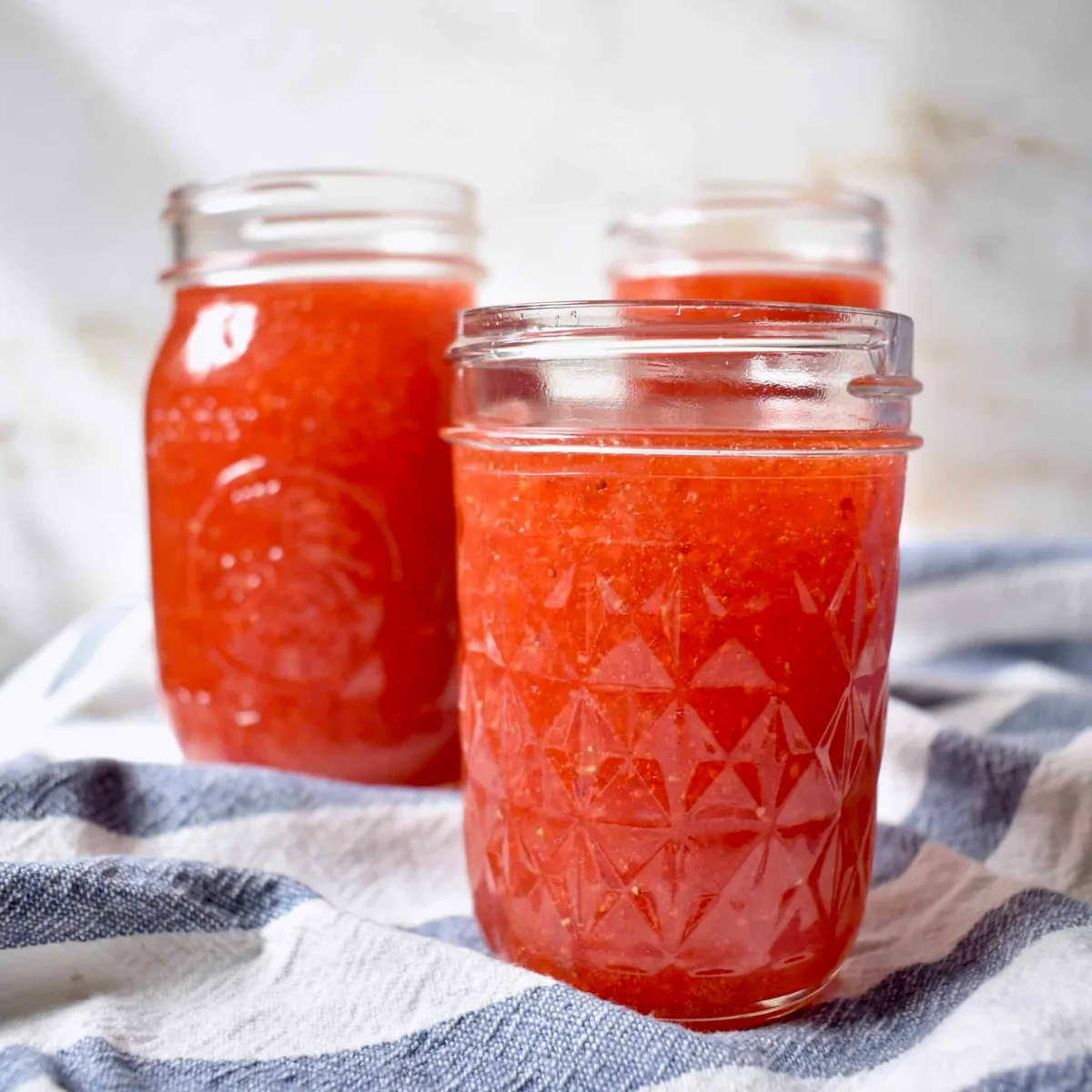
Image source: Web (Bing) / plantoeat.com (Web image (fair-use with source credit))
Quick Answer
To make strawberry jelly, crush berries and strain the juice. Measure it exactly, then add sugar and pectin per package directions. Boil, skim foam, and test for gel.
Fill jars with 1/4-inch headspace and process in a boiling water bath for 10 minutes at sea level.
Why Your Strawberry Jelly Didn't Set (And How to Fix It Next Time)
Strawberries are a tricky fruit for jelly making. They're naturally low in pectin, the plant compound that creates gel. And their acid level, while safe for canning, is borderline for a good set.
That's why commercial pectin is your best friend here.
Most failed batches come down to one of three errors:
- Not boiling hard enough. The mixture must hit a rolling boil that stirs itself.
- Mismeasuring sugar. Sugar ratio isn't about taste. It directly affects pectin's ability to set.
- Skipping the lemon juice. Acid activates the pectin. Without it, your jelly stays syrupy.
If your jelly is already runny, you can sometimes save it. Pour it back into a pot, add a little extra pectin, and boil again for exactly 2 minutes. It won't be as bright, but it works.
The better fix is prevention. Follow the recipe's boiling time to the second, use a candy thermometer if you have one, and always do a wrinkle test before you turn off the heat. Sea level jelly sets at 220°F.
Every 1,000 feet of altitude lowers that by about 2 degrees.
One more thing to check: your fruit's ripeness. Slightly underripe strawberries contain more natural pectin. Overripe ones, the kind you often get from a U-pick field in July, have far less.
If you're making no-pectin jelly, berry choice is everything.
The Three Paths to Strawberry Jelly: High-Sugar, Low-Sugar, and No-Pectin
Every strawberry jelly recipe falls into one of three categories. Which you choose depends on your goals, not prestige. Let's break them down.
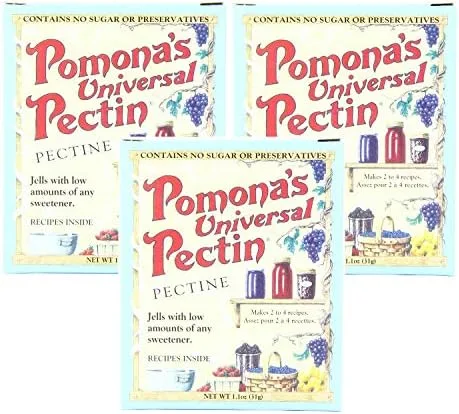
Image source: Web (Bing) / amazon.com (Web image (fair-use with source credit))
High-Sugar (Traditional)
This is the classic pectin recipe. It uses about 4 cups of sugar per standard batch. The sugar bonds with the pectin to create a stiff, clear gel.
It's shelf-stable for up to a year, and the flavor is intensely sweet. Best for beginners because it sets fastest and stores the longest. The trade-off is a sugary taste that buries some of the strawberry.
Low-Sugar (Fruit-Forward)
Using pectins like Pomona's Universal Pectin or Ball's low-sugar pectin, you can cut the sugar to a fraction. You can even use honey or maple syrup. The result is a fresher, more fruity flavor with a softer set.
It's not quite as firm and needs refrigeration after opening. Best if you're watching sugar intake or want to taste the berries.
No-Pectin (Old School)
This method relies on naturally occurring pectin. You boil crushed strawberries, add lemon juice, and simmer until the mixture reaches 220°F. It takes longer, up to 45 minutes, and yields less.
But purists love the clean ingredient list. Strawberry is a low-pectin fruit, so success requires some underripe berries and plenty of patience. This path has the highest failure rate.
| Path | Sugar Needed | Set Strength | Shelf Life | Difficulty |
|---|---|---|---|---|
| High-Sugar | 4 cups per batch | Firm, clear | 1 year | Easy |
| Low-Sugar | 1/2 cup or less | Soft, spreadable | 3 weeks after opening | Moderate |
| No-Pectin | 2 to 3 cups | Loose, jammy | 1 year | Hard |
How to Choose Your Method: A Quick Decision Guide
Still undecided? Work through these branches:
- If you want a guaranteed set on your first try, choose high-sugar pectin. It's the most forgiving method.
- If you need pantry storage without refrigeration, high-sugar is also your pick.
- If you're diabetic or cutting sugar, opt for low-sugar pectin. Just know it sets softer.
- If you have a bowl of slightly underripe strawberries and plenty of time, try the no-pectin method.
- If you're making gifts, high-sugar jelly looks shinier and holds its shape better.
- If you plan to eat it within three weeks, any method works. Fridge jelly is totally acceptable.
The logic is simple. The more sugar and processed pectin you use, the more reliable the outcome. The less you use, the more natural the flavor and the higher the risk.
Also consider your equipment. The high-sugar path needs a candy thermometer for accuracy. The low-sugar path needs specific pectin, not the generic kind.
The no-pectin path needs a jelly bag and a heavy-bottomed pot.
No matter which path you pick, always use bottled lemon juice. Fresh lemons vary in acid, and bottled juice is consistently at a safe pH for canning.
Step-by-Step: Making Strawberry Jelly (With Decision Points)
Here's the actual process, with decision points where things change by method.
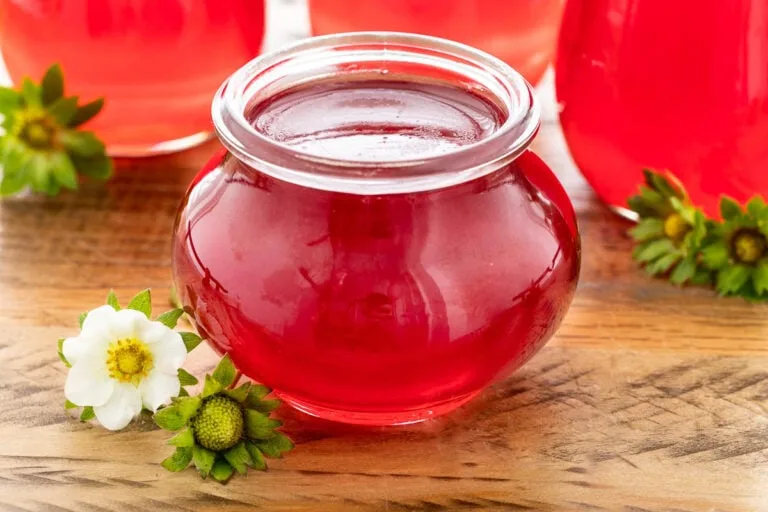
Image source: Bing (Web (fair-use with source credit))
Crush and strain 2 pounds of strawberries. Squeeze gently. Let the juice drip through a jelly bag. For the clearest jelly, don't press the bag. Let it drain overnight in the fridge.
Measure 4 cups of juice. Add water if short. Boil it down if over.
Stir powdered pectin into cold juice. Skip this step if you're using liquid pectin.
Boil and add sugar. Once the juice reaches a rolling boil, dump in the sugar per your recipe. Add the lemon juice. Boil hard for exactly 1 to 2 minutes.
Do the plate test. Put a spoonful on a frozen plate. Wait 30 seconds. Push the edge with your finger. If it wrinkles, kill the heat.
Jar and process. Fill jars with 1/4-inch headspace. Wipe the rims. Put on two-piece lids. Process in a boiling water bath for 10 minutes at sea level, per the National Center for Home Food Preservation.
The no-pectin path is different. You skip the pectin entirely and boil until the mixture hits 220°F. Time can range from 20 to 45 minutes.
That's your one big decision point. If you're using liquid pectin instead of powdered, add it after the sugar, during the final boil. Powdered goes in early.
Liquid goes in late. That timing difference is the most common place people mess up.
The Mistakes That Matter Most (Targeted at Your Method)
Each method has its own failure mode. Here's what to avoid.
High-Sugar Mistakes:
- Adding pectin at the wrong time. Powdered goes in cold juice. Liquid goes in after sugar.
- Undercooking. One extra minute can dull the flavor, but one less minute gives you syrup. Us the exact times.
- Scaling down. Don't halve a pectin recipe without precise measurements. Pectin chemistry doesn't scale evenly.
Low-Sugar Mistakes:
- Using regular pectin instead of low-sugar pectin. Regular pectin needs large amounts of sugar to gel.
- Not mixing pectin into the liquid thoroughly. Lumps form and never dissolve.
- Over-stirring. This introduces air bubbles, turning your jelly cloudy.
No-Pectin Mistakes:
- Using overripe strawberries. They lack the natural pectin you're relying on.
- Expecting a firm set. No-pectin strawberry jelly is often more spoonable than sliceable.
- Forgetting the lemon juice. Acid is your only helper here, and without it, nothing firms up.
The biggest universal mistake is trusting your schedule over your thermometer. If the recipe says 10 minutes but it's not setting, boil longer. If it's looking thick at 8, trust the test.
Storing Your Jelly: Fridge, Freezer, or Canned?
Your storage method depends on how long you need the jelly to last and what equipment you have.
Canned jelly goes in a boiling water bath. Process half-pint jars for 10 minutes at sea level. Adjust for altitude per USDA guidelines.
Sealed jars stay good for up to a year in a cool, dark pantry. Unsealed jars go straight to the fridge.
Fridge jelly skips the water bath entirely. Pour hot jelly into clean jars, let them cool, and screw on the lids. Store them in the refrigerator.
They keep for about three weeks. This is the easiest path for small batches.
Freezer jelly needs freezer-safe jars or containers. Leave 1/2-inch headspace for expansion. Most pectin brands offer a freezer jelly version.
Frozen jelly keeps for six months to a year. Thaw it in the fridge overnight before serving.
Can you re-process a jar that didn't seal? Yes. Remove the lid, check the rim for nicks, and replace the lid. Return the jar to the canner and process for the full time again.
The texture changes slightly, but it's safe.
Head pressure real quick. Canned jelly must stay in a sealed jar. Once opened, refrigerate it. Mold appears as fuzzy spots on top.
Discard the whole jar if you see mold. The FDA and the USDA extension services both say scraping mold off jelly is not safe. Botulism is rare in high-acid foods like jelly, but spoilage mold is common.
Frequently Asked Questions (When Things Go Wrong)
Why is my strawberry jelly runny?
The most common cause is undercooking. The mixture needs to reach 220°F at sea level, or a rolling boil that can't be stirred down. Another cause is too little pectin or too much sugar.
Test with a frozen plate before you fill your jars.
Can I re-cook runny jelly to make it set?
Yes, but only once. Pour the runny jelly back into a pot. Add 1 tablespoon of lemon juice and 1 tablespoon of powdered pectin per quart.
Boil for exactly 2 minutes. The color will darken, and the flavor will be less bright, but it will set.
How long does strawberry jelly take to set?
Most fruit jellies set within 12 to 24 hours. Some take up to two weeks, especially no-pectin batches. Be patient.
If it's still liquid after two weeks, it needs re-cooking. Don't judge the set while it's still warm.
Do I have to use bottled lemon juice for canning?
Yes. Bottled lemon juice has a consistent pH of about 2.3. Fresh lemons vary between 2.0 and 3.0.
For safe canning, you need a reliable acid level. The USDA recommends bottled lemon juice for all home canning.
What's the difference between jelly and jam?
Jelly is made from fruit juice, not pulp. It's clear and holds a firm shape. Jam uses crushed or chopped fruit, including the solids.
Jam is thicker, cloudier, and less stable on a sandwich. Strawberry jelly is translucent. Strawberry jam is opaque.
Can I double this strawberry jelly recipe?
Not easily. Pectin recipes don't scale linearly. Doubling increases boil time unevenly, which affects the set.
Make two separate batches instead. Same ingredients, same timing, better results.