You've brought home a beautiful bag of apples, and within days they've gone soft and mealy. Storing apples the right way starts with understanding what makes them spoil so fast. The good news: with a simple plan, many varieties can stay crisp for months.
According to USDA postharvest data, apples stored at 32°F to 35°F can last five times longer than those left on the counter. That cool temperature, paired with humidity around 90 to 95 percent, is the difference between a snack that lasts a week and one that lasts a season. So why do most home storage attempts fail?
Let's start with the real reason.
Why Your Apples Turn Mealy (And How to Stop It)
Apples are climacteric fruit, which means they keep ripening after they're picked. The driver is ethylene, a natural plant hormone that triggers softening and starch-to-sugar conversion. On your counter at room temperature, that process speeds up fast.
In fact, apples produce more ethylene than most other fruits, and they're sensitive to it themselves. That's why one bad apple really can spoil the whole batch.
The mealy texture you hate happens when apples lose moisture and their cell walls break down. Warm air pulls water out of the fruit. Ethylene speeds up the cell breakdown.
Together, they turn a crisp Honeycrisp into a sad, floury mess in about a week.
The fix is simple: slow the ethylene process and lock in moisture. Lower temperature is the single most effective tool. Every 10°F drop roughly doubles shelf life according to the USDA.
That's why professional cold storage operations keep apples at 32°F to 35°F with humidity at 90 percent or above.
But temperature alone isn't enough. You also need to separate apples from other produce. Ethylene doesn't just affect apples.
It ruins leafy greens, broccoli, carrots, and cucumbers too. And if you store apples with bananas or tomatoes, everything ripens faster.
One more point: washing apples before storage is a common mistake. Moisture on the skin promotes mold growth. Commercial apples often have a natural wax coating that helps retain moisture.
Washing removes it. The rule is simple: wash them right before you eat them, not before you store them.
The first step is knowing what you're working with. Look at three things: the variety, your timeline, and your storage setup. We'll walk through each one.
Quick Answer: What to Do With Your Apples Right Now
Keep apples in the fridge, not on the counter. The crisper drawer provides the humidity they need. Store them away from other fruits and vegetables.
Wash apples only when you are ready to eat them. For long storage, wrap each apple in paper and check for rot weekly.
The Big "It Depends": Three Variables That Change Everything
Not all apples are the same, and not all storage plans work for every situation. Your method depends on what variety you have, how long you need them to last, and what equipment you've got. Let's break down each one.
Apple Variety: Which Ones Last, Which Don't
Some apples are natural keepers. Varieties like Granny Smith, Fuji, Arkansas Black, and Gold Rush can stay crisp for four to six months under the right conditions. Others, like McIntosh and Gala, start losing quality after just a few weeks.
The general rule: firm, tart, thick-skinned apples last longest. Thin-skinned sweet apples spoil faster. If you're buying for storage, choose a long-keeping variety.
Your Timeline: This Week vs. This Winter
If you plan to eat apples within one to two weeks, the counter is fine. Just keep them out of direct sunlight and eat the softest ones first. For three to four weeks, the fridge crisper drawer works well with no wrapping needed.
For months of storage, you need cold temperatures, high humidity, and individual wrapping to prevent rot from spreading. The timeline directly dictates your storage method. Short window means less effort required.
Your Setup: Fridge, Counter, or Root Cellar
A fridge set to 32°F to 35°F is the most reliable option for most people. A root cellar or unheated basement works if temperatures stay between 30°F and 40°F with high humidity. The counter only works for short-term eating within one to two weeks.
If you lack any cold space, focus on buying small batches and eating them quickly. That's the honest trade-off. No cold storage means no long-term storage.
The Decision Tree Itself: Match Your Apples to Your Situation
Here's how to decide what to do with your apples right now, step by step.
Step 1: Check the variety. If you have McIntosh, Gala, or Red Delicious, plan to eat them within two to three weeks. If you have Granny Smith, Fuji, Honeycrisp, or Arkansas Black, you can store them for months. The variety determines your ceiling.
Step 2: Inspect each apple. Discard any with bruises, soft spots, or mold. One damaged apple releases enough ethylene to speed up ripening in the whole batch, and mold spreads quickly. Only perfect apples go into long-term storage.
Step 3: Decide your timeline. Eating within a week? Leave them on the counter, but keep them out of direct sun. Eating within a month?
Put them in the fridge crisper drawer, no wrapping needed. Want them to last through winter? Move to step 4.
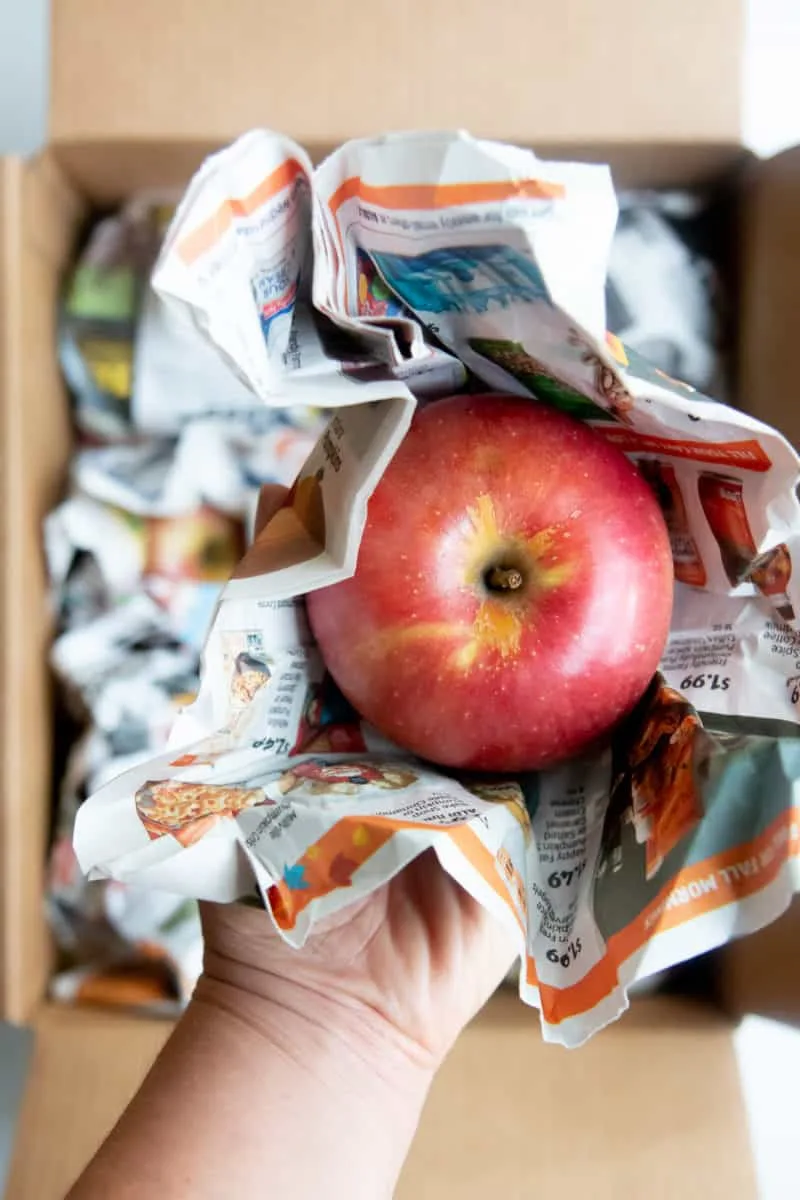
Step 4: Wrap and refrigerate. Wrap each apple in newspaper, tissue paper, or paper towel. This prevents rot from spreading and slows moisture loss. Place them in a single layer in a perforated plastic bag or open crate.
Stacking deep piles traps ethylene and causes bruising.
Step 5: Check weekly. Open the bag or crate once a week. Remove any apple that shows soft spots or mold. One bad apple really can spoil the whole batch, and it happens fast.
A five-minute check saves you from losing pounds of fruit.
Step 6: If you don't have fridge space. Skip long-term storage entirely. Buy only what you'll eat in one to two weeks. Process extras by making applesauce, freezing slices, or drying them.
Those methods don't require cold storage.
The Pro Tips That Make the Real Difference
These are the details that separate apples that last weeks from apples that last months. Get these right, and your storage game changes completely.
The Ethylene Problem (And How to Work With It)
Apples are ethylene factories. They produce the gas constantly, and it speeds up ripening in both the apples themselves and nearby produce. The fix is ventilation and separation.
Keep apples in a perforated bag or open container so ethylene can disperse. Never store them in a sealed bag, which traps the gas. And keep apples away from leafy greens, carrots, broccoli, and bananas.
A separate drawer or shelf makes a huge difference. Cornell University's Extension program has documented that ethylene exposure from apples can cut the shelf life of leafy greens by half in just a few days.
Wrapping, Stacking, and Airflow
Individual wrapping is the single best technique for long-term storage. It prevents mold from jumping from one apple to another. It also slows moisture loss.
Use newspaper, tissue paper, or paper towels. Place wrapped apples in a single layer if possible. If you must stack, put the oldest or softest apples on top so you eat them first.
Airflow matters too. Don't crowd the container. Some space between apples helps ethylene escape and maintains stable humidity around each fruit.
The One-Bad-Apple Rule (It's Real)
It's not an old wives' tale. A single rotting apple releases enough ethylene to accelerate ripening across the whole batch. It also introduces mold spores that spread through direct contact.
That's why weekly inspections matter. Find a soft spot? Eat that apple today or discard it.
Don't leave it in the crate thinking you'll get to it. You won't, and you'll lose more apples because of it. The rule applies at every stage of storage, from the counter to the crisper to the root cellar.
Check early and often.
What About Apartment Living? Small-Space Solutions
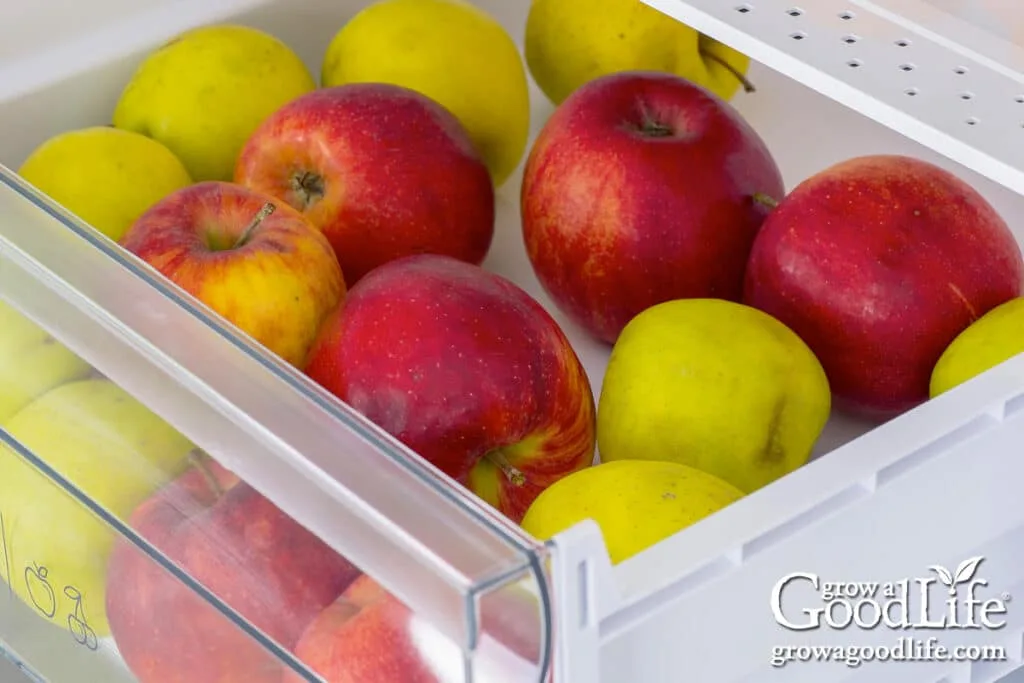
No root cellar? No problem. A standard refrigerator crisper drawer does about 80 percent of the job a cold storage room does.
The key is using it correctly.
Start by clearing out one drawer for apples alone. Set the humidity vent to the high setting if your fridge has adjustable vents. Then place apples in a perforated plastic bag or leave them loose with a damp paper towel in the corner.
That towel helps maintain the 90 to 95 percent humidity apples crave.
If you don't have a crisper drawer, the back of a lower shelf works too. Just keep apples away from the fridge walls, where they can freeze. Frozen apples damage their cell walls and turn mushy when thawed.
For apartment dwellers, bulk buying is usually a mistake. Buy only what you can eat in one to two weeks unless you have fridge space set aside. A bushel of apples needs roughly 1.5 cubic feet of space.
That's a full fridge shelf stacked with fruit.
Your best small-space alternative is processing. Freeze apple slices for baking, make applesauce, or dry apple chips. These methods sidestep cold storage entirely and take up much less room.
A single gallon bag of frozen slices equals about a peck of fresh apples.
One more trick: if your fridge is packed, consider a cool pantry or closet. Apples last one to two weeks at room temperature, and up to three weeks if the room stays below 60°F. Check daily and eat the softest ones first.
Small batches, honest timelines, and consistent checks beat any storage hack.
Frequently Asked Questions
How long do apples last on the counter?
Apples stay fresh on the counter for about one to two weeks. Heat and dry air speed up ethylene production and moisture loss. Eat the softest apples first and keep them out of direct sunlight.
Should I wash apples before storing?
No. Washing removes the natural wax coating and adds moisture that promotes mold. Wash apples right before eating them instead.
Can I store apples with other fruit?
Avoid it. Apples release ethylene gas that ripens nearby produce too fast. Bananas, tomatoes, and leafy greens spoil quickly when stored beside apples.
What apple varieties store the longest?
Granny Smith, Fuji, Arkansas Black, and Gold Rush last four to six months in proper storage. McIntosh and Gala only hold up for a few weeks.
Is it okay to freeze whole apples?
Freezing whole apples isn't recommended. Water expands and ruptures cell walls, leaving them mushy. Freeze peeled, sliced apples instead for baking or cooking.