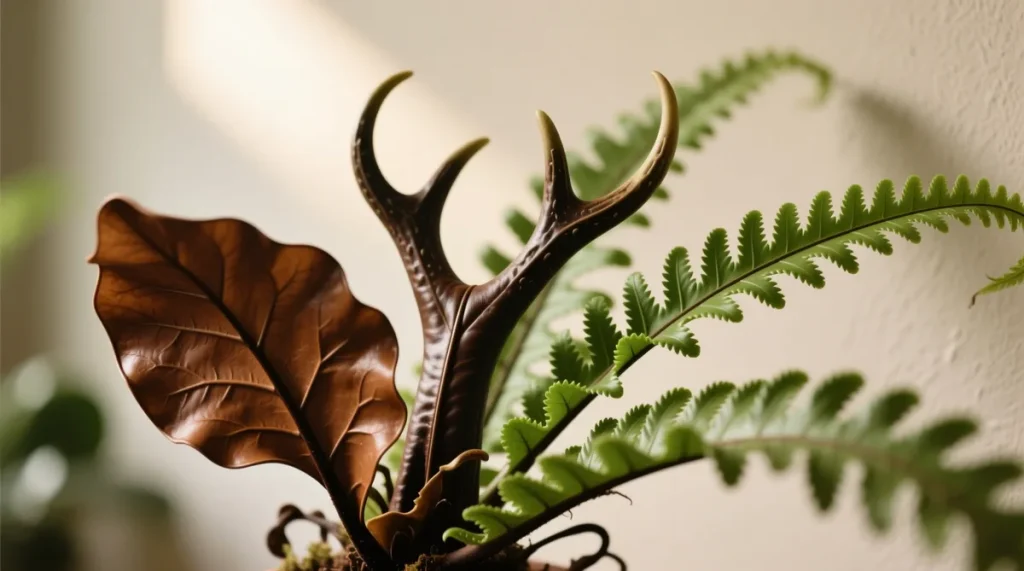
Staghorn fern care comes down to understanding one thing: these plants are epiphytes, not typical houseplants. In the wild, they cling to tree bark, soaking up rain, humidity, and trapped leaf litter. That's why staghorn ferns die indoors so often.
Owners treat them like a potted philodendron, and it doesn't work.
In our research, the best results come from mimicking their natural mount, not forcing them into soil. As of 2026, most growers recommend a sphagnum moss board or slab mount with a soak-and-dry watering cycle. That's the approach we'll take here.
We'll walk through the visual cues you need to spot healthy growth, early warning signs, and exactly how to mount and water your fern so it thrives.
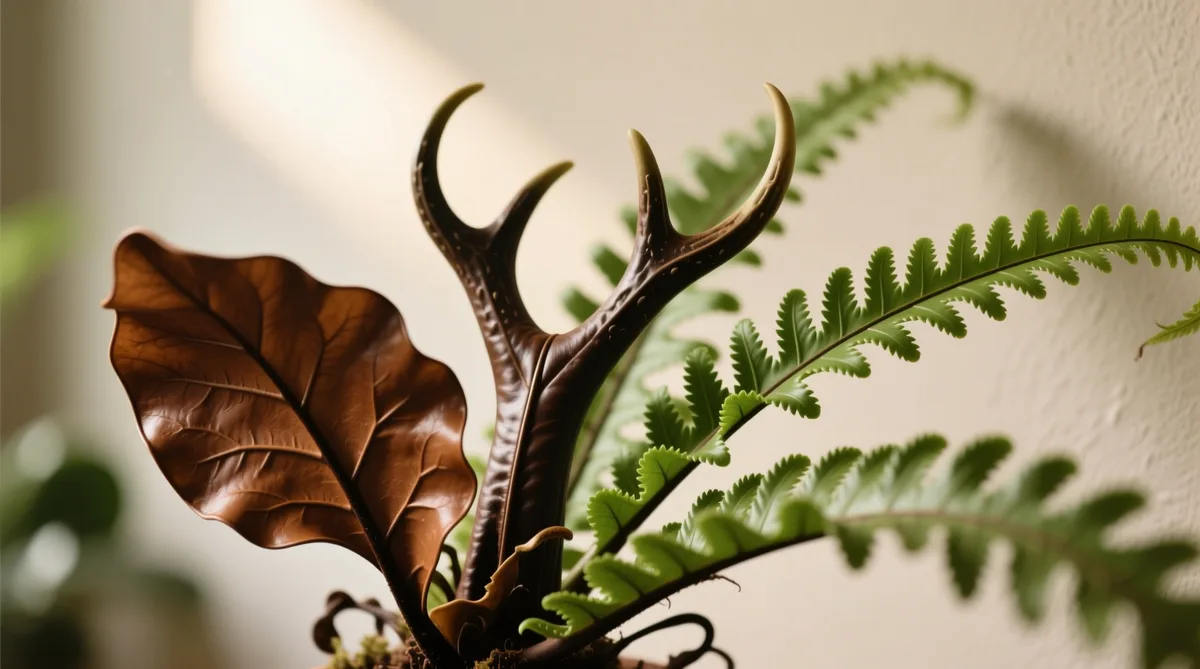
Image source: Bing (Web (fair-use with source credit))
Quick Answer
Staghorn fern care means mounting on bark or moss, not potting in soil. Water by soaking the mount completely every 7 to 10 days. Give bright, indirect light and humidity above 50 percent.
Brown shield fronds are normal, not dead. Remove them only when they come off easily.
Why Staghorn Fern Care Is Different, and Why Visual Cues Matter
Most houseplants grow in soil. Staghorn ferns grow on trees. That one difference changes everything about how you care for them.
In nature, Platycerium species attach to bark in tropical canopies. Their roots are exposed to air and rain. They never sit in dirt.
When you replicate that environment at home, the plant rewards you with years of new growth.
This is an epiphyte. It uses its host for support, not nutrients. Water and humidity come from the air and from leaf litter trapped behind its shield fronds.
So the old houseplant tricks don't apply. Sticking a finger in the soil tells you nothing because there is no soil.
That's why visual cues matter. The fronds, the shield, the moss, the color, all of it tells you exactly what the plant needs. Learn to read those signals and you'll rarely lose a staghorn fern.
Take the shield fronds, for example. Those flat, brown, papery growths at the base confuse new owners. They look dead.
They're not. They're the plant's built-in mulching system, and they're a sign of health, not decline.
What You Need: The Mounting Setup (Step by Step)
Before you do anything, gather your materials. This isn't a complicated setup, but each piece matters.
| Tool / Material | Why It's Needed |
|---|---|
| Cedar, cork, or driftwood board | Natural surface for the fern to grip |
| Long-fibered sphagnum moss | Holds moisture around the roots |
| Fishing line or soft zip ties | Secures the plant without cutting tissue |
| Plastic backing sheet | Keeps moisture off your wall |
| Clean scissors or a knife | For trimming and dividing pups |
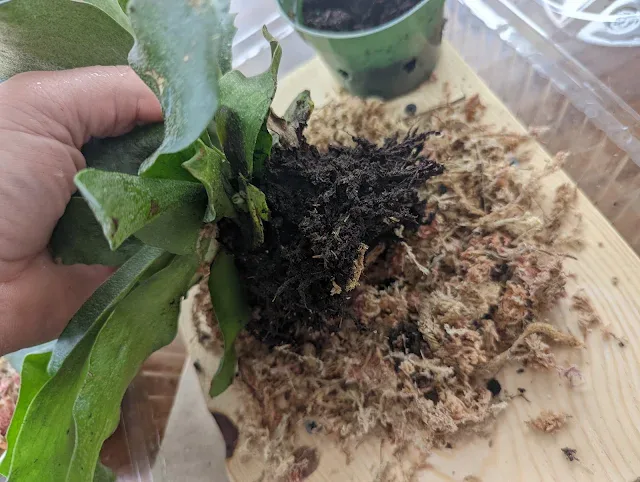
Image source: Web (Bing) / blog.jakeparrillo.com (Web image (fair-use with source credit))
Platycerium bifurcatum, the common staghorn fern, is the best species to start with. It's forgiving, adaptable, and the one you'll likely find at a local nursery. As of 2026, it's still the standard recommendation for mounted displays.
Here's the simple mounting process.
Soak the sphagnum moss for 10 minutes. Squeeze out the excess, but keep it damp. Lay the fern against the board with the flat shield fronds flush to the wood.
Angle the antler-shaped fronds upward.
Wrap the root ball in a thick pad of moss. Press it onto the board. Lace fishing line around the whole setup, crossing back and forth until the plant feels secure.
Don't strangle it. You want firm contact between the roots and the board, not compression.
If the mount will hang against a painted wall, add a plastic sheet behind the board first. That prevents moisture stains and keeps the wall dry.
How to Water: The Soak Method (With Visual Signs)
The biggest mistake in staghorn fern care is watering on a schedule. It's not about calendar days. It's about the plant telling you it's thirsty.
Here's what thirst looks like: the fertile fronds turn pale, almost gray-green. The tips start to curl inward. The sphagnum moss feels crunchy and dry to the touch.
That's your signal to soak.
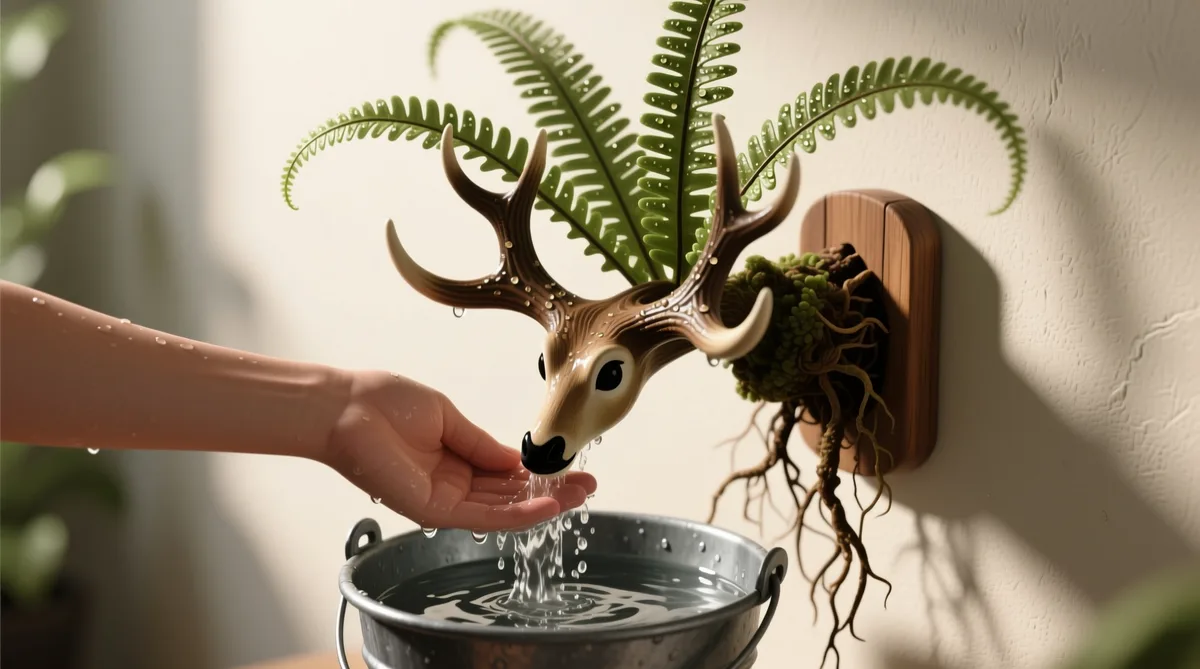
Image source: Web (Bing) / gardening.alibaba.com (Web image (fair-use with source credit))
To soak, take the mount down and set it in a sink or bucket of room-temperature water. Submerge the root area and moss completely. The fertile fronds can stay dry above the water.
Let it soak for 10 to 20 minutes. Air bubbles will rise as the moss rehydrates. When the bubbles stop, the soak is done.
Lift it out, let it drain fully, then hang it back up. In a normal indoor setting, that's roughly every 7 to 10 days. In winter, stretch the interval longer.
In a hot, dry room, you might need to soak sooner.
Overwatering is just as dangerous as underwatering. If the base of the plant turns yellow or black and the moss stays soggy for days, you're drowning the roots. The roots need air as much as they need water.
When in doubt, let it dry.
Light, Humidity, and Temperature (And How to Read the Leaves)
Staghorn ferns are not high-light plants. They want bright, indirect light. An east-facing window or a few feet away from a south-facing one works well.
Direct afternoon sun will bleach the fronds. They turn pale yellow or white, like a sunburn. Too little light makes the fertile fronds grow long, floppy, and dark green.
They're reaching for more.
Humidity is a big deal. These are tropical epiphytes. They thrive at 50 to 80 percent humidity.
A bright bathroom is often the best spot in the house. If your air is dry, run a small humidifier nearby or mist the mount daily. The moss also helps keep the microclimate around the roots moist.
Temperature is simpler. Keep plants between 60°F and 80°F. They can handle short dips to 40°F, but frost kills them.
If you move yours outdoors for summer, bring it in before the first freeze.
University extension programs, like the one at University of Florida IFAS, have documented Platycerium culture in detail for warm climates. Their guidance matches what seasoned growers report: bright shade, high humidity, no direct hot sun.
Troubleshooting: What Those Brown Fronds Actually Mean
Brown is the color that panics staghorn fern owners the most. Here's the truth: not all brown is bad.
The flat, shield-shaped fronds at the base turn brown and papery as the plant matures. That's natural. It's how the plant traps moisture and nutrients.
Leave them alone.
Now, if the antler-shaped fertile fronds turn brown, pay attention. Brown tips usually mean dry air, low humidity, or fertilizer burn. If the whole frond goes crispy and dry, the moss probably got too dry.
Black or mushy brown patches are a red flag. That's often water pooling in the crown, which leads to rot. Cut back on watering and improve airflow around the mount.
Yellowing fronds are a sign of too much water or poor drainage. Let the entire mount dry out completely before the next soak.
Also check for scale insects and mealybugs. They love to hide under the shield fronds. Insecticidal soap or neem oil works if you apply it directly to the pests.
When to Re-mount, Divide, or Repot (Visual Cues for Action)
Staghorn ferns outgrow their mounts eventually. The visual cues are obvious once you know what to look for.
The mount feels unstable. The fern rocks side to side when you lift it. That means the roots have run out of fresh moss to grip.
The plant is clinging to an exhausted board.
Another cue: pups crowd the parent. A healthy, mature fern produces offsets. When those pups overlap each other and shield the parent's crown from light, it's time to divide.
Here's the decision rule. If the mount is intact but covered in pups, divide. If the mount is rotting or crumbling, re-mount.
If the whole plant is one massive clump with no board left, do both.
To re-mount, remove the fern from the old board. Gently pull apart the root mass. Each pup with a visible root system can become a new plant.
Wrap fresh damp sphagnum moss around each section. Secure them to new boards or slabs with fishing line.
Divide in spring or early summer. That gives the divided sections a full growing season to reestablish. Water sparingly for two weeks after dividing.
The roots need time to heal before they can handle a full soak.
A plant that outgrows its mount every two to three years is doing well. A plant that never outgrows its mount might be struggling.
Fertilizer and Pest Management (Keep It Simple)
Staghorn ferns are light feeders. They evolved in tree canopies, not rich soil. Overfertilizing causes more problems than underfertilizing.
Apply a balanced liquid fertilizer at quarter strength. Do it once a month during spring and summer. Use a formula like 10-10-10.
Dilute it heavily. Stop completely in fall and winter when growth slows.
The easiest method is to add the diluted fertilizer to your soaking water. The moss absorbs it slowly. The roots get a gentle dose instead of a shock.
Avoid getting fertilizer directly on the fertile fronds. It can burn the tips and cause brown patches.
Slow release pellets work too. Tuck a few into the moss pad near the root zone. One application at the start of spring is enough.
Do not add more later.
Pests are rare but not unheard of. Scale insects hide under the shield fronds. They look like small brown bumps.
Mealybugs appear as white cottony clusters. Both weaken the plant by sucking sap.
Treat with insecticidal soap or neem oil. Apply it directly to the pests with a cotton swab or spray bottle. Do not saturate the moss.
Repeat treatment once a week for three weeks. Most infestations clear up quickly.
Spider mites show up in dry air. You'll see fine webbing between the fronds. Boost humidity and rinse the fronds with room temperature water.
That usually knocks them back before they establish.
Frequently Asked Questions
How often should I water a mounted staghorn fern?
Soak the mount every 7 to 10 days on average. Check the moss. If it feels dry and crunchy, soak it.
If it feels damp, wait. More frequent watering may be needed in hot dry rooms. Less frequent in winter.
Can staghorn ferns grow in soil?
They can survive in a coarse orchid mix for a while. But they thrive on a mount. Soil holds too much moisture around the roots.
That leads to rot. A board-mounted setup with sphagnum moss is always the better choice.
Why are my fern's fertile fronds turning brown at the tips?
Brown tips usually mean dry air, too much fertilizer, or inconsistent watering. Check your humidity levels. Aim for above 50 percent.
Cut back on fertilizer strength. Make sure the moss never fully dries out between soaks.
How do I know if my staghorn fern needs more light?
The fertile fronds will grow long and floppy. They lean toward the nearest window. The color turns dark green instead of the normal lighter green.
Move the mount closer to a bright east or north window. Avoid direct hot sun.
When is the best time to divide staghorn fern pups?
Early spring is ideal. That's when the plant enters active growth. The divided pups have the whole growing season to establish roots on their new mounts.
Avoid dividing in fall or winter when growth slows.
Is a staghorn fern safe for pets?
Yes. The ASPCA classifies Platycerium species as non toxic to cats and dogs. That said, keep the mount out of reach.
Pets can knock it down or chew the fronds. The plant is safe. The mount hardware might not be.