Spring houseplant care feels like it should be simple. Longer days, warmer windowsills, plants ready to grow. But that's exactly why so many houseplants die in March and April.
The same winter routine that kept them alive suddenly rots roots and scorches leaves.
In our research, the most common mistake is acting too early. Most houseplants are still in their winter slowdown when the calendar flips. Per standard houseplant guidance, the top 1 to 2 inches of soil should be dry before you water again, even in spring.
That simple check prevents most early-spring losses.
Quick Answer
Check for new growth first. Water only when the top 1 to 2 inches of soil are dry. Repot only if roots are cramped.
Fertilize after active growth starts, not before. Move plants to brighter spots gradually.
Image source: Bing (Web (fair-use with source credit))
Why Spring Is the Trickiest Season for Indoor Plants
Your houseplant doesn't know it's March. It responds to light, temperature, and moisture. Day length is climbing, but indoor heating still dries the air.
That combination confuses both plants and owners.
Water is the biggest culprit. In winter, roots drink slowly. In spring, growth accelerates unevenly.
Some plants suddenly need more water while others barely need any. A fixed watering schedule will fail you.
Some species, like many tropicals, are actively pushing out leaves. Others, like certain succulents, are just waking up. The difference matters, and the calendar won't tell you which is which.
University extension services like the University of Minnesota Extension recommend checking soil moisture directly. As of 2026, that remains the most reliable starting point.
Light changes fast too. The sun's angle shifts quickly in March and April. A window that offered gentle morning light all winter can suddenly deliver harsh midday intensity.
Leaves that aren't ready can scorch.
In our research, people lose more plants to over-care in spring than to neglect. They water, feed, and repot all at once. A plant that's still waking up can't handle that.
The smartest move is to slow down and look closer.
The Two-Question Check Before You Do Anything
Before you change anything, ask two questions. Is the plant actively growing? Is the soil actually dry?
Both need a yes before you water, repot, or fertilize.
The first question is about visible signs. New leaves, fresh stems, or roots poking from the pot mean growth has started. If you see none of those, the plant is still resting.
The second question is about moisture. Press a finger 1 to 2 inches into the potting mix. If it's dry at that depth, moisture has moved down.
If it's damp, wait.
Here's a quick reference for what to look for.
| Active growth | Still dormant |
|---|---|
| New leaves or stems | No fresh growth for weeks |
| Roots emerging from holes | Soil stays wet for days |
| Pot feels light after watering | No change in water use |
| Paler or stretched top growth | Leaves curled or flat |
If both answers are yes, move on to the decisions below. If either is no, keep doing what you're doing. Most spring damage happens when people skip this check and act on schedule.
Decision #1: To Water or Not to Water (More)
This is the first real fork in the road. Start by lifting the pot or feeling the soil.
If the top 1 to 2 inches are dry and you see new growth, water thoroughly until it drains from the bottom. If the soil is still damp, wait three to four days and check again. A moisture meter can help if you're not sure.
If the plant is still dormant, don't drench it. Give just enough water to keep the roots from drying out completely. A splash in early spring is safer than a full soak.
For plants that hate wet leaves, bottom watering works well. Set the pot in a tray of room-temperature water for 15 to 30 minutes. Then let it drain completely before returning it to its saucer.
Watch for overwatering signs too. Yellowing lower leaves, mushy stems, or a musty smell mean you're giving too much. Cut back and let the soil breathe.
If you're unsure, under-watering is the safer mistake in spring. Most plants recover from a dry spell. Root rot from soggy soil is much harder to fix.
Decision #2: Is It Time to Repot?
Most houseplants need repotting every 12 to 18 months. But the calendar isn't the trigger. Roots are.
Here's what to look for. Roots circling the top of the soil. Roots poking through drainage holes.
Water running straight through the pot without soaking in. Soil that dries out within a day or two.
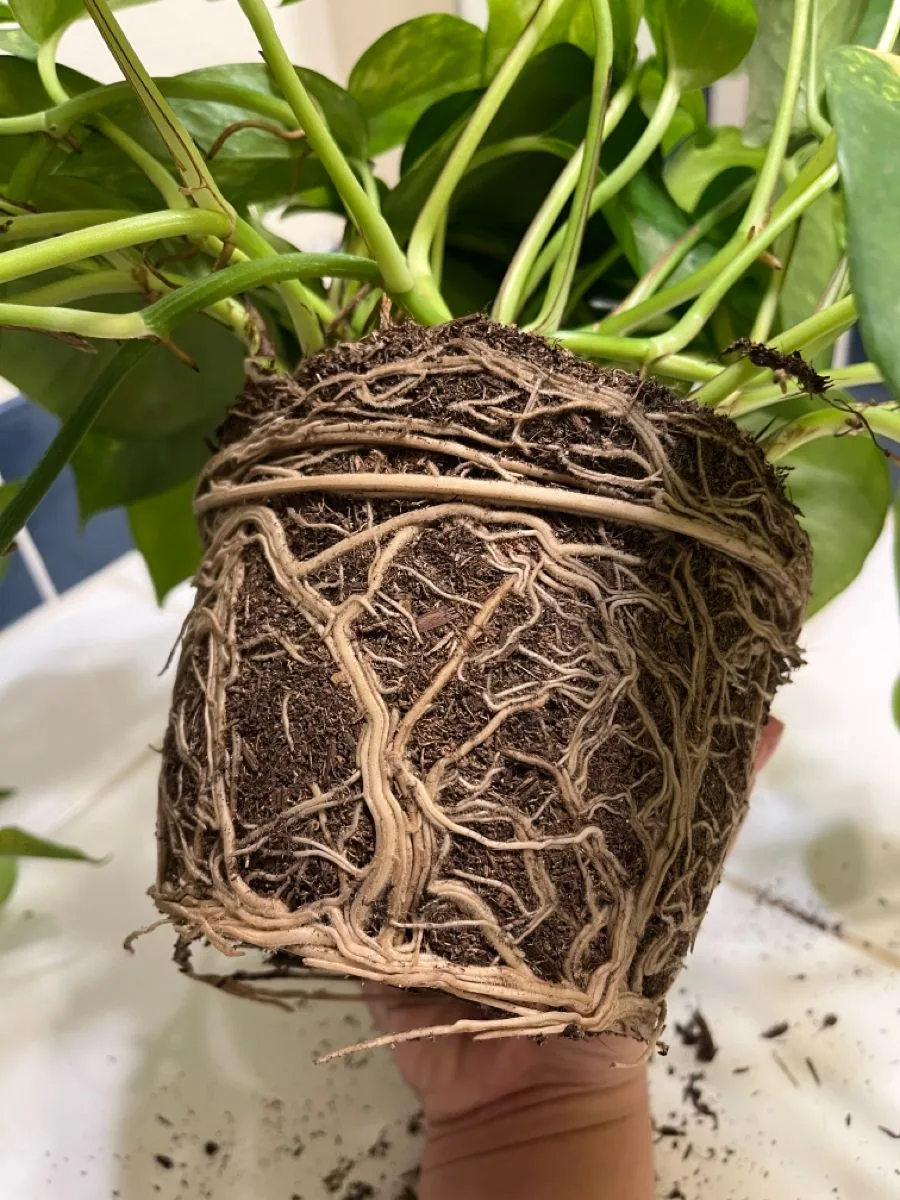
Image source: Web (Bing) / jp.pinterest.com (Web image (fair-use with source credit))
If you see those signs, repot now while spring growth is just beginning. If the roots have room and the soil still holds moisture, skip the repot. You can refresh the top inch of soil instead.
Choose a pot 1 to 2 inches wider than the old one. Anything bigger holds too much water and invites root rot. Use fresh indoor potting mix, never garden soil.
Gently loosen the root ball. Trim any dark, mushy roots. Set the plant at the same depth it was before, then water lightly.
If the plant is currently blooming, wait until the flowers fade.
Decision #3: Should You Fertilize Yet?
Fertilizing a dormant plant does more harm than good. The salts build up in the soil and can burn roots. So wait until you see real growth.
If you spot new leaves, stems, or roots, it's safe to feed. Use a balanced liquid fertilizer at half strength. A formula like 10-10-10 works for most foliage houseplants.
Repeat every two to four weeks through the growing season.
If the plant is still resting, hold off. There's no deadline. Feeding one month later is fine.
Also, if you just repotted, wait four to six weeks. Fresh potting mix already contains nutrients. Adding fertilizer on top can overload the roots.
Slow-release granules are a lower-maintenance alternative. They break down gradually, so one application in early spring may be enough. Check the package for the right dose.
Watch for fertilizer burn. Brown leaf tips, a white crust on the soil, or wilting leaves after feeding mean you went too strong. Flush the soil with plain water and skip the next feeding.
Decision #4: Can You Move Your Plant for More Light?
Yes, but do it slowly. A sudden shift from winter light to direct spring sun can scorch leaves in hours.
Start by evaluating your current spot. If your plant spent winter in a north window or several feet from the nearest glass, its leaves are adapted to low light. Those leaves have thin cell walls that can't handle intense rays.
Image source: Bing (Web (fair-use with source credit))
Move the plant a foot closer to the window each week. If you're shifting to a brighter exposure entirely, give it morning sun only for the first week. East-facing windows are the safest spring option.
South or west windows need extra caution. A sheer curtain works well as a diffuser. It cuts intensity by about 40 percent while still letting plenty of light through.
Watch the leaves for signs of stress. Pale or crispy edges mean you moved too fast. Brown patches on the surface mean direct sunburn.
Back the plant off and restart the acclimation process.
If you can't add natural light, a grow light helps. Place it 6 to 12 inches from the plant and run it for 10 to 12 hours a day. That's enough to support new growth through the spring transition.
Pro Tips for a Smooth Spring Transition
Spring cleaning matters more than you think. Dust on leaves blocks light and reduces photosynthesis. Wipe broad leaves with a damp cloth every two to three weeks.
Check for pests while you're at it. Spider mites and mealybugs thrive in warm, dry spring air. Look under leaves and along stems.
A quick wipe with diluted neem oil catches most problems early.
Hold off on repotting blooming plants. Flowers drop when roots are disturbed. Wait until the bloom cycle finishes, then repot as new growth resumes.
Grouping plants together helps raise humidity. Spring air indoors can still be dry. A small humidity tray or a simple pebble tray underneath works too.
If you're planning to move plants outdoors, wait until nighttime temperatures stay above 55°F. Start with a few hours of shade outdoors. Extend the time by one hour each day over a week.
Frequently Asked Questions
How often should I water houseplants in spring?
Water only when the top 1 to 2 inches of soil feel dry. As growth picks up, that might mean every 5 to 7 days for some plants and every 10 to 14 days for others. Check soil moisture before guessing.
When should I start fertilizing my houseplants in spring?
Start fertilizing when you see new leaves or stems. That usually happens 2 to 4 weeks after the plant wakes up. Use a balanced 10-10-10 liquid fertilizer at half strength.
What temperature is best for houseplants in spring?
Most houseplants grow well between 65°F and 75°F during the day. Nighttime temperatures can drop 5 to 10 degrees. Avoid placing plants near drafty windows or heating vents.
Can I move my houseplants outside in spring?
Yes, but only after nighttime lows stay above 55°F. Start with a few hours of shade. Gradually increase exposure over one to two weeks to prevent leaf scorch.
Should I repot all my houseplants in spring?
No. Only repot when roots are circling the pot or coming out of drainage holes. If the soil still absorbs water well and roots have room, wait another year.
Why are my houseplant leaves turning yellow in spring?
Yellow leaves often mean overwatering. Check the soil moisture. If it's wet, let it dry out before watering again.
If only old leaves are yellowing while new growth looks good, that's normal leaf turnover.