Most people overthink how to spread mulch, but they usually get it wrong in the same few ways. Piling it too deep against tree trunks or skimping on depth in flower beds are the two biggest offenders. And those mistakes cost you time, money, and sometimes the health of your plants.
Here's a number that might surprise you: according to university extension research, a 3-inch layer of organic mulch can reduce soil moisture evaporation by up to 35% during the hottest months. That's a serious water savings. But that benefit only works if you apply it at the right depth in the right places.
So let's walk through exactly how to get it right.
Quick Answer
Spread mulch 2 to 4 inches deep. Keep it 1 to 2 inches away from plant stems and tree trunks. Use organic mulch for best soil health.
Apply in spring after the soil warms up. Replenish annually as it decomposes. That's the short version.
Now here's the full breakdown.
Common Mulch Mistakes and Why They Happen
The most common mistake people make is what landscapers call "volcano mulching." That's when you pile mulch up high against a tree trunk, like a cone. It looks tidy for a week, but it's terrible for the tree. The mulch traps moisture against the bark, which leads to rot, disease, and girdling roots.
Over time, those roots can strangle the tree.
Another frequent error is spreading mulch too thin. A skimpy 1-inch layer won't block sunlight for weeds. You'll still spend weekends pulling crabgrass.
On the flip side, going over 4 inches deep can suffocate plant roots, especially in heavy clay soil that drains slowly.
If you're using fresh wood chips or grass clippings, watch out for nitrogen drawdown. Fresh wood chips contain a lot of carbon. As they break down, soil microbes consume available nitrogen to digest them.
That leaves less nitrogen for your plants, which can cause yellowing leaves and stunted growth.
Matting is another headache. Fine-textured mulches like double-shredded hardwood tend to form a crust after heavy rain. That crust can block water and air from reaching the soil.
If you notice a hard layer on top, rake it loose with a garden rake to break it up.
How Mulch Works: Depth, Type, and Timing
Mulch does three main jobs. It suppresses weeds by blocking light. It holds soil moisture by slowing evaporation.
And it insulates the soil, keeping roots cooler in summer and warmer in winter.
But not all mulch works the same way. Here's a quick comparison of common types:
| Mulch Type | Best Depth | Decomposition Rate | Best For |
|---|---|---|---|
| Shredded bark | 2–3 inches | 12–18 months | Flower beds, trees |
| Wood chips | 3–4 inches | 2–3 years | Paths, trees |
| Pine straw | 2–3 inches | 6–12 months | Slopes, acid-loving plants |
| Grass clippings | 1–2 inches | 1–2 months | Vegetable gardens |
| Rubber nuggets | 3–4 inches | Indefinite | Playgrounds, paths |
As of 2026, the most common advice from university extension services is still 2 to 4 inches for organic mulches. That depth hits the sweet spot between weed suppression and air flow.
Timing matters too. In spring, wait until the soil has warmed up and your plants are a few inches tall. Mulching too early keeps the ground cold and slows growth.
In fall, wait until after the first hard frost. That way you're putting down an insulating blanket, not trapping heat.
How to Spread Mulch Right Every Time
Here's the step-by-step process that works for most situations.
Start by clearing the area. Pull any visible weeds, especially perennial ones like dandelions or bindweed. If you skip this step, you're just mulching over weeds that will push through anyway.
Then lightly water the soil if it's dry. Damp soil helps the mulch settle and stay in place.
Next, decide on your depth. If you're working with fine textured mulch like shredded hardwood, aim for 2 to 3 inches. If you're using coarse wood chips or pine bark nuggets, go with 3 to 4 inches.
Fine mulch settles and compacts more, so you need less to start.
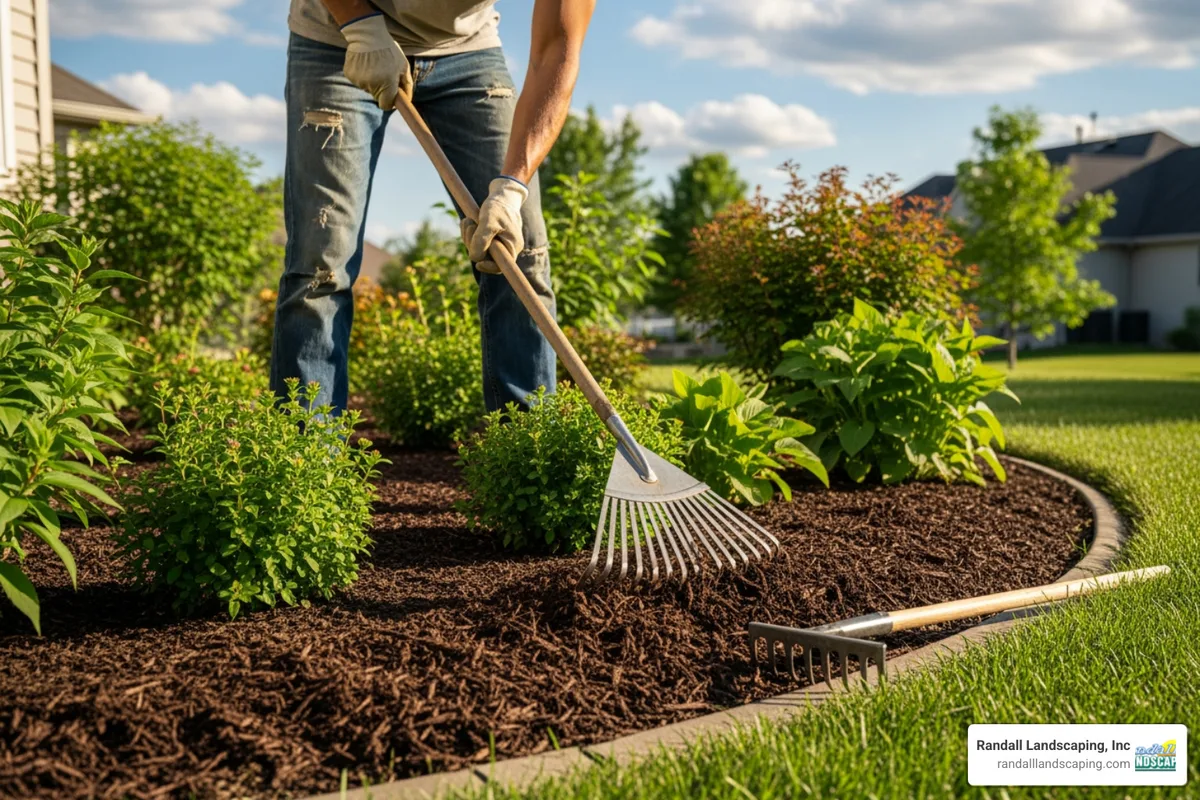
Spread the mulch using a wheelbarrow and a shovel. Dump small piles across the bed, then rake them out evenly. Don't spread by hand unless you're doing a tiny area.
Gloves help, but a rake is faster and gives you a consistent layer.
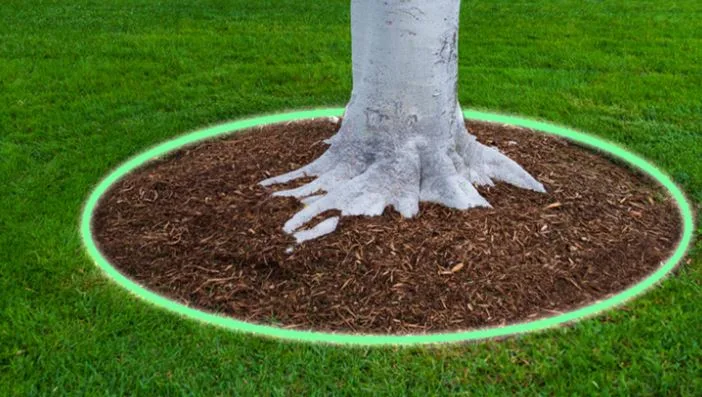
The golden rule: never let mulch touch the plant stems or tree trunks. Keep a bare ring, about 1 to 2 inches wide, around every stem. For trees, a 3 to 4 inch bare ring around the trunk is ideal.
This prevents moisture buildup and discourages pests like voles or borers.
After spreading, water the mulch lightly. This helps it settle and reduces wind blow. For fine shredded mulches, skip the watering if rain is forecast within a day.
You don't want it matting down prematurely.
Mulch by Situation: Trees, Flower Beds, and Vegetable Gardens
Your situation changes the rules. Here's how to adapt.
Trees and shrubs. Spread mulch in a flat ring around the tree, not a volcano. Start the bare ring at the trunk and extend the mulch out to the drip line if possible. That's the area directly under the outermost branches.
Go 3 to 4 inches deep with wood chips or shredded bark. This mimics the natural forest floor where trees drop leaves and needles.
Flower beds and ornamental gardens. Stick with 2 to 3 inches of fine shredded bark or pine straw. These mulches break down faster and add organic matter to the soil. If you're planting annuals, apply mulch after the transplants are in the ground and watered.
For perennials, mulch in spring after the soil warms.
Vegetable gardens. Here you want thinner mulch, 1 to 2 inches max. Vegetables need warm soil and your mulch shouldn't keep the ground cool. Use straw, grass clippings, or compost.
Avoid wood chips in veggie beds unless they're well aged. Fresh chips can tie up nitrogen just when your tomatoes need it most.
Paths and playgrounds. Go with 4 to 6 inches of coarse wood chips or rubber nuggets. You want something that compacts well and doesn't blow away. Rubber never decomposes, so it's a one time cost.
Wood chips need topping up every couple of years.
That covers the main scenarios. Now let's talk numbers, because guessing wrong here wastes money fast.
How Much Mulch You Need (And What It Costs)
Start by measuring your bed length and width in feet. Multiply them to get square footage. Don't trust your eyes.
Most people overestimate bed size by 30 to 50 percent.
Once you have the square footage, multiply it by your target depth in inches. Then divide by 324. That gives you the cubic yards you need.
For a 10 by 20 foot bed at 3 inches deep, that's 200 times 3 divided by 324, or about 1.85 cubic yards. Round up and you're set.
Bagged and bulk each make sense in different situations:
| Purchase Method | Cost per Cubic Yard Equivalent | Best For |
|---|---|---|
| Bagged (2 cu ft per bag) | $40 to $80 | Small beds, easy loading, no delivery fee |
| Bulk delivery (per yard) | $20 to $60 | Beds over 100 square feet, one trip |
A single 2 cubic foot bag covers about 8 square feet at 3 inches deep. A 10 by 10 foot bed is 100 square feet, so you'd need about 13 bags. That's fine for small jobs.
But once you pass roughly 2 cubic yards, bulk starts winning on price. Call a local landscape supply yard for quotes. Expect $30 to $50 per yard for double-shredded hardwood as of 2026 in most regions.
On a budget? Check free options. Many municipalities give away composted leaf mulch.
Tree service companies often drop wood chips for free. The texture will be rougher, but your plants won't mind.
The USDA Natural Resources Conservation Service publishes straightforward guidance on mulch and soil health. Worth a read before you commit to a truckload.
Frequently Asked Questions
Should I remove old mulch before adding new?
No, unless it's matted or moldy. Old organic mulch breaks down into humus that feeds the soil. Rake it loose first, then add fresh mulch on top.
Keep the total layer at 2 to 4 inches. If it's already too deep, rake some out before topping up.
Can I spread mulch directly over weeds?
Yes, if you layer it thick enough. A 3 to 4 inch layer will smother most annual weeds. Perennials like bindweed or dandelions will push through eventually, so pull those first.
For severe weed pressure, lay cardboard under the mulch. It blocks light and breaks down within a season or two.
What's the best time of year to spread mulch?
Late spring, after the soil has warmed, works best in most climates. You're locking in moisture without trapping cold. Fall mulching also works, but wait until after the first killing frost.
At that point, you're insulating roots for winter rather than encouraging new growth.
Is dyed mulch safe around vegetables?
Most modern dyes are non-toxic, carbon-based colorants. They're safe for ornamental beds. For vegetable gardens, use plain straw, grass clippings, or compost instead.
Those break down faster and contribute more organic matter to the soil your food grows in.
How often should I refresh the layer?
Check once in spring. Fine shredded bark breaks down within a year, so it often needs a 1 to 2 inch top-up. Wood chips can go two to three years.
Rubber and stone never decompose, but they never improve your soil either. Match the material to how much maintenance you actually want to do.
Quick Reference: Mulch Depth by Plant Type
Bookmark this table and you'll stop second-guessing the wheelbarrow.
| Area | Ideal Depth | Best Mulch Type |
|---|---|---|
| Vegetable gardens | 1 to 2 inches | Straw, grass clippings, compost |
| Annual flower beds | 2 to 3 inches | Shredded bark, pine straw |
| Perennial beds | 2 to 3 inches | Double-shredded hardwood |
| Trees and shrubs | 3 to 4 inches | Wood chips, shredded bark |
| Paths and play areas | 4 to 6 inches | Coarse wood chips, rubber |
| Slopes | 3 inches | Pine straw (it interlocks well) |
| Containers and pots | 1 to 2 inches | Fine bark or pea gravel |
Hold one rule above all of them. Keep mulch off stems, trunks, and crowns. Everything else you can fix with a rake.
A plant smothered under a volcano of mulch is usually gone for good.
Flower beds and ornamental gardens. Stick with 2 to 3 inches of fine shredded bark or pine straw. These mulches break down faster and add organic matter to the soil. If you're planting annuals, apply mulch after the transplants are in the ground and watered.
For perennials, mulch in spring after the soil warms.
Vegetable gardens. Here you want thinner mulch, 1 to 2 inches max. Vegetables need warm soil and your mulch shouldn't keep the ground cool. Use straw, grass clippings, or compost.
Avoid wood chips in veggie beds unless they're well aged. Fresh chips can tie up nitrogen just when your tomatoes need it most.
Mulch Maintenance Through the Seasons
Mulch isn't a set-it-and-forget-it job, even if you do it right. It changes with the weather. A quick seasonal check keeps your beds healthy all year.
In spring, rake old mulch loose before new growth emerges. That simple act breaks up matted layers and improves airflow. Top it up only if the total depth has dropped below 2 inches.
If it's still thick enough, leave it alone.
In summer, watch for compaction after heavy rain. Crusted mulch repels water like a roof. Run a garden rake over the surface and water will soak in again.
You'll also catch any weeds that sprouted in the few open spots.
In fall, wait until after the first hard frost. Then add a fresh 1 to 2 inch layer over perennials and tree roots. This blanket keeps soil temperatures steady during winter thaws.
Don't overdo it. A thin insulation layer is enough, no need for a quilt.
Troubleshooting Common Mulch Problems
Seeing white fuzzy patches on your mulch? That's usually saprophytic fungi, which is harmless and actually a sign your mulch is decomposing properly. If it bothers you, rake the surface to break up the mold and increase airflow.
It'll settle down within a week or two.
Water pooling on top of the mulch is a matting problem. Fine-textured mulches like double-shredded hardwood are the usual culprits. Break up the crust with a rake and the water will start soaking through again.
If it keeps happening, switch to a coarser mulch like pine bark nuggets.
If your mulch smells sour or vinegary, it went anaerobic. That means waterlogged and lacking oxygen. Turn the mulch over with a pitchfork and let it dry out.
Avoid this in the future by keeping your layer under 4 inches and watering less frequently.
Mulch and Pest Management
Wood mulch can attract termites, carpenter ants, and other moisture-loving insects. The trick is not to eliminate mulch but to keep it away from your foundation. Maintain a bare gap of 6 to 12 inches between the mulch and your house siding.
That simple barrier removes the bridge between soil pests and your wooden structure.
Cedar and cypress mulches naturally repel some insects thanks to their aromatic oils. They're a decent choice if bugs are a concern around entryways. Not a guarantee, but a solid first line of defense.
Bottom line. Skip mulch types that feed pests you already struggle with, and inspect beds near your home every few months. Early detection beats a fumigation bill later.
Mulch Safety and Fire Risk
This one gets overlooked. Rubber mulch is flammable and, once lit, it can smolder for days. Keep it away from fire pits, grills, and any structure.
In wildfire-prone regions, that means avoiding it entirely near homes and decks.
Pine straw is the most combustible natural mulch. Those dry needles catch fire easily and blow around, spreading flames. Shredded bark is slightly better, but still burns steadily.
If you live in a high-risk zone, use stone, gravel, or well-composted compost instead.
Check local fire codes too. Some areas restrict certain mulches within a certain distance of buildings. A quick call to your local fire marshal or county extension office gives you the rules straight.
Better to ask than to learn the hard way.
Mulch Alternatives for Special Situations
Mulch works in most beds, but sometimes another solution fits better. On steep slopes, ground cover plants like creeping thyme or vinca hold soil far better than any mulch layer. Their roots anchor the dirt while their leaves block weeds.
In heavy clay soil that drains poorly, skip organic mulch entirely. It holds moisture and can rot your plant roots. Coarse stone or pea gravel lets water evaporate faster and keeps the soil surface from staying soggy.
For a no-dig garden, try sheet mulching. Lay cardboard or newspaper directly over grass, wet it thoroughly, then pile on 4 to 6 inches of straw or compost. The cardboard smothers the grass while the straw breaks down into rich soil.
No digging, no tilling, just a layered workhorse that feeds your beds for seasons.