You’ve got your seed trays set up. The soil is damp. You wait.
And then the seedlings come up thin, pale, or they flop over and die. That’s the moment seedling care stops being theory and becomes a real test of what you know.
Our research, drawing on university extension data, shows that roughly 75 % of seedling failures come down to just three factors: light, water, and temperature. Get those right, and you’re almost guaranteed strong transplants. Let’s walk through the decisions you need to make.
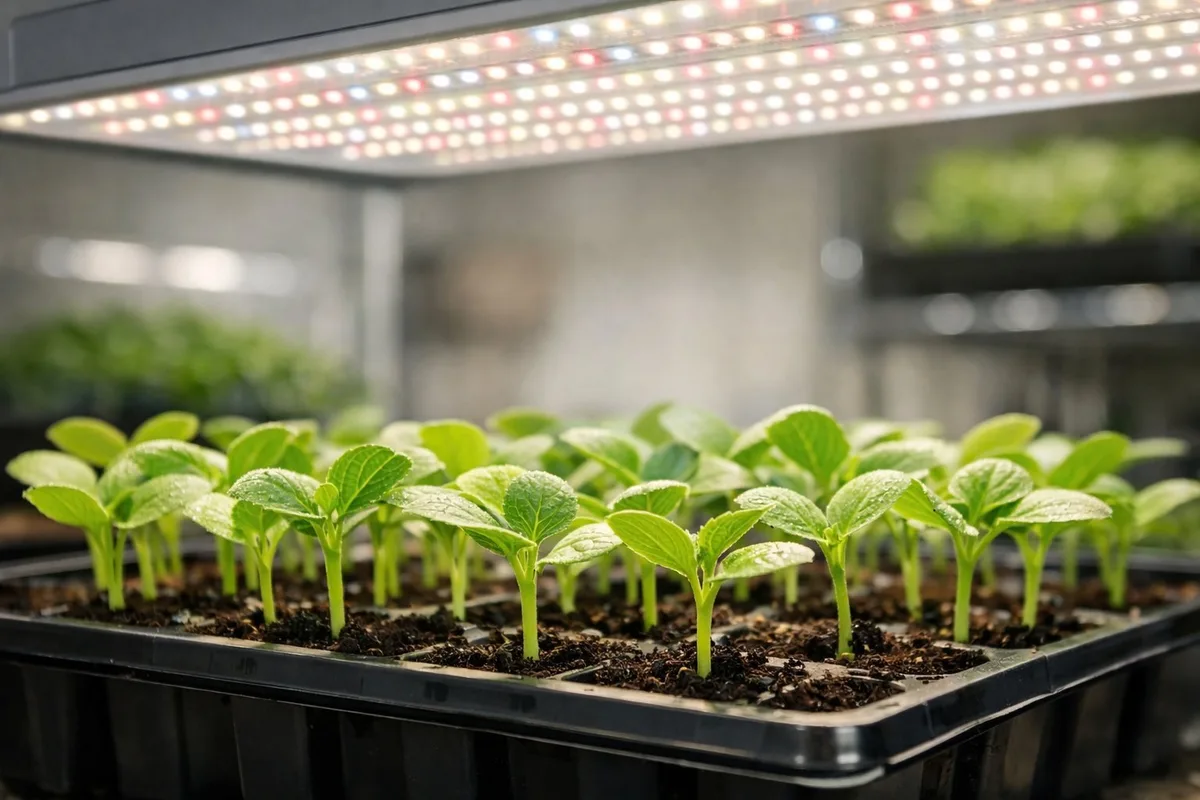
Image source: Bing (Web (fair-use with source credit))
Quick Answer
Seedling care means controlling light, water, and temperature. Give seedlings 14, 16 hours of bright light. Water from below to keep soil moist but not wet.
Keep air moving to prevent disease. Hardening off takes 7, 10 days.
When Your Seedlings Look Weak or Leggy — Light Is Usually the Problem
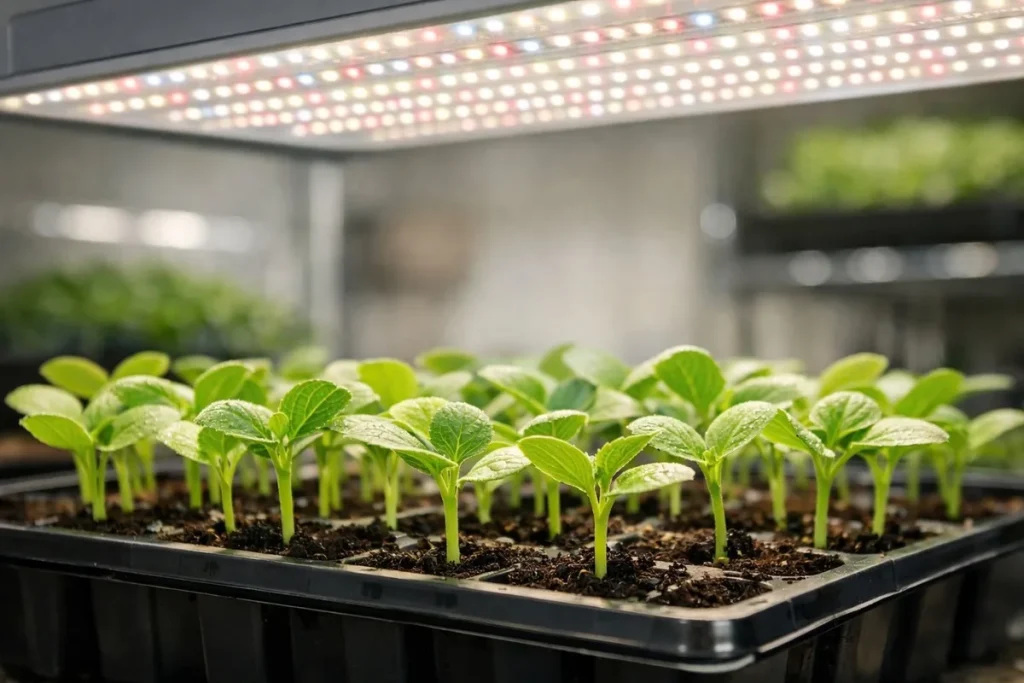
If your seedlings are stretching toward a window, they aren’t getting enough light. This condition, called “leggy,” means the stem elongates too fast because the light source is too weak or too far away. You’ll see thin stems and wide gaps between leaves.
The fix is straightforward. Place a grow light 2 to 4 inches above the foliage for most seedlings. LEDs and T5 fluorescents work well.
Run them 14 to 16 hours a day with a timer. If you don’t have a grow light, a south‑facing window can work, but you’ll get slower, weaker growth.
Decision tree: if your seedlings are over 4 inches tall and falling over, check light first. If they’re pale yellow, increase brightness or lower the light. If they’re dark green but leggy, bring the light closer.
Turn trays daily if using a window so they don’t lean. University extension research confirms that light is the most common cause of weak seedlings.
Watering Is the #1 Killer — Here's How to Know If You're Over or Under Doing It
More seedlings die from water problems than from anything else. Overwatering leads to damping‑off, a fungal disease that rots the stem at soil level. Underwatering causes wilt and stunted growth.
The key is consistent moisture without saturation.
Bottom watering is the safest method. Fill a tray with water and let the soil absorb it from the drainage holes. This keeps the top of the soil dry, which discourages mold and fungus gnats.
Check moisture by lifting the tray: if it feels light, it’s time to water. If it still feels heavy, wait.
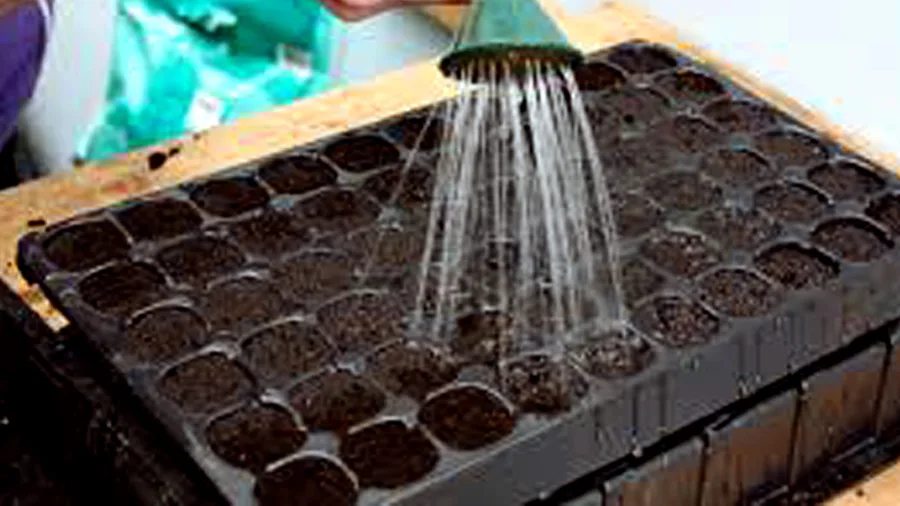
Image source: Bing (Web (fair-use with source credit))
Decision tree: if the stem is pinched at the soil line and the seedling has fallen over, that’s damping‑off from overwatering. Let the soil dry out slightly and improve air circulation. If leaves are drooping but the soil is wet, roots may be rotting.
Stop watering and let the plant recover. If leaves are dry and crispy, the soil is too dry. Water from below immediately.
Temperature and Humidity — Matching the Right Conditions to Each Seed Type
Different seeds need different soil temperatures to germinate. Warm‑season crops like tomatoes and peppers prefer 70, 85 °F. Cool‑season crops like lettuce and broccoli do fine at 60, 70 °F.
A heat mat with a thermostat is the most reliable way to hit the target.
Once seedlings emerge, lower the temperature a few degrees to encourage sturdy growth. Keep humidity around 50, 70 % during germination using a clear dome. After emergence, remove the dome and let air circulate.
A small fan on low prevents stagnant air.
| Crop type | Germination soil temp | After emergence air temp |
|---|---|---|
| Warm‑season (tomato, pepper, eggplant) | 70–85 °F | 65–75 °F |
| Cool‑season (lettuce, broccoli, kale) | 60–70 °F | 55–65 °F |
Decision tree: if your seeds haven’t germinated after the expected time, check soil temperature with a cheap thermometer. If the room is cold, add a heat mat. If the room is hot, ventilate or move trays to a cooler spot.
The Hardening-Off Decision Tree — When and How to Move Seedlings Outside
Hardening off is the process of gradually acclimating indoor seedlings to outdoor conditions. Without it, your plants will sunburn, windburn, or suffer transplant shock. The timeline is 7 to 10 days.
Start by placing seedlings outdoors in a shaded, sheltered spot for one hour on day one. Increase exposure by an hour each day. By day four, introduce direct morning sun.
By day seven, leave them out overnight if temperatures stay above 50 °F.
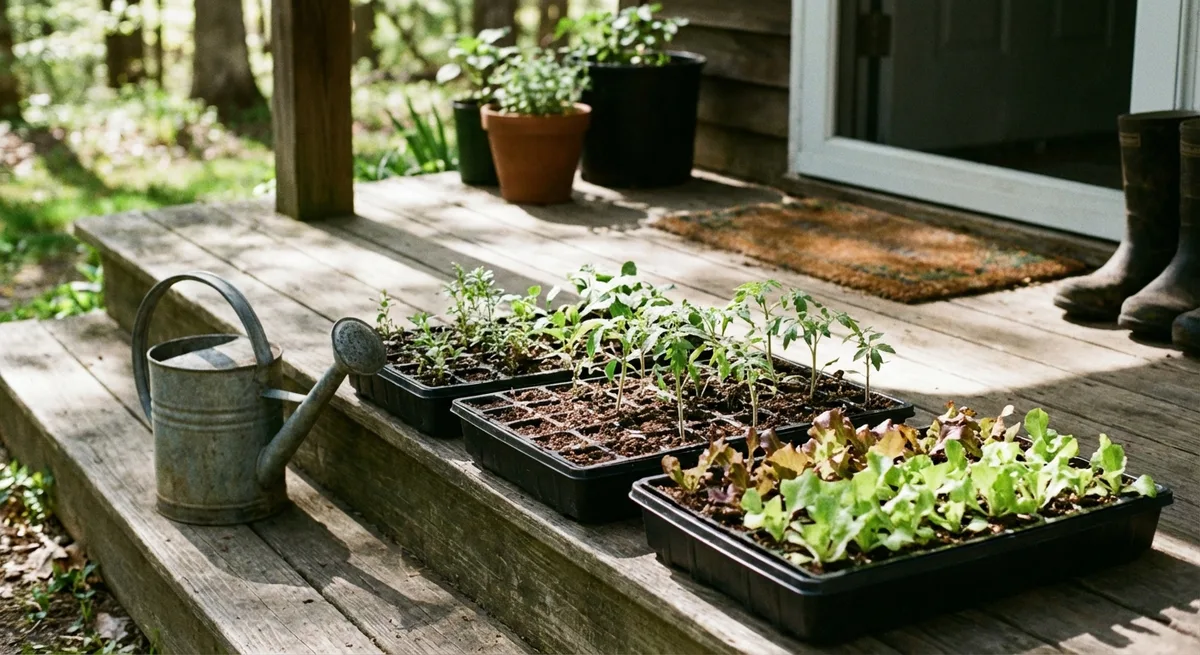
Image source: Bing (Web (fair-use with source credit))
Decision points: if temperatures drop below 45 °F, bring them inside. If it’s windy, skip outdoor time that day. If leaves show white patches (sunburn), reduce sun exposure and increase shade.
If stems become purple (cold stress), move them to a warmer spot.
The goal is to have seedlings fully exposed to sun, wind, and nighttime temperatures before transplanting. This step is non‑negotiable in seedling care. Many gardeners rush it and lose plants within days.
Troubleshooting Common Seedling Problems (With Decision Paths)
Here’s how to diagnose the most common issues using a decision tree.
Damping‑off: seedling falls over at the soil line with a pinched stem. Cause is overwatering or poor air circulation. Action: discard affected seedling, improve air flow, water from below, let soil dry slightly.
Leggy growth: tall, thin stems with large gaps between leaves. Cause is insufficient light. Action: move light closer, increase brightness, extend photoperiod to 16 hours.
Pale yellow leaves: indicates nutrient deficiency after true leaves appear. Action: fertilize with a dilute liquid fertilizer at half strength.
Stunted growth: seedlings stop growing after first leaves. Cause could be cold temperatures or root binding in small cells. Action: check soil temp, pot up to larger container.
Mold on soil surface: white or green fuzz. Cause is too much moisture and poor ventilation. Action: scrape off mold, water less frequently, improve air circulation.
Each problem has a clear decision path. Identify the symptom, apply the fix, and adjust conditions. The earlier you catch it, the better.
When to Pot Up vs Plant Out — How to Read Your Seedling's Cues
Not every seedling needs potting up into a bigger container. Some can go straight into the garden. The decision depends on root development, weather, and plant type.
Check the bottom of your cell tray. If roots are circling or poking through drainage holes, the seedling is root bound. That means it needs a bigger pot before transplanting.
If roots still look white and loose, you can wait.
Decision tree: if roots fill the cell and outdoor conditions are still too cold, pot up into a 3 or 4 inch container. If roots fill the cell and the last frost date has passed, plant out directly. If roots are sparse and the seedling is small, give it more time under lights.
Potting up buys you 2 to 3 extra weeks of indoor growth. It also prevents transplant shock because the roots stay undisturbed. Use a well draining potting mix, not garden soil.
Water thoroughly after moving.
Broccoli and lettuce move quickly. They can go out after 3 to 4 weeks. Tomatoes and peppers are slower.
They often need potting up once before transplanting. If you see leaves turning yellow on the bottom of a tomato, that is a sign the plant needs more space. Act right away.
When to plant out: wait until the soil is at least 60°F for warm season crops. Cool season crops can handle 50°F soil. Use a soil thermometer to be sure.
Check the 10 day forecast. Avoid planting before a cold snap.
Frequently Asked Questions — Quick Answers for Common Situations
How deep should I plant seeds?
A general rule is twice the seed's width. Tiny seeds like lettuce need just a dusting of soil. Big seeds like squash need about 1 inch.
Check the seed packet for exact depth.
Should I use a heat mat for all seedlings?
No. Cool season crops like kale and lettuce germinate fine at room temperature. Heat mats help warm season crops like peppers and eggplant.
They also speed up germination by a few days. Use a thermostat to avoid overheating.
Why are my seedlings falling over?
That is damping off. It is caused by overwatering and poor air circulation. Remove the affected seedlings.
Let the soil dry slightly. Add a small fan on low to move air. Water from below instead of above.
Can I reuse seed starting mix?
Not recommended. Old mix can carry pathogens that cause damping off. It also breaks down and compacts over time.
Always use fresh sterile seed starting mix for best results.
How often should I fertilize seedlings?
Start fertilizing after the first true leaves appear. Use a dilute liquid fertilizer at half strength once a week. Stop fertilizing a week before transplanting.
This helps seedlings adjust to garden soil.
Your Seedling Care Decision Guide — A Simple Flow to Follow
Here is a quick reference for the entire process. Follow these decision points in order.
Step 1: Check light. Are seedlings leggy or pale? Move light closer or increase brightness.
Aim for 14 to 16 hours daily.
Step 2: Check water. Is the soil surface dry? Water from below.
Is the stem pinched at soil level? Let the soil dry and improve airflow.
Step 3: Check temperature. Did seeds fail to germinate? Use a heat mat with thermostat.
Are seedlings growing slowly? Check if the room is too cold.
Step 4: Check roots. Do roots fill the cell? Pot up or plant out depending on weather.
Are roots brown or mushy? That signals root rot from overwatering.
Step 5: Check hardening off. Have seedlings been outdoors gradually for 7 to 10 days? If not, start the process before transplanting.
Skip this step and your plants will struggle.
Step 6: Transplant. Choose a cloudy day or late afternoon. Water the seedling well before moving.
Plant at the same depth it was growing. Water again after transplanting.
This flow works for vegetables, flowers, and herbs. Adjust timing based on your local frost dates and crop type. Keep a journal of what works each season.
Seedling care gets easier every time you do it.



