Russian sage care doesn't have to be complicated, but it does have to be specific. The difference between a thriving silver-blue clump and a floppy, leggy mess comes down to a handful of timing decisions based on your climate, soil, and how long the plant has been in the ground.
The good news? Once you understand those few variables, Russian sage (Salvia yangii, formerly Perovskia atriplicifolia) is one of the easiest perennials you'll ever grow. It thrives in USDA hardiness zones 5 through 9, needs almost no fertilizer, and laughs at drought once established.
As of 2026, it remains a top pick for water-wise gardens across the mountain West, Great Plains, and Southwest. Let's walk through the conditions that matter.
The Quickest Way to Get It Right: A Conditional Flowchart
If you only take away one thing, make it this: Russian sage care is about matching your actions to the plant's current state. The chart below covers the most common decision points.
| Your Situation | What To Do |
|---|---|
| Newly planted, first summer | Water deeply once a week for the first month, then twice a month until fall |
| Established plant, normal summer | Do nothing. Seriously. It's fine. |
| Established plant, extended drought (3+ weeks) | Give it a deep soak every 2–3 weeks |
| Early spring, before new growth | Cut back old stems to 6–12 inches above the ground |
| Late fall, cold climate (zones 4–5) | Leave stems alone. Mulch the crown after the ground freezes. |
| Late fall, warm climate (zones 7–9) | Trim for tidiness if you want, or leave it for winter interest |
| Plant flopping over | Cut back in early spring, make sure it gets 6+ hours of full sun |
| Plant not blooming | Check for too much shade or over-fertilization |
That table handles roughly 90% of the decisions you'll face. The rest of this article walks through the "why" behind each row.
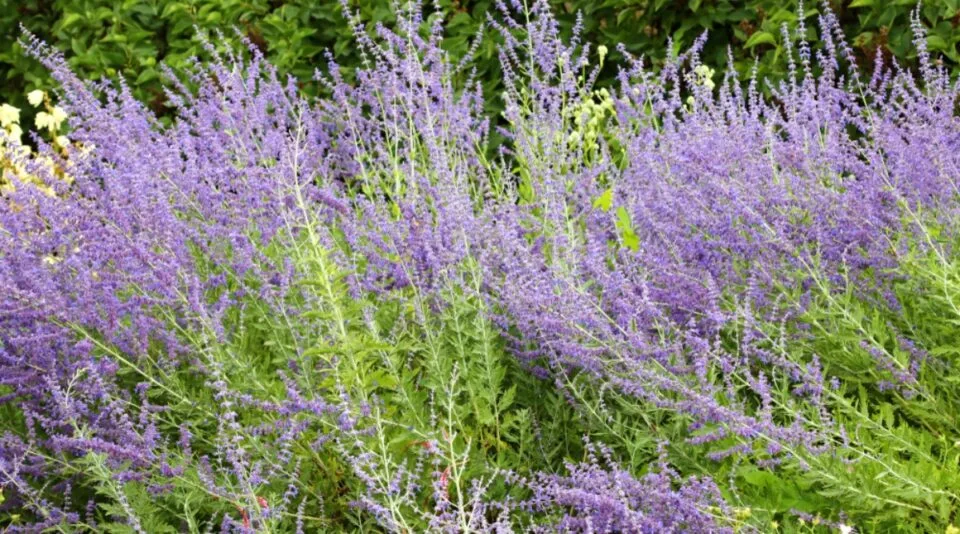
Image source: Web (Bing) / epicgardening.com (Web image (fair-use with source credit))
Why Russian Sage Care Is So Conditional
Where most perennials reward a steady routine, Russian sage punishes it. When you water it on a schedule, it sulks. When you fertilize it, it gets lanky.
When you prune it too late in the season, the crown can rot over the winter. The plant evolved in dry, rocky steppes, not in a well-manicured border with a drip line.
That last point is the key to understanding it. Russian sage is a plant that expects to fend for itself.
So why does so much care advice contradict itself? Because the same action can be a lifesaver in one garden and a death sentence in another. Spring pruning, for instance, is essential above zone 7.
It triggers healthy new growth and keeps the plant compact. But in a humid southern climate, pruning too early can expose the crown to excess moisture and powdery mildew.
The three variables that matter most are climate, soil drainage, and plant age.
Climate dictates your pruning window, your winter protection needs, and how aggressively the plant self-seeds. Soil drainage determines whether your sage thrives or drowns. Plant age tells you how much water and attention the roots actually need.
Get those three right, and the rest is mostly hands-off.
Watering: How Dry Is Dry Enough?
Watering is where most well-meaning gardeners accidentally kill their Russian sage. The plant's number one enemy is wet feet. Heavy, soggy soil can cause root rot that turns a vigorous young plant into a wilting, yellowed mess within a few weeks.
For new plants, give the roots time to establish. Water deeply once a week for the first month after planting. Then scale back to every other week for the rest of the first growing season.
This trains the taproot to follow the water downward, which builds drought tolerance.
For established plants in year two and beyond, stop scheduling. Russian sage is genuinely drought-tolerant once its root system develops. In most regions, natural rainfall is plenty.
Water only when you've gone three or more weeks without meaningful rain, and even then, a deep soak every couple of weeks is enough.
The soil type changes the math, though.
Clay soil holds moisture far longer than sandy soil, so cut the watering frequencies in half. Sandy soil drains quickly, so you may need to water more often in the first year. Before you water, stick your finger two inches into the ground near the base.
If it's still damp, skip the watering. If it's bone dry, it's time to give it a drink.
The Two Big Pruning Decisions
Pruning Russian sage is a classic two-step decision: the "when" and the "how much." The when matters more than almost anything else in this plant's care.
In most climates, early spring is the right window. Wait until you see small new green shoots emerging at the base, then cut away the old woody stems. This is the safest approach because the plant's crown has time to recover before the summer growth flush.
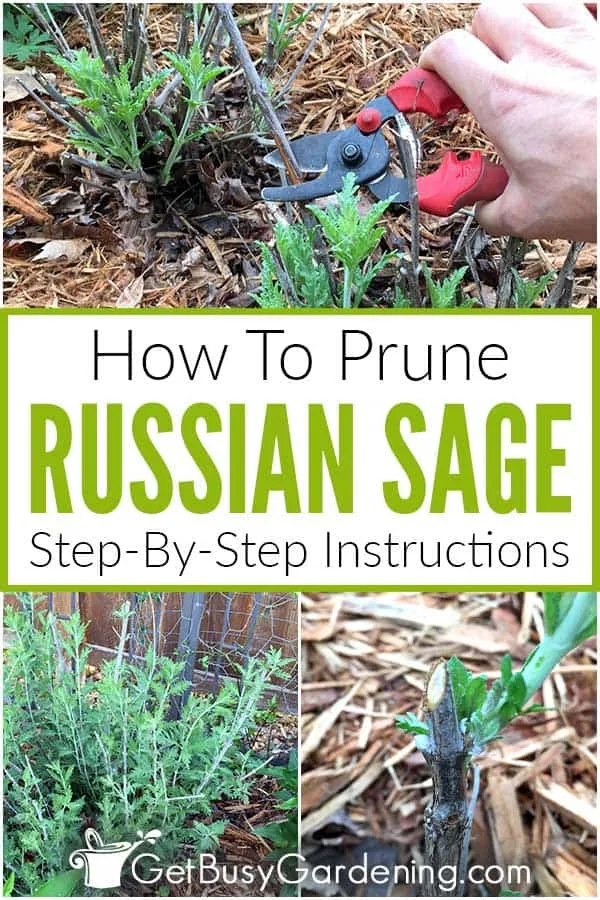
Image source: Web (Bing) / getbusygardening.com (Web image (fair-use with source credit))
The "how much" depends on your goals. A hard prune to 6, 8 inches keeps the plant compact and maximizes bloom quality. A lighter prune to 12, 18 inches produces a taller, airier plant.
Either works. The important thing is to leave a few sets of buds on each stem.
For the cold climate crowd, there's one more warning. If you cut Russian sage back in the fall, you risk killing the crown. The old stems and leaves protect the root zone from winter freezing.
So if you're in zones 4 or 5, leave the plant standing through winter and prune only in spring.
If you already pruned in the fall and got lucky, fine. But it's not a habit worth keeping.
Feeding, Mulching, and Winterizing by Climate
Let's get one thing straight: Russian sage does not need fertilizer. In fact, rich soil and high-nitrogen fertilizer produce exactly what you don't want: soft, tall stems that flop over under their own weight. If your soil is very poor, a one-inch layer of compost in spring is more than enough.
Mulching is simpler. In warm zones, skip it entirely. The plant likes warm, dry soil at its base.
In cold zones, apply 2, 3 inches of loose mulch like straw or bark around the crown in late fall. Wait until after the first hard freeze so you don't trap heat and encourage rotting.
Winterizing by zone is where the division really shows.
In zones 7, 9, there's essentially no preparation. The plant may stay semi-evergreen, and you can trim it in either late fall or early spring. In zone 6, a light mulch over the root zone is a reasonable insurance policy.
In zones 4, 5, the full routine applies: leave the stems standing, apply mulch after the ground freezes, and remove it gradually in early spring. The stems trap snow, which acts as an insulating layer, so resist the urge to tidy them up.
Fixing the Most Common Struggles
"My Russian Sage Flopped Over"
This is the most common complaint by far. The fix is almost always too much nitrogen or too much shade.
High nitrogen fertilizer forces soft, weak stems that can't support themselves. If you've been feeding it, stop. Even rich compost can cause this in some soils.
The other culprit is less than six hours of direct sun. Russian sage needs full sun to develop strong, woody stems. If it's reaching for light, it gets leggy and falls over.
The solution for this season is a light trim to remove the flopped stems. The solution for next season is a hard spring prune to six inches and a relocation to full sun if needed.
"It's Not Blooming"
No blooms usually means one of three things: too much shade, pruning at the wrong time, or over-fertilization.
If you pruned in late spring after growth had already started, you cut off the flower buds. Russian sage blooms on new wood, so early spring pruning before growth begins is safe. If you fertilized, the plant is putting energy into leaves instead of flowers.
And if it's in shade, it simply won't have the energy to produce a full bloom set.
Move it, stop feeding it, and prune earlier next year.
"Leaves Look Yellow or Powdery"
Yellow leaves almost always mean too much water or poor drainage. Check the soil moisture at root level. If it's consistently wet, you're either watering too often or the soil doesn't drain well.
Powdery mildew shows up as a white coating on the leaves. It's common in humid climates with poor air circulation. The fix is to space plants farther apart and water at the soil level instead of overhead.
In severe cases, remove affected stems and improve airflow.
"The Center Is Dead After a Few Years"
Russian sage clumps have a natural lifespan of about four to six years. After that, the center of the plant becomes woody and stops producing new growth.
The fix is simple: divide the clump in early spring. Dig up the entire root ball. Discard the woody center section.
Replant the vigorous outer sections with fresh roots. This reinvigorates the plant and extends its life by several more years.
Mistakes That Kill Russian Sage (and How to Avoid Them)
Overwatering Is the Number One Offender
More Russian sage plants die from too much water than from anything else. The roots are adapted to dry, rocky soil. They rot quickly in constantly wet conditions.
Signs of overwatering include yellowing lower leaves, wilting despite wet soil, and a mushy stem base. If you see these, stop watering entirely and let the soil dry out for at least two weeks. If the plant is in heavy clay, consider moving it to a raised bed or mound.
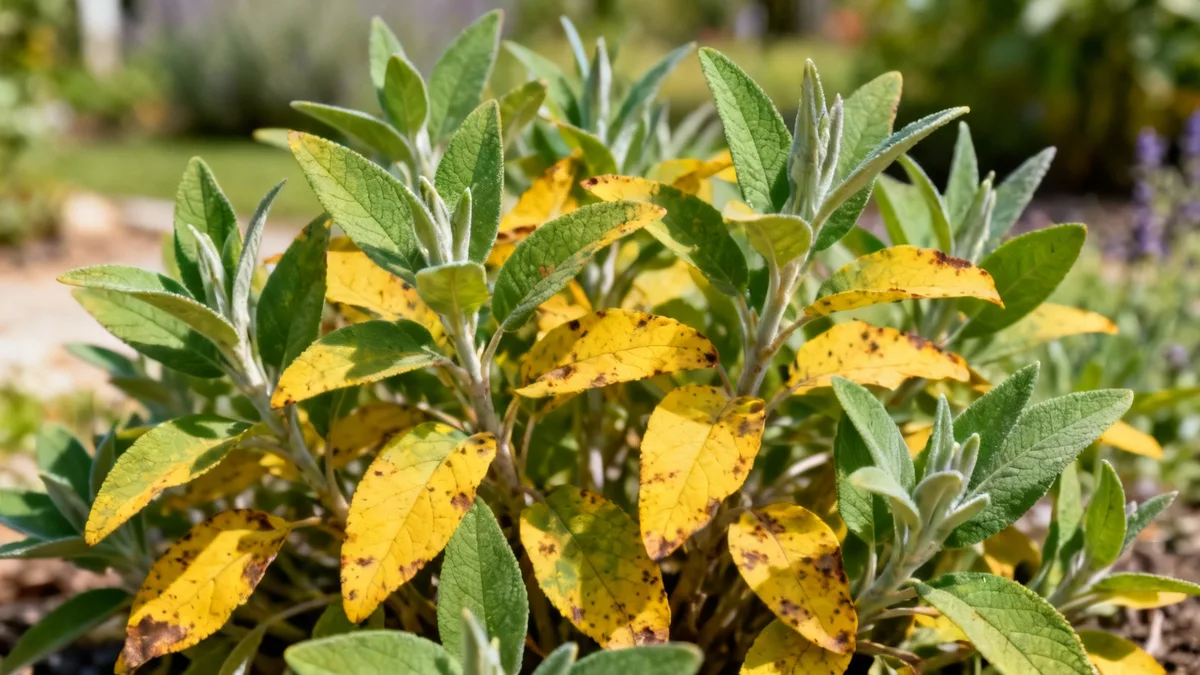
Image source: Web (Bing) / bulbsociety.org (Web image (fair-use with source credit))
Pruning at the Wrong Time
Cutting back in the fall is a gamble in cold climates. The old stems protect the crown from freezing. Without them, winter kill is a real risk.
The fix is to wait until early spring. Look for new green shoots at the base before you cut. If you already pruned in the fall, add a thick layer of mulch over the crown and hope for the best.
Planting in Shade
Even part shade causes problems. The plant stretches for light, producing weak stems and sparse blooms. It also stays wetter longer, inviting powdery mildew.
If your Russian sage is in less than six hours of direct sun, move it. Full sun is non-negotiable for this plant to perform well.
Fertilizing Like It's a Rose
Russian sage evolved in poor soil. It needs almost no nutrients to thrive. Fertilizer, especially high-nitrogen types, creates lush but weak growth that flops and blooms poorly.
Skip the fertilizer entirely. If your soil is truly barren, a thin layer of compost in spring is all it needs.
Quick-Reference Decision Tree (Pruning and Watering)
| Decision Point | Conditions | Action |
|---|---|---|
| When to prune | Cold climate (zones 4-5) | Early spring, after new growth appears |
| When to prune | Warm climate (zones 7-9) | Early spring, or fall for tidiness |
| How much to cut | Compact plant desired | Hard prune to 6-8 inches |
| How much to cut | Tall, airy plant desired | Light prune to 12-18 inches |
| Water frequency | First year, sandy soil | Weekly deep soak |
| Water frequency | First year, clay soil | Every other week deep soak |
| Water frequency | Established plant | Only during extended drought (3+ weeks) |
| Winter protection | Zones 4-5 | Leave stems, mulch crown after first freeze |
| Winter protection | Zones 6-9 | No protection needed |
| Division | Center appears dead or sparse | Every 4-6 years in early spring |
Frequently Asked Questions
Can I grow Russian sage in a pot?
Yes, but choose a dwarf cultivar like "Little Spire" or "Lacey Blue." Use a large container with drainage holes and a gritty potting mix. Water more frequently than in-ground plants, but let the soil dry completely between waterings. Repot every two to three years.
Should I deadhead Russian sage?
Deadheading isn't necessary. The plant blooms continuously from midsummer through fall without any help. Removing spent flowers doesn't extend the bloom period significantly.
Many gardeners actually prefer the look of the dried seed heads for winter interest.
How do I propagate Russian sage?
The easiest method is division in early spring. Dig up an established clump, discard the woody center, and replant the outer sections. Softwood cuttings taken in late spring also root well.
Use rooting hormone and keep the cuttings moist until roots form.
Is Russian sage invasive?
It can self-seed aggressively in some regions, particularly in parts of the western United States and the Pacific Northwest. It's not on the federal noxious weed list, but check with your local extension office. If self-seeding is a concern, deadhead before seeds mature.