If your rubber plant's leaves are turning yellow or dropping off, that's not bad luck. It's a message. Rubber plant care is about learning to read those messages and adjusting your routine before small issues become big ones.
Most problems come down to two root causes: watering on a fixed schedule and guessing at light levels. As of 2026, indoor specimens typically grow 6 to 10 feet tall when given bright, indirect light and consistent moisture. Get those two decisions right, and your plant forgives almost everything else.
Let's start by figuring out what your plant is actually telling you.
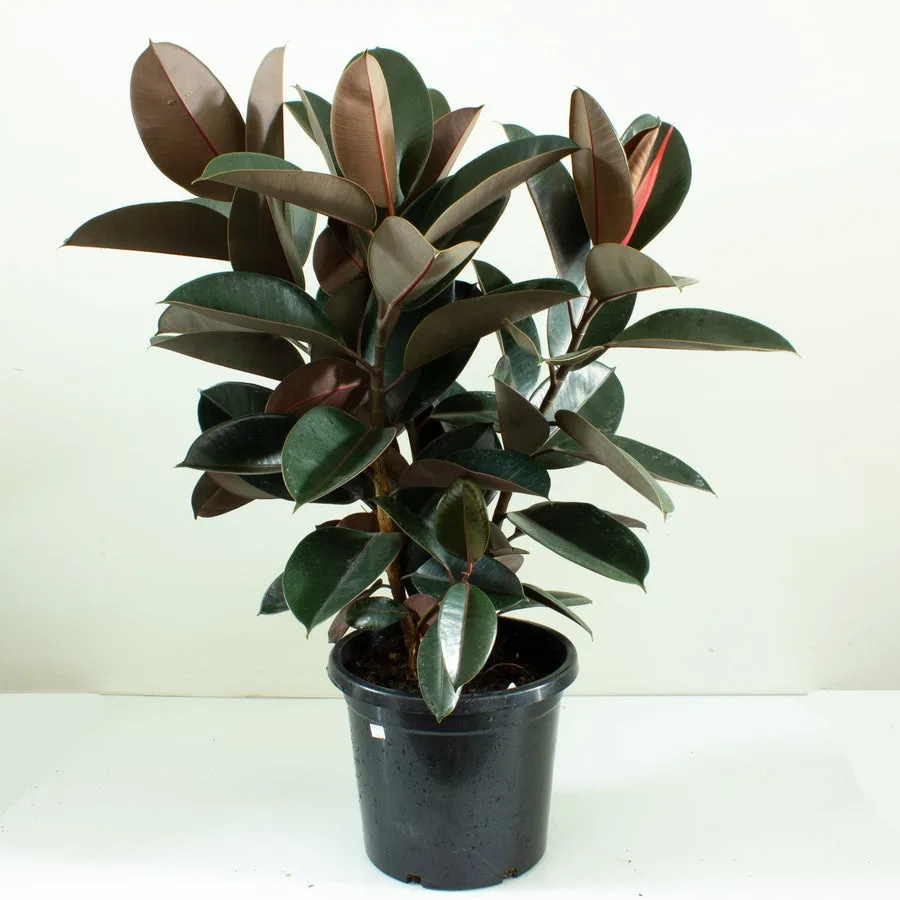
Image source: Web (Bing) / myjunglehome.com.au (Web image (fair-use with source credit))
Is Your Rubber Plant Trying to Tell You Something?
Yes, and the clues are in the leaves. Yellow lower leaves usually mean too much water. Brown, crispy edges often mean too little humidity or moisture.
Sudden leaf drop says your plant just experienced a draft, cold blast, or watering shock. Stretching stems with wide gaps between leaves say it's not getting enough light.
Here's how to interpret what you see, using if-then logic:
If the lower leaves are yellowing and soft, you're likely overwatering. The soil may be staying soggy, and root rot can be starting. Ease off immediately.
Let the top 1 to 2 inches of soil dry out completely before watering again.
If the leaf tips are brown and papery, the air might be too dry, or the plant dries out between waterings. Check your humidity and your watering interval.
If leaves suddenly drop, one or two at a time, think about recent changes. Did you move the plant? Did a window get drafty?
Rubber plants hate sudden temperature swings.
If the colors look washed out or the variegation fades, your plant needs more light. Move it closer to a bright window, but not into direct afternoon sun.
And if you spot sticky residue on leaves or tiny webs, you're dealing with pests like scale or spider mites. Isolate the plant and wipe down every leaf with insecticidal soap.
Notice a pattern? The leaves are just feedback. Your job is to figure out which condition changed.
Which Rubber Plant Do You Have? (Cultivar Differences That Matter)
Not all rubber plants behave the same. The cultivar you own changes how much light it needs and how fast it grows. That's why the same "average care" advice fails for half the people reading it.
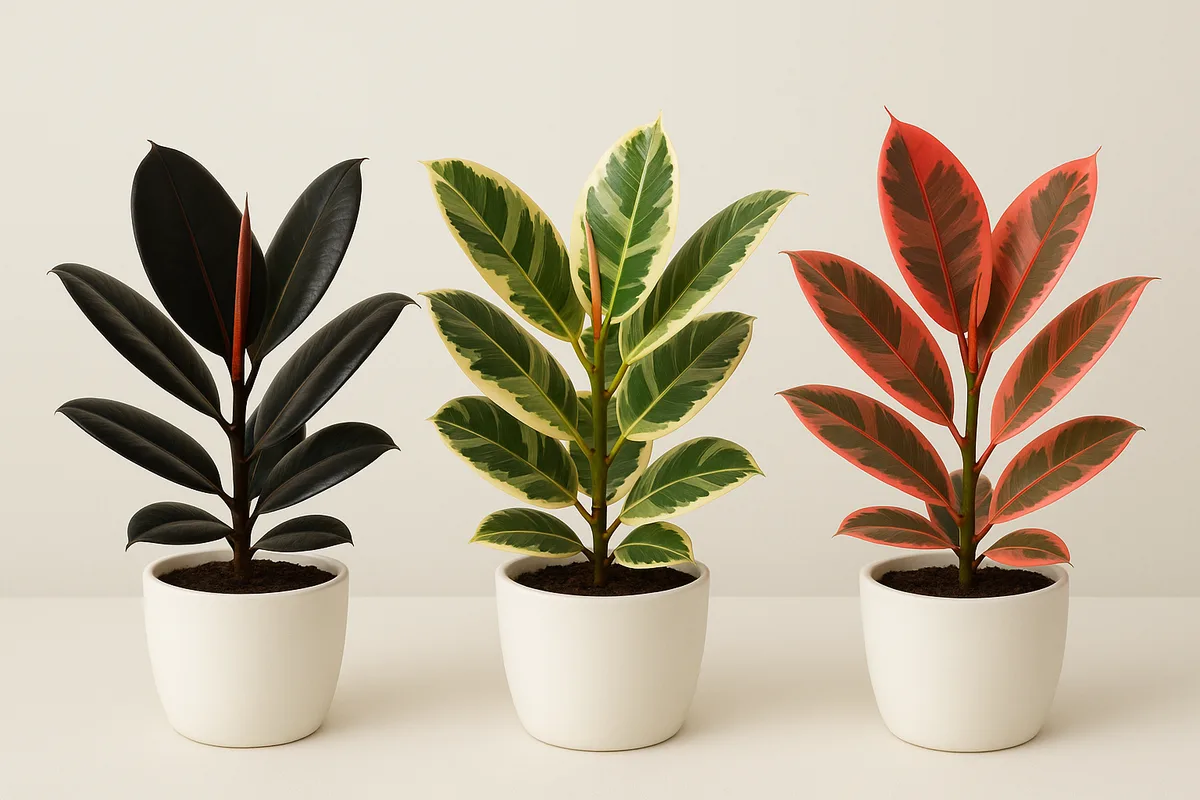
Image source: Web (Bing) / feralfoliage.com (Web image (fair-use with source credit))
Here's a quick breakdown of the most common types.
| Cultivar | Leaf Appearance | Light Need | Best For |
|---|---|---|---|
| Burgundy | Dark green to near-black | Low to bright indirect | Low-light rooms |
| Robusta | Broad, flat, deep green | Bright indirect | Bold statement pieces |
| Tineke | Green edges, cream centers | Bright indirect | Variegation lovers |
| Ruby | Green with pink edges | Bright indirect, some direct morning sun | Color contrast |
| Shivereana | Green with mint speckles | Bright, warm spot | Slow-growing rare plant fans |
The darker the leaf, the less light it needs. Simple rule. Variegated types like Tineke and Ruby have less chlorophyll, so they need more sunlight to photosynthesize.
Put a Ruby in a dim corner and those pink edges will fade back to green. Put a Burgundy in a sunny south window and it'll do fine, but the leaves may look slightly washed out.
This matters for one big reason. If your plant looks healthy but the colors are reverting, you're not failing at care. You might simply have the wrong plant for that spot.
So check your cultivar before you change your whole routine. It saves you time and confusion.
The Two Big Decisions: Light and Water
Everything about rubber plant care funnels down to two decisions. Get them right, and the rest is maintenance. Get them wrong, and no amount of fertilizer or leaf shine will save you.
Decision one: Light. Rubber plants want bright, indirect light. Think a few feet from a south or west window, or right in an east window. They can handle some direct morning sun, but afternoon sun scorches the leaves.
If you don't have a bright window, consider a grow light. Low light won't kill the plant right away, but growth slows dramatically and variegation fades. In our research, the plants that look the best consistently get somewhere between 10,000 and 20,000 lux for most of the day.
Decision two: Water. This is where most of the damage happens. Here's the simple workflow:
- Stick your index finger into the soil up to your second knuckle.
- If the soil feels dry at that depth, water thoroughly until it drains out the bottom.
- If the soil feels damp or cool, wait a few more days.
That's it. No weekly schedule. Plants drink at different rates depending on light, pot size, and season.
A rubber plant in a sunny window in July might need water every 5 days. That same plant in January might go 3 weeks. Learn to check the soil, not the calendar.
Drainage matters too. Your pot must have drainage holes. Sitting in water is the fastest way to trigger root rot.
If you love a decorative pot with no holes, keep the plant in a nursery pot and slip it inside. Remove it when you water, let it drain fully, then put it back.
Make those two decisions well, and your rubber plant becomes an easy houseplant.
Why Leaves Turn Yellow, Brown, or Drop Off
When rubber plant care goes wrong, the leaves talk first. Here's a quick troubleshooting guide based on what you're seeing.
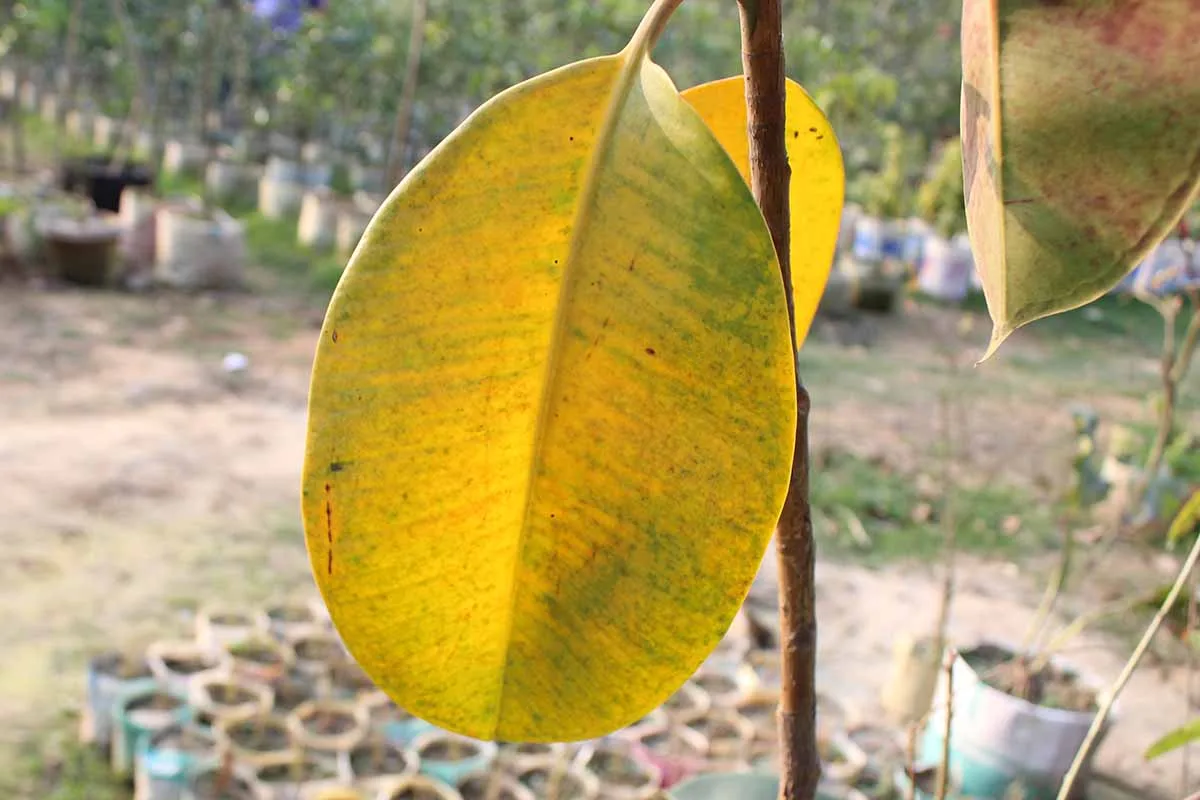
Image source: Web (Bing) / infoupdate.org (Web image (fair-use with source credit))
Yellow leaves, especially lower ones. Overwatering is usually the culprit. The roots sit in soggy soil, they suffocate, and the plant drops its oldest leaves. Fix this by letting the soil dry further between waterings.
If the stem feels mushy at the base, you're too late to save the roots, so take a cutting and start over.
Brown, crispy leaf edges or tips. This points to underwatering or low humidity. Rubber plants tolerate average indoor air, but if your home drops below 30% relative humidity in winter, the leaf edges will crisp. Set the pot on a pebble tray with water, run a small humidifier, or just water more consistently.
Brown patches in the middle of the leaf. That's sunburn. Direct afternoon sunlight through a window will literally cook the leaf tissue. Move the plant back from the glass or filter the light with a sheer curtain.
Sudden leaf drop. This is a stress response. It often happens after you bring a plant home from the store, move it to a darker spot, or blast it with cold air from an HVAC vent. Coral root trio.
The plant recovers, but it'll keep dropping leaves until conditions stabilize.
Faded color or washed-out variegation. Light is the issue. The plant needs more of it. Move closer to a window.
Remember, a few older lower leaves yellowing over time is normal. The plant is just retiring its oldest foliage. As long as new leaves grow in healthy and firm, you're doing fine.
When and How to Prune, Repot, and Propagate
Rubber plants don't need constant fussing, but a little seasonal work keeps them full and healthy. Here's what to know about pruning, repotting, and making new plants.
Pruning. Rubber plants grow tall fast. When the stem gets too long, prune it back in spring or early summer. Cut just above a leaf node, the little bump where a leaf meets the stem.
New growth will appear a few weeks later from that point. Wear gloves when you do this. The milky sap can irritate your skin, and it stains fabric.
You can also prune to encourage branching. If you want a bushier plant instead of a single trunk, make the cut lower and the plant will push out multiple shoots near the cut.
Repotting. Check once a year, usually in spring. If roots are circling the bottom or poking out of drainage holes, it's time. Choose a pot just 2 inches wider than the current one.
A huge pot holds too much water and invites root rot. Use a well-draining potting mix. Aroid mixes with added perlite and orchid bark work beautifully.
When you repot, loosen the root ball gently. Set the plant at the same depth it was before. Water it well and keep it out of direct sunlight for a week while it settles.
Propagation. You can turn one plant into several. Take a stem cutting with at least three or four leaves. Strip the bottom leaf, then root it in water or moist soil.
In water, roots often appear within 2 to 4 weeks. Once they're a couple inches long, move the cutting to soil.
For larger plants, air layering is more reliable. Girdle the stem, wrap it in damp sphagnum moss, and cover it with plastic. Roots form in a few weeks, and then you can cut below the new root ball and pot it up.
Do all of this during the growing season, and your rubber plant will handle it without a fuss.
A Heads-Up on Safety (Pets, Sap, and Pot Size)
Rubber plants are not dangerous if you treat them with basic respect. But they do have a few sharp edges worth knowing about.
Toxicity to pets and kids. The ASPCA lists Ficus elastica as toxic to dogs and cats. The sap contains calcium oxalate crystals and a latex protein that can irritate mouths, cause drooling, and upset stomachs. In our research, most pets ignore the plant entirely.
But curious cats who chew on leaves may need a vet visit. Keep the plant somewhere out of reach, or skip it if your pet is a known plant chewer.
The milky sap. Cut a stem or break a leaf, and sticky white sap oozes out. It can irritate sensitive skin and stain fabric permanently. Wear disposable gloves when you prune.
If sap gets on your skin, wash it off with soap and cold water right away. Keep it away from your eyes. Per the University of Florida IFAS extension, the latex can cause contact dermatitis in some people.
Pot size and stability. Rubber plants grow tall quickly. A top-heavy plant in a lightweight pot tips over easily. That's a hazard for kids, pets, and your floor.
Use a heavy ceramic or terracotta pot at least as wide as the canopy. If the plant leans, stake it with a bamboo pole until the roots bulk up.
Floor protection. That sticky sap isn't the only mess. Dust settles on the broad leaves and needs wiping. When you water, runoff can stain surfaces.
Always empty the saucer after watering. Sitting water in a saucer also invites fungus gnats.
None of these are dealbreakers. Just simple precautions. Know what you're working with, and your rubber plant stays a safe, easy part of your home.
Quick Answers to Common Rubber Plant Questions
How often should I water my rubber plant?
There is no set schedule. Check the soil instead. Stick your finger in up to the second knuckle.
If it's dry, water thoroughly. If it's damp, wait. In bright summer light, that might be every 5 to 7 days.
In winter, it could stretch to 2 or 3 weeks.
Why are my rubber plant leaves curling inward?
Curling usually means the plant is underwatered or stressed by low humidity. The leaves curl to reduce surface area and conserve moisture. Water more consistently and mist the leaves or add a humidifier.
If the curling is paired with yellowing, check for overwatering instead.
Can I put my rubber plant outside in summer?
Yes, if nights stay above 60°F and the spot gets bright, indirect light. Keep it out of direct afternoon sun. Acclimate it slowly over a week.
Bring it back indoors before temperatures drop below 55°F in autumn. A sudden cold shock will drop every leaf.
How do I clean rubber plant leaves without damaging them?
Use a soft, damp cloth. Hold the leaf underneath with one hand and wipe gently with the other. Do this monthly to remove dust.
Dust blocks light absorption and slows growth. Avoid commercial leaf shine products; they can clog the pores on the leaf surface.
My rubber plant is not growing. What's wrong?
Likely too little light or too much water. Growth slows dramatically in low light. Move it closer to a bright window.
Check that you're not overwatering. If the roots are healthy and the light is good, try a balanced liquid fertilizer (20-20-20) diluted to half strength once a month during spring and summer.
Is it normal for older leaves to fall off?
Yes. A rubber plant naturally drops its lowest, oldest leaves as it grows upward. That's how it forms a bare trunk over time.
If only the bottom leaves turn yellow and drop, and the rest looks fine, that's normal aging. If leaves drop from all over the plant, that's stress.