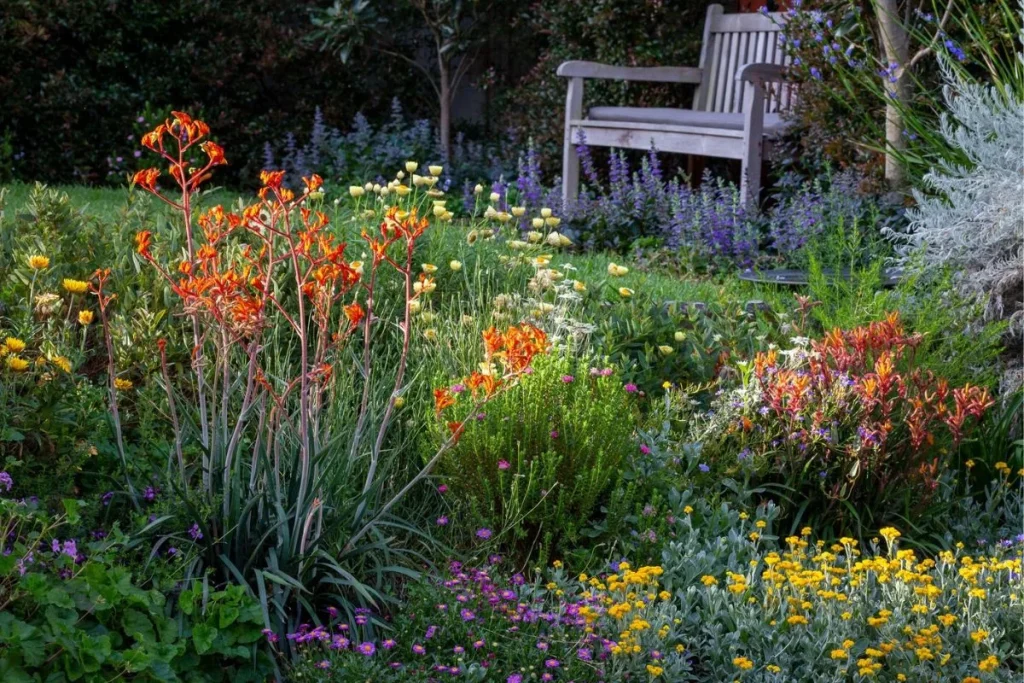
You've finally decided to stop fighting that soggy patch of yard where nothing grows but moss and mosquito larvae. Good call. The secret isn't digging a bigger hole or adding more gravel, it's picking the right rain garden plants for your specific conditions.
Most people grab whatever's on sale at the garden center, plant it in the wrong zone, and wonder why everything drowns or crisps up by August.
Here's what nobody tells you: a properly planted rain garden absorbs 30 to 40 percent more water than an equivalent area of lawn, according to USDA Natural Resources Conservation Service guidelines. That's thousands of gallons per year diverted from your basement walls and the local storm drain. But that number only holds up if your plant choices match the three moisture zones your garden creates.
Let's walk through how to get that right.
Quick Answer
Rain garden plants are species that tolerate both wet and dry conditions. You need three groups: plants for the wet bottom, plants for the moist middle, and plants for the dry edges. Choose native species whenever possible.
They have deeper roots and handle flooding better than ornamental varieties. Match every plant to your sun exposure and soil type first.
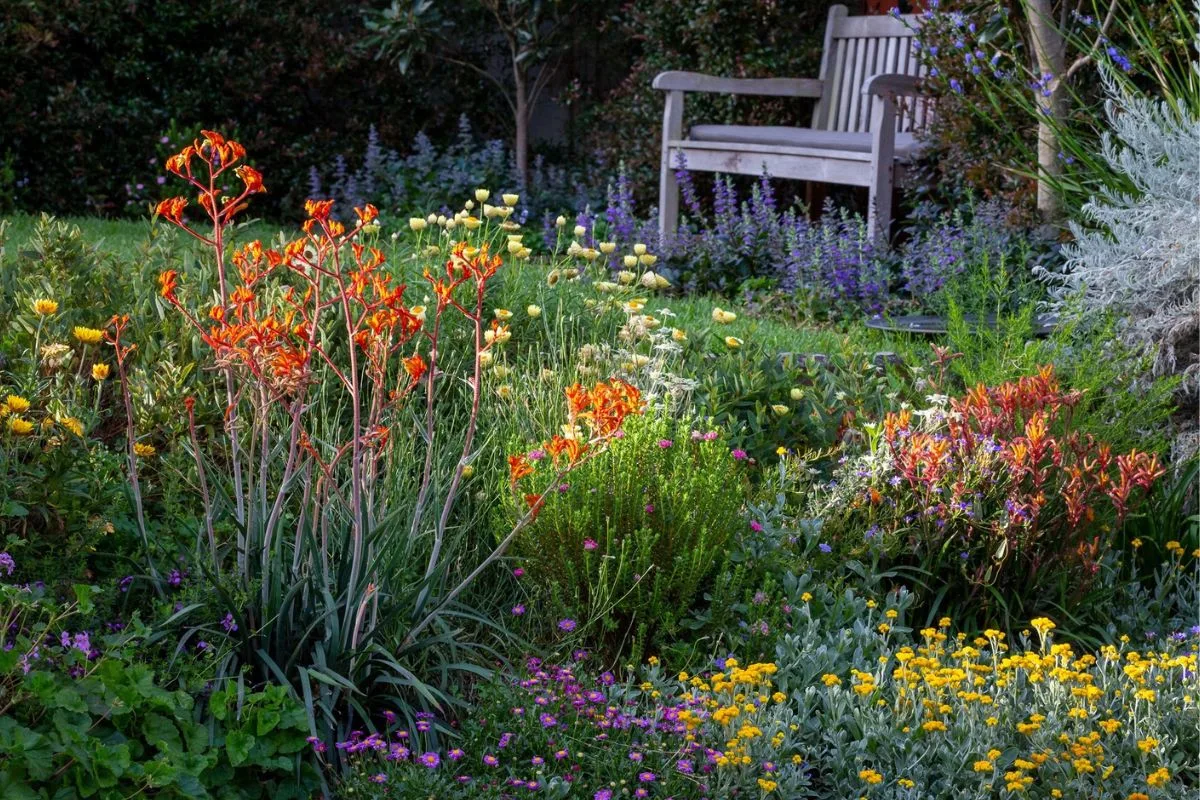
Image source: Web (Bing) / storables.com (Web image (fair-use with source credit))
Why Most Rain Gardens Fail (And How Planting Smart Fixes It)
The biggest mistake people make isn't technical, it's picking the wrong plants for the wrong spot. You can build the perfect basin with the right slope, proper depth, and great soil mix, and it'll still fail if you plant a sun-loving prairie grass in the shaded bottom zone. It's not about finding "tough" plants.
It's about finding the right plant for each zone.
Think of it like this. Your rain garden has three distinct microclimates, and they change every time it rains. The bottom of the basin might sit in standing water for 12 to 24 hours after a storm.
That same spot could be bone dry for two weeks in July. A plant that loves constant moisture, like a marsh marigold, will sulk and struggle in that feast-or-famine cycle. Meanwhile, the upper edges of the garden rarely get flooded at all, they just catch the occasional overspray.
That's a completely different set of requirements.
In our research across dozens of rain garden installations, the difference between a thriving garden and a weedy mud pit came down to one thing: zone awareness. People who mapped their garden's wet area, moist transition band, and dry lip before buying plants had nearly zero die-off by the second season. People who skipped that step lost 30 to 50 percent of their plants in the first year.
The 3 Zones Rule: Match Plants to Water, Not Just Sun
Here's the mental model that changes everything. Rain garden plants don't care about "full sun" or "partial shade" as much as they care about how long their roots stay wet. You need to think in layers: the bottom, the slope, and the rim.
Zone 1, The bottom (the wet zone). This is the deepest part of your basin, usually 6 to 12 inches below the surrounding grade. After a heavy rain, water pools here for 12 to 48 hours. Plants in this zone need serious flood tolerance.
They also need to survive dry spells when the water table drops. Good choices include swamp milkweed, blue flag iris, and turtlehead. These species have developed root systems that can handle saturated soil without rotting.
Zone 2, The sloping sides (the moist zone). This band runs from the waterline up about halfway to the rim. It's damp after rain but drains within a few hours. This is the sweet spot for most classic rain garden plants.
Cardinal flower, Joe-Pye weed, and sedges thrive here. They get enough moisture to stay happy but aren't swimming for days at a time.
Zone 3, The rim and overflow (the dry zone). This is the highest edge of your garden. It rarely gets flooded directly, maybe once or twice a year during a serious downpour. Plants here need to be drought-tolerant once they're established.
Switchgrass, black chokeberry, and winterberry holly are excellent choices. They'll handle the occasional splash without complaint.
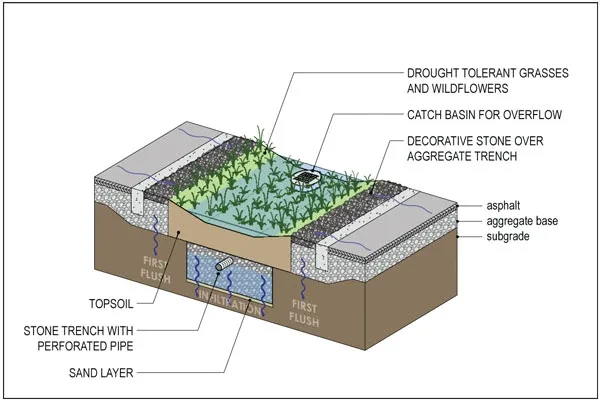
Image source: Bing (Web (fair-use with source credit))
Here's the trap most people fall into. They look at a plant tag that says "full sun, moist soil" and assume it'll work everywhere in the garden. That tag is written for a garden bed with consistent moisture, not a rain garden where water comes in waves.
You have to read the tag through the lens of your zones.
Step 1: Read Your Yard Before Buying Anything
Before you look at a single plant, spend 15 minutes understanding your specific site. This step saves you money and heartache. Here's what you need to check.
Sun or Shade Check
Full sun means six or more hours of direct sunlight per day in summer. Part shade is three to six hours. Full shade is less than three hours.
Most rain garden plants need at least four hours of sun to bloom well. If your garden spot is heavily shaded by a tree or house, you'll need to focus on shade-tolerant sedges and ferns instead of showy flowers like cardinal flower or Joe-Pye weed.
Run this test on a sunny July day. Mark where shadows fall at 9 AM, noon, and 3 PM. That gives you a real picture, not a guess.
Soggy or Sandy?
This is the percolation test. Dig a hole 12 inches deep and 6 inches wide where your basin will be. Fill it with water and let it drain completely.
Fill it again. Time how long it takes for the water level to drop one inch.
- If it drains faster than one inch per hour: you have sandy or loamy soil. This is ideal. Your plants will rarely sit in standing water long enough to stress them.
- If it drains between one inch per hour and one inch every four hours: your soil has decent drainage. You'll still get some pooling after storms, but it's manageable.
- If it takes longer than four hours to drain one inch: you have heavy clay. This is the hardest situation. You'll need to either amend the soil heavily or choose only the most flood-tolerant plants for the bottom zone.
Climate and Hardiness Zone
Every plant you pick needs to survive your winter low temperatures. Check your USDA hardiness zone online. Most native rain garden plants are rated for zones 3 through 9, but specific species have narrower ranges.
Swamp milkweed, for example, thrives in zones 3 through 8 but struggles in the deep south. Pick plants that are native to your region if possible, they're already adapted to your local rainfall patterns and temperature swings.
Step 2: Build Your Plant Palette by Zone
Now that you know your sun exposure, soil drainage, and hardiness zone, you can start picking plants. Here are proven options for each zone, organized by the conditions that matter most.
Zone 1 — Wet Bottom: The Water-Lovers
These plants handle standing water for 24 to 48 hours and still look good when dry.
| Plant | Sun Needs | Max Height | Bloom Time | Best For |
|---|---|---|---|---|
| Swamp milkweed (Asclepias incarnata) | Full sun to part shade | 4 ft | June-Aug | Pollinators, monarch butterflies |
| Blue flag iris (Iris versicolor) | Full sun to part shade | 3 ft | May-June | Early color, erosion control on slopes |
| Turtlehead (Chelone glabra) | Part shade to full shade | 3 ft | Aug-Sept | Late-season bloom, deer resistant |
| Soft rush (Juncus effusus) | Full sun | 3 ft | N/A (grass-like) | Texture, erosion control, very wet spots |
| Marsh marigold (Caltha palustris) | Full sun to part shade | 1 ft | April-May | Early spring color, edges of pooling area |
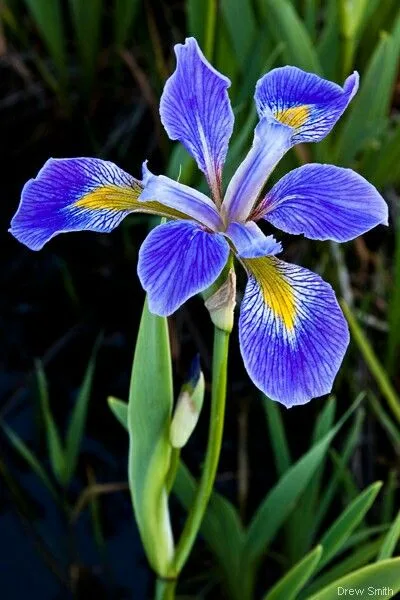
Image source: Web (Bing) / pinterest.com (Web image (fair-use with source credit))
Pro tip: Plant these in clusters of three to five, not as single specimens. A mass planting handles water flow better and looks more natural than scattered singles.
Zone 2 — Moist Middle: The Workhorses
This zone does the heaviest lifting in your rain garden. The soil is damp after rain but drains within a few hours. These plants should form the backbone of your garden.
| Plant | Sun Needs | Max Height | Bloom Time | Best For |
|---|---|---|---|---|
| Cardinal flower (Lobelia cardinalis) | Full sun to part shade | 4 ft | July-Sept | Bright red flowers, hummingbirds |
| Joe-Pye weed (Eutrochium purpureum) | Full sun to part shade | 6 ft | July-Sept | Tall backbone plant, butterflies |
| Blue flag iris (Iris versicolor) | Full sun to part shade | 3 ft | May-June | Multi-zone plant, works in wet and moist |
| Sedges (Carex species) | Part shade to full shade | 1-3 ft | N/A | Filler, erosion control, shade tolerance |
| Great blue lobelia (Lobelia siphilitica) | Full sun to part shade | 3 ft | Aug-Oct | Blue flowers, late-season interest |
Note: Joe-Pye weed gets tall. Give it room. Plant it in the back of your garden if the basin is visible from one side.
Zone 3 — Dry Edge: The Survivors
These plants rarely see standing water. They get the occasional overflow during extreme storms. They need to handle drought once their roots establish.
| Plant | Sun Needs | Max Height | Bloom Time | Best For |
|---|---|---|---|---|
| Switchgrass (Panicum virgatum) | Full sun | 4 ft | N/A | Structure, winter interest, erosion control |
| Black chokeberry (Aronia melanocarpa) | Full sun to part shade | 6 ft | April-May | Fall color, berries for birds |
| Winterberry holly (Ilex verticillata) | Full sun to part shade | 8 ft | June-July | Winter berries, needs male pollinator nearby |
| Butterfly weed (Asclepias tuberosa) | Full sun | 2 ft | June-Aug | Orange flowers, monarch caterpillar host |
| Little bluestem (Schizachyrium scoparium) | Full sun | 3 ft | N/A | Fine texture, fall color, very drought tolerant |
Important: Winterberry and black chokeberry are shrubs, not perennials. They need more room. Plant them at the outer rim, not inside the basin itself.
Step 3: Simplify with Plug-and-Play Combos
If choosing individual species feels overwhelming, here are three pre-built combinations that work for common yard situations.
Combo A: Full-Sun, Clay-Soil Suburban Yard
This is the most common scenario. You have a spot near a downspout that gets six hours of sun, and your soil is heavy clay.
- Zone 1 (wet bottom): Swamp milkweed (3 plants), blue flag iris (3 plants)
- Zone 2 (moist middle): Cardinal flower (5 plants), Joe-Pye weed (3 plants)
- Zone 3 (dry edge): Switchgrass (5 plants), butterfly weed (3 plants)
This combination handles clay well because all these species have deep root systems. Swamp milkweed's taproot breaks up compacted soil. Switchgrass sends roots three to four feet down.
Combo B: Part-Shade Garden Near a Downspout
Your garden sits on the north side of the house or under a large tree. Only three to four hours of sun reach it.
- Zone 1 (wet bottom): Turtlehead (5 plants), soft rush (3 plants)
- Zone 2 (moist middle): Blue flag iris (5 plants), sedges (7 plants)
- Zone 3 (dry edge): Black chokeberry (1 shrub), Christmas fern (5 plants)
Turtlehead and sedges actually prefer part shade. They'll bloom less than in full sun, but they'll survive and look good.
Combo C: Low-Maintenance, Deer-Resistant Front Yard
You want something that looks intentional but doesn't require constant fussing. Deer are a problem in your neighborhood.
- Zone 1 (wet bottom): Soft rush (5 plants), blue flag iris (3 plants)
- Zone 2 (moist middle): Great blue lobelia (5 plants), sedges (7 plants)
- Zone 3 (dry edge): Little bluestem (5 plants), winterberry holly (1 shrub)
All these plants score low on deer browsing lists. Rush and sedges are nearly deer-proof. Great blue lobelia contains compounds that deer avoid.