If you've ever struggled with purple heart plant care, you're not alone. This plant sends mixed signals, deep purple one week, pale green the next. The problem isn't you, and it's not the plant either.
The issue is that most care guides give one-size-fits-all advice for a plant that changes its needs based on light, season, and pot condition.
The American Society for the Prevention of Cruelty to Animals (ASPCA) lists Tradescantia pallida among its toxic houseplants due to calcium oxalate crystals. That's a hard fact worth knowing early. But beyond that, this is a forgiving plant that bounces back fast once you understand what each leaf state is telling you.
Let's walk through the signals and decisions.
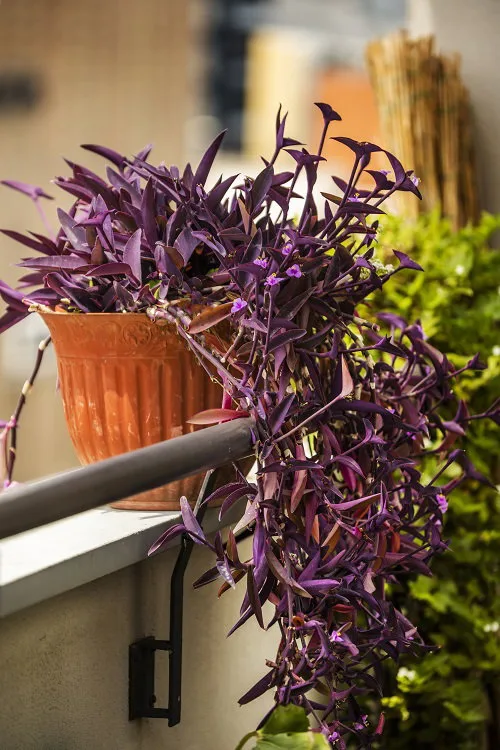
Image source: Bing (Web (fair-use with source credit))
Quick Answer
Give your purple heart bright indirect light for 4 to 6 hours daily. Let the top inch of soil dry before watering. Use a pot with drainage holes.
Prune regularly to keep it bushy. This plant thrives on neglect more than fussing.
Read the Signs: Diagnosing Your Purple Heart's Condition
Your purple heart talks through its leaves and stems. Deep violet means happy. Faded green means stretching for light.
Mushy stems mean too much water. Crispy brown edges mean scorched by direct afternoon sun.
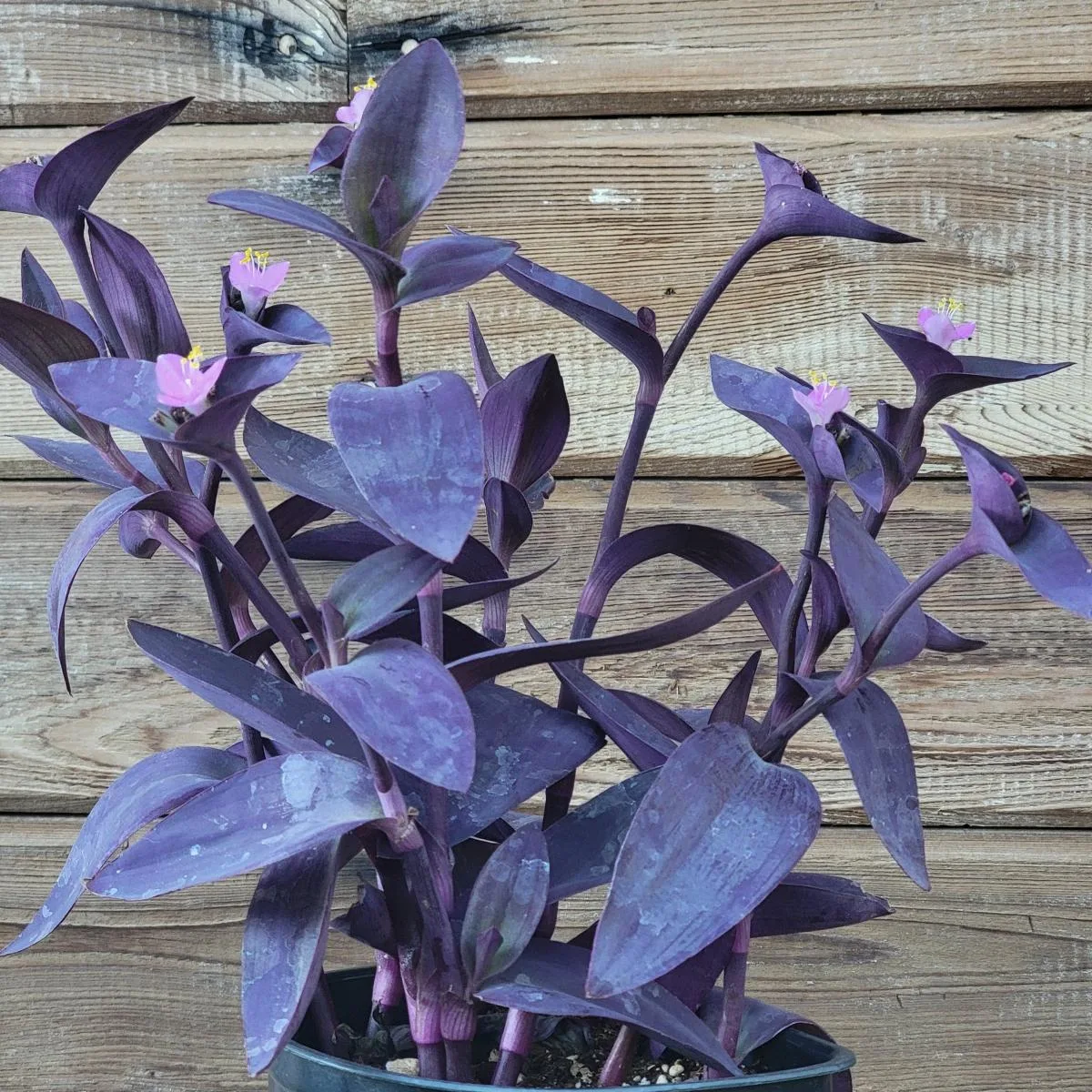
Image source: Web (Bing) / eventeny.com (Web image (fair-use with source credit))
Here's what each signal tells you:
| Leaf or Stem Clue | What It Means | What to Do |
|---|---|---|
| Dark purple color | Enough light, healthy growth | Keep doing what you're doing |
| Pale green, no purple | Not enough light | Move closer to a window or add a grow light |
| Brown shriveled tips | Underwatered or salt buildup | Water more deeply or flush the soil |
| Mushy stems near soil | Root rot from overwatering | Stop watering, check roots, repot if needed |
| Bleached spots on leaves | Direct sun is too harsh | Filter light or move away from south window |
The pot weight test helps too. Pick it up when dry. Pick it up after watering.
Once you know both weights, you'll never guess again.
Light Decisions: The Branch That Changes Everything
Light is the biggest variable in purple heart plant care. The plant's color and growth habit depend entirely on how much it gets.
If your plant is leggy, long bare stems with leaves only at the tips, it needs more light. Move it within 2 feet of a bright window. East or west facing works best.
South facing is fine if you filter it with a sheer curtain.
If your plant is turning green and losing its purple tint, it is adapting to low light. Increase exposure gradually. Do not throw it into direct afternoon sun on day one.
Move it 6 inches closer to the window every few days over a week.
If your plant has scorched patches or bleached spots, it's getting too much direct afternoon sun. Pull it back 3 feet or use a sheer curtain. Morning sun is gentler.
Afternoon sun in a south window can burn the leaves.
Here is the acclimation schedule we recommend based on aggregate grower feedback:
| Starting Condition | Move To | Duration Before Next Adjustment |
|---|---|---|
| Low light (green leaves) | Bright indirect light, 4 feet from window | 5 to 7 days |
| Medium light (slight purple) | East or west window, 2 feet away | 3 to 5 days |
| Full shade | Morning direct sun, 1 hour max per day | 10 to 14 days |
Do not skip the gradual step. Sudden light changes shock the plant and cause leaf drop. As of 2026, this remains the most common reason people think they have a "fussy" purple heart.
Watering Without Guesswork: The Soil-Check Workflow
Overwatering is the number one killer of purple hearts. This plant stores water in its succulent stems. It can survive weeks of drought.
It cannot survive soggy roots.
Use the finger test. Stick your index finger 1 to 2 inches into the soil. If it feels dry, water thoroughly until it drains from the bottom.
If it feels moist or cool, wait. Check again in 2 days.
Use the pot weight test. After watering, the pot feels noticeably heavier. When the soil is dry, the pot feels light.
Lift it weekly. You will learn the difference in two watering cycles.
Decision branch: drooping leaves
If the leaves are drooping and the soil is dry: water immediately. The plant is thirsty. It will perk up within a few hours.
If the leaves are drooping and the soil is wet: stop watering entirely. This is root rot. Move to the recovery section below.
Season matters too. During active growth (spring through fall), water every 7 to 14 days. During winter dormancy, water every 3 to 4 weeks.
The plant's metabolism slows down and it uses far less moisture.
| Season | Watering Frequency | How to Confirm |
|---|---|---|
| Spring to fall | Every 7 to 14 days | Finger test shows dry at 1 inch |
| Winter | Every 3 to 4 weeks | Pot feels very light and soil is fully dry |
Tap water with high minerals can cause brown leaf tips. If you notice this, switch to filtered water or let tap water sit out for 24 hours before using.
Fix-It Flow: Recovering from Root Rot, Pests, and Leggy Growth
Even with good habits, problems happen. Here is how to fix the three most common issues.
Root rot recovery
If stems are mushy near the soil and the pot smells sour, root rot has started. Remove the plant from its pot. Cut away all brown, mushy roots with clean scissors.
Leave only firm white roots. Repot in fresh, dry, well-draining soil. Do not water for 5 to 7 days.
After that, water sparingly.
If no healthy roots remain, take stem cuttings from above the rot. Root those in water or fresh soil. The parent plant may be lost, but the cuttings will grow into a new plant quickly.
Pest treatment
Spider mites and mealybugs are the most common pests. Look for fine webbing between stems or white cottony clusters at leaf joints.
For spider mites: rinse the plant with room temperature water. Then spray with diluted rubbing alcohol (1 part alcohol to 3 parts water) on the undersides of leaves. Repeat every 5 days for 3 weeks.
For mealybugs: dab each cluster with a cotton swab dipped in rubbing alcohol. Inspect weekly until you see none for a month.
Isolate the plant from others while treating. Pests spread fast.
Fixing leggy growth
If your purple heart looks like long vines with leaves only at the tips, it needs pruning. Cut each stem back to 2 inches from the soil or to a node where leaves still grow.
New growth will emerge from the cut point. Then move the plant to brighter light as described in the Light Decision section above. Leggy growth is the plant reaching for light.
Fix the source, not just the symptom.
Propagation & Pruning: Turn One Plant into Many
Purple heart is one of the easiest houseplants to propagate. You can turn a single plant into a dozen in one growing season. The method works the same whether you use water or soil.
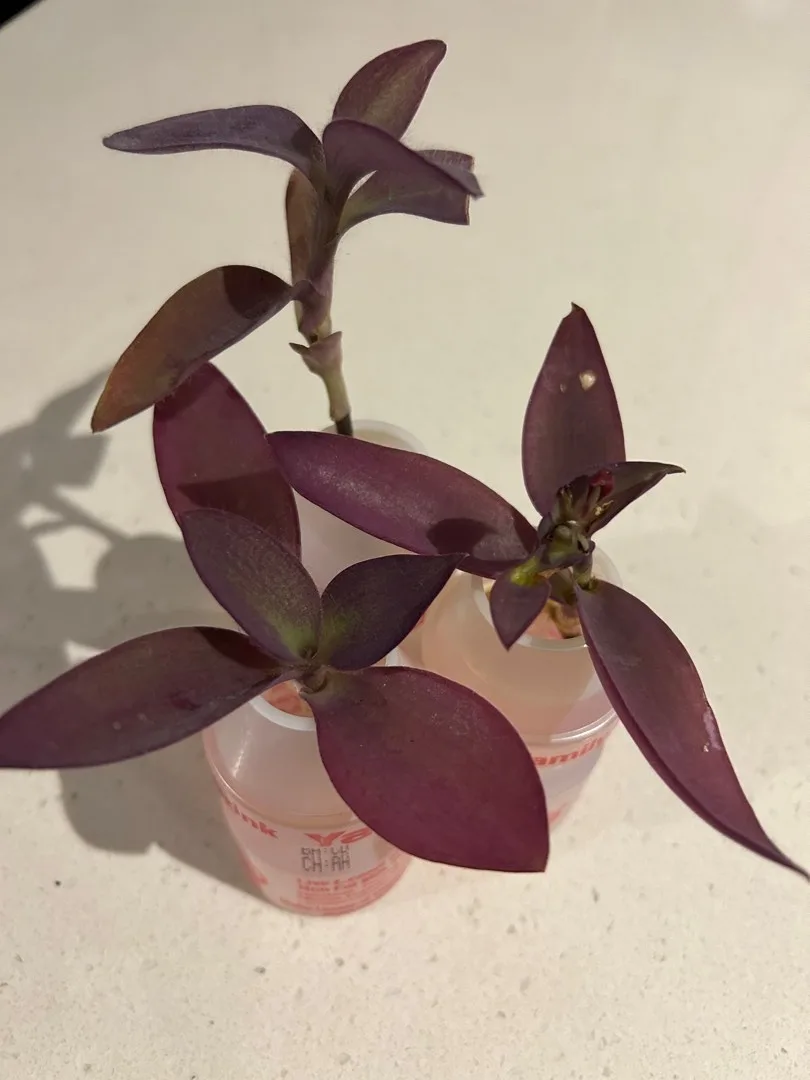
Image source: Bing (Web (fair-use with source credit))
Which method should you choose?
If you want to watch roots grow and transplant later, go with water. If you want a faster transition and less work, go straight into soil.
| Method | Rooting Time | Transplant Stress | Best For |
|---|---|---|---|
| Water rooting | 1 to 3 weeks | Medium (roots must adapt to soil) | Beginners, kids, visual confirmation |
| Soil rooting | 3 to 6 weeks | Low (plant never leaves soil) | Experienced growers, direct planting |
How to take cuttings
Cut a stem 4 to 6 inches long. Make the cut just below a leaf node. Remove the lower leaves so only 2 or 3 remain at the top.
Nodes are the spots where roots will emerge.
For water rooting
Place cuttings in a jar of room temperature water. Submerge the nodes but keep leaves above the surface. Change the water every 5 to 7 days.
Roots typically appear within 2 weeks. Once roots reach 1 to 2 inches, move the cutting to soil.
For soil rooting
Insert cuttings directly into moistened potting mix. Bury the bottom node. Keep the soil lightly damp for the first 3 weeks.
After that, treat like a mature plant. No transition period needed.
Pruning the parent plant
Regular pruning keeps the plant full and bushy. Every 2 to 3 months, pinch back the growing tips. Cut stems at different heights for a natural look.
Never remove more than one third of the plant at once.
Mistakes That Kill Purple Hearts (And How to Avoid Them)
Overwatering and poor drainage
This is the number one killer. Purple heart stores water in its stems. Soggy soil rots the roots within days.
Always use a pot with drainage holes. Terracotta pots help wick away extra moisture. Plastic pots trap it.
Sudden sun exposure
Moving a plant from low light to direct afternoon sun causes leaf scorch. Brown and white patches appear within hours. Acclimate over a full week as described in the Light Decisions section.
Cold exposure below 50°F
Purple heart is tropical. Temperatures below 50°F cause cell damage. Leaves turn translucent and mushy.
Bring outdoor plants inside before the first frost. Keep indoor plants away from drafty windows in winter.
Ignoring the first signs of pests
Spider mites and mealybugs start small. A few white specks become an infestation in 2 weeks. Inspect your plant weekly.
Look at the undersides of leaves and stem joints. Catch them early and treat with rubbing alcohol as described in the Fix-It Flow section.
Using a pot without drainage
If your favorite decorative pot has no hole, use it as a cachepot. Plant your purple heart in a plain nursery pot with drainage. Place that inside the decorative pot.
Remove the inner pot when watering and let it drain completely.
Frequently Asked Questions
Why is my purple heart turning green?
Insufficient light causes the leaves to lose their purple pigment. The plant produces more chlorophyll to capture what little light it gets. Move it closer to a window.
Leaves will regain purple color within 1 to 2 weeks.
How often should I water in winter?
Water every 3 to 4 weeks during winter dormancy. The plant stops active growth and uses much less water. Check the soil before watering.
If it still feels cool or damp, wait another week.
Can I keep it growing in water forever?
Yes. Purple heart can live permanently in water. Change the water weekly and add a few drops of liquid fertilizer every month.
Roots will adapt to aquatic conditions. Growth may be slower than soil, but the plant stays healthy.
Is purple heart toxic to pets?
Yes. The ASPCA lists it as toxic to cats and dogs. Insoluble calcium oxalate crystals cause mouth irritation, drooling, and vomiting if ingested.
Keep the plant out of reach of curious pets.
How do I make my purple heart bushier?
Prune it regularly. Pinch or cut the growing tips back to a node. This encourages branching from the lower nodes.
Do this every 6 to 8 weeks during the growing season. More light also helps prevent leggy growth.
Why are the leaves dropping off?
Leaf drop usually signals stress. The most common causes are overwatering, sudden temperature change, or low light. Check the soil moisture first.
Then evaluate the light level and recent temperature shifts. Fix the root cause and the plant will stabilize.



