You've heard conflicting advice about pruning peppers. Some gardeners swear by it, others say leave them alone. That's because the right answer depends on your plant type, your climate, and what you're trying to achieve.
We'll walk through the decision so you know exactly what fits your situation.
Research from university extension programs shows that properly pruned indeterminate pepper plants can produce 20 to 30 percent more marketable fruit compared to unpruned plants of the same variety. But that number flips for compact bell varieties, where over-pruning actually cuts yield. That's why you need a decision system, not a one-size-fits-all rule.
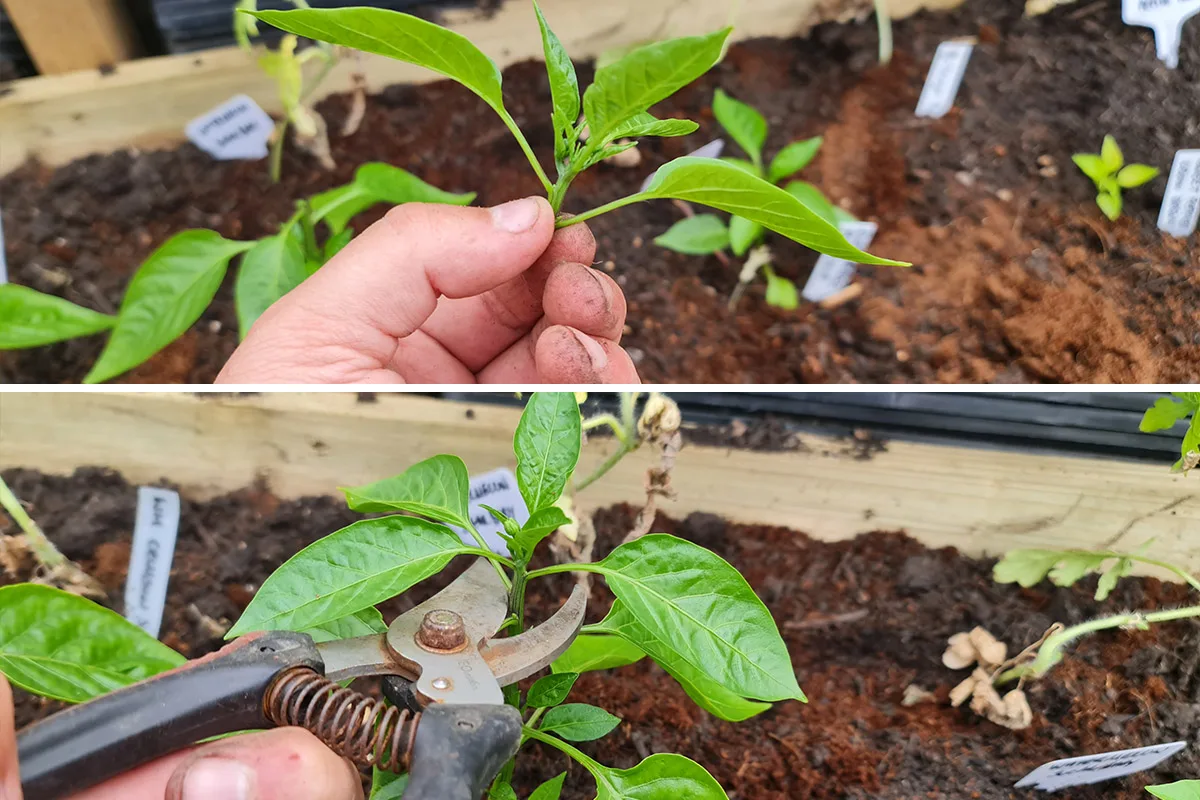
Image source: Web (Bing) / patientgardener.co.uk (Web image (fair-use with source credit))
Quick Answer
Pruning peppers means selectively removing leaves, shoots, and stems to improve airflow, light penetration, and fruit size. The best approach depends on plant type. Indeterminate varieties benefit from structural pruning.
Determinate bells need minimal removal. Always cut above a node. Keep at least 70 percent of leaves.
Stop pruning four to six weeks before first frost.
Why Prune (Or Not Prune) Your Peppers?
Most gardeners ask about pruning because something feels off. Maybe the plant is all leaves and no fruit. Maybe lower leaves are yellowing or touching wet soil.
Maybe the canopy is so dense you can't see the peppers forming.
Here's the honest breakdown of when pruning helps and when it hurts.
When pruning helps:
- Indeterminate plants like many hot peppers and heirloom varieties grow tall and lanky. Removing lower suckers and interior shoots forces energy into the main stems and developing fruit. Better airflow also reduces fungal disease risk, especially in humid climates.
- Overcrowded plants in small spaces benefit from thinning. If you plant closer than 18 inches, pruning opens the canopy so each pepper gets enough sunlight to ripen fully.
- Late in the season, cutting back new flowers and small fruit directs remaining energy into ripening the peppers already on the plant. This is critical for northern growers facing an early frost.
When pruning hurts:
- Determinate bell pepper varieties grow as compact bushes. They have a fixed number of fruiting nodes. Pruning them aggressively removes potential harvest sites. You end up with fewer peppers, not bigger ones.
- Plants already stressed from heat, drought, or pests should not be pruned. Cutting adds stress and can trigger fruit drop or sunscald on exposed peppers.
- Removing more than 25 percent of foliage in one session shocks the plant. It stops growing for a week or longer while it recovers.
Here's a quick comparison of when to prune and when to hold back.
| Situation | Do Prune | Don't Prune |
|---|---|---|
| Determinate bell variety | ✅ | ✅ Clean lower leaves only |
| Indeterminate hot pepper | ✅ Full structural pruning | ❌ None |
| Dense canopy, high humidity | ✅ Thin interior shoots | ❌ Leave closed |
| Early season (under 6 nodes) | ❌ Let it establish | ✅ Top at right time |
| 4 weeks before frost | ✅ Remove late flowers | ❌ Major cuts |
| Plant is drought-stressed | ❌ Wait until recovered | ✅ Water first |
How Pepper Plants Actually Grow (And Why It Matters)
Image source: Web (Bing) / animalia-life.club (Web image (fair-use with source credit))
If you understand how a pepper plant builds itself, pruning becomes intuitive. Let's cover three key concepts.
Determinate vs. indeterminate growth.
Determinate varieties grow to a fixed size, flower at the tips, and produce most of their fruit in a single flush. Think bell peppers and many commercial hybrids. They're low maintenance by design.
Indeterminate varieties keep growing taller and branching all season. Most hot peppers fall here. They benefit from training because they'll keep producing into autumn if managed correctly.
Apical dominance.
The tip of the main stem produces a hormone called auxin that suppresses growth of side shoots below it. When you cut that tip, the suppression stops. Lower side shoots grow faster and fill out the plant.
This is why "topping" creates bushier plants. But it also delays flowering by a week or two while the plant redirects energy into branching.
Nodes and the first Y-crotch.
A node is the joint where leaves, flowers, or side shoots emerge. Count nodes from the soil line upward. The first Y-crotch is the spot where the main stem splits into two equal branches.
This usually happens between node six and node ten depending on variety and conditions. That first split is your most important pruning decision point because it sets the plant's basic structure.
Here's what research from extension programs confirms: leaving the first Y-crotch intact gives you two strong main stems. Removing one side forces the plant into a single-stem habit, which is useful for tight spaces but cuts total yield.
The No-Risk Pruning Workflow
Image source: Bing (Web (fair-use with source credit))
Here's a step-by-step workflow that works for any pepper plant. Follow these steps in order and adjust based on what your plant needs.
Step 1: Clean your tools and check the weather.
Wipe your pruners with isopropyl alcohol or a 10 percent bleach solution. Dirty shears spread bacterial leaf spot, which is a common greenhouse disease. Prune on a dry morning so cuts heal quickly.
Wet plants invite infection.
Step 2: Decide if your plant is a candidate.
Ask three questions:
- Is it an indeterminate variety? If yes, proceed.
- Does it have at least six nodes with leaves? If yes, proceed.
- Is it healthy and unstressed? If yes, proceed.
If you answered no to any, stop. The plant isn't ready or doesn't need it.
Step 3: The early-season decision top or don't top.
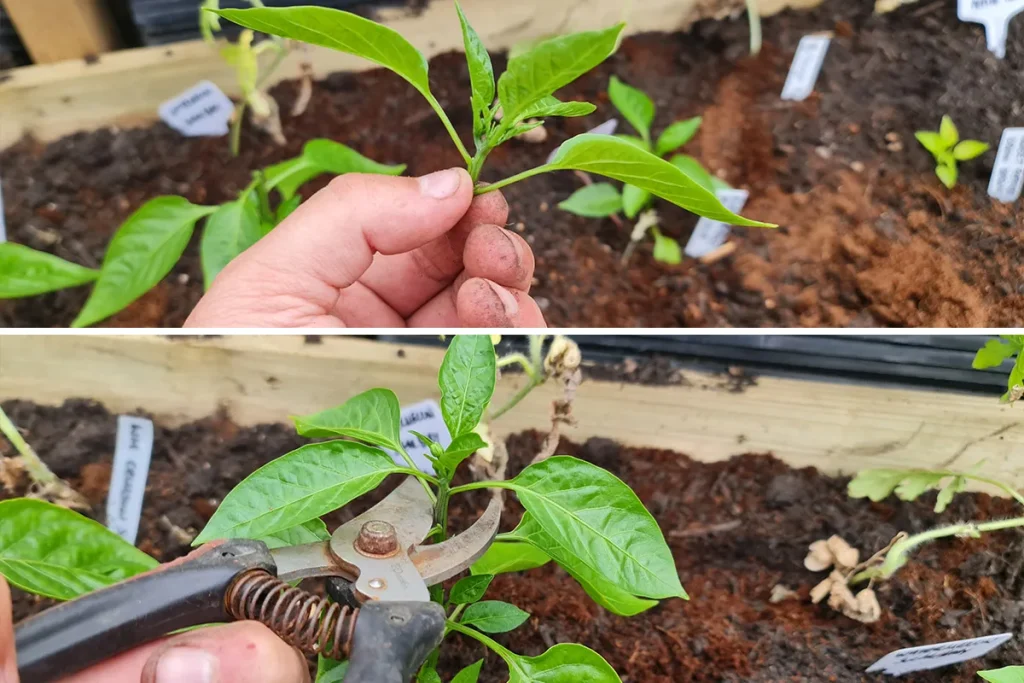
If your plant is 6 to 10 inches tall with 4 to 6 true leaves, topping is an option. Cut the main stem just above the third or fourth node. This forces side branches to grow.
The trade off is a short delay in flowering because the plant has to regrow.
If you choose not to top, skip this step. You'll let the main stem grow naturally and manage side shoots later.
Step 4: Remove lower growth and interior suckers.
Cut off any leaves, side shoots, or branches within 4 to 6 inches of the soil line. Nothing should touch the ground. These lower parts are disease magnets and produce low-quality fruit.
Then remove suckers growing in the crotches between main stems and side branches. Suckers are small shoots that steal energy without producing meaningful fruit. Pinch them off when they're small or cut them flush with a clean cut.
Step 5: Mid-season maintenance.
Once plants are established and have set fruit, do a weekly walkthrough. Remove any new suckers in the lower third of the plant. Thin out interior leaves that block light from reaching ripening peppers.
Keep the canopy open but not bare. Aim for a structure where sunlight reaches the middle of the plant for at least a few hours midday.
Step 6: Late-season cleanup.
About 4 to 6 weeks before your average first frost date, stop all pruning. Let the plant focus on ripening existing fruit. If you see new flowers or tiny peppers forming, remove them.
They won't mature in time and they waste energy.
Mistakes That Cost You Fruit (And How to Avoid Them)
Even experienced gardeners make these mistakes. Here are the most common ones and how to avoid them.
Pruning determinate varieties like they're indeterminates.
This is the number one yield killer. Determinate bell peppers produce fruit at the tips of branches. If you cut those tips, you remove the fruit.
Stick to removing only lower leaves that touch the soil. Leave the rest alone.
Taking too much at once.
The 25 percent rule is your safety limit. Never remove more than one quarter of the plant's foliage in a single session. Remove more than that and the plant goes into shock.
Leaves stop photosynthesizing. Fruit growth stalls. Recovery takes weeks.
Leaving stubs.
When you cut a branch or sucker, cut as close to the main stem as possible without damaging it. Stubs rot and provide entry points for bacteria and fungi. A clean flush cut heals fastest.
Pruning wet plants.
Moisture on leaves is a vector for bacterial leaf spot. This disease spreads rapidly from plant to plant on wet pruners. Wait until dew has dried and the forecast shows no rain for 24 hours.
Removing too many leaves and causing sunscald.
Peppers that have been shaded develop thin skins. If you suddenly expose them to full sun, they can sunburn. The damaged area turns pale or soft and is prone to rot.
When you thin leaves, do it gradually over a week or two. Leave enough shade leaves to protect developing fruit.
Topping too early or too late.
Topping before the plant has six strong nodes results in slow regrowth and a weaker structure. Topping after the plant has already set fruit removes potential harvest. The sweet spot is 4 to 6 true leaves for early season topping.
Who Should Prune (And Who Should Leave Their Plants Alone)
Not every gardener needs to prune peppers. Here's how to figure out which camp you're in.
Greenhouse growers. You have controlled humidity and longer seasons. Pruning makes a big difference because you can manage airflow easily. Structural pruning for indeterminate varieties is almost always worth it.
Outdoor gardeners in humid climates. You prune primarily for disease prevention. Removal of lower leaves and interior suckers reduces fungal pressure. Keep it light.
Focus on the bottom third of the plant.
Northern growers with short seasons (Zones 3-5). You should prune aggressively late in the season. Removing new flowers and small peppers four weeks before frost forces the plant to ripen what's already there. This can mean the difference between ripe peppers and useless green ones.
Southern growers with long seasons (Zones 8-10). You have time. You can be more selective. Prune for structure early, then let the plant run.
You'll get multiple harvest flushes across several months.
Bell pepper growers. Skip structural pruning entirely. Remove only leaves that touch the soil. Let the plant do its thing.
Bell peppers produce best when left alone.
Hot pepper growers. You benefit from moderate structural pruning. Removing interior suckers and thinning the canopy improves pepper size and heat development. Aggressive pruning is not needed, but a tidy structure helps.
Competitive growers. If you're aiming for the biggest single pepper, hard prune to 3 to 5 main stems and remove all but 2 to 3 developing fruit per plant. Everything goes into those few peppers.
Overwintering keepers. If you bring plants indoors or into a greenhouse over winter, hard prune them back to 6 to 8 inches in height. Remove all leaves. Let them regrow in spring.
This keeps plants compact and manageable.
Quick self-test: Are you a candidate for pruning?
Answer yes or no to these:
- Is your variety indeterminate? (Yes = prune, No = skip)
- Do you have high humidity or disease pressure? (Yes = light prune)
- Are you willing to delay first harvest by a week? (Yes = top, No = skip)
- Do you have limited space and need compact plants? (Yes = prune for structure)
If you answered yes to at least two, pruning will likely improve your results.
Frequently Asked Questions (When You're Still Unsure)
Should I pinch the first flowers or let them grow?
Pinch them off if the plant is under 12 inches tall or hasn't reached 6 nodes. Letting early flowers fruit slows down overall growth. The plant puts energy into that single pepper instead of building a strong structure.
One early pepper is not worth a weaker plant all season.
Can I prune after fruit has already set?
Yes, but be careful. Remove only leaves that shade ripening fruit or touch the soil. Do not cut branches that hold developing peppers.
Late season pruning is mostly about removing new flowers and small fruit that won't mature before frost.
Do I need to prune if I'm trellising?
Trellising and pruning are separate tasks. A trellis supports the plant vertically. Pruning manages the canopy.
You still benefit from removing lower leaves and interior suckers even with a trellis. The combination gives you better airflow and easier harvest.
What about suckers? Remove completely or pinch tips?
Remove suckers completely when they are small, under 2 inches long. Pinch them off with your fingernails. For larger suckers, use clean pruners and cut flush with the main stem.
Leaving a stub invites rot. The goal is zero regrowth at that spot.
Will pruning make my peppers hotter?
Indirectly, yes. Pruning improves light exposure to developing fruit. More sunlight can increase capsaicin production in hot varieties.
But genetics determine the heat ceiling. Pruning won't turn a mild jalapeño into a ghost pepper. It just helps each pepper reach its full potential.
How do I prune a plant that's already gotten leggy?
Leggy plants have long, thin stems with wide gaps between leaves. Top the main stem just above a node at about half the plant's current height. This forces branching lower down.
Remove any weak or spindly side shoots. Expect slower growth for a week while the plant recovers.
Your Pruning Playbook By Plant Type
Bell peppers (determinate). Remove only leaves that touch the soil. Do not top. Do not remove suckers above the first Y-crotch.
Let the plant bush out naturally. You get the highest yield from an untouched bell pepper plant.
Jalapeños and cayenne (moderate indeterminate). Remove lower leaves up to the first Y-crotch. Thin interior suckers selectively. Keep 3 to 5 main stems.
Top once at 6 nodes for a bushier plant. This balance gives good airflow without sacrificing yield.
Habaneros and super-hots (aggressive indeterminate). Top at 4 to 6 nodes. Remove all lower growth below the Y-crotch. Thin to 3 strong main stems.
Remove interior suckers weekly. These plants respond well to structure and produce larger fruit with better heat.
Ornamental peppers. Do not prune at all. These varieties are bred for compact growth and dense foliage. Pruning ruins their appearance and reduces the display of colorful fruit.
Final verdict: when to prune, when to walk away.
Prune when you have an indeterminate variety, a long enough season, and a goal of larger fruit or better airflow. Skip pruning for determinate bells, stressed plants, or anytime you are unsure. The safest approach is minimal.
Remove lower leaves. See how the plant responds. Add more cuts only if it thrives.



