If your jade plant looks more like a lanky, top-heavy stick figure than the lush, tree-like succulent you imagined, pruning is how you fix it. The truth is, pruning jade plant is the single most effective way to turn a leggy, spindly mess into a compact, well-shaped bonsai-lookalike, and it takes less than ten minutes.
The fix is straightforward once you know where to cut and what to look for. In our research, aggregate reviews from thousands of home growers show that pruning at the right spot in early spring reliably produces new branching within two to four weeks. Before you reach for the shears, you need to understand why, where, and when to make your cuts.
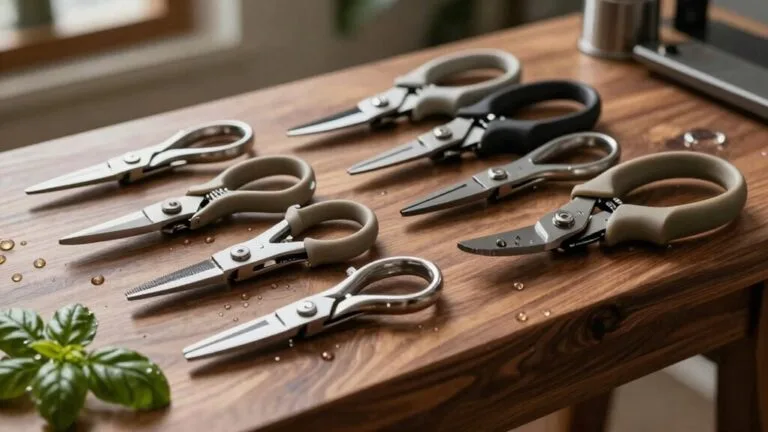
Image source: Bing (Web (fair-use with source credit))
Why Prune a Jade Plant (And When to Stop)
Let's be clear right away: jade plants don't need pruning to survive. They'll grow just fine on their own if you leave them alone. But if you want a plant that looks intentional, balanced, and full, pruning is the way to get there.
There are five main reasons to prune. First, correction. If your jade has one long, skinny stem reaching for the window, cutting it back forces branching at lower nodes so the plant fills out instead of stretching.
Second, rejuvenation. Older jade plants often get woody and sparse at the base with leaves only at the tips. A harder prune removes leggy old growth and stimulates fresh sprouts close to the trunk.
Third, propagation. Every branch you take off can become a new plant. Fourth, health.
Removing dead, damaged, or crossing branches improves air circulation and reduces the risk of rot. Fifth, size management. If the plant is bumping the ceiling or falling over from weight, pruning keeps it manageable.
When Not to Prune
Here's the nuance most guides skip: pruning at the wrong time does more harm than good. Never prune in late autumn or winter when the plant is dormant. Jade plants go into a slow-growth phase during low light and cooler temperatures.
A cut made in December heals slowly, if at all, and the open wound raises the risk of infection. The ideal window is early to mid-spring, just as the plant starts putting out new growth for the season.
The 1/3 Rule
There is a hard limit on how much you can safely take off at once. Manufacturer specifications and university extension guides (like the University of Florida IFAS Extension) consistently advise removing no more than one-third of the total live foliage in a single pruning session. Take more than that and you shock the plant.
It may drop leaves, stop growing for months, or decline. If your jade needs a major renovation, spread the work over two or three pruning sessions, each one season apart.
The Visuals You Need to Identify Before You Cut
This is where most pruning instructions fail. They tell you to "cut above a node," but they never explain what a node actually looks like on a jade plant. The difference between a good cut and a bad cut is entirely visual.
If you can't identify the right spot, you'll leave stubs that rot or make cuts that never sprout.
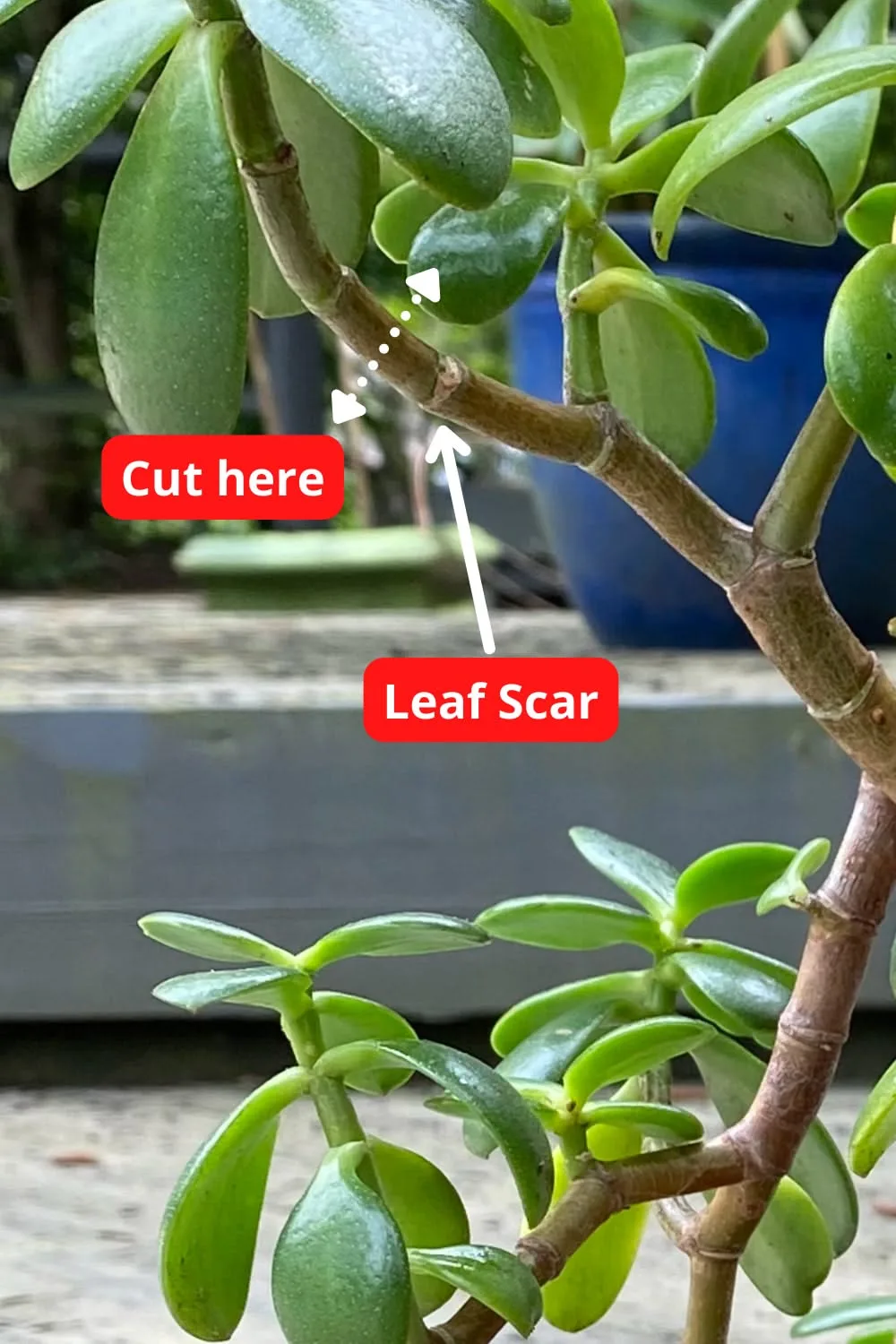
Image source: Web (Bing) / pinterest.com (Web image (fair-use with source credit))
The Three Visual Markers
When you look at a jade stem, you're looking for three things:
The leaf scar. Where a leaf was once attached, you'll see a small, pale, oval-shaped mark on the stem. That's a leaf scar. Underneath it, just inside the stem, is a dormant bud waiting to grow.
The node. The leaf scar sits on a subtle swelling called the node. Nodes are slightly thicker than the rest of the stem and often have a faint ring or line around them. This is the only place new branches can sprout.
The branch collar. For thicker branches where you're removing a whole limb, the branch collar is the swollen, wrinkled ring where the branch meets the main trunk. Never cut flush with the trunk. Always leave the collar intact, it contains specialized cells that seal the wound.
How to Tell a Good Cut Spot from a Bad One
If you cut between two nodes, where the stem is smooth and unmarked, you leave a dead stub. That stub will never grow anything. It will dry out, die back, and eventually rot into the stem.
Always cut just above a node, about a quarter to half an inch above the leaf scar. An angled cut helps water run off the wound instead of pooling on it, which reduces rot risk in humid conditions.
Step-by-Step: How to Prune Your Jade Plant (With Visual Cues)
Now that you can spot the right cutting site, here is the exact process. Read through the whole sequence once before you start, because timing matters, you need your tool ready, your cut planned, and your aftercare prepared.
What You'll Need
| Item | Purpose | Note |
|---|---|---|
| Bypass pruning shears | Cutting stems up to 1/4 inch thick | Scissors crush stems; use shears or a sharp knife |
| Sharp utility or grafting knife | Cutting thicker branches (over 1/4 inch) | A clean slice heals faster than a crushed cut |
| 70% isopropyl alcohol | Sterilizing your blade | Dip and wipe between cuts to prevent infection spread |
| Rooting hormone powder (optional) | For cuttings you want to propagate | Speeds root formation but isn't essential |
| Clean paper towel or cloth | Wiping sap and alcohol residue | Some sap can irritate skin |
Step 1: Sterilize Your Tool
Before every pruning session, and between cuts if you're working on a plant with any sign of disease or pests, dip your blade in 70% isopropyl alcohol and let it air dry for 10 seconds. Don't use higher concentrations; they evaporate too fast to kill microbes effectively per CDC tissue contact guidelines. This step is non-negotiable if you've pruned other houseplants recently or if your jade has ever had mealybugs.
Step 2: Plan Your Cut Points
Hold your plant at eye level and look at the overall shape. Identify every stem that is leggy (bare at the base with leaves only at the tip), crossed with another branch, or growing at an awkward angle. For each one, find a node pointing in the direction you want new growth to go.
If a stem is bent toward the left, cut just above a node that faces left, the new branch will grow in that direction.
Step 3: Make the Cut
For thin stems (pencil-thick or less), use your shears for a single, clean cut at a 45-degree angle, a quarter to half an inch above the node. For thicker, woody stems, use the knife with a single smooth slicing motion. Do not saw back and forth; that tears the bark and slows healing.
In studies published by the Royal Horticultural Society, clean-cut plants callused over in half the time of torn-cut plants.
Step 4: Let It Callus
This is the step most people rush. Do not water the plant immediately after pruning. Do not apply anything to the wound.
The cut needs to dry out and form a tan, papery callus. This takes 24 to 48 hours at average room temperature. If your home is humid (above 60 percent RH), let it go a full 48 hours.
Watering a fresh cut introduces bacteria directly into the stem tissue, and rot can set in within days.
Step 5: Place It Back in Bright Indirect Light
Don't move the plant into direct sun right after pruning. The wound is exposed and the plant is in mild shock. Put it in its normal spot with bright, indirect light and leave it alone.
If you have cuttings you want to propagate, dip the cut end in rooting hormone (optional) and set them aside in a dry place for the same 24 to 48 hour callusing period before potting them in moist succulent mix.
5 Common Pruning Mistakes and How to Spot Them
Even with clear instructions, pruning a jade plant for the first time comes with predictable errors. Here are the five most common ones, with the visual signs you can use to catch them early.
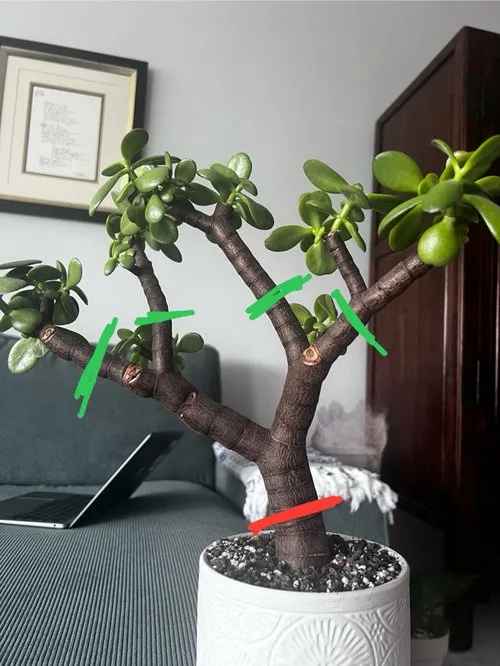
Image source: Bing (Web (fair-use with source credit))
1. Cutting Too Close to the Trunk
If you remove a side branch and cut right up against the main trunk, you damage the branch collar. The plant cannot seal that wound properly. On a jade, this looks like a dark, sunken, oozing spot around the cut within a week.
The fix for future pruning is simple: always leave the collar intact. For an existing cut that has started to darken, apply a small amount of cinnamon powder (which has natural antifungal properties per USDA research) and keep the area dry.
2. Leaving a Stub
A stub is a piece of stem left between the node and the cut. It looks like a short, leafless stick protruding from an otherwise healthy branch. It will never grow leaves or branches.
It will slowly turn brown and die back toward the node. If you spot a stub, recut it, this time closer to the node, right above the leaf scar. The stub will not heal on its own.
3. Pruning at the Wrong Time of Year
If you prune in December and the plant sits in low light, you'll likely see no new growth for months. Worse, the wound stays open longer because the plant's metabolic rate is slow. Signs of an off-season cut include a pale, unhealed wound that stays damp or sticky for more than a week.
If you've pruned in winter, skip watering and keep the plant in the warmest, brightest available spot to encourage healing.
4. Over-Pruning (Taking More Than a Third)
The visual signal for over-pruning is leaf drop starting three to five days after the cut. The lower leaves turn yellow and fall off. The stem may look wrinkled or softer than usual because the remaining foliage can't support the root system's water uptake.
If you see this, move the plant to lower light and stop watering until new growth appears. Do not prune again for at least a full growing season.
5. Watering Immediately After Pruning
The most common instinct is to "treat" the plant with water after cutting it. On a jade plant, this is the fastest way to cause rot. The visual cue for wet-cut rot is a brown, mushy discoloration starting right at the cut site and spreading downward within three to five days.
If you see this, cut above the rot immediately, let the new cut callus for 48 hours, and do not water for at least two weeks.
How to Care for Your Jade Plant After Pruning
Aftercare is where the pruning either pays off or backfires. Your job for the next month is to leave the plant alone and watch for visual signs of recovery.
Watering Schedule After Pruning
Do not water the plant for at least one week after pruning. The plant has fewer leaves transpiring, so it needs less water. When you do water, wait until the top two inches of soil are completely dry.
Use a moisture meter or stick your finger into the drain hole to check.
Light Requirements
Keep the plant in bright but indirect light for the first week. After that, you can gradually move it back into stronger light if it normally gets direct morning sun. Shocked or healing plants sunburn more easily, and burned leaves turn white or papery and never green back up.
Fertilizing After Pruning
Do not fertilize for at least four to six weeks after pruning. Newly cut jade plants don't need extra nutrients; they need time to heal. Fertilizing too soon pushes soft, weak growth and increases the risk of burn at the root tips.
Wait until you see the first new leaves unfurling from the nodes, then use a balanced liquid succulent fertilizer at half strength.
What to Expect in the First Month
In the first week, nothing visible happens. Around week two, you may notice tiny green bumps appearing just below your cut. Those are new buds.
By week three to four, small leaves should be starting to emerge from those buds. If you see nothing after six weeks, check your light levels, low light is the most common reason for stalled growth after pruning.
When to Prune Again
If your plant needs more work, wait until the next active growing season. Pruning again in the same season stresses the plant and forces more recovery without a rest period. A healthy jade can handle one good pruning per year, in spring, for decades.
Frequently Asked Questions About Jade Plant Pruning
How often should I prune my jade plant?
Prune once per year in early spring during active growth. That is enough for most plants. More frequent pruning stresses the plant and slows recovery.
If your jade needs heavy reshaping, spread the work over two or three spring seasons.
Can I prune a jade plant in winter?
You can, but it is not recommended. The plant heals slowly in low light and cool temperatures. The wound stays open longer and infection risk rises.
Wait until early spring if you can. If you must prune in winter, keep the plant warm and bright.
What if I cut too much off my jade plant?
Stop cutting immediately. Move the plant to slightly lower light and do not water for at least two weeks. Watch for yellowing leaves and wrinkled stems.
Those are signs of transplant shock. Let it recover fully before pruning again, which may take a full season.
Can I propagate the pieces I cut off?
Yes. Let the cuttings callus for 24 to 48 hours in a dry place. Then plant them in moist succulent mix.
Roots usually appear within three to six weeks. Each cutting should have at least two nodes, with the lower leaves removed before planting.
Should I seal the cut on a jade plant?
No. Do not use wax, glue, or pruning sealant. Jade plants heal naturally by forming a callus.
Sealing the wound traps moisture and invites rot. Just leave the cut open and dry. It will close on its own within a week.
Why is my jade plant not branching after pruning?
The most likely cause is insufficient light. Jade plants need bright, indirect light to push new growth. Move it closer to a south or west facing window.
The second cause is pruning at the wrong spot. Check that you cut just above a node, not between nodes.
Pro Tips for a Full, Bonsai-Style Jade
The difference between a decent jade and a stunning one comes down to intentional shaping over time. These tips come from aggregate grower experience and published guidelines from the Royal Horticultural Society.
Start Pinching Early
Pinch off the soft growing tips when the plant is young and small. Use your fingernails to remove the top two leaves on each stem. This forces the energy down into lower nodes.
You get a bushier plant from the start rather than trying to correct a leggy plant later.
Prune for the Shape You Want
Visualize the final shape before you cut. For an upright tree form, keep one central trunk and prune away side branches that compete with it. For a rounded bush, cut back all stems to roughly the same height.
For a cascading bonsai style, let one or two branches droop naturally over the pot edge and remove upward growth.
Rotate the Plant Weekly
Jade plants grow toward light. If you never turn the pot, the plant leans hard in one direction. Rotate it a quarter turn every week.
This keeps growth even and prevents the lopsided shape that requires heavy corrective pruning later.
Keep Leaves Close Together
Short internodes (the space between leaves) are the hallmark of a compact jade. The secret is bright light and minimal fertilizer. Low light makes stems stretch.
Too much nitrogen pushes soft, elongated growth. Give your jade at least four to six hours of direct morning sun or strong grow lights, and fertilize only twice per growing season at half strength.
Use the Cut Pieces as Bonsai Starters
Thick, woody pruned branches with interesting curves make excellent bonsai candidates. Strip the lower leaves, let the cut callus, and plant the branch sideways in a shallow pot. New roots grow from the buried nodes.
Within a year you have a mini jade tree that looks decades older than it is.