Pruning basil is the single most impactful thing you can do for a healthy, bushy plant that keeps producing all season. Without it, basil grows tall and leggy, flowers early, and stops putting out new leaves. The secret is understanding that every cut triggers a predictable response at the leaf nodes.
As of 2026, research from university extension services confirms that basil responds to pruning based entirely on where you cut relative to the nodes. Cut in the right spot and you essentially double your harvest. Cut in the wrong place and the plant stalls for weeks.
Let's walk through exactly how this works so you never have to guess again.
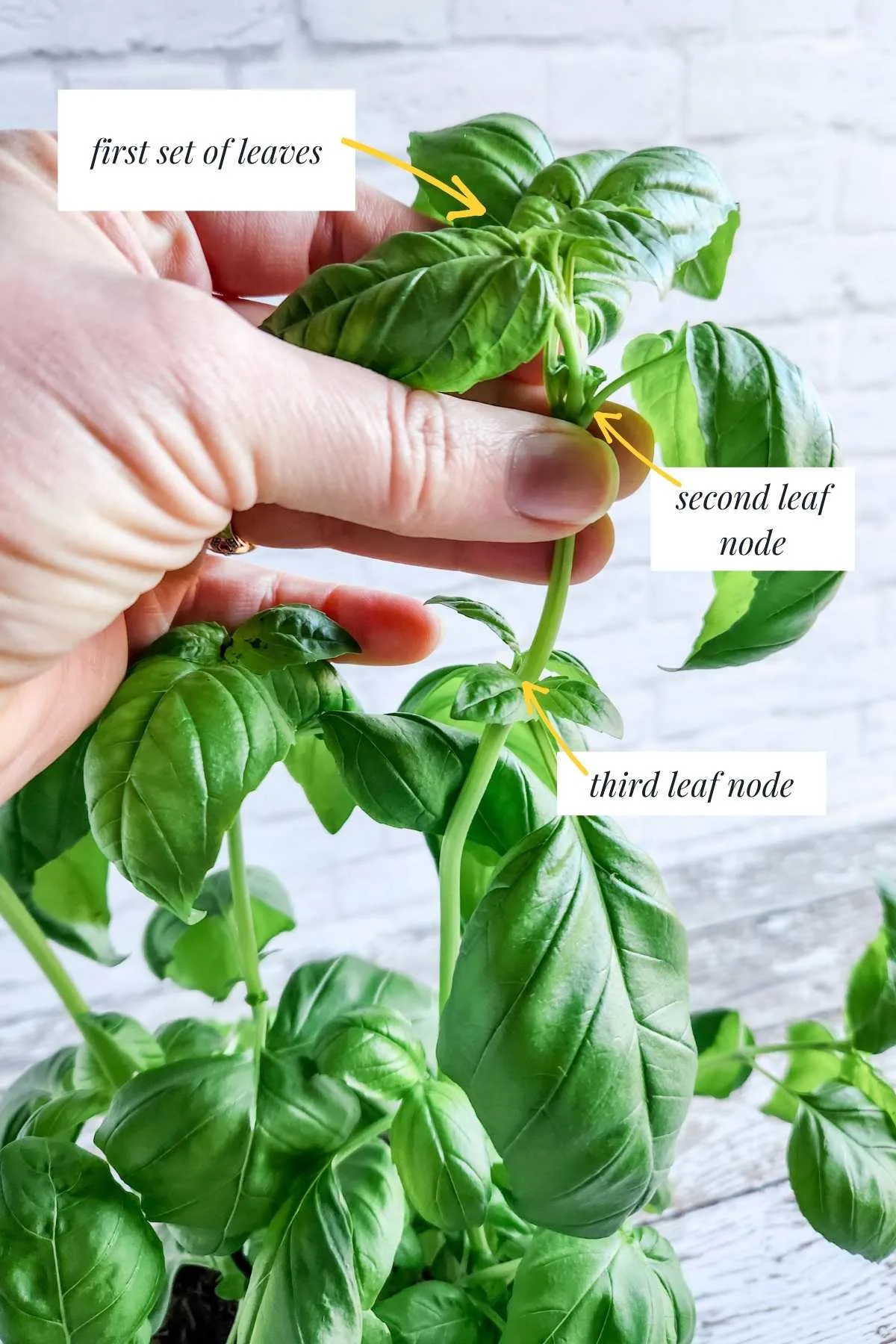
Image source: Web (Bing) / milkglasshome.com (Web image (fair-use with source credit))
Quick Answer
Pruning basil means cutting the stem above a leaf node. This forces two new stems to grow from that node. The result is a bushier plant with more leaves.
Start pruning when the plant is 6 to 8 inches tall. Always leave at least two sets of leaves on the plant.
The Key Insight: Basil Grows From the Nodes, So Prune Like You Mean It
Basil doesn't branch the way a tomato or a pepper does. It wants to grow one single main stem straight up, flower at the top, and call it a season. Your job is to interrupt that program.
Every leaf node on the stem holds a dormant bud. When you cut the stem just above that node, the plant releases hormones that activate those buds into two new side shoots. One cut becomes two stems.
Two cuts become four. That is the entire logic of pruning in one sentence.
Why Cutting Above a Node Creates Two Stems From One
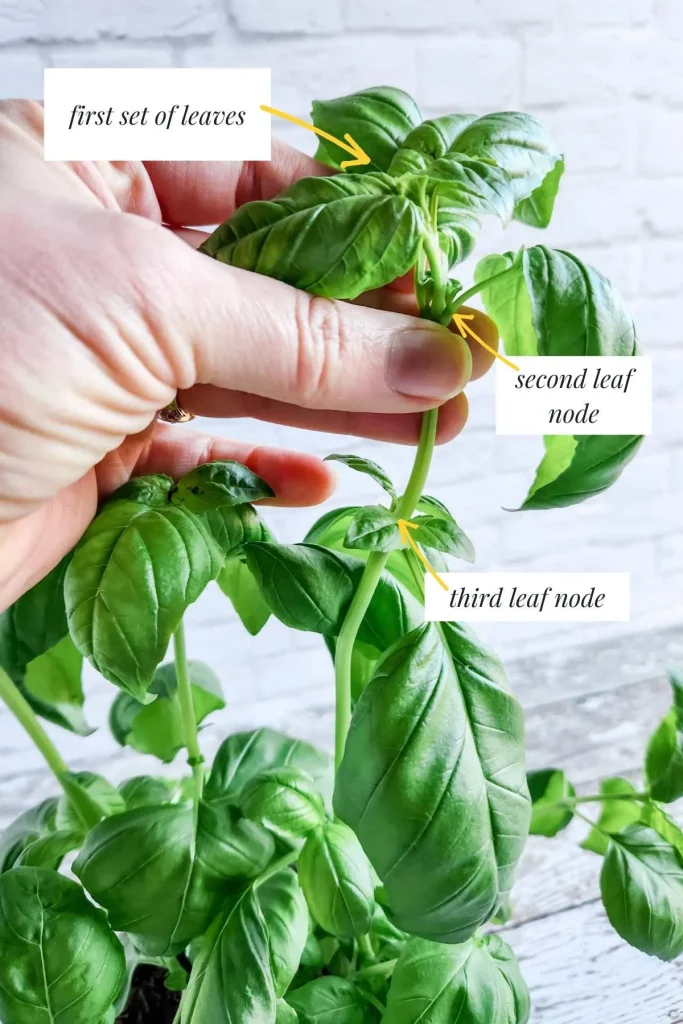
The node is the point where leaves attach to the stem. Look closely at a healthy basil stem and you will see tiny bumps or tiny leaves already forming in the crotch where each leaf meets the stem. Those are the axillary buds.
They are waiting for a signal to grow. When you remove the dominant growing tip, the plant sends auxin to those buds and they spring to life. University of Minnesota Extension research confirms that leaving at least two full leaf sets below the cut ensures the plant has enough photosynthesis capacity to fuel that new growth quickly.
The Difference Between Pinching, Topping, and Harvesting
These three terms describe the same action at different stages of the plant's life. Pinching is what you do to a young seedling with your fingernails. Topping is the same cut on a more mature stem between 6 and 12 inches tall.
Harvesting is topping with the goal of using the removed leaves for cooking. The cut is identical in all three cases. You are removing the top of a stem above a node.
The only difference is whether you eat the cuttings or compost them.
Decision Guide: Which Basil Situation Are You In?
Not all basil plants need the same treatment. Your pruning decision changes based on the plant's age, height, and whether it has already started flowering. Here is how to read your plant and choose the right move.
New Seedling With Just 1–2 Pairs of True Leaves
If your basil still has its first two rounded seed leaves, do not touch it. Those cotyledons are the plant's only energy source. Wait until the seedling has at least three full pairs of true leaves, each pair larger than the one below it.
At that point the plant is roughly 4 to 6 inches tall. Use your thumbnail to pinch off the top pair of leaves right above the second pair. Leave the bottom two pairs intact.
This is the first pruning and it sets the entire shape of the mature plant.
Established Leafy Basil With No Flowers
This is the sweet spot. The plant is 8 to 12 inches tall with dense foliage and no signs of flower buds. Count down from the top until you find a node with small side leaves already visible.
Cut the main stem a quarter inch above that node. Remove no more than one-third of the plant's total height. This is the pruning pattern you repeat every one to two weeks during the growing season to keep the plant bushy and productive.
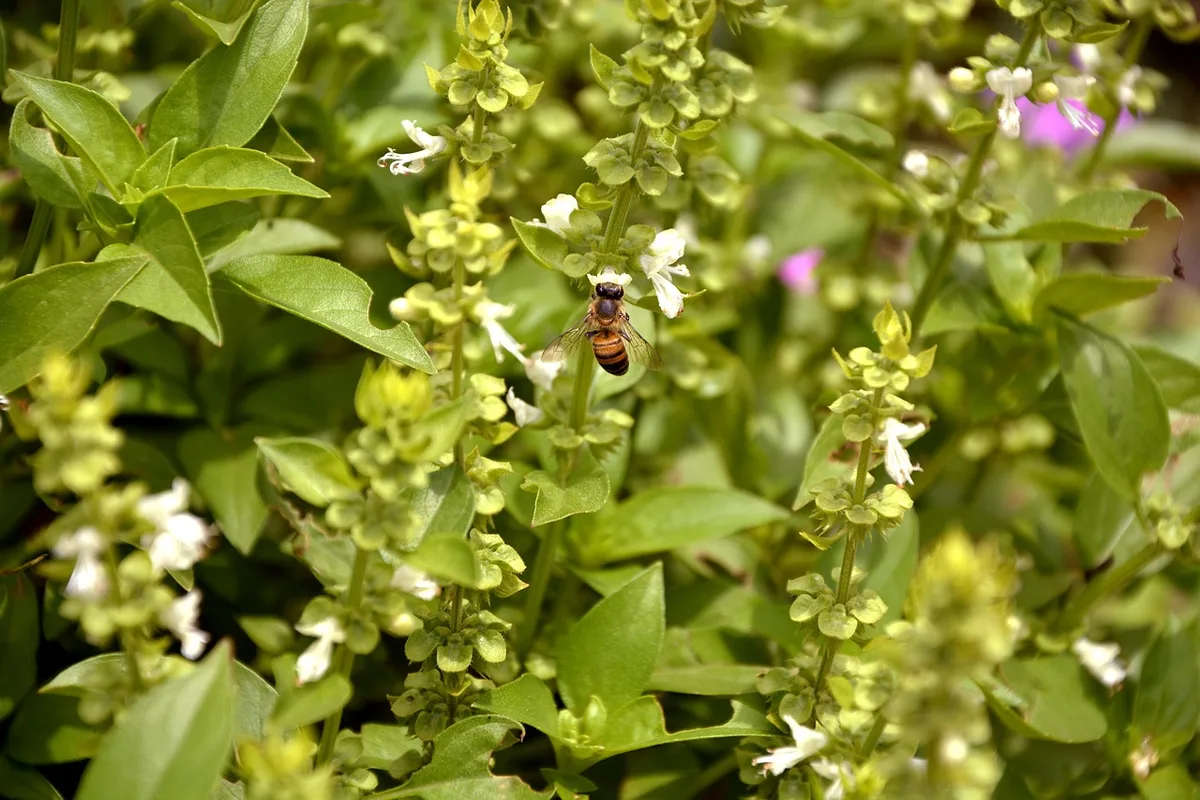
Image source: Web (Bing) / ar.inspiredpencil.com (Web image (fair-use with source credit))
Basil That's Already Flowering or Bolting
If you see a cluster of small white buds or tiny flowers at the top of the stem, the plant has shifted into reproduction mode. Those flowers signal the leaves to turn bitter and the plant to stop producing new foliage. Cut the entire flowering stem back to the first healthy node below the flower cluster.
Remove any flower buds you see on lower branches. The plant will recover and start pushing new leaves within a week. But you must check every few days for new buds.
Flowering basil is persistent.
Leggy, Woody, or Top-Heavy Basil
A plant that has been left unpruned for weeks will have long bare stems near the bottom and a cluster of leaves at the top. The lower stem may feel tough and woody. You can still save it.
Find the lowest leaf node that still has green tissue or tiny side shoots. Cut the entire top off just above that node. Strip away all remaining leaves on the lower stem to reduce water loss.
Water deeply and place in bright indirect light for a few days. New growth will appear from that node within 7 to 10 days.
The Cut: Step-by-Step Pinching and Topping Instructions
Getting the cut right matters more than when you do it. A clean cut at the correct angle and position determines whether the plant responds in days or struggles for weeks.
What Tools to Use
For stems thinner than a pencil, your thumbnail is the best tool. It makes a clean crush-free pinch that seals the stem naturally. For thicker stems, use sharp kitchen shears or small pruning scissors.
Dull blades crush the stem tissue and slow healing. Wipe the blades with rubbing alcohol before you start to avoid transferring diseases between plants. University extension sources recommend cleaning tools between cuts if you are working on multiple plants.
Exactly Where to Cut
Look at the stem and find the node where a pair of leaves attaches. Measure a quarter inch above that node. Make your cut at a 45-degree angle sloping away from the node.
This prevents water from pooling on the cut surface and reduces the risk of rot. Cut straight across only if the stem is very thin and soft. Do not cut below the node.
The node is where the new growth will emerge. Cut too low and you leave a bare stump that cannot regrow.
How Much You Can Safely Remove
The one-third rule applies here. Never remove more than one-third of the plant's total height at a single pruning. A 12-inch plant gets a cut that removes no more than 4 inches.
If a plant is badly overgrown or flowering heavily, spread the pruning across two sessions three days apart rather than taking everything at once. This reduces shock and keeps the plant actively growing rather than stalling out.
7 Pruning Mistakes That Turn a Healthy Basil Plant Into a Bare Stick
Most pruning failures happen because of one predictable error. Here are the most common ones and how to avoid each.
Cutting Below the Cotyledons
The cotyledons are the first two round leaves that appear when the seed sprouts. They are not true leaves. If you cut the stem below them, the plant has no nodes left to regrow from.
The stem will simply dry out and die. Always prune above at least two sets of true leaves so the plant has a foundation for regrowth.
Stubbornly Ignoring Flower Buds
A flower bud left on the plant for more than a few days triggers hormonal changes that affect the entire plant. Leaves become tougher and more bitter. New leaf production slows.
The plant puts all its energy into seed production instead of foliage. Check your basil every three days during the growing season for flower buds. Pinch them off as soon as you see them, even if you are not ready to harvest a full pruning.
Over-Pruning at the Wrong Time
Pruning late in the day during hot weather exposes fresh cuts to intense sunlight and high temperatures. The plant loses water faster than it can recover. Prune in the morning when the plant is fully hydrated and the sun is low.
This gives the cuts a full day to seal before peak heat. Avoid pruning during a heat wave or drought stress period.
Leaving Long Bare Stems
A stem with no leaves and no nodes above the cut point will not regrow. The plant can only produce new shoots from active nodes. If you cut a stem back to a woody section with no visible leaf bumps, that stem is done.
It will stay bare and eventually die back. Always cut down to a node with green tissue or tiny side leaves visible.
Pruning With Dull or Dirty Tools
Dull scissors crush the stem instead of slicing it cleanly. The crushed tissue dies and forms a barrier that blocks new growth. Dirty tools can introduce bacterial leaf spot or fungal infections into the fresh cut.
Wipe your shears with isopropyl alcohol between plants and sharpen them at the start of each season.
Removing Too Many Leaves at Once
A plant needs leaves to photosynthesize and fuel regrowth. Removing more than half the foliage at once starves the plant. The root system continues to demand energy that the leaves cannot supply.
The result is yellowing lower leaves, slowed growth, and sometimes plant death. Leave at least two full leaf sets after every pruning.
Pruning When the Plant Is Already Stressed
Transplant shock, underwatering, pest damage, or extreme temperatures all put the plant in survival mode. Pruning during any of these conditions adds another stress the plant cannot handle. Wait until the plant shows signs of recovery: new leaves, firm stems, and regular watering.
Then prune.
After Pruning: Watering, Feeding, and Keeping the Momentum Going
The work does not end with the cut. What you do in the days after pruning determines how quickly the plant bounces back and how well it branches.
Water the plant thoroughly right after pruning. The fresh cut causes a temporary increase in transpiration as the plant adjusts. Keep the soil consistently moist but not soggy for the three days following a prune.
Do not fertilize immediately. Wait until you see new growth at the pruned node, which usually takes 5 to 7 days. Then apply a balanced liquid fertilizer diluted to half strength.
A 5-5-5 or 10-10-10 formula works well for leafy herbs. Nitrogen-heavy fertilizers push leaf growth but can also dilute flavor. Stick with a balanced ratio.
Mulch the soil surface around outdoor basil with an inch of organic compost or straw. This keeps the roots cool and moist while the top of the plant recovers. For indoor basil, move the pot away from direct afternoon sun for two to three days after pruning to reduce water loss.
How Often to Prune for Continuous Harvest
Once the plant reaches 8 inches tall, prune every 10 to 14 days during active growth. In peak summer conditions with full sun and regular water, some plants need pruning every 7 to 10 days. The rule is simple: prune when the plant has grown at least two new leaf sets above the last cut.
If the stem between nodes is getting longer than an inch, you have waited too long. Consistent light pruning beats occasional heavy pruning every time.
How to Propagate New Basil From Your Cuttings
Every stem you remove during pruning is a potential new plant. Take the cut stem and strip off the lower leaves, leaving only the top two leaf sets. Place the bare stem in a glass of room-temperature water.
Make sure no leaves sit below the water line. Put the glass on a bright windowsill out of direct sun. Change the water every two days.
Roots appear at the submerged nodes within 7 to 14 days. Once the roots are at least an inch long, transplant the cutting into moist potting soil. Water well and keep in indirect light for the first week.
This method gives you a constant supply of new basil plants at zero cost.
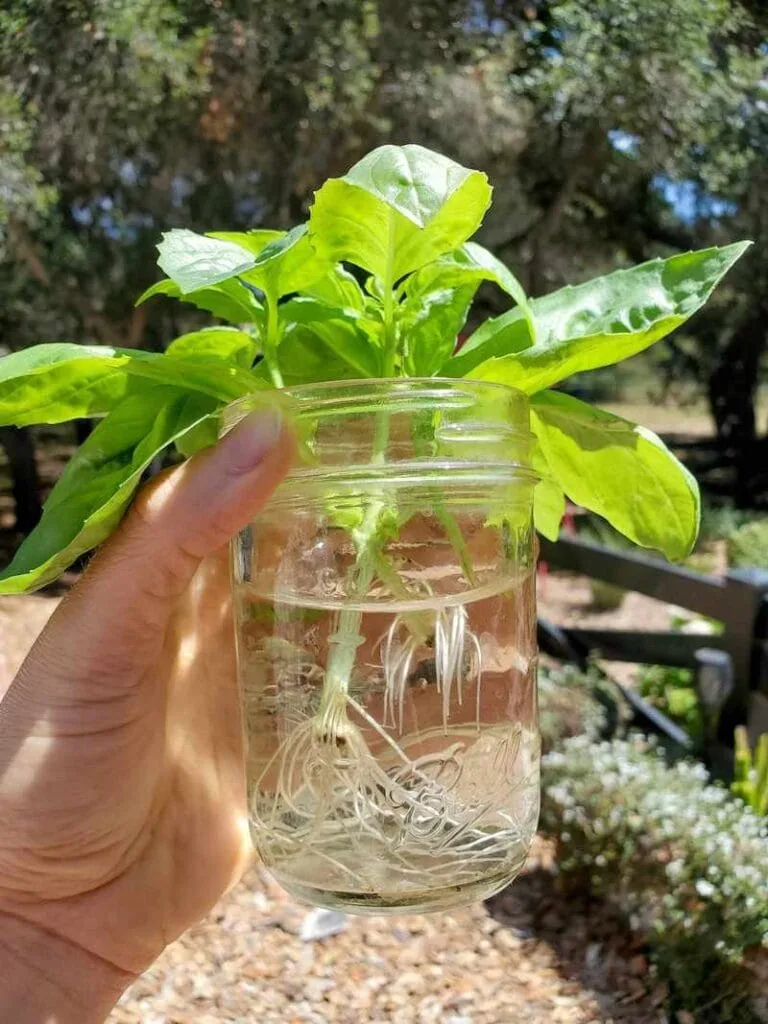
Image source: Bing (Web (fair-use with source credit))
Basil Pruning FAQ
How often should I prune basil?
Every 10 to 14 days once the plant is established. That means pruning when two new leaf sets appear above your last cut. In peak summer heat, weekly pruning is common.
In cool indoor conditions, every two to three weeks works fine. Research from the University of Minnesota Extension confirms this keeps plants productive.
Where exactly do I cut on a basil stem?
Cut a quarter inch above a leaf node at a 45-degree angle. The node is where two leaves attach to the stem. Always leave at least two leaf sets lower on the plant.
Cutting below the node leaves a bare stub that cannot grow new shoots.
Can basil recover after it starts flowering?
Yes, cut the flowering stem back to the first healthy node below the flower cluster. Remove all visible flower buds on lower branches. New leaves usually appear within 5 to 7 days.
Check every few days and pinch buds early. Once basil flowers, it tries to keep flowering.
How long does basil take to regrow after pruning?
New leaf shoots usually appear at the cut node within 5 to 7 days. Full recovery to a bushy plant takes about two weeks under warm conditions. In cool indoor setups, expect closer to three weeks.
Slower regrowth means something else is wrong, often low light or inconsistent watering.
Can I root the cuttings I prune from basil?
Yes, strip the lower leaves and place the stem in a glass of room-temperature water. Keep leaves above the waterline and change the water every two days. Roots form at the submerged nodes within 7 to 14 days.
Once roots reach an inch, transplant into moist potting soil.
What happens if I cut my basil stem too low?
If you cut below the cotyledons or below the last active node, the stem cannot regrow. That branch simply dies back. The plant may still survive if other stems remain.
If you cut the entire plant too low, it will not recover. This is why we always leave two leaf sets behind.