If you are trying to figure out propagating ZZ plants, you have probably heard conflicting advice. Some people say stick a leaf in water and wait. Others insist you need stem cuttings or a full division.
The confusion makes sense because the best method depends entirely on what you are starting with. The plant itself is forgiving once you match the technique to your situation.
Our research into grower forums and university extension guides shows that the single most overlooked factor is choosing the right method for your starting material. For example, leaf cuttings can take 3 to 12 months to produce a viable plant, while division gives you a mature plant in an afternoon. Let's break down what actually works and why.
Quick Answer
Propagate ZZ plants by division, stem cuttings, or leaf cuttings. Division is fastest and most reliable. Stem cuttings root in 4 to 8 weeks.
Leaf cuttings work but take months. Choose based on the size of your parent plant and how much time you have.
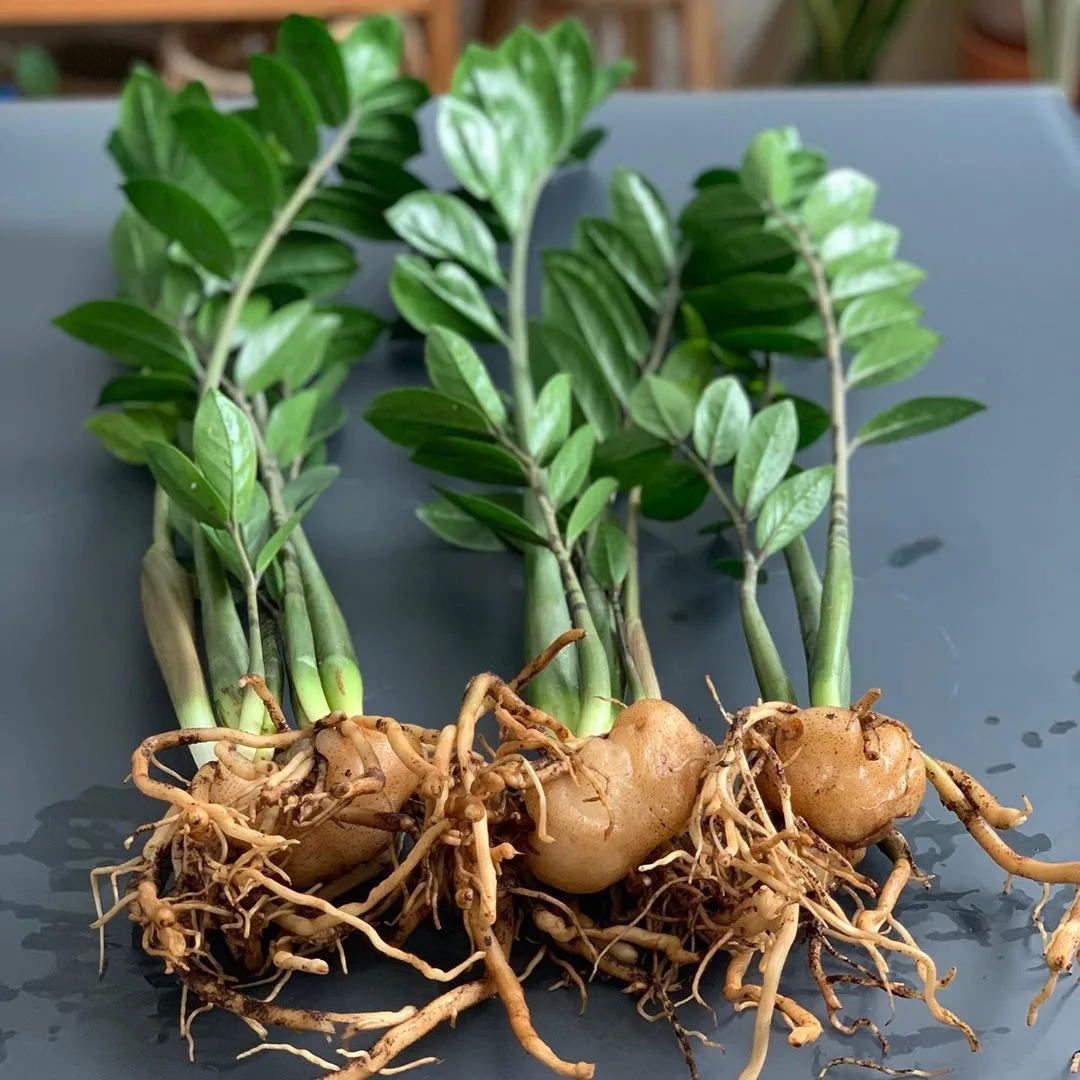
Image source: Bing (Web (fair-use with source credit))
Why Propagating a ZZ Plant Feels Tricky (and Why It Does Not Have to Be)
ZZ plants have a reputation for being slow to propagate. That reputation is earned. These plants store energy in thick underground rhizomes, and they do not rush to grow new roots.
If you have ever stuck a leaf in water and waited months with nothing happening, you know exactly what we mean.
The real issue is that most advice does not tell you which method to use when. A single leaf cutting is a very different project from dividing an overgrown plant. They follow different timelines and face different risks.
The trickiest part is rot. ZZ cuttings are sensitive to overwatering, especially in soil. Keep the propagation medium barely moist.
Let the cutting callous for a day or two before planting. This small step dramatically reduces rot.
Another frustration is the waiting period. A leaf cutting can sit unchanged for six months before producing a rhizome. Many people give up or assume the cutting is dead.
In reality, the plant is just working underground. You cannot rush a ZZ plant. It moves at its own pace.
Once you understand these quirks, the process becomes much simpler. Choose the method that matches your patience level and the plant material you have. A stem cutting gives visible roots in weeks.
A leaf cutting is a long term project. Division is instant.
The Three Ways to Propagate a ZZ Plant: Division, Stem Cutting, or Leaf Cutting
You have three basic options. Each one suits a different situation. Here is how they compare.
| Method | Best For | Time to Roots | Difficulty |
|---|---|---|---|
| Division | A mature plant with multiple stems | Immediate (already rooted) | Easy |
| Stem cutting | A leggy plant or a single stem you want to trim | 4 to 8 weeks | Moderate |
| Leaf cutting | A broken leaf or when you only have one leaf | 3 to 12 months | Easy but slow |
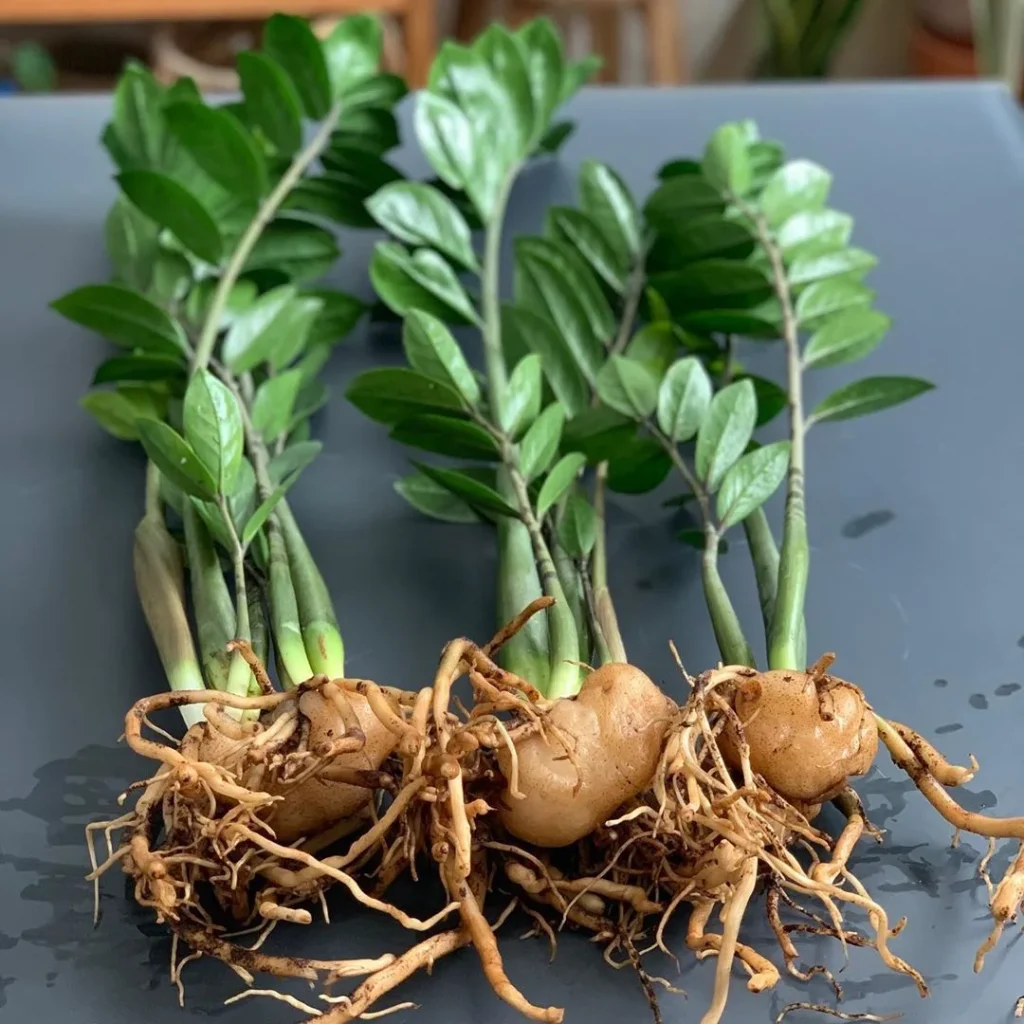
Division means separating the underground rhizomes into individual plants. Each piece already has roots and stems attached. This gives you a full plant right away.
It is the most reliable method because you are not starting from zero. Use this when your ZZ plant is crowded in its pot or when you want multiple plants fast.
Stem cutting means taking a section of the stem with one or two leaves attached. The stem contains stored energy and nodes that produce roots. This method is faster than leaf cuttings because the stem already has vascular tissue.
Use this when you have a stem that is getting too long or when you want a moderate sized plant in a few months.
Leaf cutting means taking a single leaf with the petiole (the stalk that attaches it to the stem). You can also use individual leaflets from a compound leaf. This method produces the smallest plant and takes the longest.
Use this when you have no stems to work with or when you want to propagate from a fallen leaf.
Each method works. The question is which one fits your situation.
Which Method Should You Choose? A Simple Decision Tree
Your choice depends on three things: the size of your parent plant, the material you have available, and how much time you are willing to wait.
If you have a mature plant with multiple stems growing from the pot:
Choose division. This is the fastest and most reliable method. You get an instant plant with existing roots and leaves.
There is no waiting for roots to develop. The only requirement is that your plant is large enough to divide. Look for separate stems that each have their own cluster of rhizomes underground.
If you have a single stem that is leggy or broken:
Choose a stem cutting. This method works well when you have one or two stems you can trim. Each stem cutting needs at least one node (the bump where leaves attach).
Cut the stem into sections with one node each. Remove the lower leaves and place the cutting in water or soil. Roots appear in 4 to 8 weeks.
If you only have a leaf or a leaflet:
Choose a leaf cutting. This is the only option when you have no stems to work with. It works with a single leaf and its petiole.
You can also use individual leaflets from a compound leaf. Expect to wait months before seeing roots. This method requires patience but uses almost no plant material.
If you want multiple plants from one parent:
Start with division first, then use the leftover stems for cuttings. This gives you the most new plants from a single parent. Divide the rhizomes and pot them separately.
Take stem cuttings from any remaining stems. You can even root the leaves you remove from the stem cuttings.
If you are a beginner:
Start with division or stem cuttings. Leaf cuttings have a high failure rate and take too long for most beginners to stay motivated. Division is nearly foolproof.
Stem cuttings are forgiving because you can see the roots forming in water.
Step-by-Step: Division (Fastest, Most Reliable)
Division is the method most experienced growers use when they want results quickly. Here is how to do it.
What you need:
- A mature ZZ plant with multiple stems
- Clean pruning shears or a sharp knife
- Fresh potting mix (well draining, like a cactus blend)
- Pots with drainage holes (4 to 6 inches wide)
- Rubbing alcohol for sterilizing tools
Step 1: Remove the plant from its pot.
Turn the pot sideways and gently pull the plant out. If the roots are tightly packed, squeeze the pot sides or run a knife around the inside edge. Do not yank the stems.
Work the root ball out carefully.
Step 2: Identify the natural divisions.
Look for places where separate stems each have their own cluster of rhizomes. Rhizomes look like thick, potato like tubers underground. Each stem cluster should have at least one decent sized rhizome attached.
Step 3: Separate the rhizomes.
Gently untangle the roots with your fingers. Use your hands to pull the clusters apart if they separate easily. For stubborn connections, use sterilized shears to cut through the connecting rhizome.
Make sure each piece has healthy roots and at least one stem.
Step 4: Trim dead or damaged roots.
Cut off any mushy or dried up roots with clean shears. Healthy ZZ roots are firm and light colored. Remove any rhizomes that feel soft or hollow.
Only keep firm, solid pieces.
Step 5: Pot each division.
Fill each pot with fresh potting mix. Place one division in the center. The rhizome should sit just below the soil surface.
Backfill around the roots and firm the soil gently. Leave about half an inch of space below the pot rim for watering.
Step 6: Water lightly and wait.
Water the soil until it is evenly moist but not soaked. ZZ plants store water in their rhizomes. They do not need frequent watering.
Let the top inch of soil dry out before watering again. Place the pots in bright indirect light. Avoid direct sun for the first few weeks.
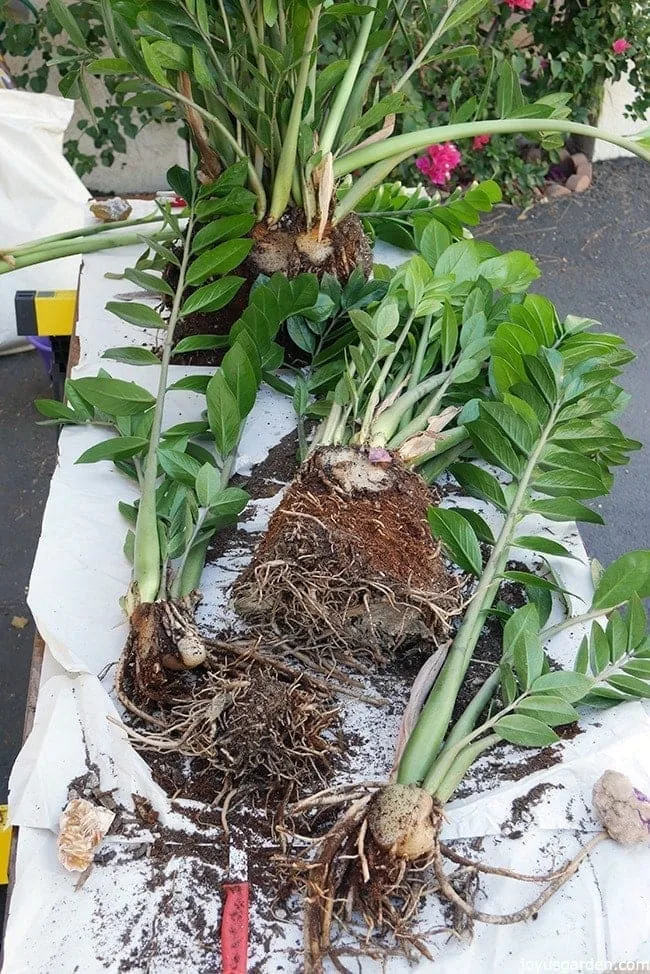
Image source: Bing (Web (fair-use with source credit))
Aftercare for divisions:
Your new plants may look a little droopy for the first week. That is normal. The roots are adjusting to the new pot.
Keep the soil on the drier side. Overwatering is the most common cause of failure with divisions. Within two weeks, the plant should perk up and start growing again.
When to repot:
Division produces a plant that is already root bound to some degree. Check the pot after six months. If roots are circling the bottom, move to a pot one size larger.
Otherwise, leave it alone. ZZ plants prefer to be slightly pot bound.