You’ve got that trailing plant that’s gone bare at the base with just a few leaves clinging on at the tips. Or maybe you just want more wandering jew to fill out a hanging basket without spending another dime. Propagating wandering jew is the fastest way to turn one leggy stem into a dozen full plants, and it’s nearly impossible to mess up if you know two simple things: where to cut and where to stick it.
In our research, the University of Florida IFAS Extension confirms that Tradescantia species root reliably in both water and soil, with visible roots often appearing in as little as three to seven days. That’s faster than almost any other common houseplant. So before you grab your scissors, let’s figure out exactly what your plant needs right now.
Before You Start – Is Your Plant Asking for a Chop or a Split?
Look at your plant for ten seconds. That’s all it takes to pick the right path.
If your wandering jew has long, bare stems with leaves only at the very ends, you want stem cuttings. That leggy look means the plant is reaching for light, and the best fix is to chop those stems into several pieces, each with a node. Then root them.
If your plant is a dense, full clump that’s outgrown its pot, you can divide it. Pull the root ball apart into two or three sections and repot each one. No cuttings, no water glass, just a straight split.
If your plant is sprawling across the soil surface and rooting at the leaf joints naturally, you already have layered cuttings working for you. You can snip those rooted stems free and pot them up immediately.
Match your plant’s appearance to one of those three conditions. That’s your starting fork.
The One-Minute Answer: Yes, You Can Root It in Water or Soil
Here’s the short version. Take a stem cutting with at least one node. Remove the lowest leaves.
Stick the node in water or bury it in moist soil. Roots appear in three to fourteen days. Pot it up when roots are one to two inches long.
That’s it.
Water propagation wins if you want to watch progress and you don’t mind potting up later. Soil propagation wins if you want zero transplant shock and a faster transition to a permanent pot. Both work.
Neither is wrong.
Division works for mature plants only. You skip the rooting phase entirely because you’re separating existing roots. Layering works if you have a long stem touching soil already.
You just help it along.
Choose based on what you have right now. If you have a glass and tap water, go water. If you have a small pot and moist soil, go soil.
If you have a full pot ready to split, go division.
Where Roots Actually Come From – Why the Node Is Everything
The node is the small bump on the stem where leaves emerge. That’s where root cells are waiting to activate. Cut above a node without leaving one on the cutting, and you get a stem that rots in water or dies in soil.
It is the most common mistake beginners make.
Look at the stem of your wandering jew. You’ll see small rings or knuckles spaced along it. Those are nodes.
Some nodes have leaves, some are bare. Either way, they work.
When you take a cutting, make your cut about a quarter-inch below a node. The node goes into water or soil. The stem above it stays out.
Roots emerge from that node, not from the cut end.
For a single cutting, aim for three to four inches of stem with two to three nodes. Remove the leaves from the bottom node or two. Leave the top leaves on.
That node in contact with water or soil is what creates the root system.
The Big Fork: Water vs. Soil vs. Something Else
You have three good paths. Here’s how each one works and who it’s best for.
Branch 1 – Water Propagation (Best for Beginners)
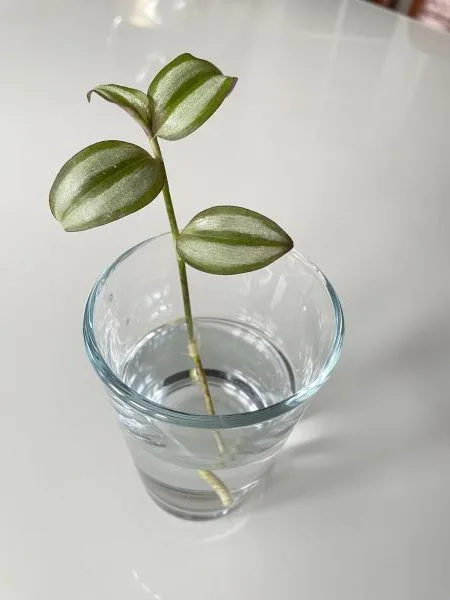
Fill a clear glass jar with tap water that’s sat out for 24 hours to let chlorine dissipate. Drop the cutting in so the bottom node is submerged but the leaves stay above water. Change the water every five to seven days.
Roots usually appear in three to seven days.
Best for people who want to see roots form and don’t mind an extra step of potting into soil later. Weakness: transplant shock can happen if you wait too long to pot up.
Branch 2 – Direct Soil Propagation (Best for Zero Transplant Shock)
Fill a three to four inch pot with well-draining potting mix. Moisten it so it’s damp but not wet. Stick the cutting into the soil so the bottom node is buried about an inch deep.
Water gently. Cover the pot with a clear plastic bag or dome for the first week to hold humidity.
Best for anyone who wants to skip the water-to-soil transition. Roots develop a bit slower, usually ten to fourteen days, but they adapt to soil immediately.
Branch 3 – Division and Layering (Best for Mature Overgrown Plants)
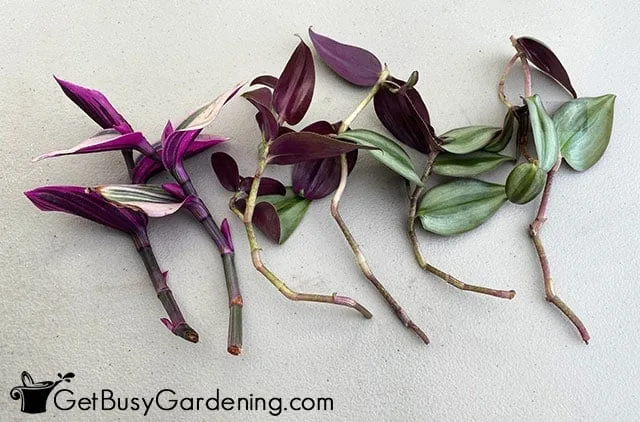
Division: Remove the plant from its pot. Gently pull the root ball apart into two or three sections. Each section must have roots and at least one growing tip.
Repot each section in fresh soil.
Layering: Bend a long stem down to the soil surface of the same pot or a new pot. Pin it in place with a paperclip or small rock. Keep that spot moist.
Roots will form at the node within one to two weeks. Snip the stem free from the mother plant and you have a new rooted plant.
Your Step-by-Step Playbook for Any Branch
No matter which method you chose, these steps apply across the board.
First, sterilize your scissors or pruners with rubbing alcohol. Dirty cuts introduce rot.
Second, identify the nodes on your chosen stem. Count at least two nodes per cutting. More nodes mean more root points.
Third, make a clean cut just below the lowest node. Remove the leaves from that bottom node. Leave two to four leaves at the top.
Fourth, place the cutting in your chosen medium. Water: node submerged, leaves dry. Soil: node buried, soil gently firmed around it.
Division or layering: roots already present, just pot or pin.
Fifth, put the cutting in bright indirect light. Direct sun stresses cuttings. Low light slows rooting.
Sixth, monitor moisture. Water propagators change water weekly. Soil propagators keep the mix consistently damp, not soggy.
Division and layering require normal watering.
Seventh, wait for roots. Water roots appear in three to seven days. Soil roots take ten to fourteen days.
Division gives you immediate roots.
Eighth, pot up when roots are one to two inches long. Use a small pot with drainage. Keep the plant in the same light level for another week to adjust.
Six Fast Ways to Kill Your Cuttings (and How to Avoid Them)
Submerging too many leaves. Leaves underwater rot fast. They turn slimy and foul the water or soil. Only the bare node and stem should sit below the surface.
Cutting without a node. A stem piece with no node has no rooting potential. It will sit there, slowly die, and never grow roots. Always check for that small bump.
Direct sunlight on fresh cuttings. Bright indirect light is perfect. Direct sun fries tender cuttings within hours. They wilt and turn brown at the leaf edges.
Skipping water changes. Stagnant water grows bacteria. Bacteria coat the stem and block root development. Change water every five to seven days, no exceptions.
Potting up too early or too late. Roots under half an inch are too fragile to handle soil. Roots over three inches long get tangled and stressed during transplant. Wait for one to two inches.
Using cold water straight from the tap. Cold water shocks the cutting and slows metabolism. Let tap water sit at room temperature for 24 hours before using it.
FAQs – Quick Hits on the Tricky Spots
How long does it take for wandering jew cuttings to root in water?
Roots appear in three to seven days in average room temperature. Cooler rooms push it closer to ten days. You should see visible root nubs emerging from the node.
Can I propagate wandering jew from a single leaf?
No. A leaf without a stem node will not grow roots. You need at least one node attached to the stem for roots to develop.
Why are my cuttings turning mushy in water?
Mushy stems usually mean leaves are submerged or water is too cold. Remove the cutting, trim off the mushy part above the node, and start fresh with clean room-temperature water.
Should I use rooting hormone on wandering jew?
Rooting hormone is optional. Our research suggests it speeds root formation by one to two days, but the plant roots reliably without it. Skip it if you prefer.
How often should I water newly potted cuttings?
Keep the soil consistently damp for the first two to three weeks. Let the top half-inch dry slightly between waterings. Soggy soil leads to rot.
When is the best time of year to propagate?
Aggregate user feedback reports that spring and early summer give the fastest results. Longer days and active growth cycles boost root development. Winter propagation works but takes longer.
Your Decision Guide – Exactly Which Method to Pick Right Now
Look at your wandering jew and answer one question. Is it leggy, is it crowded, or is it rooting on its own?
Leggy with bare stems: Take tip cuttings or stem sections. Root them in water or soil. Water gives you faster visible roots.
Soil gives you a smoother transition.
Crowded in the pot: Divide the root ball. This is the fastest method because you skip the rooting phase entirely. You get fully rooted plants immediately.
Stems touching soil and rooting: Use layering. Snip the rooted stems free and pot them up. No cutting, no waiting, just straight to a new pot.
You want the least effort possible: Layering requires no cutting and no monitoring. Just pin a stem to soil and let it do the work.
You want the most plants from one stem: Take multiple stem cuttings from a single long vine. Each node on that vine can become a separate plant.
Here is a quick table to help you decide.
| Your Situation | Best Method | Time to Roots | Effort Level |
|---|---|---|---|
| Leggy stem, you like watching progress | Water propagation | 3-7 days | Low |
| Leggy stem, you want to skip transplant shock | Soil propagation | 10-14 days | Low |
| Full, overcrowded pot | Division | Immediate | Medium |
| Long stem touching soil | Layering | 7-14 days | Very low |
| You want maximum new plants | Stem cuttings in water | 3-7 days | Medium |
That is it. Three methods. One choice based on what your plant looks like right now.
All of them work.



