So you've got a jade plant that's getting a little too tall, or maybe you snapped a branch by accident. Or you just want more of these hardy little succulents without spending nursery money. That's exactly where propagating jade plants comes in handy.
Here's what matters most: jade plants are among the easiest succulents to root, with stem cuttings having an 80 to 95 percent success rate under the right conditions. But the method you choose depends entirely on what you're working with, what season it is, and how patient you feel. Let's walk through the options so you pick the right one the first time.
Image source: Web (Bing) / getbusygardening.com (Web image (fair-use with source credit))
Quick Answer
Propagating jade plants means taking a cutting and helping it grow new roots. Use stem cuttings for faster results. Use leaf cuttings when you have extra leaves.
Let the cut piece dry for three to seven days before planting. Pot in dry succulent soil and wait for roots. Water sparingly until established.
Stem or Leaf? Pick the Right Propagation Method
This is the first fork in the road. Your choice between stem and leaf propagation hinges on one thing: how quickly you want a plant that actually looks like a jade.
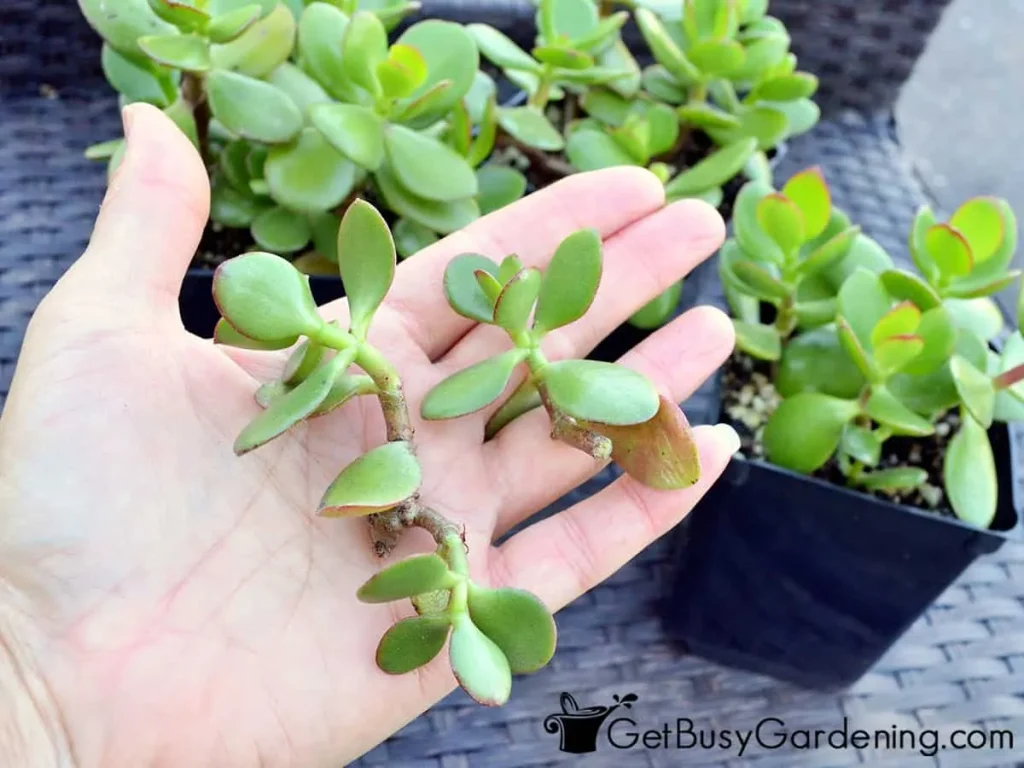
Stem cuttings are the shortcut. You take a 3 to 6 inch piece of stem with a few leaves still attached, let it callus, and plant it. Within three to six weeks, it develops roots and starts growing as a miniature version of the mother plant. Six months later, you've got a respectable little jade that could pass for a nursery purchase.
Leaf cuttings are the long game. You twist off a single leaf, let it callus, and lay it on top of dry soil. Eventually, tiny roots appear, followed by a minuscule rosette of new leaves. This process takes four to eight weeks before you see any real action.
And the new plant will need a full year or more to look like anything substantial.
| Method | Time to Root | Time to Presentable Plant | Best For |
|---|---|---|---|
| Stem cutting | 3-6 weeks | 6 months | Quick results, fixing leggy plants |
| Leaf cutting | 4-8 weeks | 12-18 months | Multiple plants from limited material |
So which should you choose? If your jade has gotten tall and sparse, go with stem cuttings. You'll fix the leggy look and get new plants fast.
If you just want to multiply your collection slowly and have leaves to spare, leaf propagation works fine. Just don't expect a gift-worthy plant anytime soon.
What Your Cutting Needs to Root: Light, Season, and Plant Health
Propagation success doesn't come from luck. It comes from giving the cutting exactly what it needs at the right time.
Season matters more than you think. Jade plants are dormant in winter. Take a cutting in December and it might sit in the soil for months doing nothing. The sweet spot is spring and early summer, when the mother plant is actively growing and pumping out natural rooting hormones.
If you're propagating indoors under grow lights, you can extend this window, but natural light cycles still give you the best results.
Light is non-negotiable. Your cutting needs bright indirect light for 8 to 12 hours a day. A south or east-facing windowsill works perfectly. Too little light and the cutting won't root, or worse, it'll produce weak, leggy growth.
Too much direct afternoon sun and the cutting can scorch before it has roots to drink.
The mother plant's health determines everything. A cutting taken from a stressed, underwatered, or pest-ridden jade has poor odds. Look for stems that are firm and green, not shriveled or mushy. The leaves should be plump, not wrinkled.
And never take cuttings right after watering. The plant's tissues are full of moisture, which raises the rot risk significantly.
Here's your if/then checklist:
- If the mother plant looks healthy and it's spring or summer, you're in prime propagation territory.
- If the plant is stressed or it's winter, wait until conditions improve.
- If you absolutely must take a cutting in winter, use a heat mat set to 70°F and a grow light on a timer.
Step-by-Step: Rooting Stem Cuttings in Soil
Soil propagation is the gold standard for stem cuttings. It produces sturdy roots that transition smoothly into normal care. Here's the process.
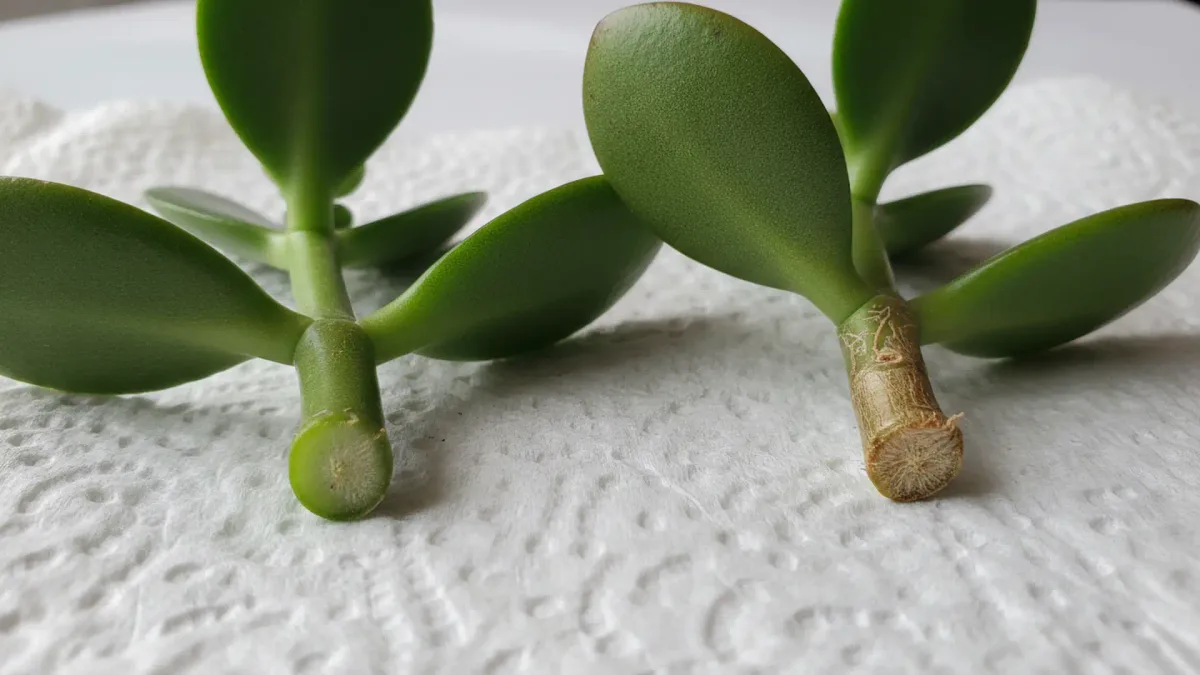
Image source: Web (Bing) / bloomingexpert.com
Step 1: Prepare your tools. Sterilize a sharp pair of pruning shears or a clean knife with rubbing alcohol. Dirty tools introduce bacteria that cause rot.
Step 2: Make the cut. Select a stem that's at least pencil-thick. Cut at a 45-degree angle just below a node, that small bump where leaves attach. Your cutting should be 3 to 6 inches long with at least two leaf pairs still attached.
Step 3: Strip the lower leaves. Gently remove the leaves from the bottom half of the cutting. This exposes the nodes where roots will emerge. Leaving leaves below the soil line invites rot.
Step 4: Let it callus. Place the cutting in a dry spot out of direct sun. Wait three to seven days. The cut end needs to form a dry, hard callus.
This is the single most important step. Plant a fresh cut and it'll rot. Plain and simple.
Step 5: Optional rooting hormone. You can dip the callused end in rooting hormone powder. Manufacturer specifications indicate this can speed rooting by about a week. It's not required, but it helps with slower varieties or winter propagation.
Step 6: Pot it up. Fill a 2 to 3 inch pot with drainage holes. Use a dry succulent mix, or make your own by mixing equal parts potting soil and perlite or coarse sand. Create a small hole and place the cutting so the bottom node is buried.
Firm the soil gently around the stem.
Step 7: Wait before watering. Do not water immediately. The callus keeps the cutting alive while it pushes out roots. Wait five to seven days, then give it a light watering.
After that, water every two to three weeks when the soil is completely dry.
Step 8: Test for roots. After three weeks, give the stem a gentle tug. If you feel resistance, roots have formed. If it pulls up easily, give it more time and keep the soil dry.
Step-by-Step: Rooting Leaf Cuttings
Leaf propagation is slower but satisfying in its own way. You can turn one leaf into a dozen plants with minimal effort.
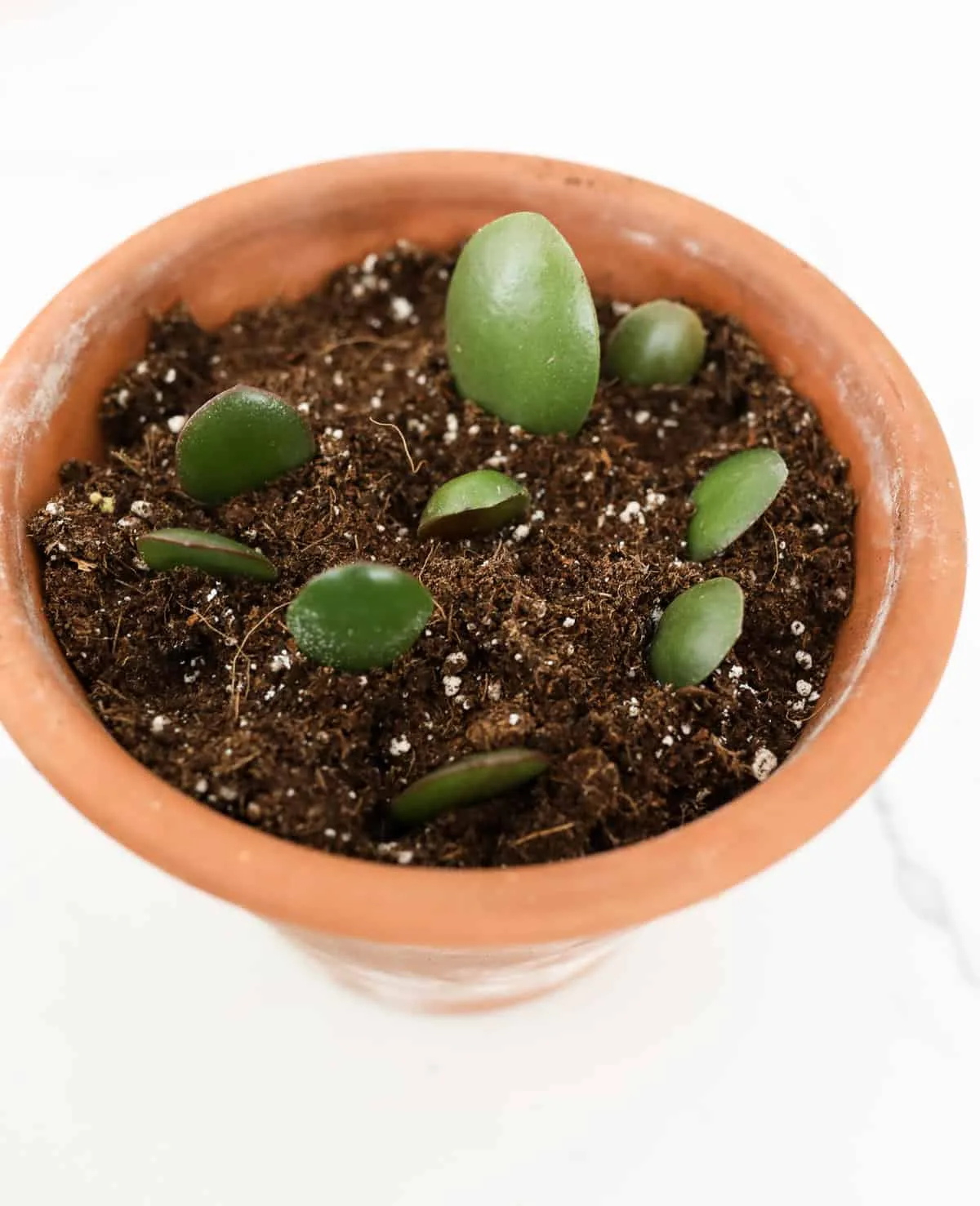
Image source: Web (Bing) / paisleyplants.com
Step 1: Select healthy leaves. Choose plump, firm leaves from the middle of the stem. Avoid old yellowing leaves or tiny ones near the top. Variegated leaves will produce variegated plants.
Step 2: Remove the leaf cleanly. Hold the leaf between your thumb and forefinger. Gently twist and pull. It should snap off cleanly at the node.
A torn leaf with no node attached likely won't root.
Step 3: Callus the leaf. Place the leaves on a dry paper towel in a shaded spot. The cut end needs three to five days to dry and seal. Jumping ahead here is the fastest way to mush.
Step 4: Lay on soil. Fill a shallow tray or pot with dry succulent mix. Lay the callused leaves on top of the soil with the cut end just touching the surface. Do not bury them.
Set them on top.
Step 5: Wait. This is where patience comes in. Keep the tray in bright indirect light. Do not water for at least two weeks.
In three to six weeks, you'll see tiny pink roots emerging from the callused end. Eventually, a tiny new rosette will form at the base of the leaf.
Step 6: Water when roots appear. Once roots are visible, mist the soil lightly every week. The mother leaf will eventually shrivel and fall off. That's normal.
The new baby plant is self-sufficient at that point.
Step 7: Pot up after months. When the new plant has at least two sets of leaves, carefully move it to its own 2-inch pot. Use the same succulent mix. Water sparingly for the first few weeks.
Water Propagation: Should You Try It or Skip It?
Water propagation is popular online because you can watch roots grow. And for many plants, it works great. For jade plants, it's a mixed bag.
The upside is visibility. You can see exactly when roots appear and how they're developing. That's reassuring if you're new to propagation and nervous about guessing.
The downside is transition shock. Roots grown in water are different from roots grown in soil. They're finer, more fragile, and adapted to constant moisture. When you move the cutting to soil, those water roots often die off, and the plant has to start over growing soil roots.
This set back can take weeks.
Our research suggests water propagation works best when you keep the cutting in water permanently. Some people grow jade plants hydroponically with good results. But if your goal is a normal potted jade in soil, skip the glass of water and go straight to dry soil.
The exception is for badly damaged cuttings. If you have a stem that's already dehydrated or wilted, a few days in water can rehydrate it before you move it to soil. But that's a rescue measure, not standard practice.
For most people in most situations, soil propagation gives you stronger roots and a smoother transition. The visual confirmation isn't worth the extra risk.
Mistakes That Ruin Jade Cuttings (And How to Avoid Them)
Most propagation failures come down to the same handful of errors. Here's what goes wrong and how to fix it.
Skipping the callus step. This is the number one killer. Plant a fresh cut into moist soil and the open wound soaks up water like a straw. Rot sets in within days.
If you remember nothing else, remember this: let every cutting dry for three to seven days before it touches soil or water.
Watering too soon. Even after callusing, a cutting has no roots to drink. Watering right after potting just keeps the soil wet around the stem. That invites rot.
Wait five to seven days after potting before the first light watering. Then wait until the soil is completely dry before watering again.
Using the wrong soil. Regular potting mix holds too much moisture. Jade cuttings need sharp drainage. Use a succulent mix or blend your own with one part potting soil and one part perlite or coarse sand.
The University of Florida IFAS extension confirms that well-draining media is critical for succulent propagation success.
Taking cuttings at the wrong time. Winter cuttings sit dormant and often rot before they root. Spring and early summer give you the best odds. If you must propagate in winter, provide bottom heat with a propagation mat set to 70°F and run a grow light 10 to 12 hours daily.
Choosing a weak cutting. A shriveled stem or a yellowing leaf rarely roots. Select firm, plump material from a healthy mother plant. If the cutting looks sad going in, it won't look better coming out.
Giving too much light or too little. Direct afternoon sun scorches unrooted cuttings. Low light stops root growth. Bright indirect light for 8 to 12 hours a day hits the sweet spot.
A north-facing window is too dim. South or east works best.
Frequently Asked Questions About Propagating Jade Plants
How long does it take for jade cuttings to root?
Stem cuttings in soil typically root in three to six weeks. Leaf cuttings take longer, usually four to eight weeks before you see tiny roots. Warm conditions and bright indirect light speed things up.
Can you propagate jade plants from a single leaf?
Yes, you can. Twist a healthy leaf off cleanly at the node. Let it callus for three to five days.
Lay it on dry succulent soil. In a few weeks, small roots appear, followed by a tiny new plant. It takes about a year to grow into a presentable size.
Should I use rooting hormone for jade cuttings?
Rooting hormone is optional but helpful. It can speed rooting by about a week and improve success rates on older or tougher stems. For fresh spring cuttings from a healthy plant, it's rarely necessary.
For winter propagation, it gives you an edge.
Why is my jade cutting turning mushy?
Mushiness means rot. The most common cause is planting a fresh cutting without letting it callus first. Another culprit is watering too soon or keeping the soil too wet.
Remove the cutting, cut away any mushy parts, let it callus again, and restart in dry soil.
Can I propagate jade plants in water?
You can, but it comes with risks. Water roots are fragile and often die when moved to soil. If you want a permanent water-grown plant, it works fine.
If your goal is a normal potted jade, soil propagation gives you stronger roots and a smoother transition.
When is the best time of year to propagate jade plants?
Spring and early summer are ideal. The mother plant is actively growing, which means faster rooting and higher success rates. Propagating in winter is possible but requires supplemental heat and light to compensate for the plant's natural dormancy.