Pencil cactus often gets labeled as a "set it and forget it" plant. That's half true. The reality is that pencil cactus care depends heavily on your specific conditions, and getting it wrong can mean root rot, pale stems, or worse.
This isn't your average forgiving houseplant.
Per university extension research and botanical society documentation, Euphorbia tirucalli (its proper botanical name) is a drought-adapted succulent native to East and South Africa. It thrives on neglect but dies on over-attention, which is exactly where most people get stuck. The magic is in learning how to read your plant's signals, and that's what we're covering here.
Quick Answer
Pencil cactus needs bright direct sun and very little water. Let the soil dry completely between waterings. Use fast-draining cactus mix.
Wear gloves when handling. Keep away from pets and kids. Water every 2 to 4 weeks in summer, once a month in winter.
Give it 6 hours of direct light daily.
The Real Problem with Pencil Cactus: It's Not Your Typical Succulent
Most people treat pencil cactus like a jade plant or an aloe. That's a mistake. This plant belongs to the Euphorbia family, not the cactus family despite the name.
And it behaves differently from both.
The biggest difference is the sap. Touch it and your skin will burn. Get it in your eyes and you risk temporary blindness.
That's not something you deal with when caring for a standard succulent. We'll talk more about safety in a moment, but it's the first thing to know.
The second difference is how it responds to water. Pencil cactus has thin, pencil-thick stems that store very little moisture compared to a plump jade plant. Those stems aren't built for long dry spells the same way.
They're built for quick drying and fast drainage. That means your soil mix matters more than your watering schedule.
The third difference is light. This plant wants full, direct sun for most of the day. Not bright indirect light.
Not a north-facing window. Full sun. Without it, the stems stretch out, turn pale, and lose their structure.
You end up with a leggy, droopy plant that looks nothing like the sculptural specimen you bought.
So the real problem is simple. People apply generic succulent logic to a plant that needs a specific set of conditions. Get those conditions right and it grows like a weed.
Get them wrong and it slowly falls apart.
The Decision Framework: Three Questions That Change Everything
Before you water, before you move the pot, before you do anything, ask yourself these three questions. Your answers will drive every care decision you make.
Question one: Where is this plant growing?
Indoor plants in small pots dry out slower than outdoor plants in large pots. A pencil cactus on a south-facing windowsill in Arizona acts nothing like one in a humid New York apartment. Your climate and location set the baseline for everything else.
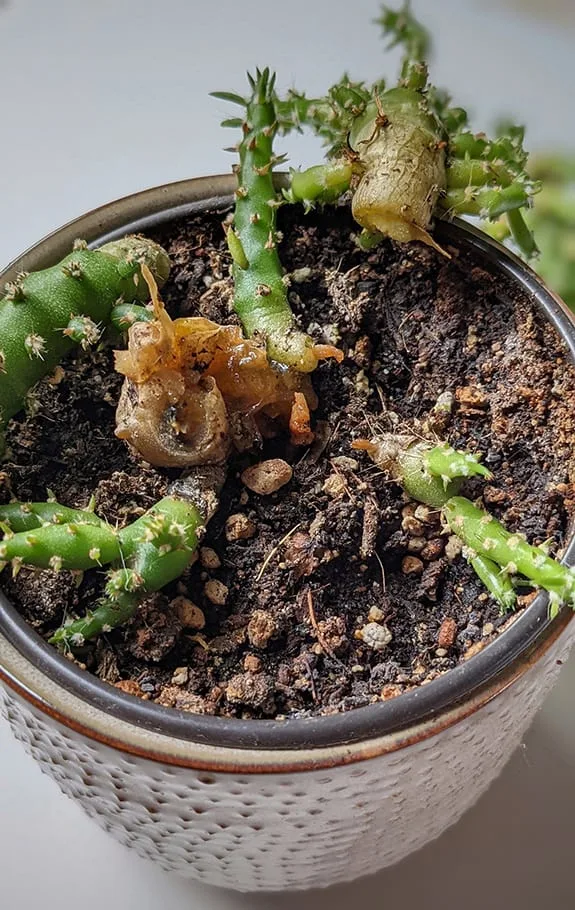
Image source: Web (Bing) / ar.inspiredpencil.com (Web image (fair-use with source credit))
If you're growing indoors in a temperate climate, your plant will need less water and more careful light management. If you're growing outdoors in USDA zones 9 through 11, the plant can handle full sun and longer dry periods. If you're in a humid region, airflow becomes a priority.
Question two: What season is it right now?
Pencil cactus has a distinct growth and dormancy cycle. Active growth happens in spring and summer. That's when it needs water and light.
Dormancy happens in winter. That's when it needs rest, cooler temperatures, and almost no water.
Many people kill their pencil cactus in winter. They keep watering on a summer schedule. The soil stays wet, the roots rot, and the plant collapses.
Question three: How does the plant look right now?
This is your most reliable guide. Firm, upright stems with good color mean the plant is happy. Soft, wrinkled, or yellowing stems mean something is wrong.
Drooping or pale stems usually mean not enough light. Mushy stems mean too much water.
Let the plant tell you what it needs. Don't follow a rigid calendar schedule.
If you have bright indoor light and dry air, water every 2 to 3 weeks in summer. If you have low light and high humidity, water every 4 weeks. If the stems start wrinkling, increase frequency slightly.
If they turn yellow, cut back.
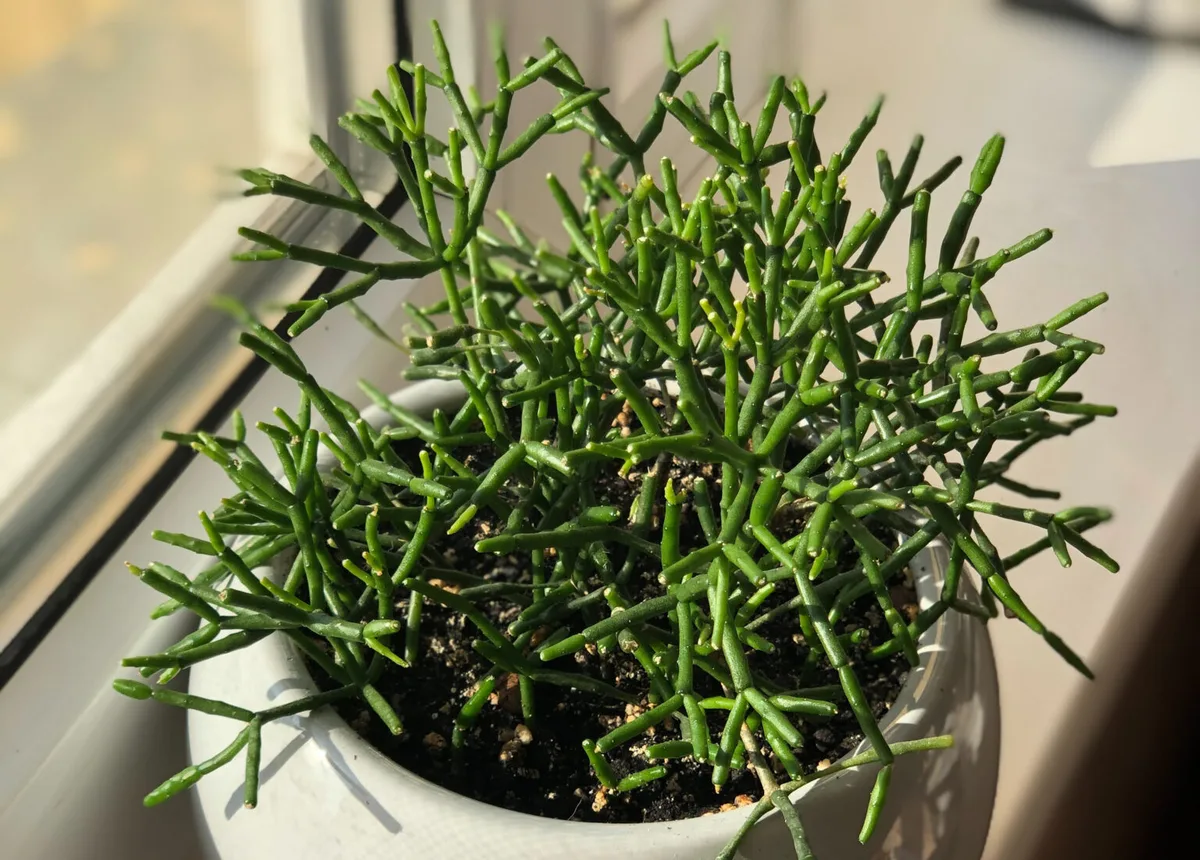
Image source: Web (Bing) / pottedplants.org (Web image (fair-use with source credit))
The Watering Flowchart: When to Water vs. When to Let It Be
Here is a simple decision tree for watering your pencil cactus. Follow these conditions in order.
Step one: Check the soil moisture
Stick your finger about two inches into the soil. If it feels damp at all, do not water. Wait at least another week and check again.
The soil must be completely dry before you add more water.
Step two: Check the stems
If the soil is dry but the stems feel firm and plump, your plant is fine. Do not water yet. Wait until you see the first signs of wrinkling or softening.
That slight stem shrink tells you the plant has actually used the water in the soil.
Some people water preemptively because the calendar says it's time. That is how you get root rot. Learn to read the stems.
Step three: When you water, water deeply
Pour water slowly until it runs out the drainage holes. This ensures the entire root ball gets moisture. Do not give it a small sip.
Small sips encourage shallow roots and weak growth.
Then let the pot drain completely. Do not let it sit in standing water. Discard any water in the saucer after 15 minutes.
Step four: Adjust for conditions
Use this simple table as a general guide.
| Condition | Watering frequency |
|---|---|
| Summer, bright sun, indoor | Every 2 to 3 weeks |
| Summer, full sun, outdoor | Every 1 to 2 weeks |
| Winter, low light, indoor | Every 4 to 6 weeks |
| High humidity environment | Reduce by 50 percent |
| Very dry, heated indoor air | May need slightly more |
These are starting points, not rules. Your plant's appearance always overrides the schedule.
Biggest Pitfalls and Safety Realities
Let me be direct about this. Pencil cactus is one of the most dangerous common houseplants to handle improperly. The sap contains diterpene esters, which are potent skin irritants.
According to the American Society for the Prevention of Cruelty to Animals (ASPCA), Euphorbia tirucalli is listed as toxic to dogs, cats, and horses. Ingestion causes vomiting, diarrhea, and gastrointestinal irritation. For humans, skin contact produces a painful burning rash that can blister.
Eye contact can cause severe pain, light sensitivity, and temporary vision loss.
Always wear gloves when handling this plant. Use thick gardening gloves, not thin disposable ones. Wear long sleeves. And protect your eyes.
Safety glasses or goggles are not overkill when you are pruning or repotting.
If you do get sap on your skin, wash immediately with soap and cold water. Do not use hot water, which opens pores and spreads the irritant. If sap gets in your eyes, flush with cool water for 15 to 20 minutes and seek medical attention.
The most common mistake people make is forgetting the sap is there. They repot without gloves. Or they prune a branch and touch their face.
Or they let a pet brush against a broken stem. It happens faster than you think.
Another common pitfall is using the wrong soil. Regular potting soil holds too much moisture. Pencil cactus needs a mix that drains fast.
Use a commercial cactus and succulent mix, or make your own by mixing two parts cactus soil with one part perlite or pumice.
A third mistake is putting the plant in a pot without drainage holes. This is a death sentence. Water collects at the bottom, roots sit in moisture, and rot sets in.
Always use a pot with at least one drainage hole.
Seasonal Care Flow: Handling Dormancy and Light Changes
Pencil cactus follows the sun. When days get longer and warmer, it grows. When days get shorter and cooler, it rests.
Your care routine should follow that same rhythm.
Spring and summer: Active growth
This is when your plant does most of its growing. Give it as much direct sun as possible. If it has been indoors all winter, move it outside gradually.
Start with one hour of morning sun per day, then increase by an hour every few days. Full sun all day can cause sunburn if the plant is not acclimated.
Water more frequently during this period. The soil will dry faster because the plant is actively using moisture. Fertilize once a month with a balanced liquid fertilizer diluted to half strength.
Stop fertilizing by late summer.
Fall: Transition period
As temperatures drop and daylight decreases, the plant slows down. Reduce watering gradually. Stop fertilizing entirely.
If your plant is outdoors, bring it inside before nighttime temperatures fall below 50 degrees Fahrenheit.
This is also a good time to trim any damaged or leggy stems. Pruning now gives the plant time to heal before winter.
Winter: Dormancy
This is the easiest season for pencil cactus care because you do almost nothing. Water only once a month, or even less. The soil should stay dry for extended periods.
Keep the plant in a cool room, ideally between 55 and 65 degrees Fahrenheit.
Do not fertilize during winter. Do not repot. Do not propagate.
The plant is resting and will not respond well to disturbance.
One thing to watch for in winter is leaf drop. Pencil cactus produces tiny leaves along the stems during active growth. In winter, those leaves often turn yellow and fall off.
That is normal. Do not panic. The stems will look bare but the plant is fine.
If your indoor air is very dry from heating, you may see some stem shriveling. A light misting once every two weeks can help, but do not soak the soil. The plant will plump back up when spring returns.