Your peace lily is drooping again, and you're not sure if it's thirsty, drowning, or just being dramatic. Peace lily plant care doesn't have to be guesswork. The plant gives clear signals.
You just need to read them in the right order.
In our research, the most reliable cultural reference points come from the University of Florida IFAS. They list a temperature range of 65 to 80°F and humidity between 40 and 60%. As of 2026, those numbers still anchor commercial greenhouse practice.
Once you know those baselines, you can diagnose your plant with confidence.
Image source: Web (Bing) / stockcake.com (Web image (fair-use with source credit))
The Real Problem: Why Peace Lilies Droop (and What’s Actually Wrong)
Peace lilies droop for one of three reasons. Underwatering, overwatering, or environmental stress. The trick is to check in that order.
Most droops trace back to water.
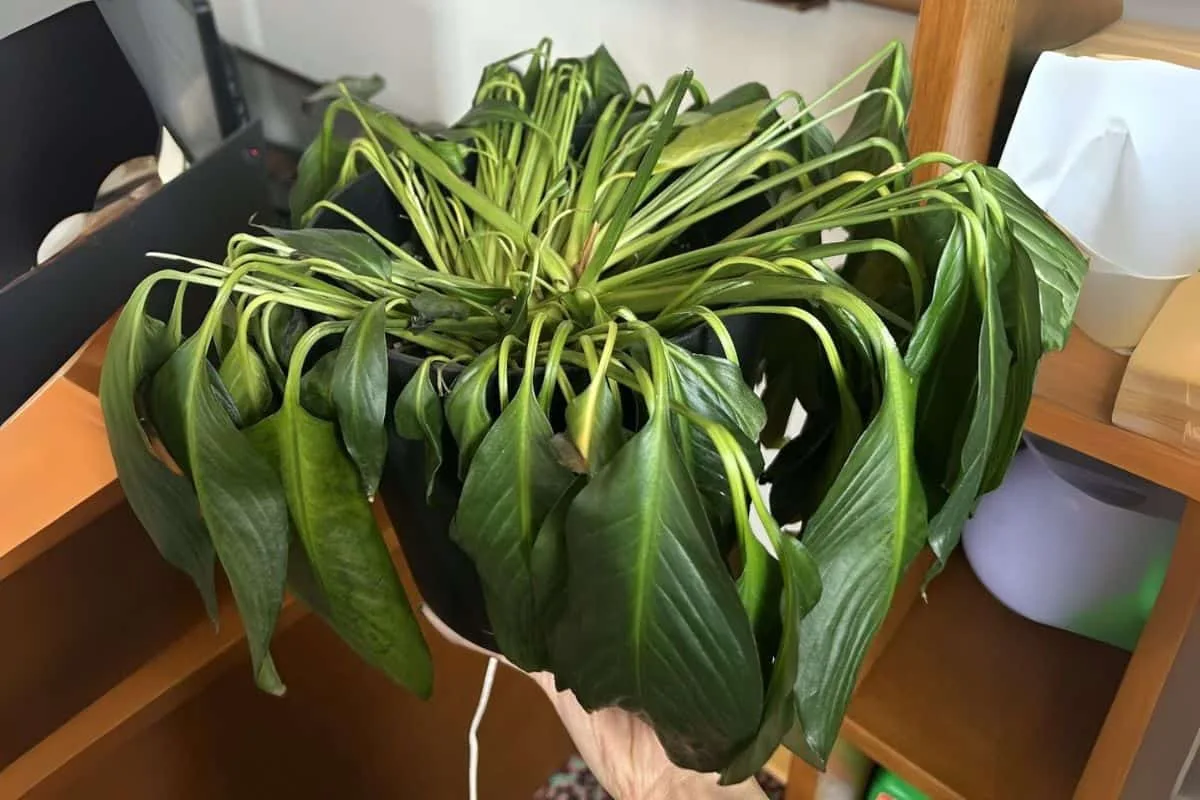
Image source: Bing (Web (fair-use with source credit))
If the soil feels dry a knuckle deep, the plant is thirsty. If it feels like a wet sponge, the roots are likely suffocating. An overwatered peace lily can look just as wilted as a thirsty one.
That's why the soil check comes first.
Environmental stress also triggers drooping. Cold drafts, sudden temperature drops, or too much direct sun can fold the leaves down. Repotting can cause a temporary slump too.
Usually that passes in a day or two.
You can tell an underwatered peace lily by the way the stems angle downward. The leaves feel dry and papery. An overwatered one has soft, mushy stems near the soil line.
If you see that, check the roots for rot.
According to the University of Florida IFAS, Spathiphyllum prefers consistently moist but never soggy soil. That one line sums up most peace lily failures.
The Quick Fix Flowchart: Is It Thirsty, Drowning, or Stressed?
Follow this order and you'll solve most problems in under five minutes. Start with the soil. Then lift the pot.
Then look at the leaves. Finally, consider the room around it.
| Symptom | Likely Cause | First Move |
|---|---|---|
| Drooping, dry soil 1–2 in down | Underwatered | Water deeply |
| Drooping, wet heavy soil | Overwatered | Remove from wet soil |
| Drooping, brown leaf tips | Low humidity or salts | Flush soil, raise humidity |
| Drooping after a cold draft | Temperature shock | Move to a warmer spot |
| Drooping, roots circling the pot | Rootbound | Repot or divide |
If you match your plant to a row, the fix is usually obvious. But don't water on a schedule. Check the soil every time.
Your peace lily is not a calendar plant.
The squeeze test helps. Lift the pot right after watering and feel the weight. Heavy pot means wet.
Light pot means dry. That simple habit prevents almost all watering mistakes.
One more clue: the leaf sheen. A healthy peace lily holds its leaves up like open palms. If they're pointing straight down, start with the table above.
Yellow Leaves: The Three Causes and How to Tell Them Apart
Yellow leaves on a peace lily usually mean one of three things. Overwatering, underwatering, or a nutrient gap. The location of the yellowing is your first clue.
Image source: Web (Bing) / energy.thecwa.org (Web image (fair-use with source credit))
- Lower leaves turning yellow while the soil stays wet means overwatering.
- Lower leaves yellow with dry soil points to underwatering or natural aging.
- Upper leaves turning pale and yellow often means too much direct sun.
- Yellowing across the whole plant with slow growth suggests a nitrogen shortage.
Older leaves naturally yellow and die as the plant grows. One or two is normal. A wave of yellow is not.
If the yellowing is widespread, check the roots for rot.
The nitrogen fix is simple. Use a balanced houseplant fertilizer at half-strength once a month during spring and summer. Don't feed a dry plant.
Water first, then fertilize.
For waterlogged soil, act fast. Slide the plant out of its pot. Trim away dark, mushy roots.
Repot in fresh, well-draining mix. This sounds scary, but it's the only way to save a drowning peace lily.
Brown Tips: Why They Happen and What Actually Stops Them
Brown leaf tips are the most complained-about peace lily issue. They're not a disease. They're dried-out tissue from stress.
And the stress usually has one of four sources.
Tap water is the biggest offender. Most municipal water contains chlorine, fluoride, or dissolved salts. Peace lilies are sensitive to those.
Over time, the salts build up in the soil and burn the leaf tips.
Low humidity is the second cause. Peace lilies come from tropical understory environments. Dry indoor air pulls moisture out of the leaves.
The leaf edges collapse and turn brown.
Fertilizer burn is third. Too much food, or feeding a dry plant, scorches the roots. That damage shows up at the leaf tips.
The fourth cause is simple neglect. Letting the soil go bone dry repeatedly leaves the edges crisp.
Switch to filtered, distilled, or collected rainwater. Set the pot on a pebble tray with water added just below the pebbles. Flush the soil every four to six months to clear salt buildup.
Use a balanced fertilizer at half-strength, no more.
Cutting brown tips is cosmetic, not a fix. Use clean scissors and cut at an angle. Leave a thin brown margin so you don't cut into healthy green tissue.
If you cut into the green, a fresh brown edge forms anyway.
When to Repot (and When to Leave It Alone)
Repotting is not annual maintenance. It's a response to a specific problem. If your peace lily grows fine, leave it alone.
Many peace lilies live happily in the same pot for two or three years.
Here are the signs that it actually needs a bigger home.
- Roots push out through the drainage holes.
- Water runs straight through the pot and out the bottom.
- The soil dries out within two days of watering.
- The root mass is a solid tangle when you lift the plant.
Potting up too far causes trouble. Go just one or two inches larger in diameter. A huge pot holds excess moisture.
That leads straight to root rot. Use a loose, well-draining indoor potting mix.
Spring and summer are the best times to repot. Growth is active then. The roots recover quickly.
You can also divide the plant while you're at it. Peace lilies split easily by hand. Each division with a few leaves and roots becomes a new plant.
This is the simplest way to multiply your collection.
After repotting, keep the soil evenly moist and place the plant in medium, indirect light. Expect some drooping for a few days. That's normal adjustment, not failure.
Don't fertilize for at least six weeks after repotting.
The Four Most Common Peace Lily Care Mistakes
Even experienced owners make these errors. The good news is each one has a simple fix once you know what to look for.
Mistake one: watering on a fixed schedule. Peace lilies do not drink the same amount every week. Their water use changes with light, temperature, and seasonal growth. A Tuesday watering habit works until winter arrives and the soil stays wet for two weeks.
Then you have rot. Check the soil instead of the calendar.
Mistake two: using tap water exclusively. Municipal water contains dissolved solids that build up in the potting mix. The salts burn the leaf tips and edges. Our research shows that switching to filtered or distilled water resolves brown tip problems in about four to six weeks for most plants.
Rainwater works even better.
Mistake three: putting the plant in direct sun. Peace lilies are understory plants. They evolved on the forest floor under a canopy. Direct sunlight scorches the leaves and turns them pale.
Bright, indirect light is the sweet spot. A north or east-facing window works well. If the leaves look washed out, move the plant back from the glass.
Mistake four: repotting too often or too large. A pot that is too big holds excess moisture. That moisture sits against the roots and causes rot. Peace lilies bloom better when their roots are slightly crowded.
Repot only when you see clear signs like roots pushing through drainage holes or water running straight through.
Quick Answers to Peace Lily Care Questions (FAQs)
How often should I water a peace lily?
There is no fixed number. Water when the top inch of soil feels dry to the touch. That might be every five days in summer and every twelve days in winter.
The weight of the pot is a reliable guide. A light pot means dry soil.
Why does my peace lily have green flowers?
The white spathe naturally fades to green as it ages. That is normal. Each bloom lasts six to eight weeks before turning green and eventually browning.
Cut the spent bloom at the base of the stem to encourage new flowers.
Can peace lilies grow in low light?
They survive in low light, but they will not bloom well. For flowers, provide medium, indirect light for several hours a day. A spot near a window but out of direct sun is ideal.
Low light produces lush green leaves with few or no blooms.
Are peace lilies toxic to cats and dogs?
Yes. Peace lilies contain calcium oxalate crystals. These cause oral irritation, drooling, and vomiting if ingested.
Keep the plant out of reach of pets. Contact your veterinarian if your pet eats any part of the plant. The ASPCA lists peace lily as toxic to both cats and dogs.
Why are my peace lily leaves splitting?
Low humidity is the most common cause. The leaf tissue dries out and cracks along the veins. Increase humidity with a pebble tray or a nearby humidifier.
Mechanical damage from brushing against the leaves also causes splits. Place the plant in a low-traffic spot.
Should I mist my peace lily?
Misting offers temporary relief but does not raise humidity for long. A pebble tray or grouping plants together works better. Misting can also encourage fungal leaf spots if the leaves stay wet overnight.
Focus on the soil and the room humidity instead.