You worked all summer to keep your hibiscus blooming, and now the forecast calls for frost. Overwintering hibiscus doesn't have to be stressful, but it does require a quick decision about what kind of plant you're working with. Get it right, and your hibiscus will reward you with fresh growth in spring.
Get it wrong, and you'll be shopping for a replacement come May.
As of 2026, the USDA Plant Hardiness Zone Map divides North America into 13 zones based on average annual extreme minimum temperatures. Tropical hibiscus (Hibiscus rosa-sinensis) typically cannot survive below 50°F, while hardy hibiscus (Hibiscus moscheutos) often tolerate winters down to -20°F when properly mulched. That one distinction drives every step you'll take from here.
What to Know Before You Start: The One Rule That Changes Everything
Here's the short version: match your overwintering method to your hibiscus variety. Tropical hibiscus must come indoors or go dormant in a cool, dark spot. Hardy hibiscus can stay in the ground and sleep under a thick layer of mulch.
That's the rule. Everything else is fine-tuning.
The reason this matters comes down to genetics. Tropical hibiscus evolved in warm climates like Hawaii, the Caribbean, and Southeast Asia. They never developed the ability to survive freezing temperatures.
Hardy hibiscus, on the other hand, are native to North American wetlands and meadows. They die back to the ground in winter and push out fresh growth when the soil warms up. If you treat both the same way, you'll lose at least one of them.
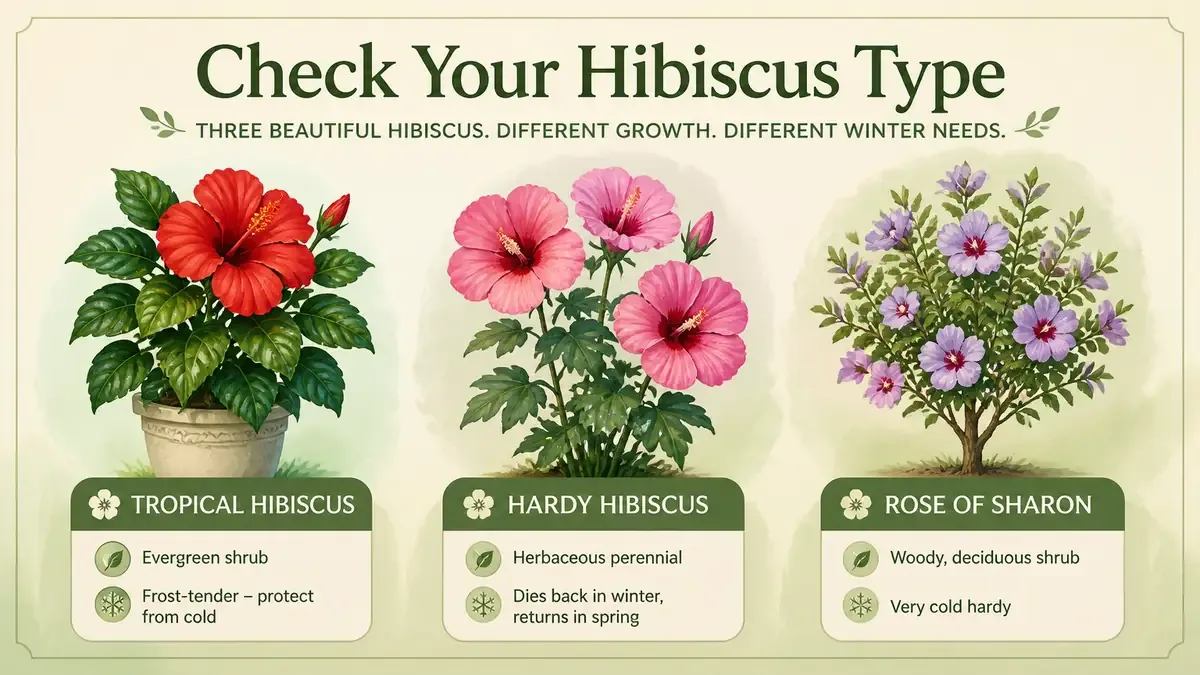
Image source: Bing (Web (fair-use with source credit))
Before you do anything else, check your local frost date and know your USDA hardiness zone. Your zone tells you how cold your area typically gets. Your frost date tells you when to take action.
Both are easy to find through your local university extension service. Write them down. You'll need both numbers for every decision you make from this point forward.
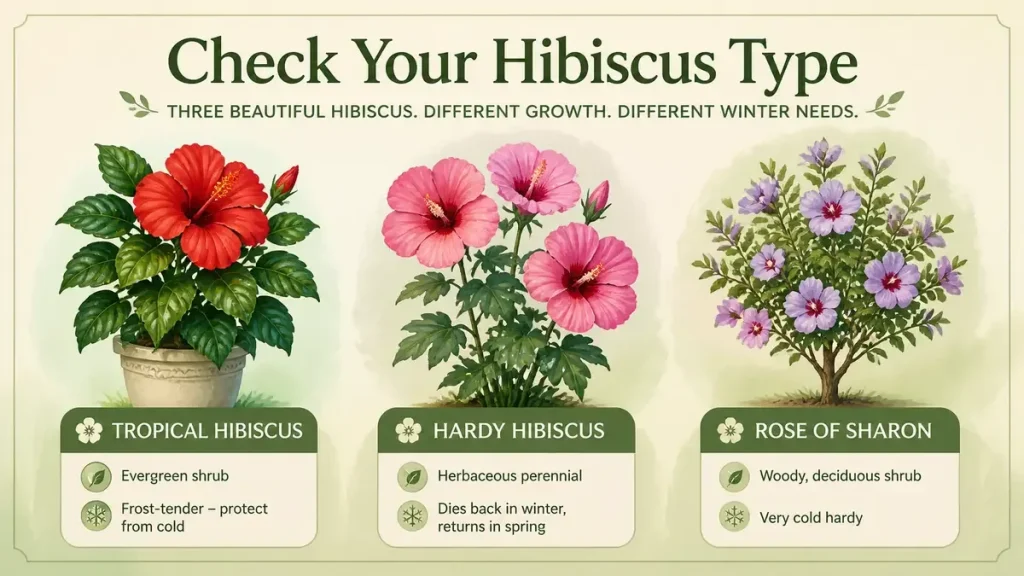
First, Do You Have a Tropical or Hardy Hibiscus? (It Matters More Than You Think)
Look at the leaves and flowers first. Tropical hibiscus have glossy, dark green leaves that stay evergreen year-round. Their flowers come in vivid colors like red, orange, yellow, and pink, and each bloom only lasts a day.
Hardy hibiscus have duller, heart-shaped leaves with a slightly fuzzy texture. Their blossoms are enormous, often reaching dinner-plate size, and they come in white, pink, or deep burgundy.
If you're still unsure, check the stems. Tropical hibiscus have woody, branching stems that never die back. Hardy hibiscus produce herbaceous, fleshy stems that collapse and turn brown in autumn.
In colder zones, a hardy hibiscus will look completely dead after the first hard frost. That's normal. It's not dying.
The roots are alive and waiting.
Here's a quick side-by-side to help you sort it out:
| Feature | Tropical Hibiscus | Hardy Hibiscus |
|---|---|---|
| Cold tolerance | Damaged below 50°F (10°C) | Survives down to -20°F (-29°C) |
| Dormancy | Needs frost protection | Dies back to roots naturally |
| Leaves | Glossy, dark green | Dull, heart-shaped, fuzzy |
| Typical blooms | 4–6 inches, many colors | 6–12 inches, dinner-plate size |
| Hardiness zones | 9–11 | 4–9 |
Research published through University of Minnesota Extension confirms that proper identification is the single most reliable predictor of winter survival. Once you know which type you have, the rest of this guide becomes straightforward.
Tropical Hibiscus: Should You Keep It Growing or Let It Sleep?
If you have a tropical hibiscus, you have two solid options. The first is to treat it as a houseplant and keep it actively growing. The second is to let it go dormant in a cool, dark spot.
Both work. The right choice depends entirely on your space and lighting.
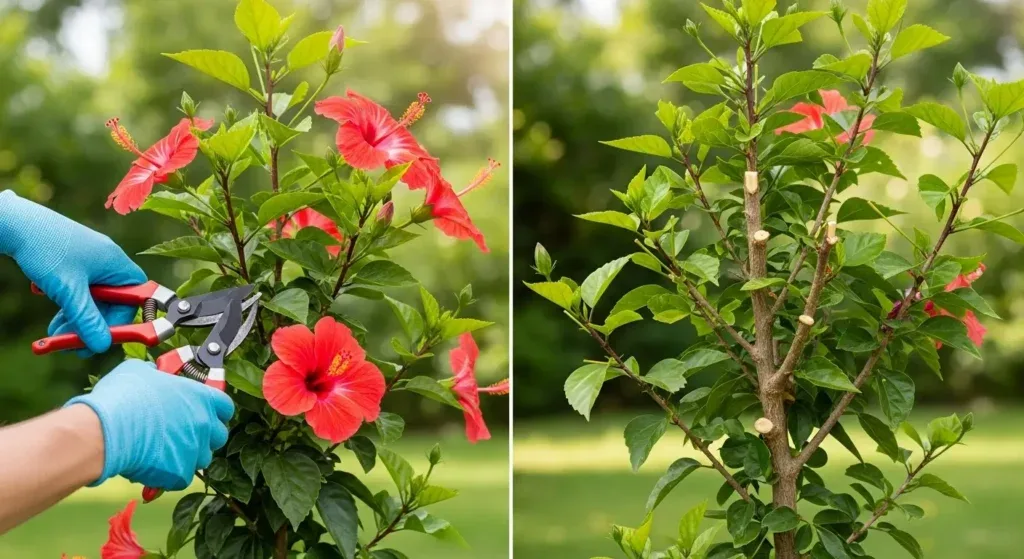
Image source: Web (Bing) / oliviasgarden.net (Web image (fair-use with source credit))
Option 1: Keep growing indoors
Your tropical hibiscus needs at least six hours of bright, indirect light per day. A south-facing window works, but you'll likely need a grow light to prevent leggy growth. Keep the temperature between 60°F and 70°F.
Water when the top inch of soil feels dry. Don't fertilize during winter unless you see active new growth. If your indoor air is dry, run a small humidifier nearby or set the pot on a pebble tray.
Option 2: Let it go dormant
Dormancy is the lower-maintenance choice. Move your hibiscus into an unheated basement, garage, or porch where the temperature stays between 45°F and 55°F. Water it deeply once every three to four weeks.
Just enough to keep the soil from completely drying out. No fertilizer. No grow light.
The plant will drop most of its leaves and look rough. That's expected. It's resting.
Ask a few simple questions to pick your route. Do you have a bright, warm room? Then keep growing.
Do you have a cool, dark spot that stays above freezing? Then let it sleep. If you're wrong, the plant won't die immediately, but you'll see problems within a month.
Hardy Hibiscus: The "Cut It Back and Mulch" Method
Hardy hibiscus are built for harsh winters. In zones 4 through 9, they can stay outside all year. The process is simple: cut them back, insulate the crowns, and wait for spring.
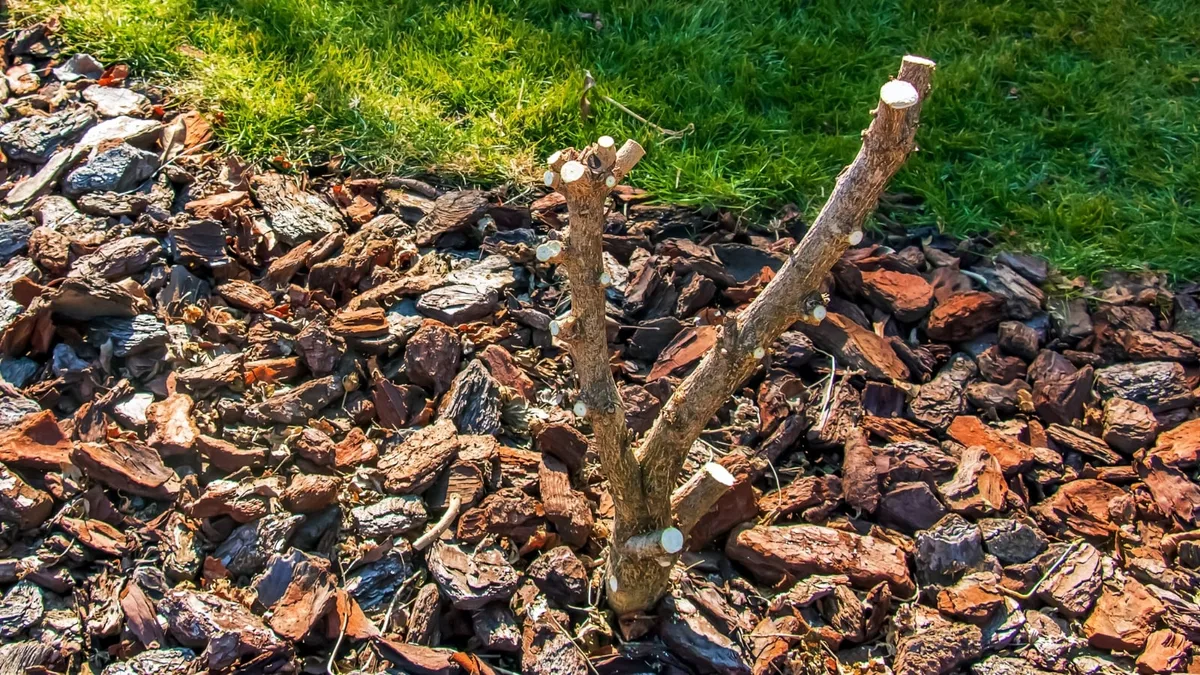
Image source: Bing (Web (fair-use with source credit))
Start by waiting until after the first hard frost kills the foliage. This usually happens in late October or November. Then cut the stems down to about 6 inches above the ground.
Use clean, sharp pruners. This reduces the chance of fungal disease and removes the soggy, collapsing stalks that can harbor pests.
Next, pile 4 to 6 inches of loose, dry mulch over the crown. Shredded bark, straw, or chopped leaves all work well. The goal is to protect the roots from freeze-thaw cycles.
Those cycles cause more damage than deep cold. If you're in the northern edge of zone 4, add a second layer of mulch in early winter for extra insurance.
Don't cut hardy hibiscus back in fall too early. Cutting while stems are still green can push out new growth that will get zapped by frost. The plant wastes energy it needs for root survival.
Also, don't remove the mulch in early spring. Wait until the soil consistently stays above 50°F. When you finally rake it away, you'll likely see tiny red shoots already pushing through the ground.
Some gardeners skip pruning entirely and let the stems stand through winter. That's fine if you want visual interest or seed pods. Just know that standing stems catch snow and often flop over.
Cutting them back is always the safer route.
The Mistakes That Kill Hibiscus Over Winter (And How to Avoid Them)
Most overwintering failures come down to five correctable mistakes. Avoid these and you'll be way ahead of the crowd.
1. Overwatering a dormant plant
People see dry soil and panic. A dormant tropical hibiscus needs almost no water. Too much moisture rots the roots.
When in doubt, add less.
2. Bringing pests inside
Aphids, spider mites, and scale love to hitchhike on indoor plants. Inspect every leaf, stem, and soil surface before moving a tropical inside. Treat with insecticidal soap and let the plant dry before bringing it in.
3. Storing tropicals in an unheated garage in freezing zones
A garage that drops below 40°F will kill a tropical hibiscus. Even in dormancy, these plants can't handle frost. Use a thermometer to verify your storage spot stays above 45°F.
4. Cutting hardy hibiscus back in September
Cutting too early stimulates fresh growth. That growth will die in the first frost, and the plant may not rebuild its crown. Wait until the first hard frost actually kills the top growth.
5. Moving plants back outside too quickly
Sunburn is real. Plants acclimate to indoor light levels. If you shove a hibiscus straight into full sun, the leaves will bleach and drop.
Harden it off over ten days. Start in shade, then gradually increase sun exposure.
One more mistake worth mentioning: forgetting to label your pots. If you grow multiple species, you'll thank yourself come spring. A simple wooden tag saves you from guessing which plant gets the cut-back treatment and which one gets a warm windowsill.
Spring Wake-Up: How to Get Your Hibiscus Growing Again
Around late February or early March, your hibiscus will start showing signs of life. Dormant tropicals may push tiny buds. Hardy varieties will wait for soil warmth.
Your job is to help them transition smoothly.
For dormant tropicals, move the pot into a bright spot and raise the temperature to around 65°F. Start watering more regularly, but don't soak the soil all at once. Resume light fertilizing after you see steady new growth.
For hardy hibiscus, wait until the soil temperature stays above 50°F before raking away mulch. That usually lands in April or May depending on your zone. New reddish shoots will appear quickly once the soil warms.
Repotting is smart at this stage. Move tropicals into a pot one size larger with fresh, well-draining mix. Hardy plants in the ground just need a light dose of balanced fertilizer and a fresh layer of mulch for summer.
Don't rush the outdoor transition. Harden off any hibiscus that spent winter indoors by placing it in shade for a few hours daily, then slowly increasing sun exposure over 10 days. Leaves that hit full sun too fast will scorch and drop.
Frequently Asked Questions
When should I bring my hibiscus inside?
Bring tropical hibiscus indoors before nighttime temperatures drop below 50°F. That often means late September or early October for northern zones. Hardy hibiscus can stay outside all winter.
Can I overwinter hibiscus in a garage?
Yes, if the garage stays between 45°F and 55°F and never freezes. A dormant tropical hibiscus can handle darkness but not frost. Attached garages work better than detached ones.
Why is my hibiscus losing leaves indoors?
Leaf drop indoors is usually shock from changing light and humidity. It happens within days of moving inside. Keep watering light and let the plant settle.
Healthy stems mean new leaves will return.
How do I wake up a dormant hibiscus?
Move it to a warm, bright spot and water thoroughly. Raise the temperature above 60°F and wait for new growth before fertilizing. Full recovery can take three to four weeks.