If your coleus has survived the summer, you already know the heartbreak. One night of frost and it's gone. Overwintering coleus cuttings is the workaround that keeps your favorite colors alive through winter and ready for spring.
Instead of hoarding big pots indoors, you take a few stem cuttings, root them, and keep them growing on a sunny windowsill.
The process is embarrassingly easy. University extension guides report that coleus roots in water within two to three weeks at normal room temperatures. As of 2026, that's still the fastest method, and it's exactly what we'll break down here.
You'll learn when to cut, how to root, and what to do when your windowsill light isn't enough.
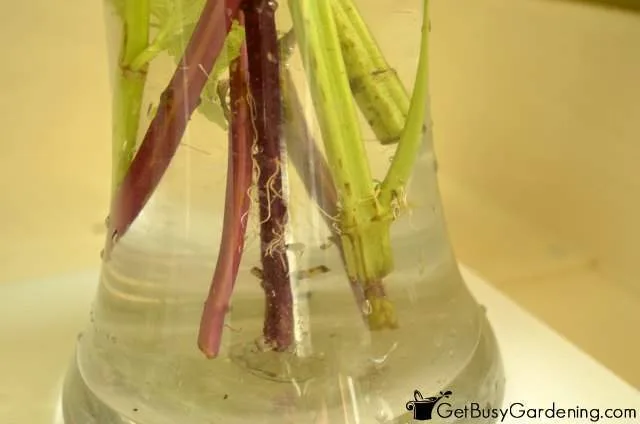
Image source: Web (Bing) / getbusygardening.com (Web image (fair-use with source credit))
Quick Answer
Overwintering coleus cuttings means taking 4 to 6 inch stem tips before the first frost. Remove lower leaves, root them in water or moist soil, and keep them indoors. Place them in bright indirect light.
Pinch new growth every few weeks. Come spring, you have free, identical plants.
Why Bother Overwintering? (The Frost Deadline)
Coleus (Plectranthus scutellarioides) is a tender perennial. That means it lives year-round in warm climates, but one hard frost kills it. In most of North America, that frost arrives between September and November depending on your zone.
Check the USDA Plant Hardiness Zone Map for your area's first frost date.
The payoff is real. One plant can give you 10 to 20 cuttings. Each one roots quickly and becomes a clone of the parent.
That's the same color, the same leaf shape, the same everything. You're not gambling on seed mixes. You're preserving what you already love.
There's also the money angle. A nursery coleus costs anywhere from $3 to $8 in spring. Overwinter a few cuttings and you skip that cost entirely.
Plus, your cuttings are already weeks ahead of anything you'd start from seed.
First Decision: Cuttings vs. Bringing the Whole Plant Indoors
Before you do anything, ask yourself if you want to keep the whole plant or just take cuttings. Both work, but each has a trade-off.
Bringing a whole coleus indoors is the lazy option. You dig it up, pot it, and carry it inside. The problem?
It often gets leggy and drops leaves as it adjusts to dimmer light. It also takes a lot of space.
Cuttings are the smarter choice for most people. They take up a fraction of the room, root easily, and you can take many of them from a single plant. If one fails, you have backups.
| Method | Space Needed | Light Needs | Success Rate | Workload |
|---|---|---|---|---|
| Cuttings | Small (windowsill) | Bright indirect | High, 90%+ with care | Low |
| Whole plant | Large (floor or table) | Very bright to stay compact | Medium, often leggy | Low-medium |
If you have a bright sunroom or a grow light big enough for a full pot, the whole plant can work. For everyone else, cuttings are the way to go.
The Core Workflow: Taking and Rooting Your Cuttings
Here's the good news: coleus roots fast. In our research, cuttings in water typically show roots in 10 to 21 days. The trick is doing it before frost, with the right cut.
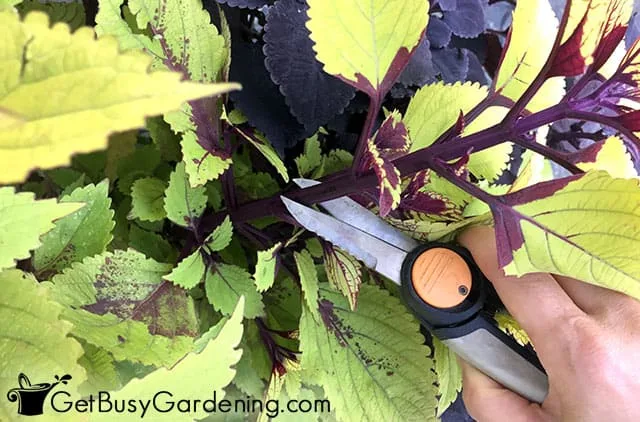
Image source: Web (Bing) / getbusygardening.com (Web image (fair-use with source credit))
Step 1: Take a Healthy Tip
Pick a stem that's not flowering. Flowering stems root slower and use energy on blooms. Use clean scissors or pruners.
Cut a 4 to 6 inch piece at a 45 degree angle just below a leaf node. That node is where the roots will emerge.
Step 2: Strip the Lower Leaves
Remove the leaves from the bottom half of the cutting. Leave two to four leaves at the top. This stops rot and gives the cutting a clear spot for roots.
Step 3: Choose Your Rooting Method
You have two solid options:
- Water: Drop the cutting in a clean jar with room-temperature water. Change the water every 2 to 3 days.
- Soil: Dip the base in rooting hormone, then plant it in moist, well-draining potting mix.
Water is easier to watch. Soil produces sturdier roots and skips transplant shock. If you go the soil route, use a humidity dome or plastic bag with a small gap for air.
Once roots are about 1 to 2 inches long (roughly 2 to 4 weeks), pot the cutting in a 3 to 4 inch pot with drainage. That's the transplant point for water-rooted cuttings.
Winter Care by Your Conditions (The Decision Branch)
Your winter windowsill is not your summer garden. Light drops, humidity drops, and the plant responds. The key is matching your care to your actual conditions.

Image source: Web (Bing) / ar.inspiredpencil.com (Web image (fair-use with source credit))
Scenario A: Bright South or East Window
If you have a sunny window, basic care works. Keep the cutting or potted plant in bright indirect light. Water when the top inch of soil feels dry.
Pinch back the growing tip every few weeks to encourage bushy growth.
Scenario B: Low Natural Light
This is the most common winter problem. A north window or short days mean the plant stretches toward the light. The fix?
Add a grow light. Standard LED shop lights work. Run them for 12 to 14 hours a day, and keep the light about 4 to 6 inches above the leaves.
Scenario C: Dry Heated Air
Radiators and forced air make indoor humidity drop, sometimes below 30%. Coleus prefers more. You'll see crispy leaf edges.
Fix it with a pebble tray, a room humidifier, or simply group several plants together.
Here's the decision branch:
- Leaves pale and leggy? Add light.
- Leaves yellow and mushy? Too much water, back off.
- Leaves curling or crisp? More humidity.
Common Mistakes That Kill Winter Coleus
Even with good intentions, people lose cuttings every winter. Here are the usual suspects.
Overwatering in Dim Light
This is the #1 killer. Coleus in winter grows slower, so it needs less water. In low light, the soil stays damp longer.
Too much water leads to root rot. Always check the top inch of soil before watering.
Skipping the Hardening-Off Step
You've kept a plant alive all winter. Then you put it straight into full sun. It burns.
The transition has to be gradual. Give it an hour of morning sun, then increase over two weeks.
Letting Cuttings Flower
A coleus in flower is a plant that thinks its job is done. Pinch off flower buds as soon as they appear. That keeps the energy in the leaves and roots.
Drafty Windows and Hot Radiators
Cold drafts stress the plant. So does scorching heat from a radiator. Pick a spot that stays between 65 and 75°F (18 to 24°C).
Ignoring Pests
Spider mites love dry indoor air. Check the undersides of leaves weekly. A quick rinse in the shower or a spray of insecticidal soap works.