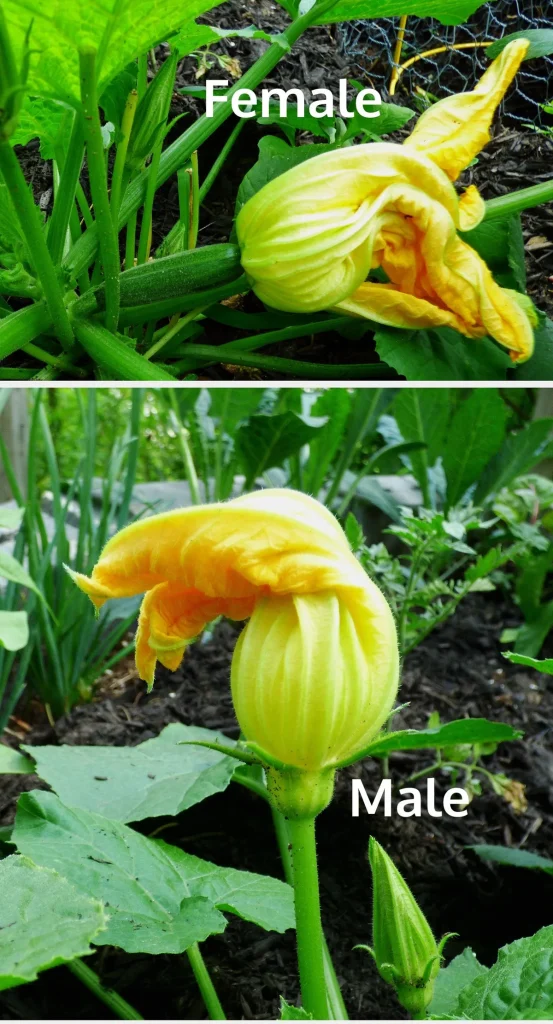
Growing squash is easy. Figuring out which blossoms to pick is another story. The difference between male vs female squash blossoms decides your harvest.
It's simple once you see it. But getting it wrong costs you vegetables.
In most squash varieties, the plant produces four to ten male blossoms for every female one. That abundance makes males the better harvest choice for eating. The key detail sits right below the petals: a swollen base that only females have.
Here's how to spot it instantly.
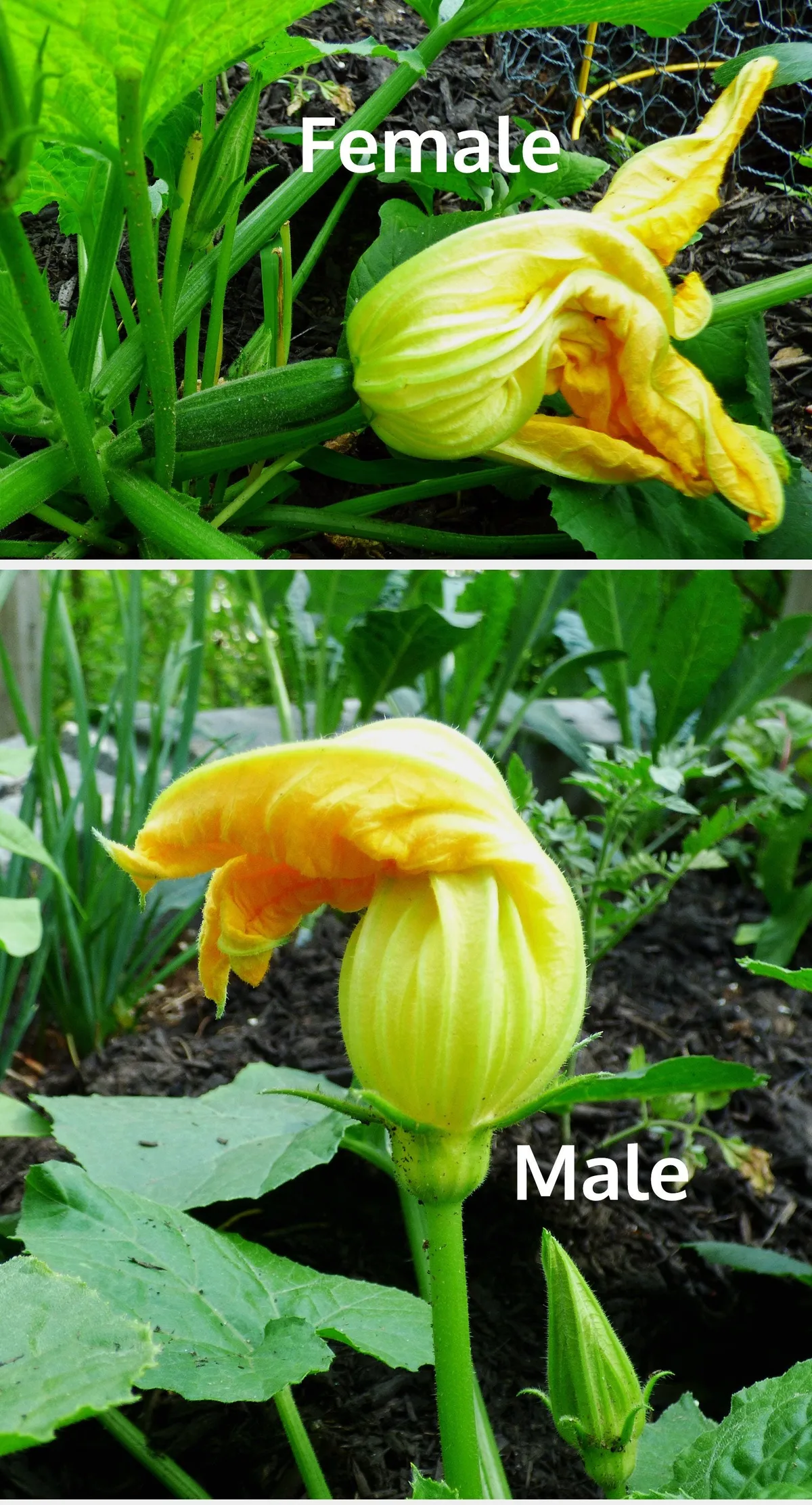
Image source: Web (Bing) / gardeningknowhow.com (Web image (fair-use with source credit))
Quick Answer / Key Insight
Male blossoms have thin stems and no fruit at the base. Female blossoms show a small swollen ovary behind the petals. Pick males for cooking, frying, or stuffing.
Leave females on the vine to develop squash. Both work for hand pollination, but males do the pollinating.
How to Tell Male and Female Squash Blossoms Apart
Look at the stem right below the flower. That single glance is all you need. On a male blossom, the stem is long, thin, and uniform all the way down.
On a female blossom, the stem is shorter and thicker. And right behind the petals sits a small bulge.
That bulge is the ovary, the immature squash before pollination. It looks like a miniature version of the vegetable you're expecting. If you see it, you're holding a female flower.
If the stem looks smooth and straight with no swelling, it's male.
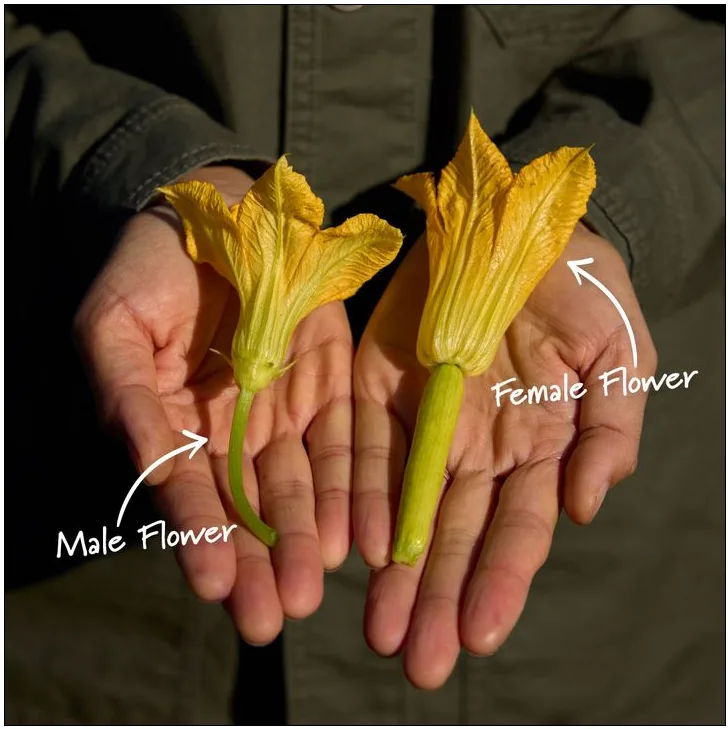
Image source: Web (Bing) / support.burpee.com (Web image (fair-use with source credit))
The inside offers a second confirmation. Male flowers hold a single furl of pollen-covered stamens in the center. Female flowers have a multi-branched stigma that receives pollen.
Both are worth cracking open if you're really unsure.
You also want to watch the timing. Male blossoms usually appear one to two weeks before females. In a young squash patch, nearly every flower you see initially is male.
Don't panic. That's normal plant behavior, not a sign of failure. The females start arriving soon after.
Male vs Female Blossoms: Side-by-Side Comparison
| Feature | Male Blossom | Female Blossom |
|---|---|---|
| Stem | Long and thin | Short and thick, with a swollen base |
| Base / Ovary | Smooth, no bulge | Bulbous embryo, like a tiny squash |
| Inside flower | Stamen covered in pollen | Stigma with multiple lobes |
| First bloom | 1–2 weeks earlier | Appears later in the season |
| Pollination role | Provides pollen | Receives pollen, grows into fruit |
| Best use | Eating, stuffing, hand pollination | Leave to mature, or eat if sacrificed |
The table covers the main differences at a glance. Our research shows the stem check is the fastest reliable identifier. You don't need a magnifying glass or a botany degree.
You just need to look at the base of the flower before you snap it off.
One thing that surprises people: the female flower itself is often larger and more open. The petals may also be slightly thicker. But the bulbous base is still the giveaway.
If the swelling is tiny, that flower was pollinated recently. If it's larger and starting to curve, you're looking at a forming squash with the blossom still attached.
Which Blossom to Pick Based on Your Goal
Now that you can tell them apart, here's the real question: which one should you actually pick? It depends entirely on what you want out of your plant.
If you want to cook with squash blossoms, pick the males. They're abundant, and removing them doesn't reduce your yield. Each male you take is one less competitor for the plant's energy.
That's a win-win.
If you want to maximize your squash harvest, leave the females alone. Every female blossom you pick is one fruit you'll never eat. You should also leave a few males behind so bees have pollen to work with.
A plant with zero males won't set fruit.
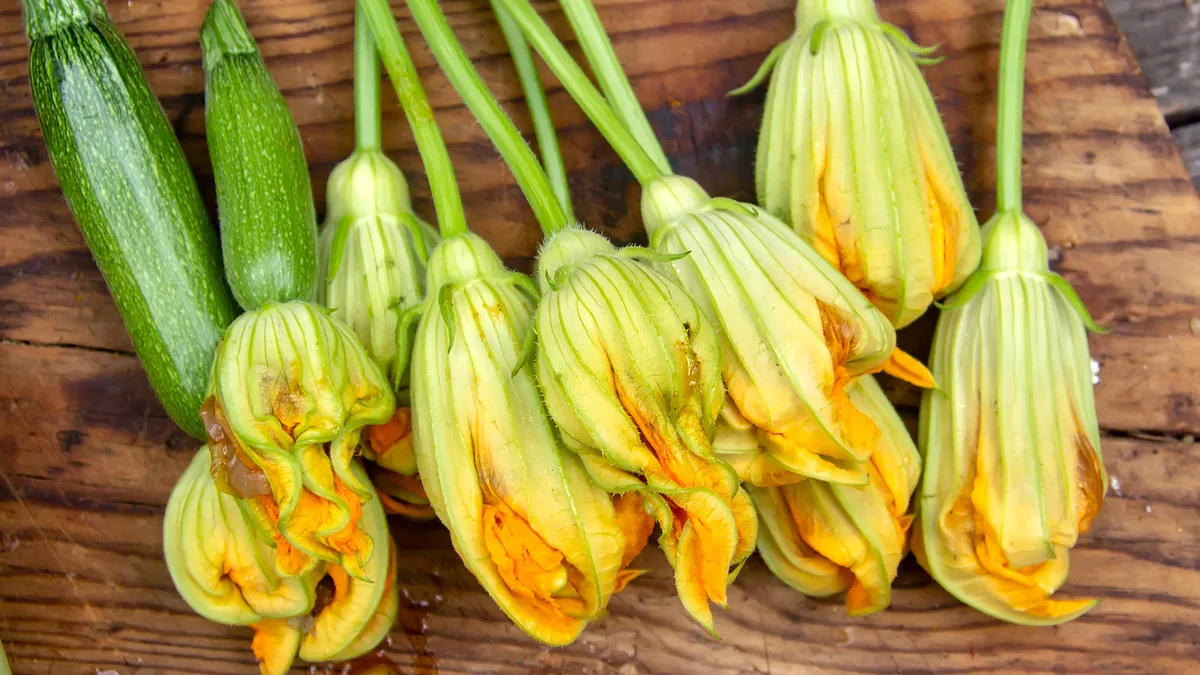
Image source: Web (Bing) / tastingtable.com (Web image (fair-use with source credit))
If you want to hand-pollinate, pick a male and do the job yourself. This is the classic technique. Strip away the petals, expose the stamen, and gently dust the female's stigma inside the blossom.
It takes about ten seconds per flower.
If you're growing for both flowers and fruit, harvest males early in the season. Once females start appearing, slow down. Take only a few males each morning and leave the rest for pollination.
Aggregate reviews from experienced gardeners confirm this balance works well for zucchini and summer squash.
If you're okay with fewer squash, feel free to eat a few female blossoms too. The flower is more tender and has a slightly richer flavor. Just know that every female blossom you harvest is one less vegetable at the end of the season.
Mistakes to Avoid When Harvesting Squash Blossoms
Even experienced gardeners mess this up. Here are the most common mistakes we see, plus what to do instead.
- Picking every blossom on the plant. If you strip all the males, pollination drops to zero. The females will wither and fall off. Always leave some males behind.
- Confusing the female's ovary with a fruit. The swollen base is part of the flower, not a vegetable that survived blossom drop. It will only grow if the flower gets pollinated.
- Harvesting at the wrong time of day. Blossoms close by early afternoon. The petals get limp and hard to work with. Pick them in the morning, right after they open.
- Washing them too aggressively. You can rinse off dirt with a gentle spray. Don't soak them or rub the petals. They're fragile and bruise easily.
- Storing them in a sealed bag. Squash blossoms need airflow. A damp paper towel in an open container works far better. They'll last about two days in the fridge, no longer.
- Throwing away the male stem. The stem is edible and adds a nice crunch. Don't trim it off unless a recipe tells you to.
One final tip: check for bees before you harvest. If a bee is already inside the flower, leave that one alone. It's doing the job you'd rather not do by hand.
Morning Harvest: Why Timing Matters More Than You Think
Timing is everything when it comes to squash blossoms. The window for picking them at their best is surprisingly short. Most blossoms open at dawn and close by late morning.
Once they close, the petals get fragile and the flavor starts to fade.
Aggregate reviews from experienced gardeners consistently point to the same rule: harvest between 6 a.m. and 9 a.m. That's when the flowers are fully open, crisp, and at peak flavor. The morning dew keeps them hydrated, which makes them easier to handle without tearing.
If you can't get out that early, you still have options. Pick them in the evening after they've closed, but understand what you're getting. The petals will be softer and more wilted.
They'll still taste fine, but they won't have that same vibrant crunch.
One thing to watch: rain changes everything. A heavy downpour can damage open blossoms, and wet petals are more prone to mold. If a storm rolls through, check your flowers the next morning.
Damaged blossoms should come off the plant anyway, so you might as well use whatever's still intact.
What About the Female Blossoms? Here's the Trade-Off
Eating female blossoms is completely fine. They're arguably more tender than males, with a slightly sweeter flavor. But you're paying a price for that indulgence.
Every female blossom you pick is one squash you'll never eat.
Here's how the math works out. In a typical growing season, a healthy summer squash plant produces around 20 to 25 fruits. Each fruit starts as a female blossom.
If you pick and eat ten of those female flowers, you're cutting your harvest roughly in half.
That's a real trade-off. But for some gardeners, it's worth it. Stuffed female blossoms with ricotta and herbs are a restaurant favorite for a reason.
The larger flower petal holds filling better and cooks more evenly.
If you decide to eat some females, be selective. Pick the ones that appear early in the season, before the plant has committed to a heavy fruit load. And never pick a female blossom that's already been pollinated.
You can tell because the ovary at the base starts swelling noticeably within a day or two of pollination.
You should also know that the first few female blossoms on a plant often drop off anyway. The plant is still establishing itself and may not have the energy to support those early fruits. Sacrificing a few of those early females for your dinner plate doesn't cost you much in the long run.
Squash Blossom Storage and Prep: Keeping Them Fresh
You've harvested your blossoms. Now the clock is ticking. Squash blossoms are among the most perishable things in the garden.
They lose their texture within hours if you don't handle them right.
Start by checking each blossom for hidden critters. Aphids love to hide in the folds of the petals. A gentle shake usually dislodges the larger bugs.
For anything stubborn, a quick rinse under cool water works, but pat them dry immediately. Standing water turns the petals soggy fast.
For storage, skip the plastic bag. The trapped moisture will turn your blossoms into a slimy mess before you know it. Instead, lay them on a paper towel in a single layer, then cover them with another paper towel.
Slide the whole thing into an open container and put it in the fridge. That setup buys you about two days.
If you're not cooking them immediately, you can also prep them in advance. The stamens inside male blossoms are edible but slightly bitter. Many recipes call for removing them.
For stuffed blossoms, you'll want to gently spread the petals and remove the pistil or stamen while leaving the flower intact.
And here's a trick we learned the hard way: don't wash them until right before cooking. Excess moisture makes the batter slide off when you're frying. Dry blossoms mean crispy blossoms.