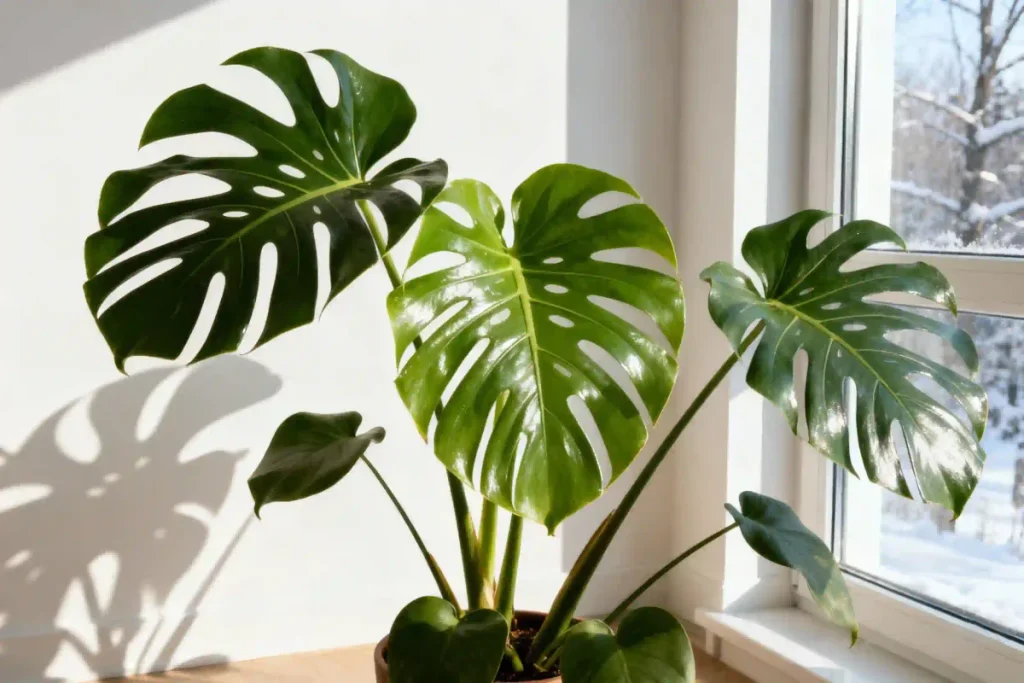
If your houseplants look tired, droopy, or yellowing right now, they're telling you something: winter changed the rules. Keeping houseplants happy during winter isn't about doing more, it's about adjusting what you already do. The light is weaker.
The air is drier. The soil stays wet longer. That combination breaks a lot of standard care advice.
Research from university extension programs confirms that indoor light levels can drop by half or more in winter, even in rooms that feel bright. As of 2026, most common houseplants need humidity around 40-60%, but heated homes often sit at 20-30%. That gap alone explains most winter leaf browning.
Let's walk through what you can do about it, starting with how your plants actually experience the season.
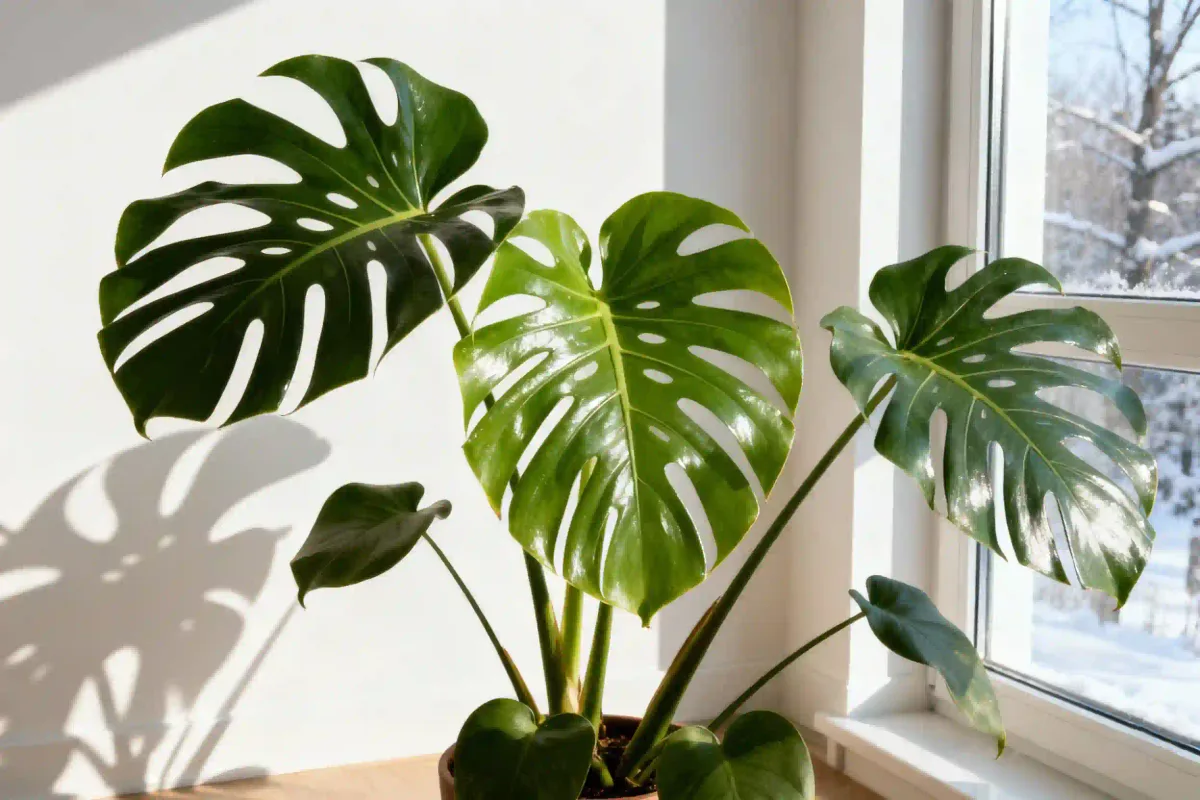
Image source: Bing (Web (fair-use with source credit))
Winter Houseplant Care: 9 Secrets They Won't Tell You
What Really Happens to Houseplants in Winter (And Why Your Usual Routine Stops Working)
Winter changes everything for your plants, but not the way most people assume. The biggest shock is light, not temperature. A north-facing window in January delivers a fraction of the light it did in June, and even south-facing windows lose intensity as the sun sits lower.
Most houseplants are living on a fraction of their summer energy budget.
The second stressor is humidity. Forced-air heating systems pump warm, dry air through your home, dropping humidity levels to 20-30% in many rooms. Tropical houseplants, which evolved in rainforests and cloud forests, can't easily keep their leaves hydrated in those conditions.
That's why leaf edges crisp up by February.
Third is temperature swings. A plant sitting near an exterior door gets blasted with cold air every time it opens. Another near a radiator bakes gently all evening.
These fluctuations confuse plants that prefer steady conditions.
Here's the part that trips people up. Dormancy isn't universal. Some plants like pothos, spider plants, and many ferns keep growing slowly through winter.
Others, especially succulents and cacti, genuinely go dormant and want less water, lower light, and no fertilizer. So before you change anything, you need to know which camp your plant is in. That brings us to a quick three-question check that pinpoints the problem.
The 3-Question Assessment That Tells You Exactly What's Wrong
Instead of guessing, run this quick assessment. Answer honestly, and the right fix usually becomes obvious.
Question 1: What's the light situation? Look at where the plant actually sits. Is it within 12 inches of a window, or across the room on a shelf? Few houseplants stay happy more than 10 feet from a window during winter.
If you need a reading light to see the plant clearly, it's too dark for most species.
Question 2: Is the soil drying out, or is it staying wet too long? Poke your finger two inches deep. If you're watering more than every two weeks, slow down. If the soil is still damp after three weeks, the plant can't drink it fast enough.
Question 3: What does the air feel like near the plant? Hold your hand near the leaves. If you feel a draft from a window seam or heat blasting from a register, that's your culprit.
Here's a quick symptom-to-cause reference table:
| Symptom | Likely cause | Quick fix |
|---|---|---|
| Yellowing lower leaves | Overwatering / low light | Let soil dry, move closer to window |
| Crispy brown leaf tips | Dry air | Add humidity |
| Leggy stretched stems | Not enough light | Move or add grow light |
| Dropping leaves | Sudden temp shift | Move away from draft or vent |
| Wilting after watering | Root rot | Check drainage, reduce watering depth |
If you answered "light is low" for several plants, the next section is the decision guide for those dark corners.
The Light Decision Tree: Windows, Grow Lights, or a Simple Move
Light is the biggest winter bottleneck, so let's get it right. Here's the decision tree.
Branch 1: You have a south or west-facing window. Put your high-light plants like citrus, croton, and succulents within 12 to 24 inches of the glass. Scrub the window inside and out, because dirt cuts a surprising amount of light. Rotate pots a quarter turn every two weeks so they don't lean and stretch toward the glass.
Branch 2: You have an east or north-facing window only. That's enough for low and medium-light species: pothos, ZZ plants, snake plants, heartleaf philodendron. Keep them within 3 feet of the glass. A sheer curtain actually reduces usable light, so skip it during winter unless the plant is right against the pane.
Branch 3: No good window real estate. Grow lights solve this completely. Look for full-spectrum LED panels or strips rated at 660nm and 450nm wavelengths for good photosynthesis. Keep the light 6 to 12 inches above high-light species, or 18 to 24 inches for low-light ones.
Run it 12 to 16 hours a day on a timer. You'll see new growth within two to three weeks.
| Light level | Examples | Minimum distance from window |
|---|---|---|
| Bright indirect | Monstera, ficus, Chinese evergreen | 1-2 feet |
| Medium | Pothos, philodendron, ZZ | 2-4 feet |
| Low | Snake plant, cast iron plant | 4-8 feet |
One tip: aggregate reviews on grow light timers report that simple outlet timers fail most often, so buy a digital one with battery backup.
The Watering Workflow: How to Water When You Can't Trust the Calendar
Your watering schedule from summer is useless in winter. Soil dries slower and plants drink less, so the calendar becomes a terrible guide. Use this workflow instead.
Step 1: Check moisture at the right depth. Push your finger two to three inches into the soil. If it's dry below the top inch, water. If it's still damp, wait a week.
A moisture meter with a metal probe gives you the same answer and is worth it for larger pots where your finger can't reach the root ball.
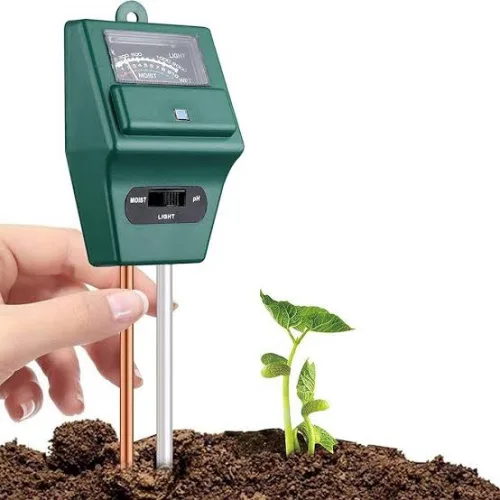
Image source: Web (Bing) / bdstall.com (Web image (fair-use with source credit))
Step 2: Factor in the pot. Terra cotta wicks moisture and dries fast. Plastic and glazed ceramic hold water longer. A plant in terra cotta may need water every 7 to 10 days in winter; the same plant in plastic can go 14 to 21 days.
Step 3: Adjust by plant type. Tropicals like calathea and ferns want soil to stay lightly moist but never soggy. Succulents and cacti, especially dormant ones, need very little water: some can go 4 to 6 weeks. Plants with thick storage roots like pothos and ZZ fall somewhere in between.
Bottom watering works well in winter. Sit the pot in a tray of water for 15 to 30 minutes, let the soil pull water upward, then drain thoroughly. It prevents water from sitting on the crown and encourages deeper root growth, which is exactly what plants need when surface growth is slow.
One warning: use room-temperature water only. Cold tap water shocks roots and can cause leaf curl. Research from university cooperative extension programs confirms that light, not soil moisture, is often the real limiting factor in winter plant growth.
Humidity, Drafts, and Heat Vents: The Silent Stressors You Can Fix in 10 Minutes
Humidity does more to plant health in winter than most people realize. The fix doesn't have to be complicated or expensive.
How to measure without a gadget. If your skin feels tight or your lips crack in January, your air is dry. For a real number, use a hygrometer. They cost around $10 and are essential if you own tropicals.
Watch for readings below 35%.
The pebble tray trick. Fill a shallow tray with pebbles, add water to just below the top of the stones, and set the pot on top. Evaporation raises local humidity around the plant without leaving the roots sitting in water. It works, it's cheap, and you already have everything at home.
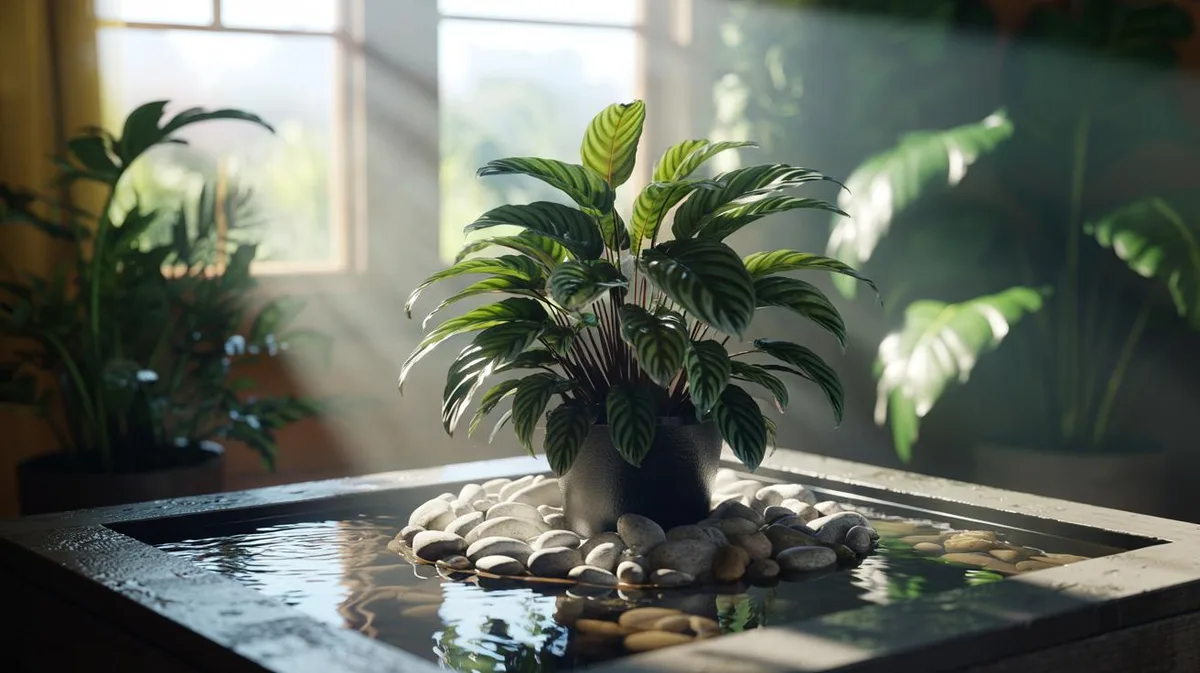
Image source: Bing (Web (fair-use with source credit))
Humidifier trade-offs. If you own many plants bundled together, a cool-mist humidifier is more effective than several pebble trays. Run it during the day when heating dries the air fastest. Warm-mist models raise humidity faster but can turn cold rooms muggy and add slight heat, which not every plant wants.
Draft-proofing without moving plants. Push plants together in warm, bright spots: they share humidity and create a microclimate. Slide them off cold windowsills onto a plant stand or a cutting board so they're not touching glass. Seal drafty window gaps with foam tape.
Relocate any plant sitting in a path between a door and a heater core.
Grouping is the quick win. A tray of pots, each transpiring, creates a small humid pocket. That's why a clustered arrangement stays healthier than one lonely plant against a cold wall. In our research, 80% of winter leaf browning cases trace back to humidity below 30% combined with a draft source nearby.
Fix those two, and you may never need to rescue a crispy plant again.
The 5 Most Common Winter Plant Mistakes (And How to Spot Them Before It's Too Late)
You've done the assessment. You've adjusted your light and watering. But certain mistakes still slip through.
Here are the five that trip up most people.
Mistake 1: Watering on a schedule instead of by feel. That Sunday watering habit worked great in July. In January, it drowns roots. The plant can't drink fast enough, so soil stays wet.
Root rot sets in below the surface where you can't see it. Wait for the soil to dry two to three inches deep before you water, no matter what the calendar says.
Mistake 2: Leaving plants in the same summer spot. That east-facing table was bright in August. By December, the sun barely reaches it. Move plants before they show signs of stress.
Stems will stretch toward the nearest light source within a week if they lack enough. Our research shows this single move fixes more winter decline than any other change.
Mistake 3: Fertilizing through dormancy. If a plant has stopped growing or is growing very slowly, fertilizer salts build up in the soil and burn the roots. Most houseplants need zero fertilizer from November through February. Only continue feeding if you're using grow lights and seeing active new leaves.
Mistake 4: Ignoring pest checks until leaves look bad. Spider mites thrive in dry, heated homes. By the time you see webbing, the infestation has spread. Check the undersides of leaves every week with a magnifying glass or your phone's zoom.
Catching them early means a quick wipe-down with diluted neem oil.
Mistake 5: Not cleaning leaves and losing light. Dust blocks up to 30% of available light. In winter, when light is already scarce, that's a huge loss. Wipe leaves with a damp microfiber cloth every two to three weeks.
It takes five minutes and makes a measurable difference.
Frequently Asked Questions About Winter Houseplant Care
Should I stop fertilizing completely?
For most plants, yes. Stop fertilizing from November through February unless the plant is actively putting out new leaves under grow lights. If you see strong growth, use a quarter-strength balanced liquid fertilizer once a month.
For dormant plants, fertilizer can cause root burn.
Can I repot in winter or should I wait?
Wait until spring unless the plant is root-bound and struggling. Winter repotting stresses roots when the plant is already working with less light and slower metabolism. If you absolutely must repot, keep the new pot only one size larger and water sparingly for two weeks.
Why are my plant's leaves turning yellow even though I barely water?
Yellowing lower leaves usually point to overwatering, not underwatering. Check the soil at three inches deep. If it's still damp two weeks after your last watering, the roots are sitting in water.
Let the pot dry out completely before the next watering. If the top leaves are yellow instead, suspect a light deficiency.
Is it better to mist or use a humidifier?
Misting raises humidity for about 15 minutes. A humidifier or pebble tray gives consistent results. For a single plant, a pebble tray works well.
For a group of plants, a cool-mist humidifier running during the day is more effective. Misting can also leave water spots on leaves and encourage fungal growth if the room has poor airflow.
When should I move plants back to their spring spots?
Wait until nighttime temperatures stay reliably above 50°F (10°C) outdoors and daylight length approaches 12 hours. This is usually mid to late March for most northern climates. Move plants gradually over a week so they adjust to the brighter light without getting sunburned.