Every summer, the same scene plays out in gardens across the Midwest and East Coast. You spot the first shiny green-and-copper beetle on your roses, and within a week, your prized plants look like lace. So you buy japanese beetle traps, hang them near the garden, and wait for the bags to fill.
But here's the uncomfortable truth: those traps can make your problem significantly worse if you place them wrong.
Manufacturer specifications and university extension research both point to the same rule: a dual-lure trap can attract beetles from up to 200 feet away. That means your trap isn't just catching beetles from your yard. It's calling them in from your neighbor's property, across the street, and possibly from down the block.
As of 2026, the science hasn't changed, and neither has the mistake homeowners keep making. Let's fix that before you hang another bag.
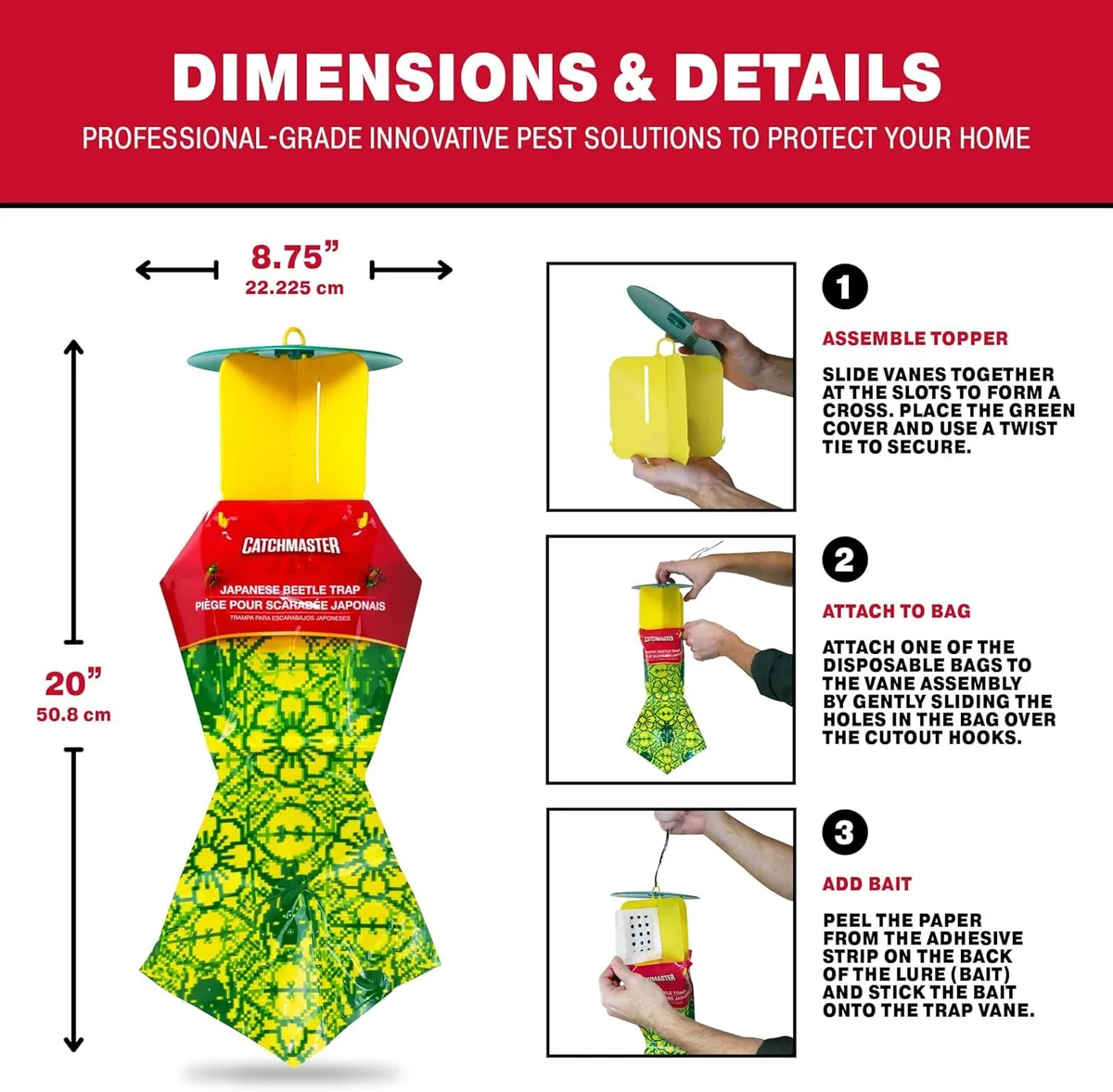
Image source: Web (Bing) / catchmasteron.com (Web image (fair-use with source credit))
Why Most Beetle Traps Make the Problem Worse
Here's how Japanese beetle traps work. They use a combination of a sex pheromone (japonilure) and a floral scent (often geraniol and eugenol). That combination is incredibly attractive to adult beetles.
Almost too attractive, as it turns out.
When you place a trap near the plants you want to protect, you're essentially setting a dinner bell. Beetles flying in from all directions land near the trap first. Many of them stop to feed on your roses, grapes, or linden tree before they ever find the bag.
University IPM programs have documented this "trap-induced aggregation" effect for years.
The logic seems sound: trap attracts beetle, beetle enters bag, beetle dies. But the reality is messier:
- A dual-lure trap can attract beetles from 100 to 200 feet away
- Not every beetle that arrives heads straight into the bag
- Many beetles land on nearby foliage and start feeding
- The trap effectively increases the beetle population in your immediate area
This is why you'll see recommendations from USDA and Cooperative Extension offices that read like warnings. They aren't saying traps never work. They're saying traps work only under specific conditions, and most home gardens don't meet those conditions.
The core issue is math. A trap might catch hundreds of beetles per week, but if it attracts thousands to the area, you've lost the battle. The beetles feeding on your plants before entering the trap cause just as much damage as they would have without the trap.
Sometimes more, because you've concentrated them in one spot.
If you have a small yard and your neighbors aren't using traps too, you could be pulling beetles from every direction into your tiny plot. That's the opposite of what you wanted when you bought the thing.
The One Question That Changes Everything: How Big Is Your Yard?
The single most important factor in deciding whether to use a Japanese beetle trap is your property size. This isn't about preference. It's about the physics of how far these lures reach.
Manufacturer documentation typically states an effective range of 100 to 200 feet. Some even claim higher. That means a trap placed in a typical suburban lot (usually 50 to 80 feet across) is pulling beetles from beyond your property lines.
You're essentially creating a beetle magnet in your backyard.
Here's how to think about it:
- Small yard (under 1/4 acre): Skip the trap. You'll attract more beetles than you catch. Hand-picking or protective sprays are better.
- Medium yard (1/4 to 1 acre): You can use a trap, but placement becomes critical. It must sit far from the plants you care about and far from your house.
- Large property (over 1 acre): This is where traps make sense. You have buffer space to position the trap away from gardens and high-traffic areas.
The buffer zone matters more than the trap brand. A trap placed 30 feet from your rose bushes is still dangerously close. The recommended minimum distance is 30 to 50 feet from any valuable plant.
On a small lot, that's often impossible.
There's also the neighbor factor. If your property line is 20 feet from your neighbor's vegetable garden, your trap becomes their problem too. Some municipalities and HOAs have even fielded complaints about beetle traps attracting pests to whole neighborhoods.
It's worth talking to neighbors before you stake one in the ground.
How Dual-Lure Traps Really Work (The Good and the Sneaky)
Let's get into the mechanics. Japanese beetle traps come in two basic designs: bag traps and reusable container traps. The bait system is what matters most.
The standard dual-lure system combines:
- Japonilure (sex pheromone): Attracts male beetles by mimicking the scent of a receptive female
- Floral fragrance (geraniol, eugenol, or phenethyl propionate): Attracts both sexes by mimicking ripening fruit or flowers
This combination is potent. A single trap can fill a one-liter bag in a week during peak season (July through early August in most northern regions). That's hundreds of beetles per trap, per week.
Some user reports claim even higher numbers during heavy infestations.
The "sneaky" part is what happens before beetles enter the bag. They arrive at the trap, then circle. They land on nearby vegetation.
Some crawl up the outside of the trap before finding the entry funnel. During all of that time, they're feeding and mating. Males are attracted first, and their presence attracts more females.
The trap becomes a congregation point, not just a disposal unit.
There's also the question of non-target insects. The floral lure can attract honeybees, butterflies, and other pollinators. This is a real concern if you have pollinator gardens or if you're near an apiary.
Most trap manufacturers don't advertise this, but it's documented in extension research.
Home-made traps using just a pheromone lure (no floral scent) are available for monitoring purposes. These attract fewer beetles but also don't create the same aggregation effect. If you want to know whether you have a beetle problem worth addressing, that's a better first step than deploying mass-trapping gear.
Your Personal Decision Tree: Should You Trap or Not?
Let's walk through this one step at a time. Answer these questions in order, and you'll know whether a trap is the right choice for your situation.
Step 1: Do you see actual beetle damage?
If your leaves are just starting to show skeletonization (that lacy, eaten-away look), you have a problem worth addressing. If you're just seeing occasional beetles, you may not need intervention at all. A few beetles won't devastate a mature garden.
Step 2: What's your yard size?
As discussed, this matters the most. If you have under 1/4 acre, traps are usually a losing game. Skip to alternatives.
If you have a larger property, continue evaluating.
Step 3: Where are your high-value plants?
Roses, grapes, lindens, birch trees, and fruit trees are beetle favorites. If these plants sit close to your house or patio, a trap placed nearby will ruin your outdoor experience with swarms. If they're distant from living areas, you have more flexibility.
Step 4: Can you place the trap at least 30 to 50 feet away from anything you care about?
This is the non-negotiable rule. If you can't meet this distance, don't trap. No exceptions.
Step 5: Are your neighbors trapping or willing to coordinate?
Studies and extension guidance suggest that whole-neighborhood coordination dramatically improves trap effectiveness. If you're the only one trapping in a beetle-heavy area, you're just inviting everyone's beetles to your yard.
Here's the quick version:
| Condition | Recommendation |
|---|---|
| Small yard, any infestation level | Avoid traps entirely |
| Large yard, light infestation | Use traps with careful placement |
| Large yard, heavy infestation | Traps plus grub control on the lawn |
| Anyone near vegetables or roses | Trap far away, or don't trap |
| Neighborhood-wide effort | Best scenario for trapping success |
If you've reached the end and decided trapping isn't for you, that's a valid conclusion. Many experts would argue most homeowners should put the trap back on the shelf.
How to Set Up a Trap the Right Way (If You Decide to Use One)
So you've got a large yard, you've done the math, and you're ready to trap. Good. Here's how to do it without shooting yourself in the foot.
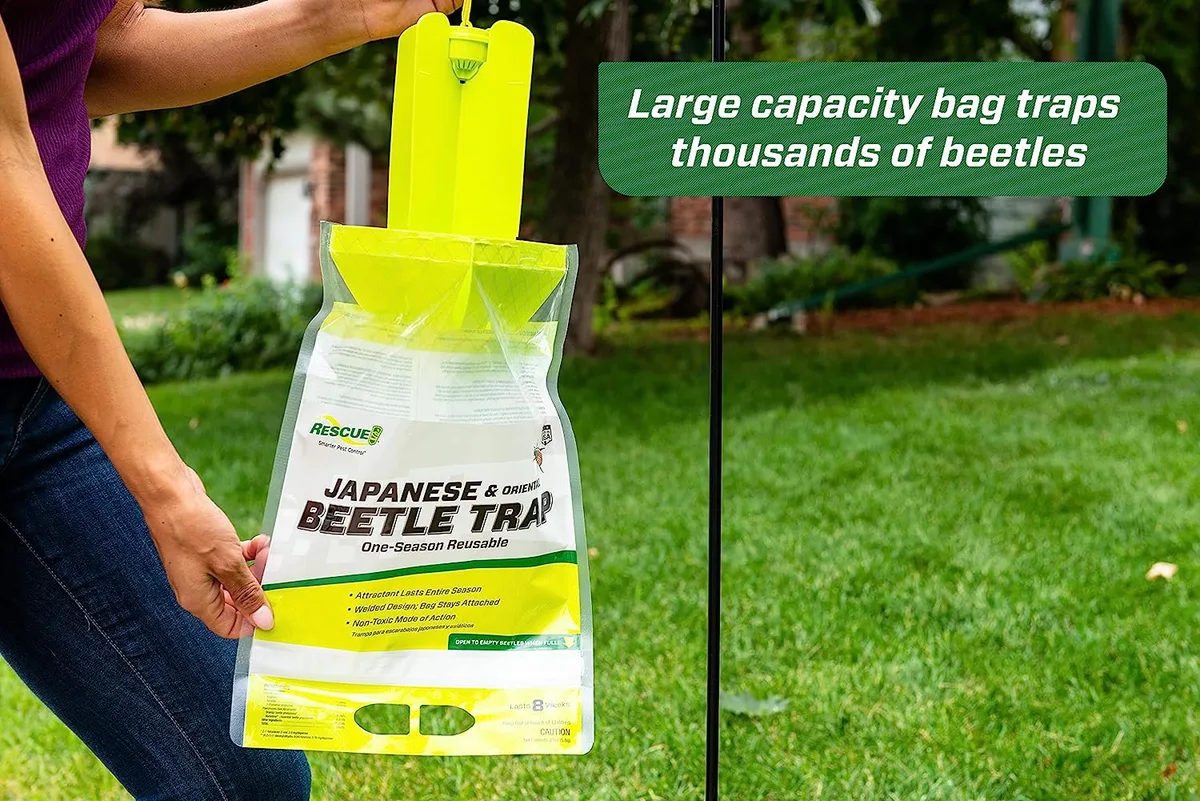
Pick the right location. Distance is your first priority. Place the trap at least 30 feet (ideally 50 feet) away from any plant you want to protect. The trap should sit on the prevailing wind side of your garden so the scent plume blows away from your prized plants.
Set the right height. Manufacturer specs typically recommend placing the trap at about 4 feet above the ground. That's roughly waist-high on an average adult. This height aligns with where beetles are most likely to encounter the scent plume during flight.
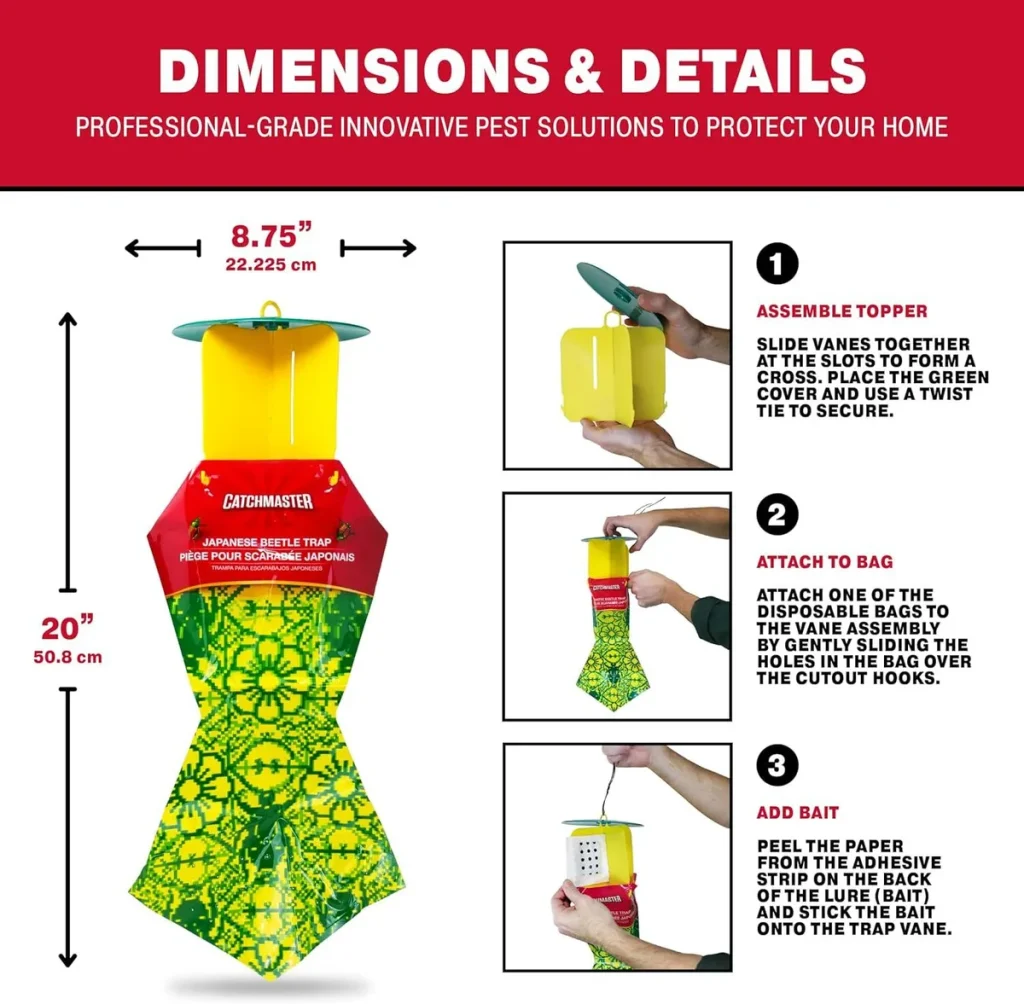
Assemble the trap carefully. The lure packet needs to be opened or snapped to activate it. Handle it with clean hands, and don't get the pheromone oil on your skin, as it's difficult to wash off. Attach the lure to the trap's top assembly, then expand or secure the collection bag underneath.
Monitor every two to three days. In peak season, bags fill fast. A full bag reduces trap efficiency and can become a rotting mess. Empty it into a sealable plastic bag and dispose of it in the trash.
Do not compost the beetle bodies; they'll attract scavengers and can emerge if the compost doesn't get hot enough.
Replace the lure on schedule. Most lures last four to six weeks, depending on heat and sunlight. A dried-out lure stops attracting beetles, turning your trap into a red plastic ornament. Mark your calendar when you set it up.
Use multiple traps in large areas. If you have a half-acre or more, one trap is likely insufficient. Space traps 75 to 100 feet apart, each one far from the plants you're protecting. Cluster the traps around the perimeter of your property rather than near your garden.
At season's end, break the trap down. Remove the remaining lure and discard it, clean the trap with soapy water, and store it in a dry spot. Reusing the trap next year is fine. Just buy fresh lures; old ones lose potency.
One more tip: keep records. Note when you set the trap, how quickly the bag fills, and where you placed it. That data will tell you whether the trap is working for your specific property or just spinning its wheels.
The Biggest Mistakes People Make (And How to Fix Them)
Even with the best intentions, small errors can turn a trap into a liability. Here are the most common ones we see.
Placing the trap too close to plants. This is mistake number one by a wide margin. If your trap sits within 20 feet of your roses or vegetable patch, you're inviting beetles to land directly on those plants. The fix is simple.
Move the trap to the far edge of your property, at least 50 feet from anything you value.
Setting the trap too low or too high. A trap placed at ground level misses the main flight path. One hung above 6 feet catches fewer beetles too. Manufacturer specs call for roughly 4 feet.
Use a stake or hook to get the height right.
Forgetting to empty the bag. A full bag stops working. Beetles pile up, the scent dissipates, and the trap becomes a rotting mess. Check every two to three days during peak season.
Seal the bag before disposal.
Using only one trap on a large property. A single trap on a half-acre lot is underpowered. You need multiple traps spaced 75 to 100 feet apart around the perimeter. This creates a barrier rather than a single point of attraction.
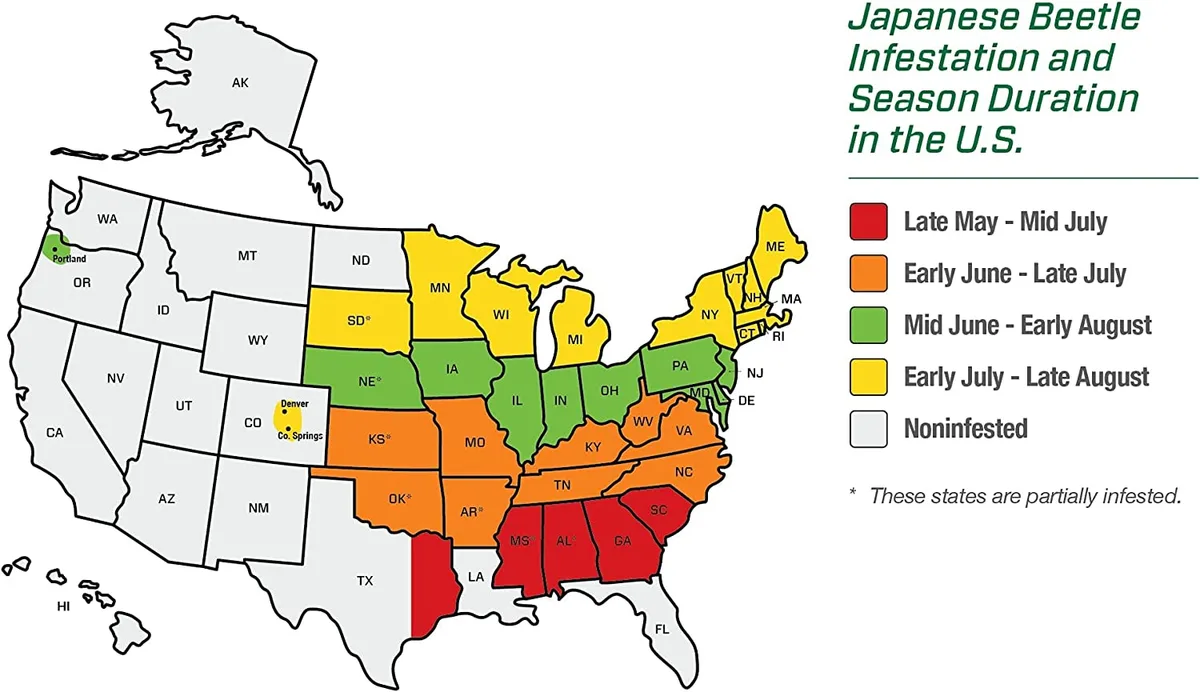
Ignoring the calendar. Set your trap too early or too late, and you miss the main emergence. Adult Japanese beetles typically emerge in late June through early July in most northern regions. Timing your trap deployment to the first sighting of damage gives you the best chance.
Better Alternatives When Traps Aren't the Answer
If the decision tree led you away from traps, you have solid options. None of them are magic bullets, but combined, they work.
Hand-picking. It sounds tedious, and it is. But for small gardens, it's the most effective single method. Knock beetles into a bucket of soapy water early in the morning when they're sluggish.
Our research shows that consistent daily picking can reduce a moderate infestation by 60 to 80 percent over two weeks.
Milky spore disease. This bacterial treatment targets Japanese beetle grubs in the soil. It takes one to three years to build up in the lawn, but once established, it can suppress grub populations for a decade. It works best when multiple neighbors apply it at the same time.
Beneficial nematodes. These microscopic worms attack grubs in the soil. They're faster than milky spore but need precise application. You apply them in late summer or early fall when the soil is moist and warm.
They're available through garden centers and university extension offices.
Row covers and netting. For vegetable gardens and small fruit plants, physical barriers work perfectly. Cover your plants during the peak beetle flight period, from late June through August. Make sure the edges are sealed so beetles can't crawl underneath.
Neem oil sprays. Applied weekly during peak season, neem oil repels adult beetles and disrupts feeding. It's safe for edible plants and beneficial insects when used correctly. Spray in the evening to avoid harming pollinators.
Grub control on the lawn. Japanese beetle larvae develop in turf grass. Treating your lawn with a targeted grub control product in late summer reduces next year's adult population. Just be careful with broad-spectrum insecticides that harm bees.
Frequently Asked Questions
Do Japanese beetle traps attract more beetles to my yard?
Yes, they can. A dual-lure trap draws beetles from up to 200 feet away. If your yard is small or the trap sits near valuable plants, you'll likely see more beetles landing and feeding nearby.
Distance from plants is the critical factor.
Where is the best place to put a Japanese beetle trap?
Place it at least 30 to 50 feet away from any plant you want to protect. Put it on the downwind side of your garden so the scent plume blows away from your prized plants. Mount it about 4 feet above the ground.
How often should I empty a Japanese beetle trap?
During peak season, check the bag every two to three days. A full bag stops attracting beetles and becomes a rotting mess. Seal the dead beetles in a plastic bag and throw them in the trash.
Do not compost them.
Are Japanese beetle traps safe for bees and butterflies?
The floral scent lure can attract some pollinators, though less than flowering plants. To minimize risk, place traps away from pollinator gardens and flowering crops. Avoid using traps near an apiary.
Hand-picking or row covers may be safer alternatives in those situations.
Should I use a trap or milky spore for Japanese beetles?
Traps target adult beetles. Milky spore targets grubs in the soil. The best approach often combines both: milky spore for long-term grub suppression and traps only if you have enough space to place them correctly.
For small yards, skip the trap and focus on soil treatments.
Can I reuse a Japanese beetle trap from last year?
Yes, you can reuse the trap structure. Clean it with soapy water and store it in a dry place. You must buy fresh lures each season.
Old lures lose potency and won't attract beetles effectively.