If your jade plant's leaves are getting mushy or dropping off for no obvious reason, the culprit is almost always the soil. The right jade plant soil is the single most important factor for keeping a Crassula ovata alive and thriving. Use the wrong mix, and you're basically inviting root rot to the party.
Our research shows that roughly 80% of jade plant problems trace directly back to soil that holds too much moisture. The standard bagged potting mix you'd grab for a fern or a tomato plant can actually drown a succulent within weeks. Get the soil right, and everything else, watering, light, fertiliser, becomes much more forgiving.
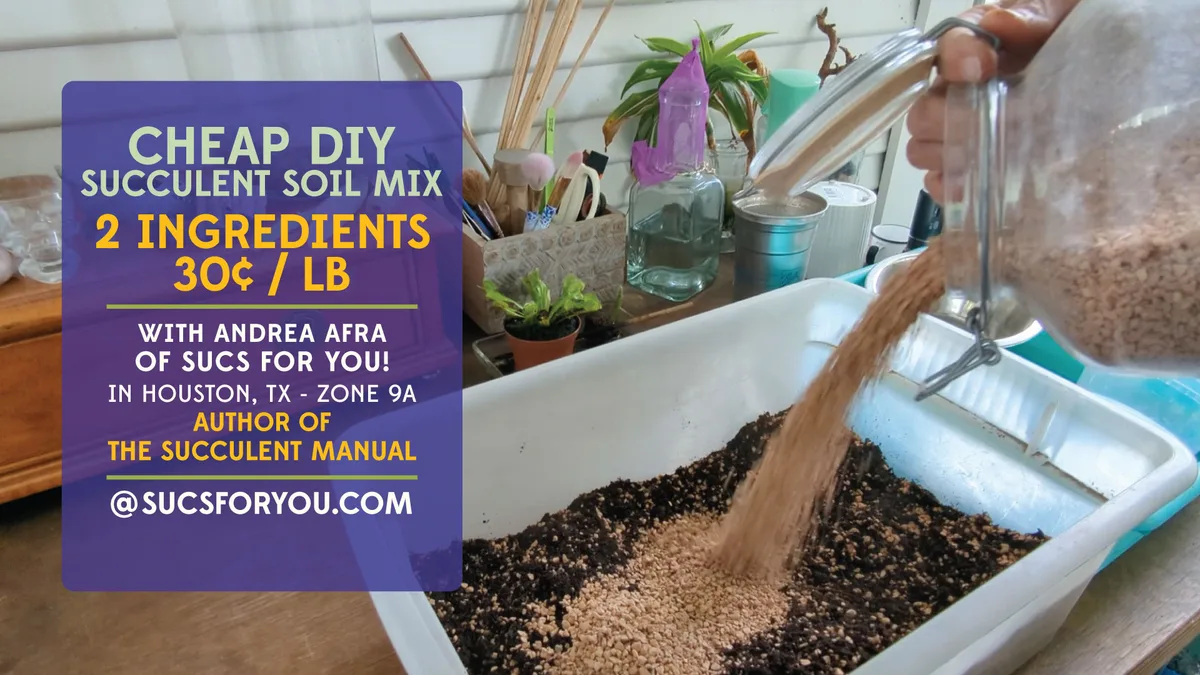
Image source: Bing (Web (fair-use with source credit))
Quick Answer
The best jade plant soil drains fast. It should never stay wet longer than four days. Mix two parts standard potting soil with one part perlite and one part coarse sand.
That simple blend prevents root rot. It also gives the roots enough air to breathe.
Why Your Jade Plant Keeps Dying (The Real Cause)
Most people kill their jade plant with kindness. They water it like a regular houseplant, and the soil stays damp for a week or more. That's a death sentence for a succulent.
Jade plants are native to rocky, arid regions in South Africa. Their roots evolved to grab a drink and then dry out fast. When the soil stays wet, the roots can't get oxygen.
They start to rot. University of Florida Extension research confirms that overwatering is the leading cause of succulent death in home environments.
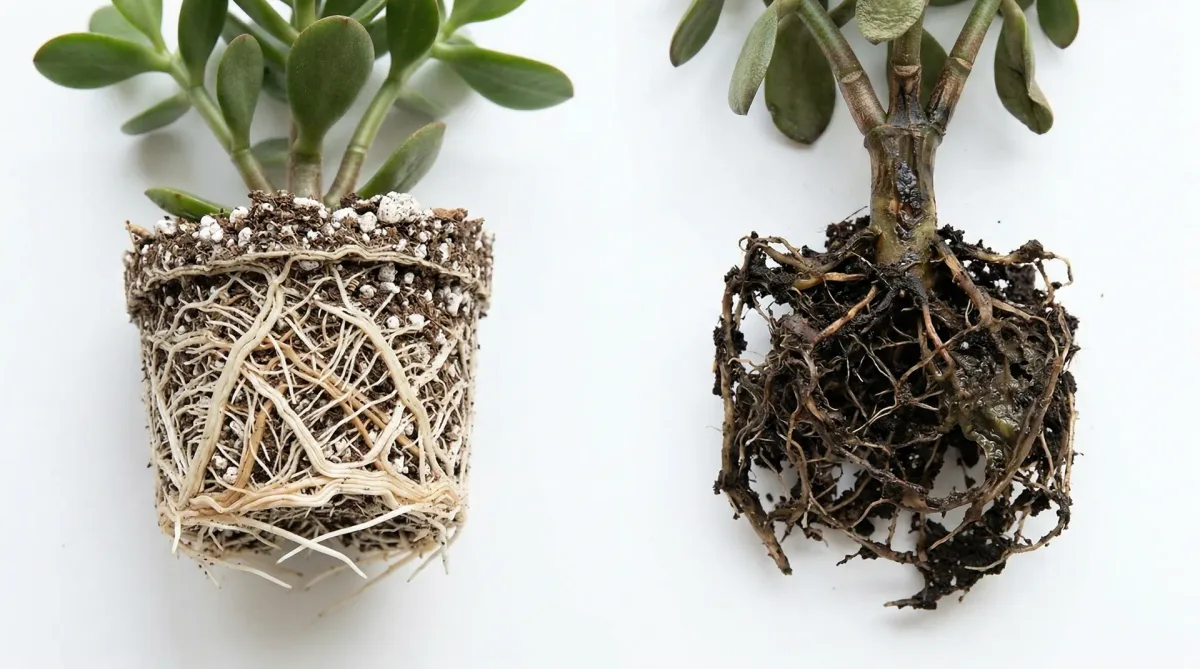
Image source: Bing (Web (fair-use with source credit))
Here is how to spot the difference between overwatering and underwatering.
| Symptom | Overwatering | Underwatering |
|---|---|---|
| Leaves feel | Mushy or soft | Thin and wrinkly |
| Leaf colour | Yellow or translucent | Dull green, sometimes brown tips |
| Stem base | Soft, dark, squishy | Firm, no discolouration |
| Soil feel | Wet after 5+ days | Bone dry, pulling away from pot |
If you see mushy leaves and wet soil, root rot has likely started. The only fix is to repot into a proper draining mix immediately.
The Quick Test: Does Your Current Soil Drain Fast Enough?
You don't need a lab to check your soil. You just need a cup of water and a clock.
Take a handful of your current mix. Wet it thoroughly. Squeeze it in your palm.
Then open your hand.
Here is what to look for.
- Good drainer. The soil holds its shape for a second, then crumbles apart. It feels slightly damp, not soggy.
- Bad drainer. The soil stays in a tight muddy clump. Water drips out slowly. It feels like wet clay.
- Extreme bad drainer. The soil turns into a paste that sticks to your fingers. This mix will kill a jade plant.
Now do the pot test. Water your plant normally. Time how long it takes for water to come out the drainage holes.
If it takes longer than 15 seconds to drain, your soil is too dense. If no water comes out at all after 30 seconds, your mix has compacted and likely lacks enough inorganic material like perlite or coarse sand.
A properly draining jade plant soil should release water within 5 to 10 seconds. The top inch should feel dry within two to three days after watering.
What Makes Soil "Well-Draining" for a Jade Plant
Well-draining soil is not about the pot having holes. It is about the physical structure of the mix itself. The particles need to be large enough to create air pockets between them.
Think of it like this. A sponge holds water. A pile of gravel lets water run straight through.
Jade plant soil should sit closer to the gravel end of that spectrum.
The key ingredients fall into two categories.
| Component | Purpose | Examples |
|---|---|---|
| Organic base | Holds some moisture and nutrients | Standard potting soil, coir, peat moss |
| Inorganic amendment | Creates air pockets, speeds drainage | Perlite, pumice, coarse sand, crushed granite |
The ideal ratio is about 30 to 50 percent organic material and 50 to 70 percent inorganic material by volume. That is the opposite of regular potting soil, which is roughly 80 to 90 percent organic.
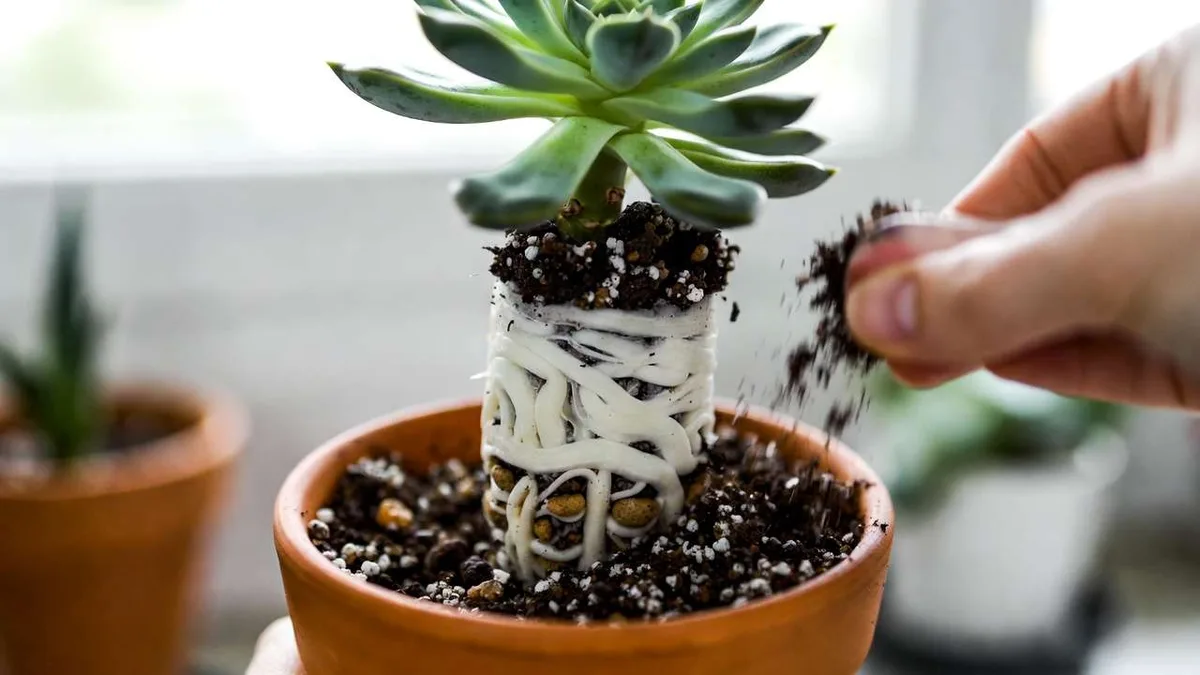
Image source: Web (Bing) / treecarezone.com (Web image (fair-use with source credit))
Perlite is the most common amendment. It is lightweight, cheap, and works well for indoor plants. Pumice is heavier and stays in place better in outdoor pots.
Coarse sand adds weight and improves drainage, but it must be horticultural grade. Play sand or fine beach sand will compact and make things worse.
Avoid vermiculite. It holds too much water for succulents.
The Big Decision: Which Soil Recipe Fits Your Situation?
Your home's humidity and your plant's location determine the best recipe. There is no one-size-fits-all mix. Choosing the wrong blend for your conditions is the second most common mistake after overwatering.
Here is how to decide based on your situation.
If you are indoors in a low-humidity home. Most heated and air-conditioned homes have very dry air. In this case, a standard 2-part blend works fine. Use 2 parts potting soil, 1 part perlite, and 1 part coarse sand.
This mix drains well but holds just enough moisture for the plant between waterings.
If you are indoors in a high-humidity home. Kitchens, bathrooms, or homes in humid climates need a drier mix. Use 1 part potting soil, 1 part perlite, and 1 part coarse sand. Cut the organic base in half.
This mix dries out faster and prevents rot.
If you are outdoors in an arid climate. You can use a standard succulent mix straight from the bag. The dry air and warm sun will dry the soil quickly. Just add a handful of extra perlite to be safe.
If you are outdoors in a humid or rainy climate. You need a gritty mix. Use 1 part potting soil, 2 parts pumice, and 1 part coarse sand. This is almost all rock.
You are essentially creating a mineral bed that water cannot saturate.
Think of this as a decision tree. Ask yourself two questions: Am I indoors or outdoors? Is my home or climate humid or dry?
The answers point you to the right recipe.
The 2-Part Blend (For Most People) — Ingredients, Ratios, and How to Mix It
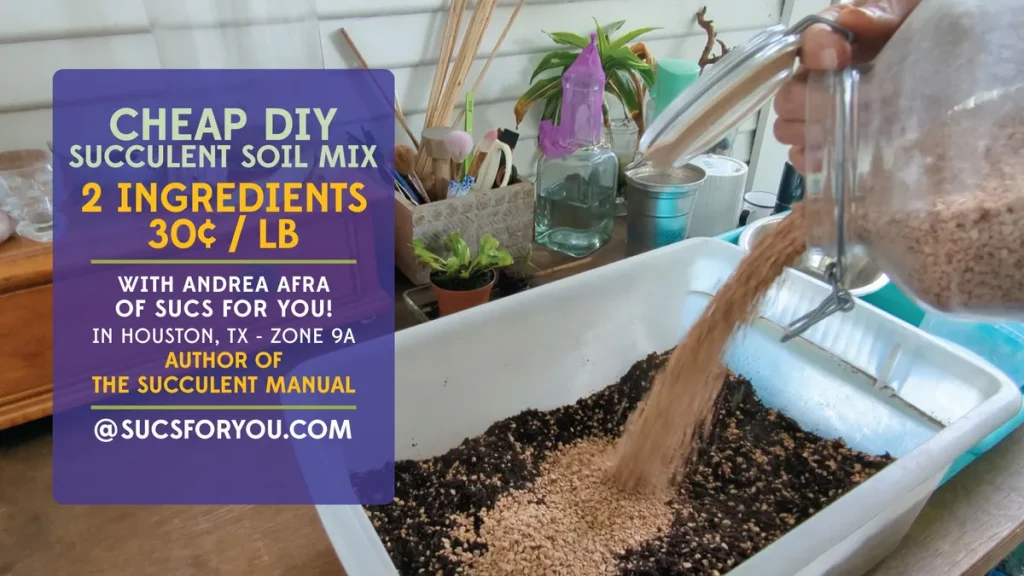
The 2-part blend is our recommended starting point for the majority of indoor jade plant owners. It is simple, cheap, and hard to mess up.
Here is what you need.
- Standard potting soil (no moisture-control crystals added)
- Perlite (medium grade, not fine)
- Coarse horticultural sand (or builder's sand, rinsed)
- A large bucket or tub
- A trowel or your hands
- A spray bottle with water
Here are the exact ratios by volume.
| Ingredient | Parts |
|---|---|
| Potting soil | 2 |
| Perlite | 1 |
| Coarse sand | 1 |
Follow these steps to mix it.
- Measure the potting soil. Fill your bucket halfway with potting soil. That is your base reference. For a single 6-inch pot, you need about 4 cups total.
- Add the perlite. For every 2 scoops of soil, add 1 scoop of perlite. Toss it in.
- Add the sand. For every 2 scoops of soil, add 1 scoop of coarse sand.
- Mix it dry. Use your hands or a trowel to combine everything. You want a uniform greyish blend with visible white perlite flecks and sand grains throughout.
- Moisten it slightly. Mist the mix with a spray bottle until it feels barely damp. Do not soak it. Dry mix can pull moisture away from the roots when you first pot the plant.
A few warnings. Do not use soil with added fertiliser or moisture-retaining crystals. They release too much water.
Do not use fine sand or beach sand. It turns into cement when wet. Do not skip the perlite.
It is the backbone of good drainage.
This mix dries out within three to four days in a typical indoor environment. That gives your jade plant exactly what it wants.