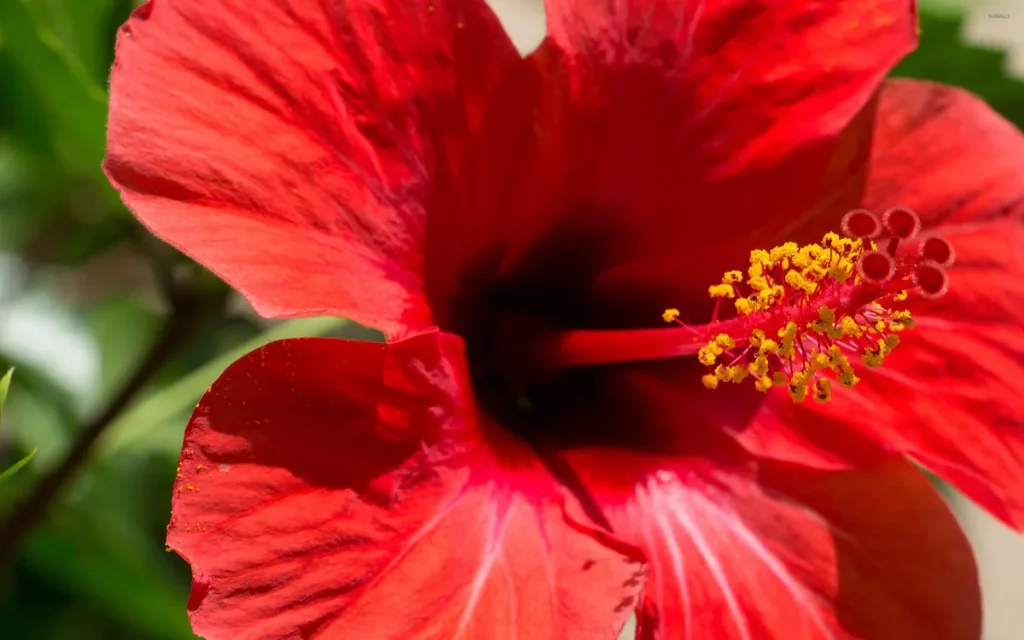
You’ve got a hibiscus at home that’s dropping buds like confetti, or maybe it’s just refusing to bloom. You’re watering it, giving it sun, talking to it, and nothing. Hibiscus care sounds simple, but the moment you bring one home, it gets complicated fast. The truth is, most problems trace back to one hidden fork in the road: what kind of hibiscus you actually own.
As of 2026, the market sells two completely different plants under the same name. One loves tropical humidity and dies below 50°F. The other shrugs off a hard freeze and comes back every spring.
Mistake one for the other, and your care routine is doomed from the start.
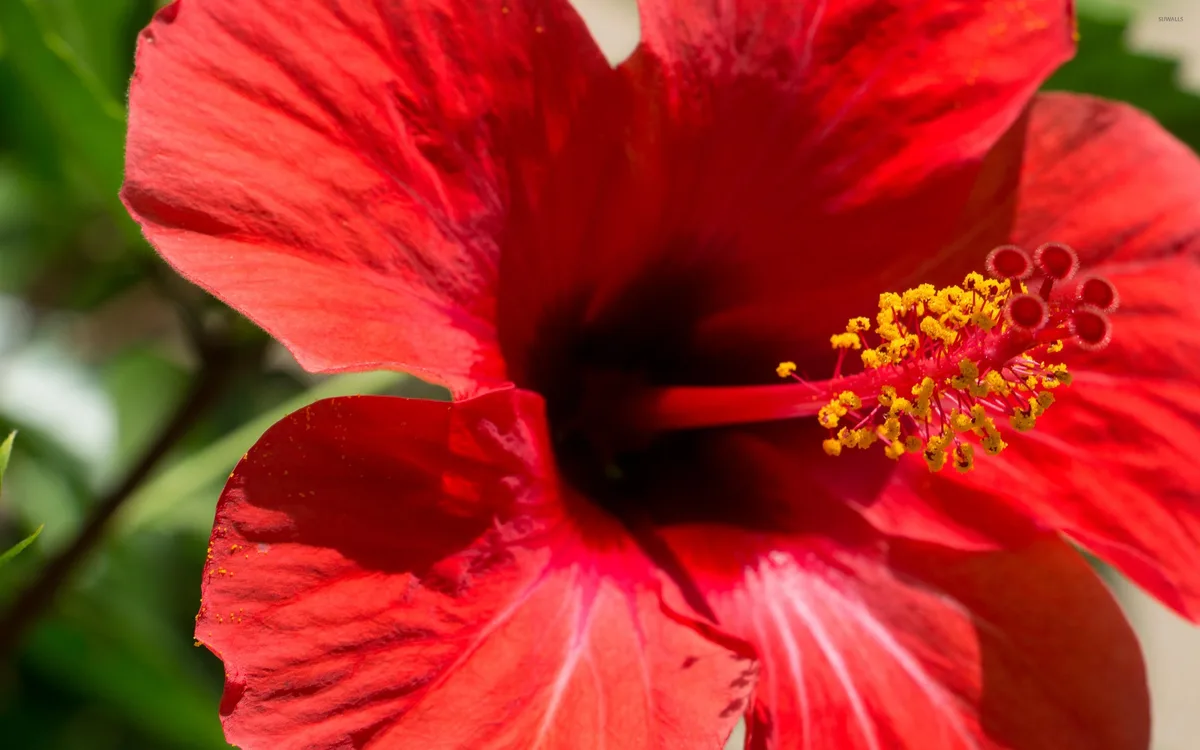
Image source: Bing (Web (fair-use with source credit))
Why Your Hibiscus Is Dropping Buds or Not Blooming
Let’s get straight to the point. Bud drop and bloom failure are almost always stress signals. The plant is trying to save energy, not being stubborn.
The top five stressors are:
- Overwatering, roots suffocate, buds fall off.
- Underwatering, the plant can’t support blooms, so it dumps them.
- Temperature swings, moving from indoors to outdoors or cold drafts shock the buds.
- Too little light, hibiscus needs 6, 8 hours of direct sun for strong buds.
- Pests, aphids and whiteflies suck energy from new growth.
Quick fix checklist: check soil moisture two inches deep, move the plant to a brighter spot, stop moving it around, and inspect leaf undersides for bugs. If you’ve covered all that and it still won’t bloom, the issue is almost certainly the wrong fertilizer or the wrong variety.
That last one is the most common trap. A tropical hibiscus fed a high-nitrogen lawn fertilizer will grow huge green leaves and zero flowers. A hardy hibiscus expecting a cold winter won’t bloom if it never gets that dormancy period.
So the first step isn’t changing your watering. It’s identifying which type you have.
The Make-or-Break Question: Tropical or Hardy?
This is the single most important decision point in hibiscus care. Get it right, and everything else falls into place. Get it wrong, and you’ll spend a year fighting the plant.
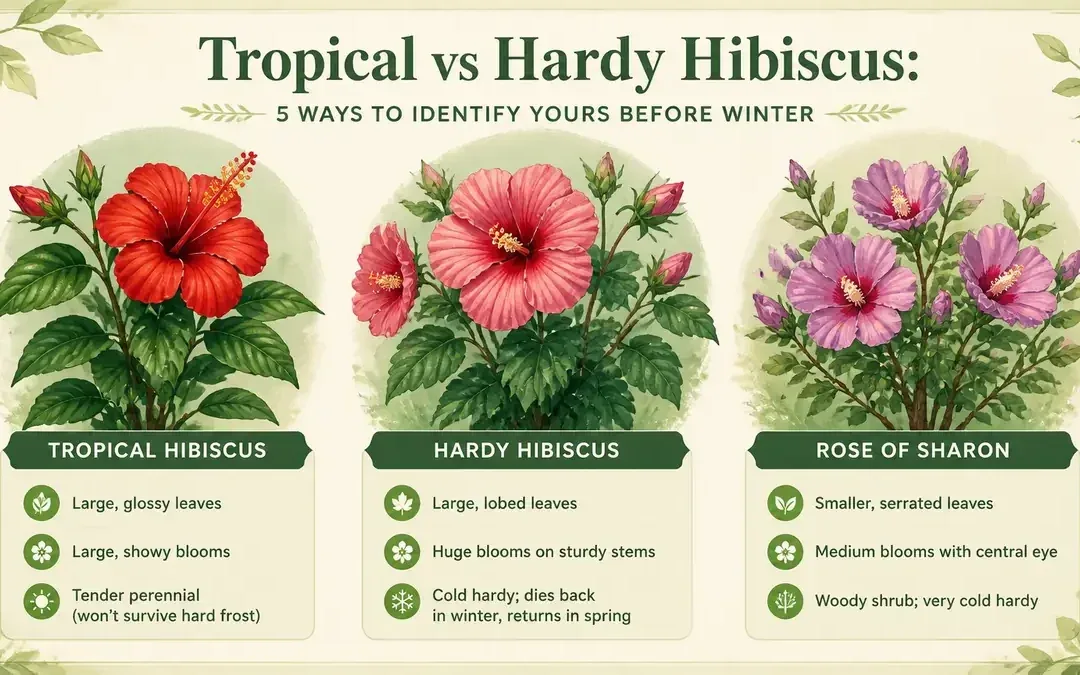
Image source: Web (Bing) / theplantmanual.com (Web image (fair-use with source credit))
Tropical hibiscus (Hibiscus rosa-sinensis) is what you see in Hawaiian shirts and hotel lobbies. It has glossy evergreen leaves, continuous blooms from spring to frost, and zero cold tolerance. It dies at 32°F.
It’s sold everywhere in garden centers from March to October.
Hardy hibiscus (Hibiscus moscheutos) is a different species. It has matte, duller leaves, dinner-plate-sized flowers (sometimes 12 inches across), and dies back to the ground each winter. It’s perennial in USDA zones 4 through 9.
You’ll often see it sold as “rose mallow” or “swamp mallow.”
Here’s how to tell them apart at a glance:
| Feature | Tropical | Hardy |
|---|---|---|
| Leaves | Glossy, dark green | Matte, lighter, slightly fuzzy |
| Growth habit | Evergreen shrub | Dies back to ground in winter |
| Cold tolerance | Zone 9–11 | Zone 4–9 |
| Bloom season | Continuous spring–frost | July–September flush |
| Typical bloom size | 4–6 inches | 8–12 inches |
If you live in USDA zone 8 or colder, you can still grow tropical hibiscus, but only as a container plant that comes indoors before the first frost. Hardy hibiscus can stay in the ground year-round. For the official zone map, check the USDA Plant Hardiness Zone Map.
That single resource will tell you which path you should take.
Tropical Hibiscus Care: Outdoors in Warm Climates, Indoors for the Rest of Us
Tropical hibiscus wants consistency, steady water, steady warmth, steady light. If you live in zones 9, 11, you can plant it in the ground and treat it like a shrub. In zones 8 and cooler, it’s a patio plant that needs winter shelter.
Light: Full sun, 6, 8 hours a day. Indoors, a south-facing window or a grow light running 14 hours. Leggy growth with small leaves is a sure sign it’s not getting enough.
Water: When the top inch of soil feels dry, water deeply until it runs out the drainage hole. In summer heat, that might be every two days for a potted plant. In winter indoors, maybe once a week.
Always check before pouring.
Fertilizer: Use a balanced liquid fertilizer (10-10-10) every two weeks during the growing season. Switch to a bloom booster (higher phosphorus, like 10-30-10) from late spring through summer. Stop fertilizing in late fall when growth slows.
Overwintering: Bring the pot indoors before night temperatures drop below 50°F. Place it in a bright room away from drafts. Water sparingly, maybe once every 10, 14 days.
It will drop some leaves, maybe look sad. That’s normal. Resume normal care when new growth appears in February or March.
Pests: Indoor tropical hibiscus is a spider mite magnet. Get a spray bottle, fill it with water and a few drops of dish soap, and mist the leaves weekly. That alone stops most outbreaks.
Hardy Hibiscus Care: Cold Climate Planting, Mulching, and Dormancy
Hardy hibiscus is the low-maintenance cousin. Plant it in the ground, mulch it before winter, and cut it back in spring. Then watch it grow six feet tall by July and blow your mind with blooms the size of dinner plates.
Planting: Choose a spot with full sun (at least 6 hours) and rich, well-draining soil. Hardy hibiscus loves moisture, it’s native to wetlands, so you don’t have to be as careful with overwatering. Space plants 3, 4 feet apart.
Mulching: In late fall, after the first hard frost kills the stems, cut the plant down to 4, 6 inches above ground. Add a 3-4 inch layer of mulch (straw, shredded bark, leaves) over the crown. That protects the root ball through winter freezes.
In spring, pull the mulch back to let new shoots emerge.
Fertilizer: Apply a slow-release 10-10-10 granular fertilizer in early spring when new growth appears. That’s usually it. Too much nitrogen will produce leafy plants with fewer flowers.
If blooms are small, add a phosphorus boost in midsummer.
Dormancy: Hardy hibiscus is fully dormant in winter. The stems die, the leaves fall. Don’t panic, the roots are alive.
Don’t water it during dormancy. Don’t dig it up. Just mulch and leave it alone.
Dividing: Every 3, 4 years, in early spring, you can dig up the clump and split it into smaller sections. Each section with a few roots and a shoot will grow into a new plant. That’s the easiest way to multiply hardy hibiscus without buying more.
Watering, Fertilizer Schedules, and Fixing Yellow Leaves
Yellow leaves are the most common cry for help from a hibiscus. But the cause changes based on context. You need to read the pattern.
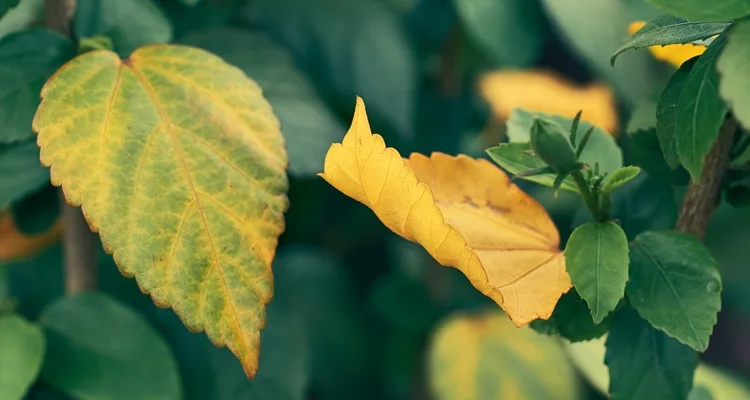
Image source: Bing (Web (fair-use with source credit))
Here’s the quick diagnostic table:
| Leaf symptom | Likely cause | Fix |
|---|---|---|
| Old lower leaves yellow, rest fine | Overwatering | Let soil dry out more between waterings |
| New leaves yellow with green veins | Iron deficiency (alkaline soil) | Apply chelated iron or Epsom salts (1 tbsp/gallon water) |
| All leaves yellow, plant droopy | Underwatering | Soak the pot thoroughly; water more often |
| Yellow with brown spots | Pests or disease | Check for aphids/spider mites; treat with neem oil |
Watering schedule: For potted tropical hibiscus, stick your finger two inches into the soil. If it’s dry, water. If it’s damp, wait.
For in-ground hardy hibiscus, water deeply once a week unless it rains. During heat waves, check more often.
Fertilizer schedule: Feed tropical hibiscus every two weeks during active growth (March, September). Skip winter. Use a bloom-boosting formula (higher phosphorus) once buds appear.
For hardy hibiscus, one slow-release granular feed in spring is enough. Overfeeding burns roots, stick to half-strength for the first dose.
pH matter: Hibiscus prefers slightly acidic soil (pH 5.5, 6.5). If your tap water is alkaline, yellow leaves will appear over time. Water with rainwater or add a few drops of vinegar to your watering can once a month to lower pH.
Aggregate reviews from long-term growers confirm this trick works better than expensive pH adjusters.
One last tip: if you’ve done everything right and the plant still looks sad, pull it out of the pot and inspect the roots. White, firm roots are healthy. Brown, mushy roots mean root rot, you need fresh soil and a pot with better drainage.
That’s the final diagnostic in our decision tree.
Frequently Asked Questions
Why are my hibiscus leaves turning yellow?
Check the pattern. Old lower leaves yellowing usually means overwatering. New leaves yellow with green veins means iron deficiency from alkaline soil.
All leaves yellow and droopy means underwatering. Match your symptom to the fix in the diagnostic table above.
How often should I water my hibiscus?
There is no fixed schedule. Stick your finger two inches into the soil. If it feels dry, water deeply until it drains out the bottom.
If it feels damp, wait. In summer heat, that might mean every two days. In winter, once a week or less.
Why is my hibiscus dropping buds before they open?
Bud drop is stress. The most common causes are sudden temperature changes, inconsistent watering, or moving the plant to a new spot. Keep it in one location with stable warmth and water on a regular rhythm.
Once the stress stops, the buds should hold.
How do I overwinter a tropical hibiscus indoors?
Bring it inside before temperatures fall below 50°F. Place it in a bright room away from drafts and heating vents. Water sparingly, about once every 10 to 14 days.
It will likely drop leaves and look tired. Resume normal watering and fertilizing in early spring.
What's the best fertilizer for more blooms?
Switch to a bloom booster with higher phosphorus, like a 10-30-10 formula, once buds start forming. For tropical hibiscus, feed every two weeks during the growing season. For hardy hibiscus, one application of slow-release 10-10-10 in spring is usually enough.
How do I treat aphids and spider mites on my hibiscus?
Catch them early. Spray the undersides of leaves with a mixture of water and a few drops of dish soap every three days until the pests are gone. For persistent infestations, use neem oil following the label directions.
Isolate the infected plant to stop spread.