You've got a parsley plant that's looking bushy, and you're wondering when to start snipping. That's exactly what harvesting parsley is about, not just grabbing leaves, but doing it in a way that keeps the plant producing for months. The most common frustration we hear from home gardeners is cutting too soon or cutting the wrong way, then watching the plant sulk instead of regrowing.
In our research, the consensus among university extension services is clear: a single well-harvested parsley plant can yield 2 to 3 cups of fresh leaves over a season if you follow the right rhythm. As of 2026, the standard guideline from the Royal Horticultural Society and multiple .edu sources agrees on one core rule, take no more than one-third of the plant at a time, and always cut from the outside. Let's walk through exactly how to decide when and how to harvest based on your specific situation.
Quick Answer
Cut outer stems at ground level once the plant has at least 8 to 10 stems. Leave the inner growth untouched. Harvest in the early morning for best flavor.
Never take more than one-third of the plant in one go. Repeat every 1 to 2 weeks.
Is Your Parsley Ready to Pick, or Are You About to Stunt Its Growth?
This is the moment most gardeners get wrong. You see a handful of leaves and think, "Time to cook!" But if the plant hasn't hit the right maturity, a premature harvest will set it back weeks. The 10-second test is simple: count the number of stems that have at least three fully formed leaf segments each.
You need at least eight to ten such stems before you make your first cut.
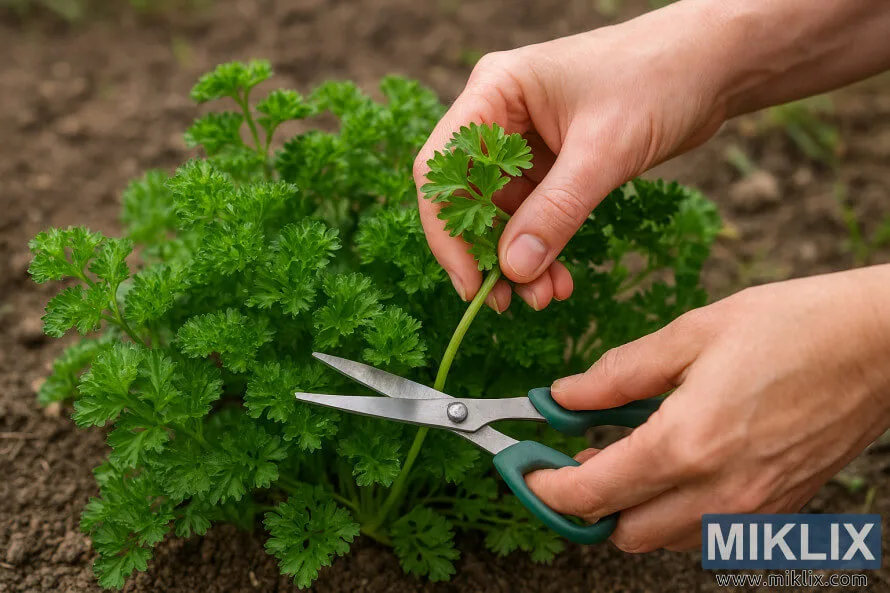
Image source: Web (Bing) / miklix.com (Web image (fair-use with source credit))
If your plant is still under six inches tall or has fewer than six branched stems, hold off. A young parsley plant's root system and leaf area are still building energy reserves. Cutting too early forces the plant to replace lost leaves from a weak base.
University of Minnesota Extension research confirms that plants harvested before reaching 8, 10 stems recover 30% slower than those that reach full size first.
On the flip side, if you wait too long, until the plant starts sending up a flower stalk, those leaves turn bitter and tough. The sweet spot is when the outer stems are dark green, firm, and at least six inches long. That's your green light.
The “Cut and Come Again” Mindset: How Parsley Actually Wants to Be Harvested
Parsley is a biennial, but in most gardens we treat it as an annual. Its growth pattern is simple: a central crown at soil level sends out stems in a rosette. New stems emerge from the center; old stems radiate outward.
The plant's growing point is that central crown. If you damage it or cut the inner stems, you essentially kill the engine.
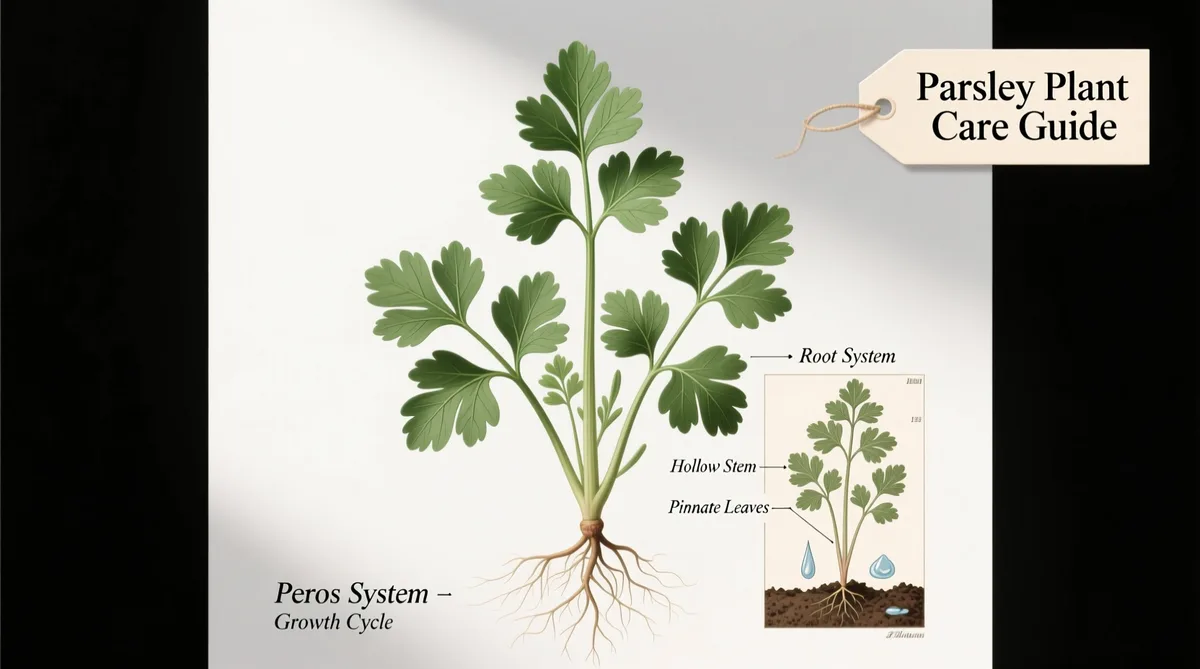
Image source: Web (Bing) / spice.alibaba.com (Web image (fair-use with source credit))
So the rule is non-negotiable: always cut outer stems, never the inner ones. Look at the plant from above. You'll see a ring of older, larger leaves around the outside and a cluster of smaller, lighter leaves in the center. Those inner leaves are the future harvests.
Pinch or snip each outer stem as close to the soil as possible, just above a leaf node. That node will push out new growth.
Why does this work? The plant prioritizes its central crown. When you remove outer stems, the plant redirects energy toward filling in from the middle.
Over a season, this "cut and come again" technique can yield up to five times more total leaf mass than taking a big harvest from the top.
A common question is whether to pinch with fingers or use scissors. Our research shows that clean cuts from sharp scissors or pruning shears cause less damage than tearing with fingers. Dull blades crush the stem tissue, opening the door for rot.
Always use clean, sharp tools.
Choosing Between Your Two Main Harvest Strategies
Not every harvest is the same. You have two distinct approaches depending on your goal: a steady trickle for daily cooking or a bulk batch for preserving. Both work, but the way you execute each one matters for long-term plant health.
| Strategy | Best For | Cutting Pattern | Regrow Interval | Max Amount Per Session |
|---|---|---|---|---|
| Sustained supply | Daily cooking, garnishes | Take 3–5 outer stems every few days | 7–10 days | 1/3 of total stems |
| Bunch harvest | Freezing, drying, bulk use | Take entire outer ring at once | 2–3 weeks | 1/3 of total stems (spread over a few days) |
The sustained supply approach
If you cook with parsley almost every day, this is your play. Each time you need a handful, go to the plant and cut two or three outer stems. Don't strip a whole side, rotate around the plant.
This keeps the rosette balanced and prevents a lopsided shape. After a week, you'll see new stems emerging from where you cut. You can keep this up from late spring through early fall.
The bunch harvest approach
Maybe you're drying parsley for winter or making a big batch of chimichurri. In that case, you want several cups at once. Take a full ring of outer stems, about one-third of the plant.
Cut them all at ground level. Then wait. The plant will look sparse for a week, but new growth will appear from the center.
Do not harvest again for at least two weeks, ideally three. This gives the plant time to rebuild its leaf surface area.
Switching between them
You can mix strategies. If you've been taking a few stems daily and see the plant getting lanky, skip a week. If you did a big harvest and the plant is bouncing back, you can resume daily picking once it has at least six new stems.
The key is to never take more than one-third of the plant in any seven-day period.
Seasonal Adjustments: Hot Summer, Fall Frost, or Indoor Winter
Parsley's growth rate changes dramatically with the seasons. Your harvest method has to adapt or you'll push the plant into decline.
Summer heat slowdowns. When temperatures consistently hit 85°F or higher, parsley growth slows. The leaves may look smaller and paler. In our research, plants in full sun during July produce about half the biomass of spring or fall plants.
Solution: harvest less frequently, maybe once every two weeks, and give the plant afternoon shade. Water deeply after each harvest to reduce stress.
Fall push and frost preparation. As days shorten and nights cool, parsley often puts out a growth spurt. This is your best window for a final bulk harvest before frost. Cut as much as you would normally (one-third) a week before the first predicted frost.
The plant will not regrow significantly after that. Harvest the remaining stems before a hard freeze (below 28°F) kills the leaves. You can then either dig up the root and bring it indoors or cover with mulch to overwinter.
Overwintering indoors. If you want parsley year-round, lift the plant before the first hard freeze. Pot it up and bring it to a bright windowsill. Indoor harvests will be smaller and slower, cut only one or two stems per week.
Don't expect winter regrowth to match outdoor vigor. The plant is essentially in survival mode.
Second-year plants. Parsley is biennial. In its second year, it will bolt (send up a flower stalk) as soon as the weather warms. Harvest only until you see the first flower buds appear.
After that, the leaves turn bitter. Let it flower if you want seeds or pollinator habitat, but the harvest window is over.
Five Mistakes That Kill Your Parsley's Productivity
These are the errors we see over and over in home gardens. Avoid them, and your parsley will keep giving.
1. Cutting from the center
This is the number one killer. When you snip the small inner leaves, you remove the plant's growth point. The plant can't produce new stems from that spot.
Result: a bald center and slow, spindly regrowth. Always cut outer stems only.
2. Taking more than a third
Greed is the second biggest mistake. Taking half or more of the plant at once shocks the root system. The plant can't photosynthesize enough to recover.
New leaves will be smaller and pale. Stick to the one-third rule. If you need more, wait a week.
3. Using dull or dirty shears
Crushed stems from dull blades invite rot and disease. Dirty tools can transfer fungal spores from other plants. Keep your scissors sharp and wipe them with rubbing alcohol between plants.
4. Harvesting at the wrong time of day
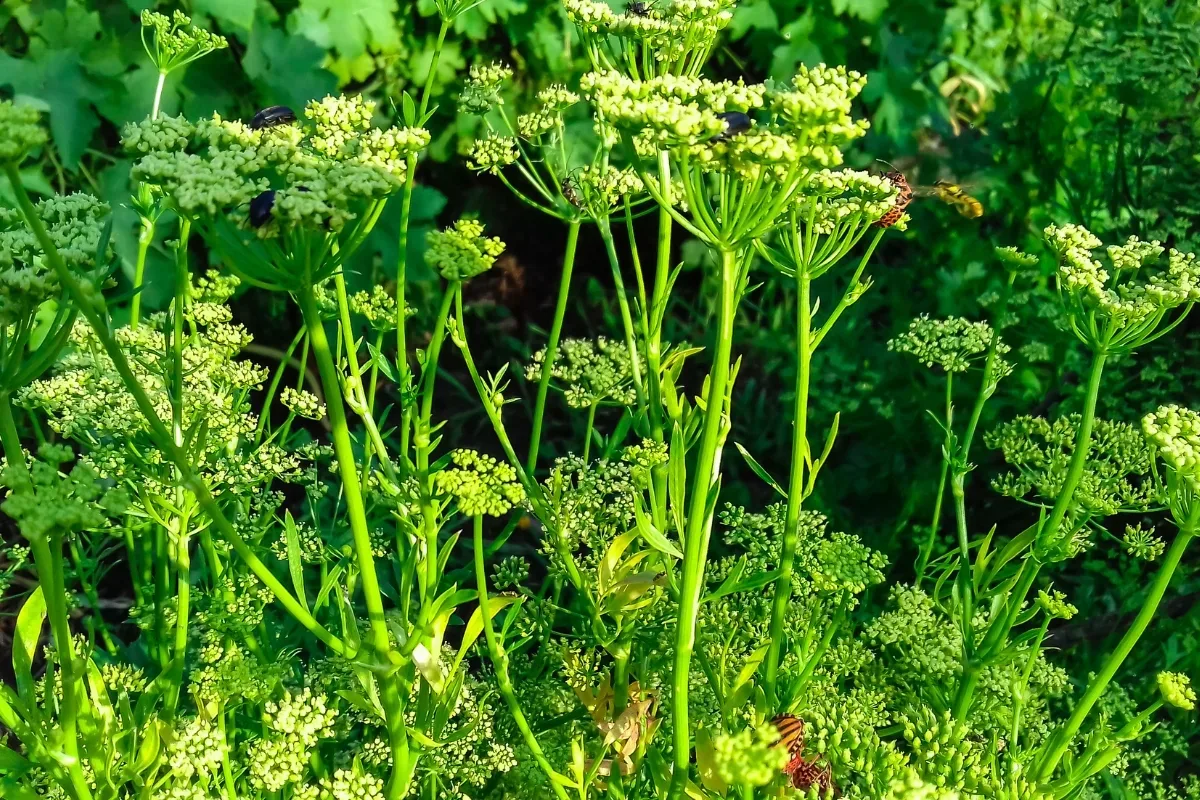
Image source: Web (Bing) / storage.googleapis.com (Web image (fair-use with source credit))
Late afternoon harvests produce leaves that wilt faster. Parsley's oil content (and flavor) peaks in the early morning when the plant is fully hydrated. Cut just after the dew dries but before the heat of the day.
If you must harvest later, immediately plunge stems into cold water.
5. Letting it bolt on purpose
Some gardeners think letting parsley flower and go to seed will give them free plants. It will, but the mother plant stops producing edible leaves the moment the stalk elongates. If you want leaves, cut flower stalks as soon as you see them.
Only let one or two plants bolt for seed saving; harvest the rest for the kitchen.