You’ve spent weeks carefully tending your seedlings indoors. You move them outside, and within a day they look sunburned, wind-whipped, or just plain defeated. That’s why you need to harden off seedlings before transplanting them into the garden.
It’s a simple process, but skipping it is the fastest way to lose all that early work.
University extension services across the US recommend a minimum of 7 to 14 days for most vegetable seedlings. Gradual exposure to sun, wind, and cooler temperatures triggers the plant to build thicker leaves and stronger stems. This makes the difference between a seedling that barely survives and one that takes off as soon as it hits the soil.
Let’s break down exactly what’s going wrong and how to fix it.
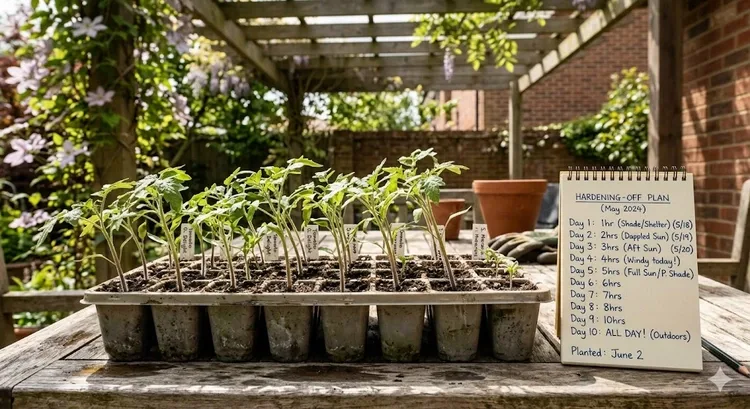
Image source: Web (Bing) / gardensynthesis.com (Web image (fair-use with source credit))
Quick Answer: What Hardening Off Actually Does (And Doesn’t Do)
Hardening off is the gradual transition from indoor to outdoor conditions. It takes 7 to 14 days. You slowly increase sun, wind, and temperature exposure.
This toughens the plant so it survives transplanting without shock.
It does not make a plant cold-hardy beyond its natural limits. It does not cure leggy growth or fix weak root systems. What it does is give the plant time to adjust to real-world stressors.
Think of it as a boot camp, not a miracle cure.
The Real Problem: Why Your Seedlings Die After You Move Them Outside
Indoor growing conditions are set to easy mode. Stable temperatures, gentle air movement, and filtered light. Outdoors is a different world.
The problems hit fast.
Sun scald is the most common killer. Indoor leaves have thin cuticles. Direct sunlight bleaches and burns them within hours.
You see white or crispy patches on the top leaves. The plant can’t photosynthesize properly after that.
Wind desiccation is the second big one. Even a light breeze speeds up water loss from leaves. The roots can’t take up moisture fast enough.
The leaves wilt and curl. If it stays windy, the whole plant dries out.
Temperature shock matters too. Seedlings grown at 70°F indoors hit 50°F nights and stop growing. They go into survival mode instead of putting energy into roots and leaves.
A cold snap below 45°F can kill warm-season crops like tomatoes and peppers outright.
The problem is not that the plant is weak. It’s that the plant was never given a chance to prepare. Hardening off builds that preparation step by step.
The Decision Tree: What Should You Do Based on Your Situation?
Branch 1: You Have 7–14 Days and Typical Spring Weather
If your nights stay above 45°F and you have at least a week before your transplant date, use the standard schedule. Start with 1 hour in light shade. Increase by 1 hour each day.
After 5 days, add some direct morning sun. By day 7, leave them out all day. This is the safest route with the highest survival rate.
Branch 2: You’re Running Late (3–5 Days to Transplant)
If you’re pressed for time, skip the full schedule but do not skip hardening altogether. Start with 2 hours in shade on day one. Day two, give them 4 hours with morning direct sun.
Day three, 6 hours with afternoon shade. Day four, full day outdoors. You lose some safety margin, but it works for hardy crops like lettuce and brassicas.
Tender crops like basil and peppers will still struggle. Give them an extra day if you can.
Branch 3: A Cold Snap Is Coming (Temperatures Below 45°F)
If frost or a cold night is in the forecast, bring everything indoors. Even a night at 40°F can damage partially hardened plants. Wait until the cold passes, then restart the process from the last successful day.
Do not skip days to make up lost time. The plants need that gradual exposure again. A cold frame or row cover can buy you 5°F to 8°F of protection, but it’s not a guarantee.
Branch 4: You’re Using a Cold Frame or Cloche
A cold frame simplifies the process. You put the seedlings inside and open the lid more each day. Day one, crack the lid an inch.
Day three, open it halfway. By day seven, remove the lid entirely during the day and close it at night if temperatures drop. This method is more forgiving because the frame blocks wind and traps heat.
But you still need to monitor temperature inside. On a sunny day, an unvented cold frame can hit 100°F and cook your plants.
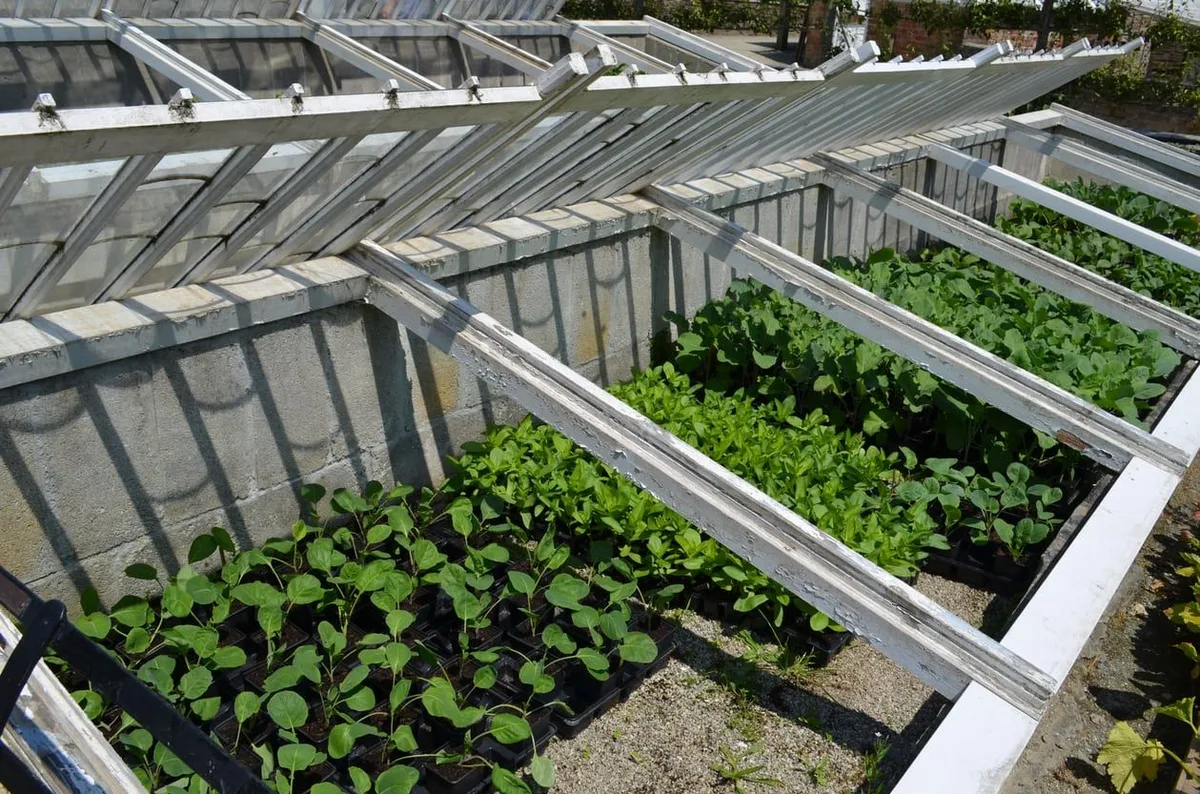
Image source: Bing (Web (fair-use with source credit))
Step-by-Step Workflow: From Indoor to Outdoor in 7 Days
This schedule works for most indoor-started vegetables. Adjust based on your weather and plant type.
Day 1: Start in a Sheltered Spot
Pick a day that is overcast or mild. Place your trays in a spot that gets dappled shade or only morning sun. Keep them out of the wind.
Leave them for 1 to 2 hours. Bring them back inside before the afternoon heat or any temperature drop.
Day 2: Add a Little More Sun
Move the trays to a spot that gets 2 hours of direct morning light. Then shift them to shade for the rest of the time. Total outdoor time: 3 to 4 hours.
Watch for wilting. If leaves droop, move them to shade earlier the next day.
Day 3: Increase Exposure
Leave them out for 5 to 6 hours. Include 3 hours of direct morning sun. Move them to a spot with light breeze if possible.
This is the first real test of wind tolerance.
Day 4: Half Day Outdoors
By day four, your seedlings should handle 6 to 8 hours outside. Include afternoon sun if it’s mild. If nighttime temperatures stay above 45°F, you can leave them out overnight starting tonight.
Day 5: Full Day, No Overmight Yet
Give them a full day outdoors with direct sun for at least 4 hours. Bring them in at night if temperatures dip below 45°F. If nights are warm, leave them out but check at dusk.
Day 6 and 7: Full Exposure
Leave them out for the full 24 hours if the forecast is clear. At this point they are ready. Water them well on the day before transplanting.
Transplant Day
Move them to the garden on a cloudy day or in the late afternoon. Water them immediately. Provide temporary shade for the first day or two if the sun is intense.
Mistakes to Avoid: What Usually Goes Wrong
Even careful gardeners make these errors. Here are the most common ones.
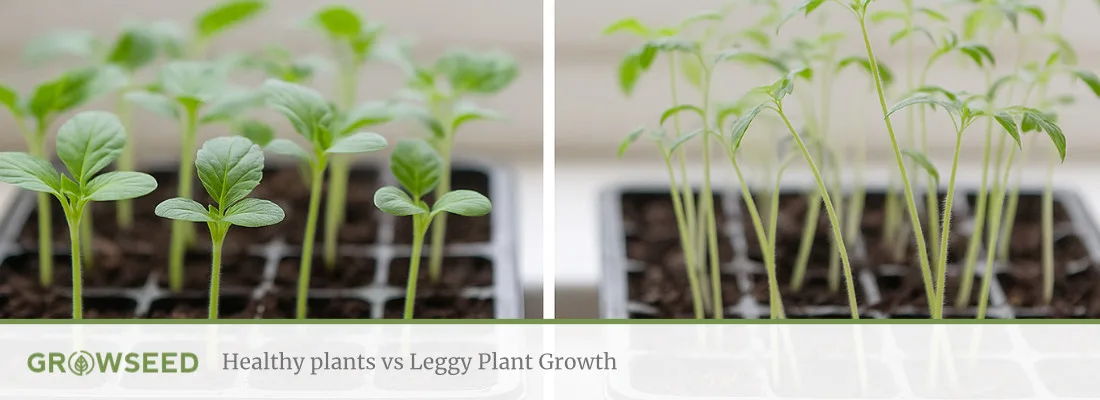
Image source: Bing (Web (fair-use with source credit))
Starting in full sun on day one. This is the number one mistake. Your indoor leaves have no tolerance for direct sunlight. Always start in shade or dappled light.
Move to direct sun gradually over three to four days.
Skipping the wind factor. People focus on sun and forget wind. Even a gentle breeze stresses seedlings. Place them behind a fence, wall, or row of pots for the first few days.
Let them feel light air movement before exposing them to open wind.
Leaving them out on a cold night. One night below 45°F can undo a week of hardening. Always check the evening forecast. If there’s any doubt, bring them inside.
Cold damage shows up as purple or yellow leaves and stunted growth.
Overwatering during hardening. Seedlings outdoors dry out faster thanks to sun and wind. But some people overcompensate and water too much. Wet soil plus cool nights is a recipe for damping off.
Let the soil surface dry slightly between waterings.
Rushing the process. Three days is not enough for warm-season crops like tomatoes, peppers, and melons. They need the full 7 to 14 days. Rushing leads to transplant shock, stunted growth, and sometimes plant death.
Patience pays off here more than anywhere else.
Your Final Decision Guide: Quick Checklist for Every Situation
Here is a simple reference for common scenarios. Use it when you are not sure what to do next.
Warm-season crops with good weather
Tomatoes, peppers, eggplants, melons, and basil. You need the full 10 to 14 days. Do not cut corners.
Start in shade, add sun slowly, and protect from wind. Leave them out overnight only after day 7. These crops will show visible stress if you rush them.
Yellow lower leaves and purple stems are common signs of a too-fast transition.
Cool-season crops with limited time
Broccoli, kale, lettuce, onions, and peas. These are more forgiving. A 5 to 7 day schedule works well.
You can start with 2 hours of sun instead of shade. Cool-season crops tolerate cooler nights down to 40°F. If you are planting them in early spring before the last frost, use a cloche or row cover for extra protection.
Crops in a cold frame or greenhouse
Your process is simpler. Open the vents or lid wider each day. Day one, a 1-inch crack.
Day three, half open. Day five, full open during the day. Close the frame at night if temperatures drop below 45°F.
Monitor internal temperature with a thermometer. On sunny days, a closed cold frame can reach 100°F and damage plants.
Crops in containers that stay mobile
If you are hardening off plants in pots that will stay in containers, keep them in a spot that is easy to move. A wheeled plant caddy or a utility cart saves your back. You can roll them in and out without lifting each tray.
Focus on sun and wind exposure the same way you would for in-ground plants.
A quick reference table for timing decisions
| Crop Type | Minimum Days | Night Min Temp | Starting Exposure |
|---|---|---|---|
| Warm-season (tomatoes, peppers) | 10–14 days | 50°F (10°C) | Dappled shade |
| Cool-season (broccoli, lettuce) | 5–7 days | 40°F (4°C) | Morning sun |
| Tender crops (basil, melons) | 12–14 days | 55°F (13°C) | Full shade day 1 |
| Hardy greens (kale, spinach) | 4–6 days | 35°F (2°C) | Morning sun |
Frequently Asked Questions (FAQs)
How long does hardening off take for tomatoes?
Tomatoes need at least 10 days. Start with 1 hour in shade. Increase by 1 hour each day.
After day 5, add direct morning sun. Leave them out overnight only after night temperatures stay above 50°F. Rushing tomatoes leads to purple stems and slow growth.
Can I harden off seedlings indoors?
Not really. Indoor conditions do not include direct sun, wind, or temperature swings. You cannot replicate the outdoor environment at home.
The best indoor alternative is a few hours near an open window on a mild day. But it is not a replacement for true outdoor hardening.
What happens if I skip hardening off?
Your seedlings will likely suffer from sun scald, wind damage, or transplant shock. Leaves turn white or brown and curl. The plant can stop growing for a week or more.
In worst cases, the plant dies within 2 to 3 days. Skipping this step is the most common reason for failed transplants.
Should I water seedlings during hardening off?
Yes, but do not overwater. Outdoor conditions dry out the soil faster. Check the soil surface daily.
Water when the top inch feels dry to the touch. Morning watering is best. Avoid watering in the evening if nights are cool, because wet soil promotes damping off.
Can I harden off seedlings in a shaded spot all week?
No. Shade only works for the first 2 to 3 days. After that, seedlings need direct morning sun to build thick leaves.
A plant hardened entirely in shade will still sunburn when transplanted. Move them into direct sun gradually starting on day 3 or 4.
How do I know my seedlings are ready to transplant?
Look for these signs. Thick, sturdy stems that hold the plant upright without support. Leaves that are dark green and slightly waxy.
The plant has been outdoors for at least 7 days and has handled one full day of direct sun and mild wind without wilting. If the plant looks the same at midday as it did at sunrise, it is ready.