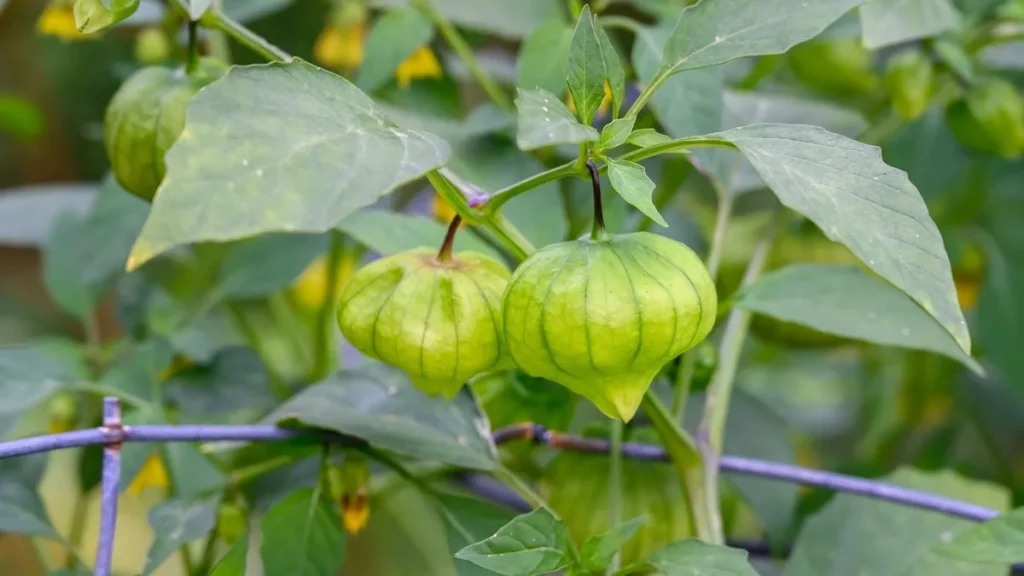
Growing tomatillos seems straightforward until you harvest exactly zero fruit from a single plant, and that's the classic first-year mistake. Tomatillos are self-incompatible, so one plant alone won't set fruit. You need at least two plants buzzing with bees for a full harvest.
The good news is that once you understand the visual cues, this crop is one of the easiest nightshades to grow.
Per USDA and university extension guidance, tomatillos (Physalis philadelphica) prefer full sun and warm soil, with a typical maturity window of 70 to 90 days after transplanting. As of 2026, home gardeners across USDA zones 2 through 11 grow them as a summer annual. The trick is reading the plant.
Let's look at what the husk, the leaves, and the fruit are telling you.
Why Tomatillos Are Not Tomatoes (and Why Visual Cues Matter)
If you've grown tomatoes, tomatillos will feel familiar. Same nightshade family, same love of full sun, same huge appetite for water. But the similarities end when it comes to pollination and ripeness.
A tomato plant sets fruit on its own. A tomatillo plant needs a neighbor to pollinate it.
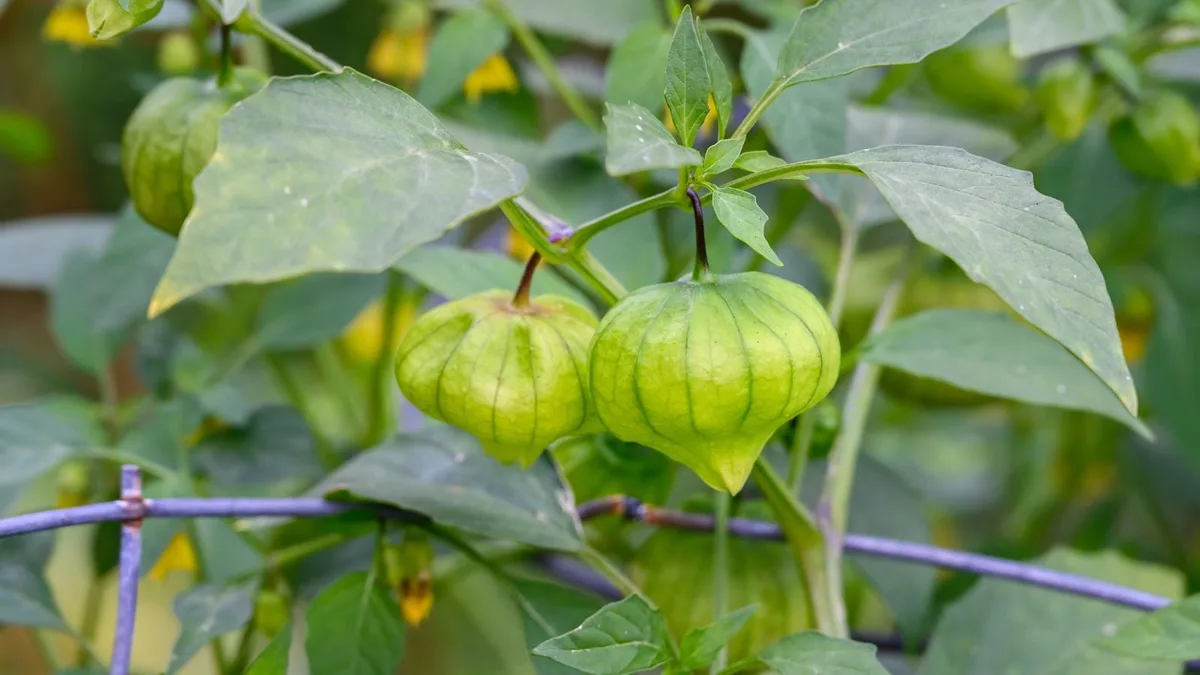
This is why visual cues matter so much. You're not checking for color change as much as the behavior of the papery husk around each fruit. That husk is the calyx, and it's your main indicator for ripeness.
It also hides the fruit completely, which makes guessing by eye the only practical way to time a harvest.
Our research shows that first-time growers often treat tomatillos like small tomatoes. If you stake them, pinch them, and feed them the same way, you'll get plenty of leaves and maybe a few husks. Then nothing.
The plant isn't broken. It's just lacking a companion.
Picture a diagram of a tomatillo flower. It has what botanists call self-incompatibility, which means pollen from the same plant won't fertilize it. That's why you need two or more plants, and ideally native bumblebees to perform buzz pollination.
Keep that visual in mind through the whole growing season. Every stage below is easier when you know what to look for.
Tomatillo Varieties: What You're Planting and How to Tell Them Apart
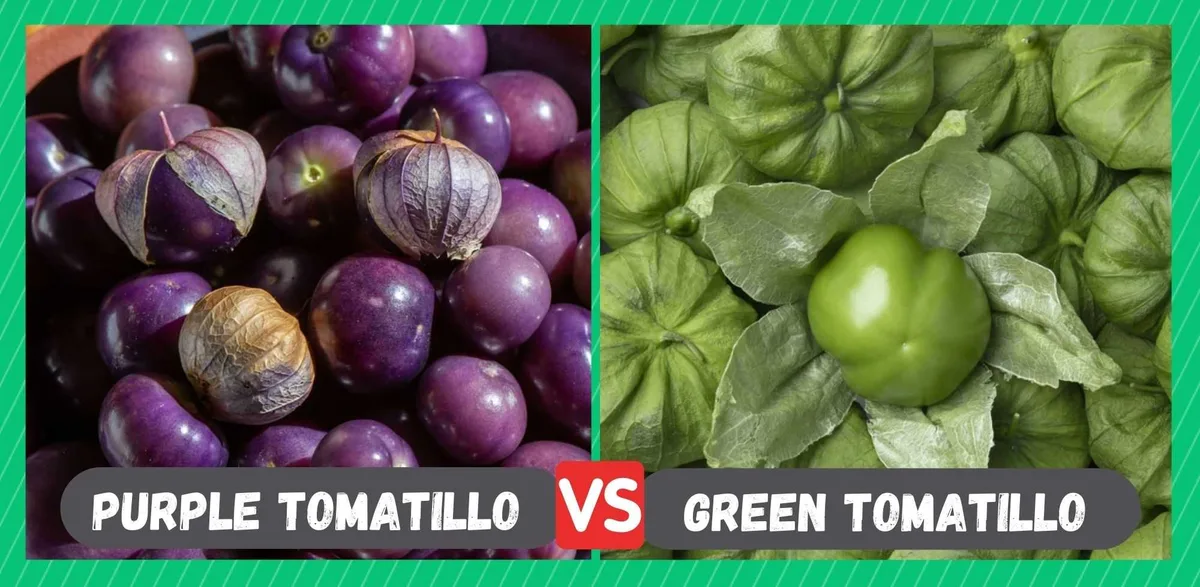
Not all tomatillos look alike. Most grocery-store tomatillos are the familiar green Toma Verde type. But home gardeners have more options, and the plants show visible differences as they grow.
| Variety | Fruit Color | Notes |
|---|---|---|
| Toma Verde | Green | Classic salsa verde flavor, widely available |
| Verde Puebla | Deep green | Flatter fruit, strong tang |
| Purple de Milpa | Purple-green | Sweeter, smaller, colors deepen in sun |
| Rio Grande | Green | Large fruit, vigorous vines |
| Amarylla | Yellow-green | Sweet, mild, good fresh |
What the plants look like matters too. Purple de Milpa vines often develop purple stems and purple veins, while green varieties stay uniformly green. Leaf shape and fuzziness also vary slightly, but the husk is your best identifier before harvest.
If the husk is tightly wrapped and the fruit feels firm, you're looking at a standard tomatillo.
Aggregate seed reviews suggest Purple de Milpa is the most ornamental, which makes it a favorite for container gardeners. Toma Verde is the most productive for salsa. For preserving, the green types hold up better because they stay firm after cooking.
A quick disclaimer: naming can be inconsistent at nurseries. If you buy transplants labeled "tomatillo" without a variety name, you're almost certainly getting a green husk tomato type. That's fine for salsa.
Just plant two of them.
Planting Tomatillos: Spacing, Sun, and the Two-Plant Rule
Start seeds indoors about 6 to 8 weeks before your last spring frost. Tomatillo seeds germinate in 7 to 14 days at 70 to 80°F, so a heat mat helps if your house runs cool. Transplant only after all frost danger has passed.
Tomatillos have zero frost tolerance, so check your last frost date using the USDA Plant Hardiness Zone Map before setting transplants out.
| Planting Factor | Recommendation |
|---|---|
| Sun | Full sun, 6+ hours daily |
| Soil pH | 6.0 to 7.0 |
| Plant spacing | 24 to 36 inches apart |
| Row spacing | 36 to 48 inches apart |
| Container | 5 gallons minimum, 10 gallons better |
The two-plant rule is non-negotiable. Because tomatillos are self-incompatible, you need at least two plants to get fruit. They don't need to be the same variety, just the same general bloom period.
Space them close enough that bees move between them, roughly 2 to 3 feet apart.
In our research, many gardeners plant three or four in a cluster. That improves fruit set. It also gives you a buffer if one plant gets eaten by a hornworm.
Before planting, harden off transplants over a week. Set them outside for a few hours each day, gradually increasing sun exposure. Mulch after planting to keep soil moisture steady, and water deeply, especially during flowering.
Tomatillo Growth Stages: Spotting the Signs From Seedling to Split Husk
Tomatillos move through distinct phases, and each one has a visual clue.
Seedling stage: you'll see broad, soft leaves with a slight fuzz. True leaves look like irregular ovals with smooth edges. If the stems stretch out and get leggy, your light is too weak.
Vegetative stage: the plant grows fast and sprawls. Branches get long and droopy. This is the time to add a cage or stake.
Letting tomatillos sprawl on the ground works, but the fruit on bare soil often rots.
Flowering stage: small yellow flowers with five pointed petals appear. They look like little lanterns. If flowers drop without forming a husk, the plant isn't getting pollinated or the heat is too intense.
Fruiting stage: soon after pollination, the calyx swells into a green papery husk. The fruit inside grows to fill it. When the husk is tight and firm, the fruit is still maturing.
Ripening stage: the husk turns from solid green to yellowish or papery brown, then splits open. That split is your signal. The fruit inside should feel firm and look slightly sticky.
Compare the plant to the diagrams in University of Minnesota Extension guides. If leaves look dark green and shiny, nitrogen is too high, and you'll get lots of foliage with fewer flowers. If the plant is pale and slow, it needs more sun or warmer soil.
When Are Tomatillos Ripe? The Husk Split Rule and Other Visual Shortcuts
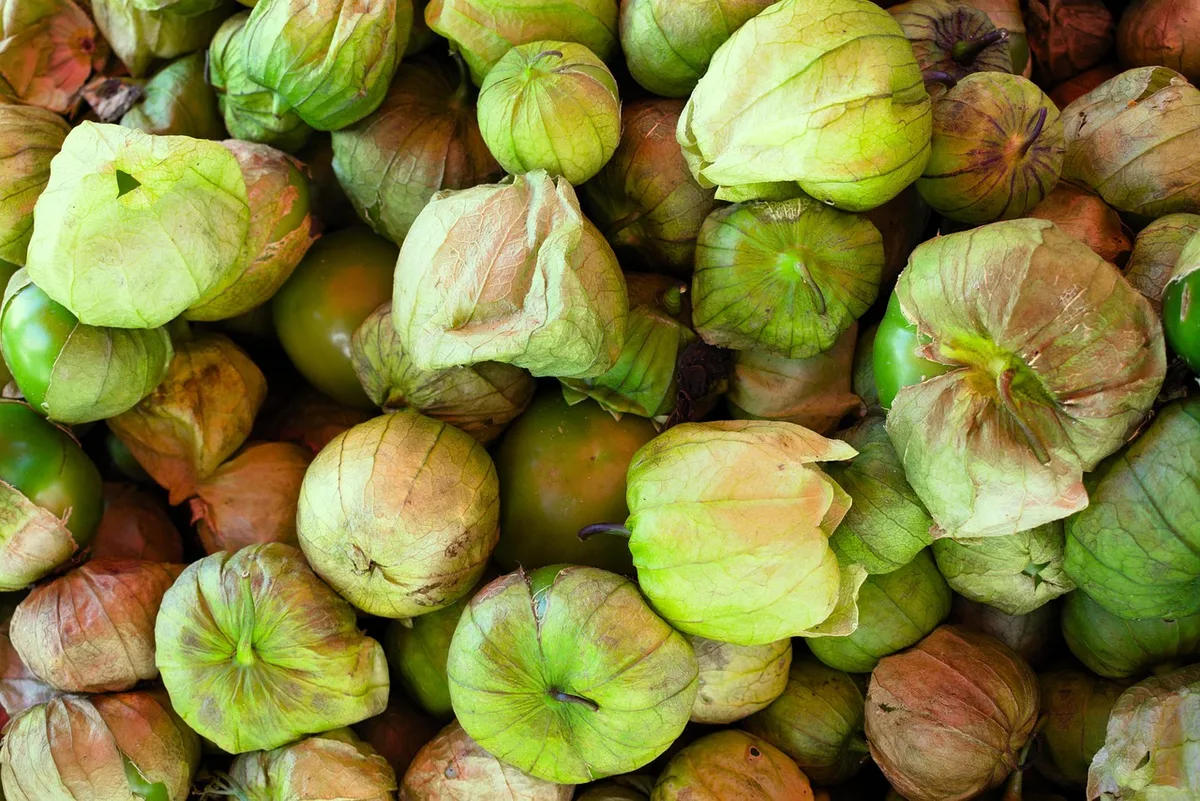
Ripeness in tomatillos is about the husk, not the fruit's color. Most varieties are ready while still green. Waiting for color turns them bland and starchy.
The main cue is the husk splitting. When the papery calyx bursts open, the fruit inside has reached full size. It should feel firm and fill the husk completely.
If you squeeze gently and feel empty space, give it more time.
Other shortcuts: ripe tomatillos feel sticky. That's the natural coating, and it's normal. They also start to pull away from the plant easily.
If a gentle tug doesn't release the fruit, it isn't ready.
Ripe tomatillos can be picked up to a couple of weeks after the husk splits. They store in the fridge for about 2 to 3 weeks. If you catch them too early, they'll still ripen off the plant, but the flavor won't be as bright.
One caution: the husk doesn't always split perfectly. In humid weather, it may split halfway and stay tight. In that case, squeeze the fruit gently.
If it feels firm and the husk has started to yellow, it's likely ready.
Our research suggests harvesting in the morning, when the fruit is cool and firm. Store them with husks on until you're ready to use them. That keeps them fresher longer.
Tomatillo Troubleshooting: Identifying Problems by Sight
Nearly every tomatillo problem shows up on the leaves, stems, or husks. Learn to read those visual signs and you can fix issues before they spread.
| Visual Symptom | Likely Cause | What to Do |
|---|---|---|
| Large ragged holes and dark droppings | Tomato hornworm | Handpick in the evening, check leaf undersides |
| Clusters of tiny green insects on new growth | Aphids | Spray with water, attract beneficial insects |
| White powdery coating on leaves | Powdery mildew | Improve airflow, water at soil level |
| Flowers falling off before fruiting | Heat stress above 90°F | Add shade cloth, keep soil moisture steady |
| Fruit rotting where it touches soil | Ground contact | Mulch, stake, or cage the plant |
If you see ragged leaf edges and dark droppings, a tomato hornworm is likely hidden under the foliage. Check stems during the evening hours and handpick them. The worms blend in well, so look for the droppings first.
Blossom drop gets misread as a disease. If flowers fall without forming husks, the air is probably too hot or the soil dried out. Increase watering and provide afternoon shade during the worst summer heat.
Harvesting, Storing, and Using Your Tomatillos
Pick tomatillos regularly once the husks split. Leaving mature fruit on the vine signals the plant to slow down. Consistent harvest pushes new flowers and raises your total yield.
To harvest, grip the fruit and twist gently. It should release with a slight tug. If it resists, give it another few days.
| Storage Method | Prep | Shelf Life |
|---|---|---|
| Fridge | Keep husks on, place in a paper bag | 2 to 3 weeks |
| Freezer | Wash, dry, freeze whole | 12 months |
| Canning | Use a tested salsa verde recipe | 12+ months |
The sticky residue on fresh fruit is a natural waxy cuticle. Just rinse it off before cooking. Fresh tomatillos shine in salsa verde, soups, and stews.
Roast or boil them first to bring out their brightness.
Always follow a tested water-bath canning recipe. The National Center for Home Food Preservation publishes reliable guides. Improperly canned salsa carries a botulism risk.
Frequently Asked Questions About Growing Tomatillos
Why didn't my tomatillos produce fruit?
The most common reason is a single plant. Tomatillos are self-incompatible, so they need pollen from another tomatillo plant. If you only planted one, or bees didn't visit, you'll get flowers but no fruit.
How do I know when tomatillos are ripe?
Watch the husk. When the papery calyx splits open and the fruit inside feels firm and sticky, it's ready. Most green varieties are ripe at full size before any color change appears.
Can you grow tomatillos in containers?
Yes, with the right setup. Use a 5-gallon pot minimum, but 10 gallons gives better root room and steadier moisture. You still need at least two plants for pollination, so plan your container space accordingly.
Do tomatillos need staking?
Not strictly, but it helps. Letting vines sprawl works fine in dry climates. In wet areas, fruit resting on soil rots quickly.
A cage or simple stake keeps the plant off the ground and makes harvest easier.
How many tomatillos do you get per plant?
Expect 3 to 5 pounds of fruit per plant with good pollination. That sounds modest until you realize two plants give you enough for a dozen batches of salsa verde. Harvest regularly to keep production going.