Thyme is the herb that should be easy to grow. It’s drought tolerant, pest resistant, and perennial in most climates. Yet the majority of first-time plants die within six months.
If you’re serious about growing thyme, you need to understand the one thing it hates: wet feet. Overwatering is the single fastest way to kill it.
Per USDA plant hardiness zone data, thyme thrives as a woody perennial in zones 5 through 9. In colder zones it needs winter protection or a container you can move inside. The secret to success isn’t a green thumb.
It’s making the right choices before you even put the plant in the ground.
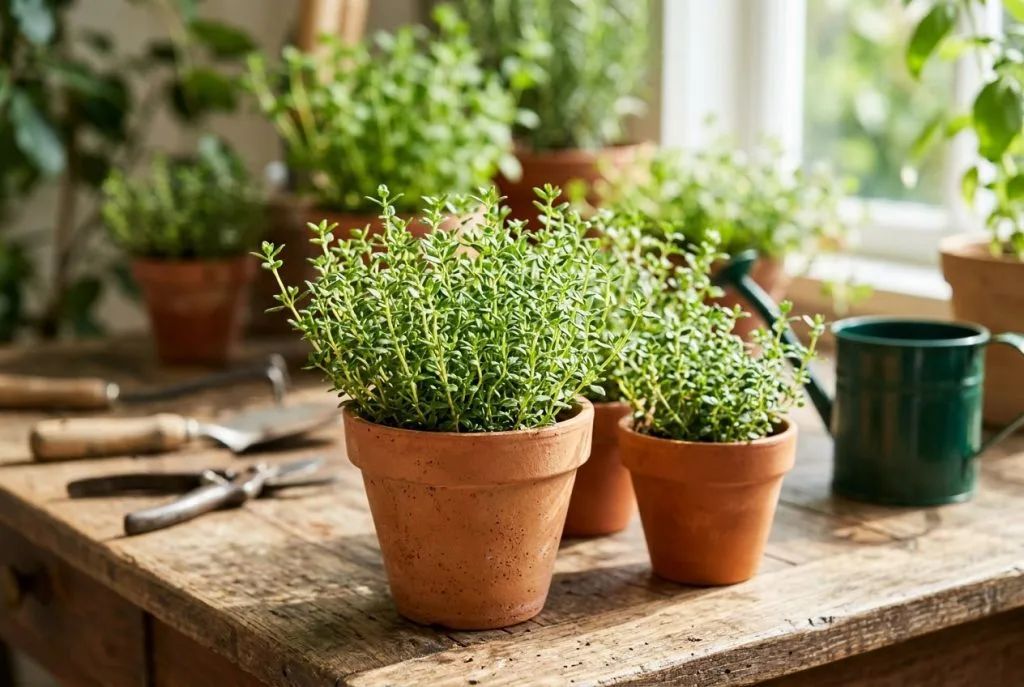
Image source: Bing (Web (fair-use with source credit))
Why Most Thyme Dies (And How to Avoid It)
Thyme dies for four main reasons. Let’s go through each one so you know what to watch for.
Overwatering. This is the number one cause. Thyme is native to the Mediterranean. It evolved in rocky, dry soil.
When its roots sit in water, they suffocate and rot. The leaves turn yellow, then brown, and the plant collapses. The fix is simple: only water when the top inch of soil is completely dry.
In a container that means waiting until the pot feels light.
Poor drainage. Even if you water sparingly, heavy clay soil traps moisture. Thyme needs soil that drains fast. If your garden soil is heavy, grow thyme in a raised bed or a pot where you control the mix.
Lack of sunlight. Thyme needs at least six hours of direct sun per day. Less than that and it gets leggy, weak, and less flavorful. Indoor thyme almost always needs a grow light to thrive.
Winter damage. In zones below 5, freeze-thaw cycles can kill thyme. The roots heave out of the soil. Mulching the base with straw or moving pots to a sheltered spot prevents this.
Your First Decision: Seeds, Cuttings, or Nursery Plants?
This is the first fork in the road. Your choice determines how long it takes to get your first harvest and how much work is involved.
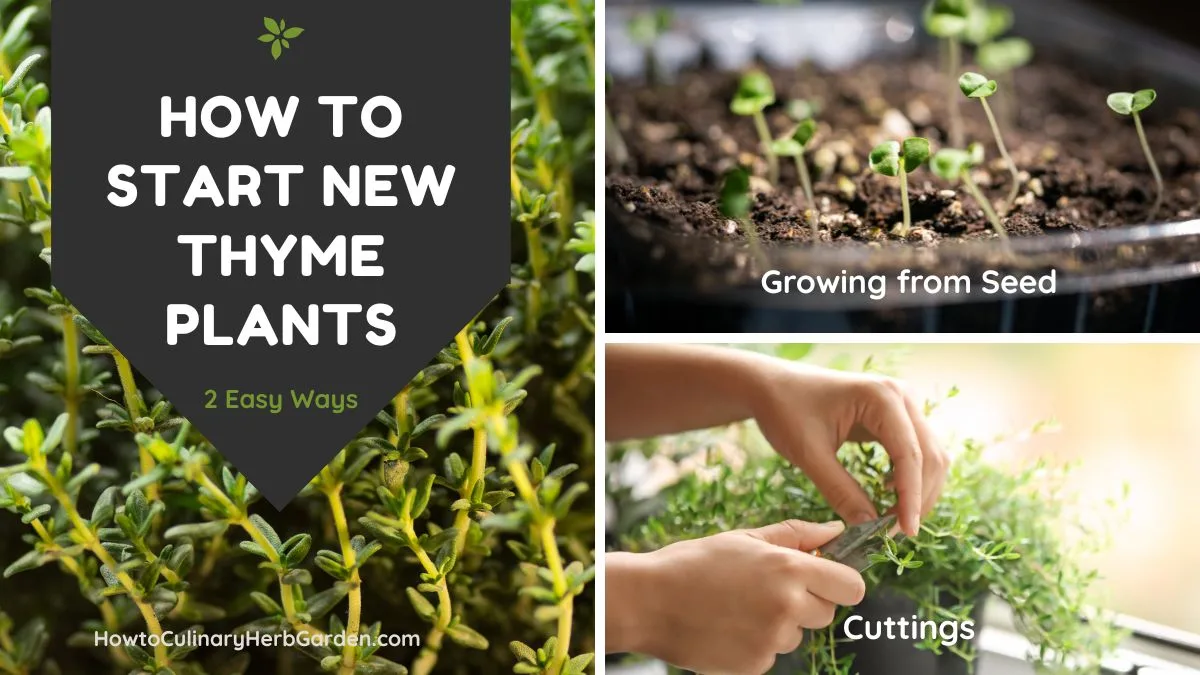
Image source: Web (Bing) / howtoculinaryherbgarden.com (Web image (fair-use with source credit))
Seeds. Thyme seeds are tiny and slow. Germination takes 14 to 28 days, and the success rate is around 50 percent. You need to start them indoors 8 to 10 weeks before the last frost.
The seedlings grow slowly, and it can take 120 to 200 days from seed to a harvestable plant. Seeds are the cheapest option, but they test your patience.
Cuttings. If you have access to an established thyme plant, take a 4-inch cutting. Strip the lower leaves and stick it in moist potting mix. Roots form in 3 to 4 weeks.
This method is free and you get an exact clone of the parent plant. The success rate is high if you keep the cutting humid.
Nursery plants. This is the fastest route. A 4-inch pot from a nursery is already several months old. You can plant it the same day and start harvesting in 6 to 8 weeks.
Nursery plants cost more, but they skip the slowest part of the process.
| Method | Time to Harvest | Cost | Success Rate | Best For |
|---|---|---|---|---|
| Seeds | 120–200 days | Low | Around 50% | Patient growers, bulk planting |
| Cuttings | 60–90 days | Free | High | Anyone with access to a parent plant |
| Nursery plant | 60–90 days | Medium | Very high | Fast results, beginners |
Here’s how to decide. If you have patience and want to grow many plants cheaply, start with seeds. If you have a friend with a thyme plant, take cuttings.
If you want a reliable harvest this season, buy a nursery plant.
Your Second Decision: Ground, Container, or Indoor Spot?
Once you have your thyme, you need to choose where it lives. Each option has trade-offs.
In-ground. This is ideal if your soil drains well and you have a sunny spot. Thyme planted in the ground spreads naturally and can become a low-maintenance ground cover. The risk is that heavy rain can waterlog the soil.
If your soil is clay, this option is not for you unless you raise the bed.
Container. A 6-inch pot with drainage holes is the safest way to control the soil mix. You can move the pot to catch the sun or avoid a storm. In colder zones you can bring the pot indoors for winter.
Use a gritty mix: one part sand, one part perlite, one part potting soil. This ensures the water drains fast.
Indoor. Growing thyme indoors lets you have fresh herbs year round. But thyme needs intense light. A south-facing window might provide enough in summer, but in winter you will likely need a grow light for 12 to 14 hours a day.
Indoor thyme is also more prone to powdery mildew if the air is still.
The if/then summary: if you have sandy or loamy soil and good sun, go in-ground. If you have clay soil or a cold winter, use a container. If you want fresh thyme in January, grow indoors with a grow light.
How to Plant Thyme the Right Way (Step by Step)
Follow these steps for the best start.
Step 1: Prepare the soil. For ground planting, dig a hole twice the width of the root ball. Mix some coarse sand into the removed soil if it feels heavy. For containers, fill your pot with the gritty mix described above.
Do not add garden soil to a pot.
Step 2: Plant at the right depth. Gently remove the plant from its nursery pot. Place it in the hole so the top of the root ball is level with the soil surface. Burying the stem invites rot.
Fill around the roots and press down lightly.
Step 3: Space them out. Thyme plants spread 12 to 18 inches wide. If you are planting multiple, give them that much room. Overcrowding leads to poor airflow and mildew.
Step 4: Water in. Give the plant a gentle soak right after planting. Then do not water again until the top inch of soil is dry. This encourages the roots to go deep.
Step 5: Add a thin mulch. Use gravel, pebbles, or very coarse bark. Do not use rich organic mulch like compost or manure. Thyme prefers lean soil, and organic mulch holds moisture against the stem.
That is the process. It takes about 10 minutes per plant.
The 5 Mistakes That Kill Thyme (And What to Do Instead)
Here are the most common errors we see in aggregate reviews and gardening forums.
Image source: Web (Bing) / storage.googleapis.com (Web image (fair-use with source credit))
Mistake 1: Watering on a schedule. Thyme does not want water every Tuesday. It wants water when it is dry. Check the soil with your finger.
If it is damp, skip the watering.
Mistake 2: Planting in rich soil. Thyme is not a heavy feeder. Fertilizer, especially high-nitrogen fertilizer, makes it grow soft, floppy leaves that attract pests. Instead, plant in poor, sandy soil and skip the fertilizer.
Mistake 3: Pruning wrong. Many people only trim the tips. This leaves a woody, leafless center. Instead, prune the plant back by one-third in early spring and after flowering.
This keeps it bushy and productive.
Mistake 4: Ignoring the flowers. Thyme flowers are pretty and bees love them. But if you let the flowers go to seed, the plant directs energy away from leaf production. Harvest the leaves before full bloom for the best flavor.
Mistake 5: Overwintering wrong. In cold zones, do not cut thyme back hard in fall. Leave the top growth to protect the crown. Mulch with straw or bring pots to a sheltered spot.
In spring, cut back the dead growth.
Five mistakes. Five simple fixes. Avoid these and your thyme will live 3 to 5 years.
Long-Term Care: Pruning, Watering, and Overwintering
Thyme is a low-maintenance plant. But "low maintenance" doesn't mean zero care. A few seasonal tasks make the difference between a plant that lasts 3 years and one that lingers for a decade.
Pruning
Thyme becomes woody at the base as it ages. Without regular pruning, the leaves disappear into bare stems. In early spring, cut the plant back by one-third.
This forces new growth from the base. After the first flowering, trim again to keep the shape compact.
Never cut into the old wood at the very bottom. It won't regrow. Leave a couple of inches of green stems on each branch.
Watering
In summer, check the soil every three to five days. Water only when the top inch is dry. In winter, slow down.
Cool, wet soil is the gravest danger for outdoor thyme. If you're in a rainy region, consider a cloche or a cold frame to keep excess water off the plant.
Overwintering
If you're in USDA zones 5 through 9, thyme can stay outside. Mulch the base with sand, gravel, or straw to prevent freeze-thaw heaving. In zones 4 and colder, move pots into a garage or unheated room.
The key is keeping the roots cold but not wet.
Water lightly once a month during winter dormancy. That's enough.
Common Thyme Growing Questions
Can I grow thyme indoors year round?
Yes, but only with enough light. A sunny south-facing window works in summer. In winter, you'll need a grow light running 12 to 14 hours a day.
Thyme needs good air circulation, too. Without it, powdery mildew shows up as white spots on the leaves.
How long does a thyme plant live?
Most thyme plants stay productive for 3 to 5 years. After that, the center becomes woody and sparse. When production drops, take cuttings from the healthiest outer stems and start fresh.
This gives you a new plant without buying another one.
Should I let thyme flower?
Bees love the flowers, and the plant looks pretty. But flowering shifts the plant's energy away from leaf production. If you're growing thyme for cooking, pinch off flower buds as they appear.
If you want to attract pollinators, let one plant bloom and keep the others trimmed.
Why is my thyme turning yellow?
Yellowing leaves almost always mean too much water. Thyme roots suffocate in soggy soil. If the plant is in a pot, check the drainage holes and cut back watering.
If it's in the ground, improve the soil with sand or perlite before replanting.