You want crisp, crunchy radishes in under a month, and growing radishes from seed is genuinely one of the most satisfying things you can do in a garden. No fussy transplants, no long waits, no complicated care. You drop seeds in the ground, water them, and within three weeks you're pulling up dinner.
USDA cooperative extension data confirms that radishes germinate in as little as 3 to 10 days depending on soil temperature. That speed makes them the perfect confidence-builder for new gardeners and a reliable gap-filler for experienced ones. Let's walk through exactly how to get it right the first time.
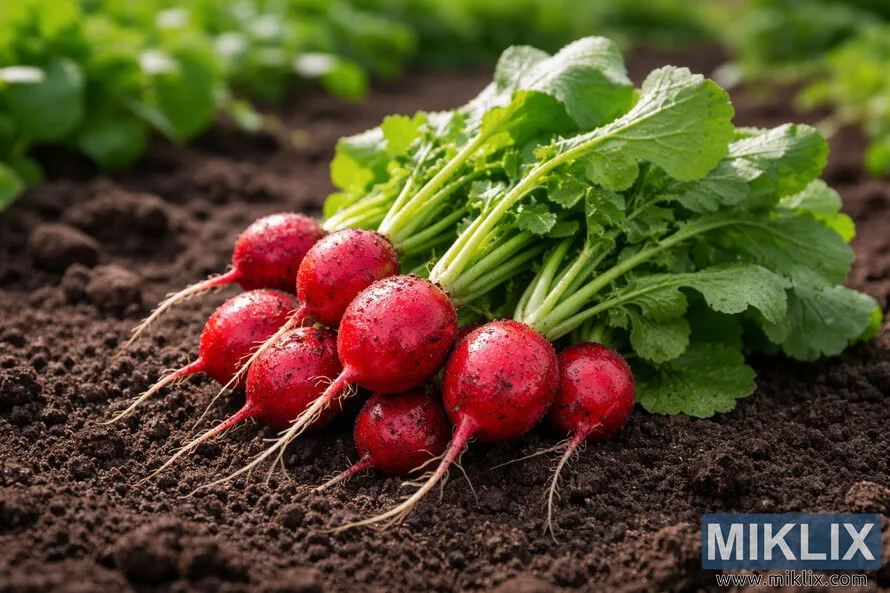
Image source: Web (Bing) / miklix.com (Web image (fair-use with source credit))
Quick Answer
Sow seeds 1/2 inch deep. Space them 1 inch apart. Thin to 2-3 inches between plants.
Keep soil moist. Harvest at 21-30 days. Choose spring radishes for speed.
Choose winter radishes for storage.
What Radishes Need Before You Sow: Soil, Sun, and Season
Radishes are cool-weather crops. They grow fastest when soil temperatures sit between 50°F and 65°F. If your soil is below 40°F, germination slows way down.
If it's above 85°F, roots turn tough and woody before they size up.
Sun matters too. Radishes need full sun, at least six hours of direct light per day. Less light means leafy tops and skinny roots.
You can push it to partial shade in very hot climates, but expect smaller harvests.
Soil should be loose and well-draining. Heavy clay or compacted ground forces radish roots to fork or stay stunted. Work the soil 6 to 8 inches deep.
Remove rocks, clods, and debris. A light 1-inch layer of finished compost mixed into the top few inches gives them a gentle nutrient boost.
The magic number for soil pH is 6.0 to 7.0. Most garden soils fall in this range naturally. If you're unsure, a basic soil test from your local extension office costs around $15.
Don't skip this if you've never tested your soil before.
Who this is for: Home gardeners with any size plot. Container growers using pots at least 6 inches deep. First-timers who want a near-guaranteed success.
Experienced growers who need a fast rotation crop between slower season vegetables.
Pick Your Path: Spring Radishes vs. Winter Radishes
Not all radishes are the same. The variety you choose changes everything about planting depth, timing, spacing, and harvest method. This is where most beginners make their first mistake, they grab any packet and hope for the best.
Here's the breakdown.
| Trait | Spring Radishes | Winter Radishes |
|---|---|---|
| Days to maturity | 21–30 days | 50–70 days |
| Best planting season | Early spring or fall | Late summer / early fall |
| Root size | Small (1–2 inches) | Large (4–12 inches) |
| Storage life | 1–2 weeks in fridge | 2–4 months in root cellar |
| Best soil depth | 6 inches | 10–12 inches |
| Common varieties | Cherry Belle, French Breakfast, White Icicle | Daikon, Watermelon, Black Spanish |
If you want radishes fast: Choose spring varieties like Cherry Belle or French Breakfast. These thrive in cool spring soil and produce the fastest harvest in the garden. Succession-plant them every 7 to 10 days to keep a steady supply through early summer.
If you want radishes for storage: Go with winter types like Daikon or Black Spanish. They grow slower and need deeper soil, but they store beautifully in a root cellar or fridge for months. Fall is the season for these.
Plant them 6 to 8 weeks before your first hard frost.
If you're container gardening: Stick with spring radishes. Round types like Cherry Belle handle shallow soil well. Long winter radishes need deeper pots, at least 10 to 12 inches, which many containers can't provide.
If you're a companion planter: Use radishes as trap crops. Flea beetles love radish leaves more than broccoli or cabbage leaves. Plant a border of spring radishes around your main brassica bed.
The beetles feed on the radish leaves instead of your more valuable crop.
The Step-by-Step Workflow: Sow, Thin, Water, Harvest
Here's the exact process that works for spring radishes. Winter radishes follow the same steps but need deeper soil and more patience.
Step 1: Prepare the bed. Loosen soil to at least 6 inches deep. Rake it smooth. Water it lightly the day before planting so the soil is moist but not soggy.
Step 2: Sow the seeds. Make a shallow furrow about 1/2 inch deep. Drop seeds about 1 inch apart. Cover lightly with soil and pat it down gently.
Don't bury them deeper than 1/2 inch, deep planting is one of the top reasons seeds don't sprout.
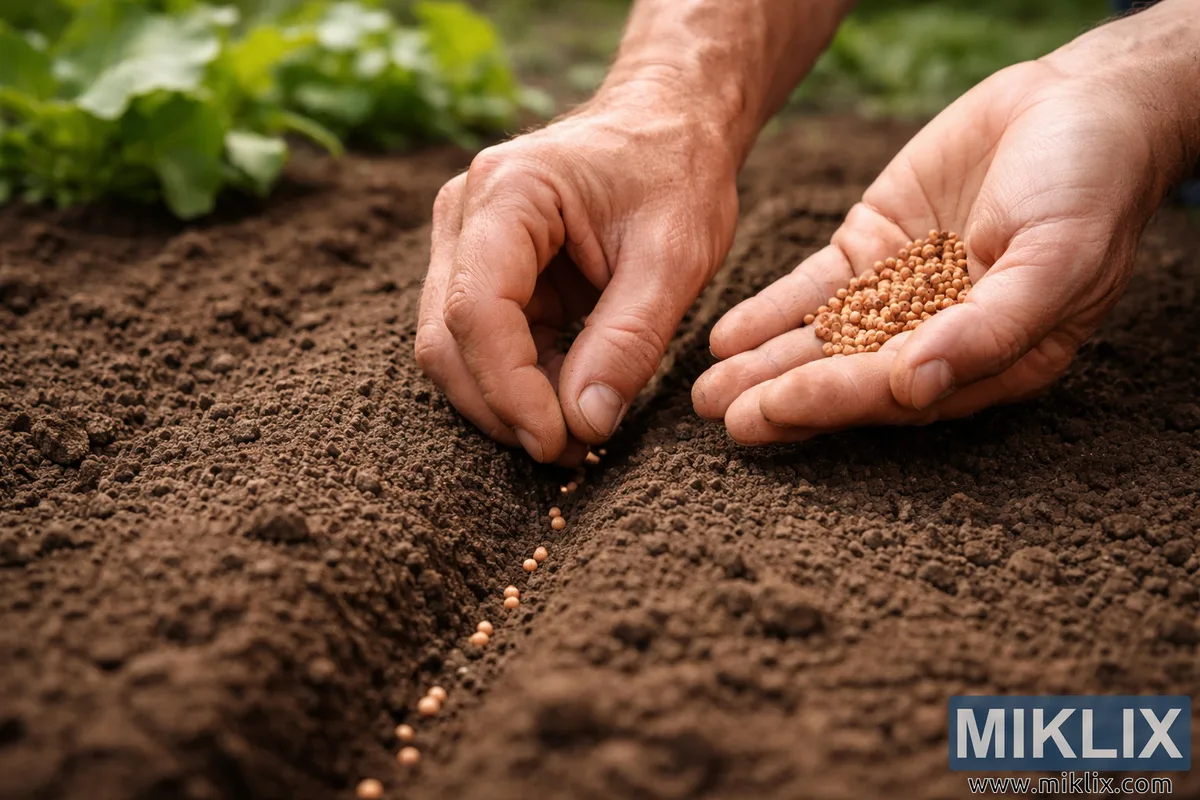
Image source: Bing (Web (fair-use with source credit))
Step 3: Water right away. Use a gentle spray so you don't wash seeds out of the furrow. Keep the top inch of soil consistently moist until seedlings appear. This usually takes 3 to 10 days depending on temperature.
If the soil dries out, seeds stop germinating.
Step 4: Thin the seedlings. This is the hardest part for new gardeners, you have to pull up perfectly healthy little plants. But crowding is the fastest path to tiny, misshapen roots. When seedlings are about 2 inches tall, thin them to 2 to 3 inches apart.
Use scissors to snip them at soil level. Pulling can disturb the roots of the plants you're keeping.
Step 5: Keep watering even. Radishes need about 1 inch of water per week. The key is consistency. If you let them dry out then drench them, the roots will crack open.
A light layer of straw mulch helps keep moisture steady.
Step 6: Harvest on time. Pull a test radish on the earliest day listed on the seed packet. For Cherry Belle, that's 21 days. If the root looks full and feels firm, harvest the whole row immediately.
Radishes left in the ground an extra week go from perfect to pithy and overly spicy.
Step 7: Succession plant. After you harvest one row, sow another in the same space. You can do this every 7 to 10 days through early summer and again in late summer for a fall crop. That's how you get months of radishes from a single small bed.
Common Mistakes That Ruin Radish Crops (and How to Fix Them)
Even experienced growers hit these walls. Here's what goes wrong and how to sidestep each problem.
Overcrowding. The most common mistake by far. People sow seeds too thickly and skip thinning. Result: lots of leafy tops and skinny, underdeveloped roots. Fix: Thin to 2-3 inches apart when seedlings are 2 inches tall.
Yes, it feels wasteful. Do it anyway.
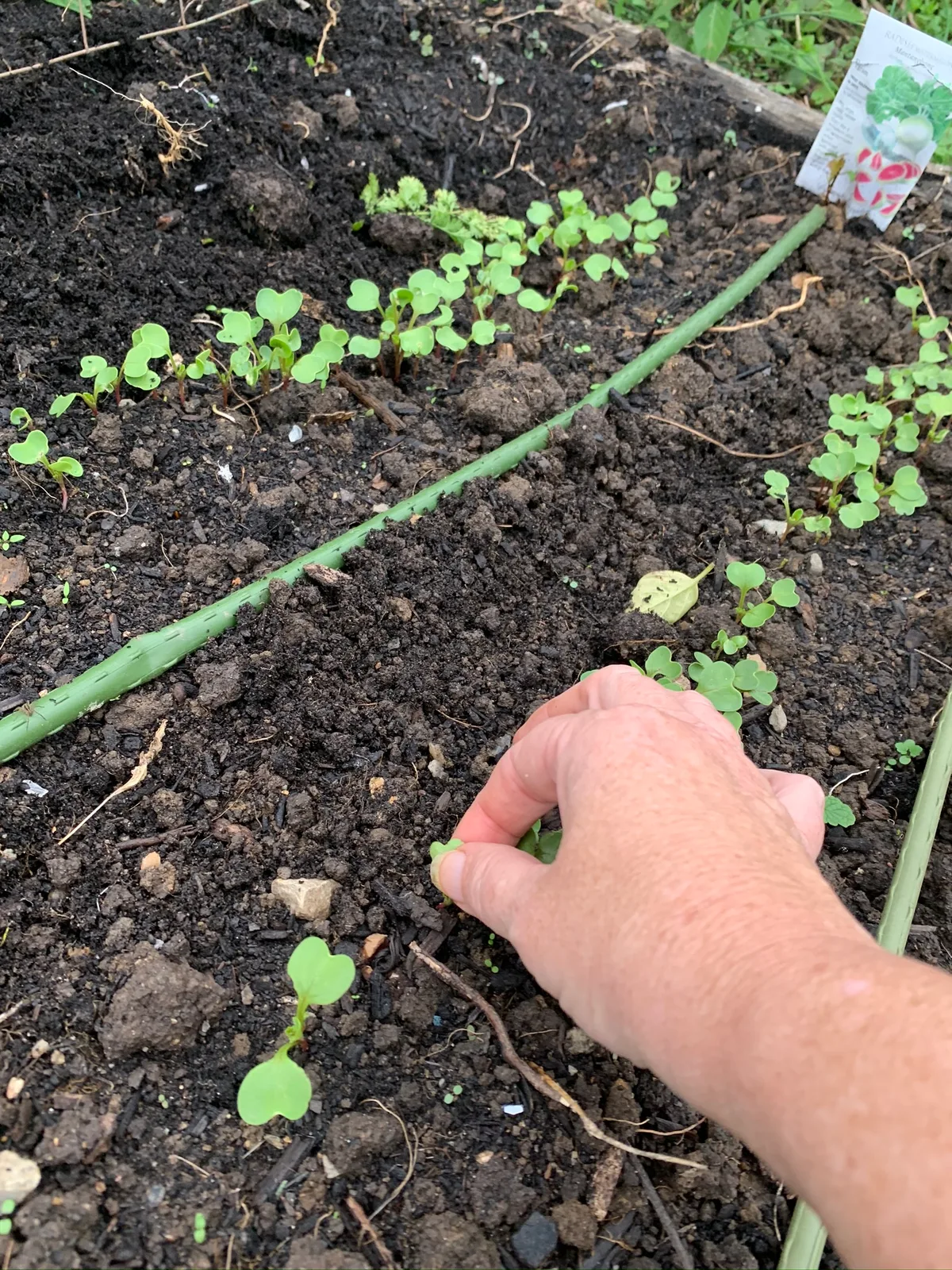
Image source: Web (Bing) / washingtongardener.blogspot.com (Web image (fair-use with source credit))
Heat stress. Radishes are not summer vegetables. When daytime temperatures consistently hit 80°F and above, roots stop sizing up and start turning woody. Fix: Plant in early spring (4-6 weeks before last frost) or in fall (6-8 weeks before first frost). If you must grow through summer, stick to Daikon or other heat-tolerant winter varieties.
Inconsistent watering. Radish roots are mostly water. Erratic moisture causes cracking, splitting, and bitter flavor. The National Gardening Association's research shows that consistent soil moisture reduces cracking rates by over 60%. Fix: Water deeply once or twice a week rather than a light sprinkle daily.
Use drip irrigation or a soaker hose for even coverage.
Too much nitrogen. High-nitrogen fertilizers produce lush green tops at the expense of root growth. University extension service research confirms that balanced fertilizers applied at planting time prevent this imbalance. Fix: Use a low-nitrogen balanced fertilizer (like 5-10-10) at planting. No side-dressing needed during growth.
Planting too deep. Seeds sown deeper than 1/2 inch struggle to push through crusty soil. Fix: Measure your furrow depth. If you're guessing, you're probably going too deep.
Leaving them too long. Radishes have a narrow harvest window. A few days past peak and they become spongy, overly spicy, and sometimes hollow inside. Fix: Mark your calendar for the earliest harvest date on the packet. Start pulling test radishes that day, not a week later.
Expert Tips: Timing, Spacing, Container Growing, and Succession Planting
These four areas separate good radish crops from great ones. Master them and you'll never have a gap in harvest again.
Timing is everything. Radishes are photoperiod sensitive. As days get longer and hotter in late spring, they bolt faster. The best window for spring radishes is 4 to 6 weeks before your last frost date through about 4 weeks after it.
For fall crops, plant 6 to 8 weeks before your first hard frost. That gives winter radishes enough cool weather to size up properly.
Spacing affects root shape. Crowded radishes grow round but small. Well-spaced radishes develop full, uniform roots. The 2 to 3 inch rule applies to most spring types.
Winter daikons need 4 to 6 inches between plants because their roots are longer. Check your seed packet for variety-specific spacing. It's printed there for a reason.
Container growing works well. You need a pot at least 6 inches deep for round spring radishes. Long winter types need 10 to 12 inches. Use a lightweight potting mix, not garden soil.
Garden soil compacts in containers and blocks root expansion. Place the pot in full sun and water daily in warm weather because containers dry out faster than ground beds.
Succession planting keeps the harvest going. Sow a new row every 7 to 10 days. That gives you a continuous supply rather than one glut followed by nothing. Stop succession planting about four weeks before your average summer heat arrives.
Resume in late summer for a fall crop. Some growers get three full cycles of spring radishes before summer heat shuts them down.
Frequently Asked Questions
How deep should I plant radish seeds?
Plant them 1/2 inch deep. Any deeper and they struggle to push through crusty soil. Any shallower and they dry out before germinating.
Measure your furrow depth with your finger. It should reach to your first knuckle.
Why are my radishes all leaves and no roots?
Too much nitrogen in the soil encourages leafy growth at the expense of roots. Switch to a low-nitrogen balanced fertilizer like 5-10-10. Overcrowding and too much shade also cause this.
Thin seedlings to 2 to 3 inches apart and ensure full sun.
Can I grow radishes in partial shade?
You can, but you'll get smaller roots and slower growth. Radishes need at least six hours of direct sun daily to size up properly. Four hours of sun produces edible roots that are noticeably smaller.
In very hot climates, afternoon shade actually helps prevent bolting.
When should I harvest radishes?
Check the seed packet for the earliest maturity date. Pull a test radish on that day. If the root is firm and full, harvest the entire row immediately.
Spring radishes left in the ground more than a few days past peak become pithy and overly spicy.
How do I store harvested radishes?
Trim the leafy tops immediately. Leaves pull moisture from the roots and cause wilting. Store unwashed radishes in a plastic bag in the fridge.
Spring radishes keep for 1 to 2 weeks. Winter radishes store for 2 to 4 months in damp sand in a root cellar or cold fridge.
Why did my radishes crack open?
Cracking happens when watering is inconsistent. The root swells quickly after a dry spell and the skin splits. Keep soil evenly moist.
Aim for 1 inch of water per week. A 1-inch layer of straw mulch helps prevent moisture fluctuations.
Final Decision Guide: What to Plant Based on Your Situation
Let's put it all together. Your choice depends on three factors: your climate, your timeline, and your space.
If you want the fastest possible harvest: Plant Cherry Belle or French Breakfast in early spring. Sow 1/2 inch deep. Thin to 2 inches apart.
Harvest at 21 to 25 days. Succession plant every 7 days for continuous supply.
If you live in a hot climate: Grow radishes only in fall and early spring. Skip summer entirely. Use daikon varieties for their heat tolerance.
Plant them in deep soil or tall containers. Water consistently to prevent bitterness.
If you have limited space: Stick with spring radishes in containers. Use pots at least 6 inches deep with drainage holes. Place them in full sun on a patio or balcony.
Harvest at 25 to 30 days and replant immediately.
If you want storage radishes for winter: Plant daikon, Black Spanish, or Watermelon radish in late summer. Space them 4 to 6 inches apart. Harvest after the first light frost but before a hard freeze.
Store in damp sand in a cool basement or fridge.
The one rule that applies to everyone: Harvest on time. The difference between a perfect radish and a pithy disappointment is about three days in the ground. Mark your calendar, pull a test root, and don't hesitate when they're ready.