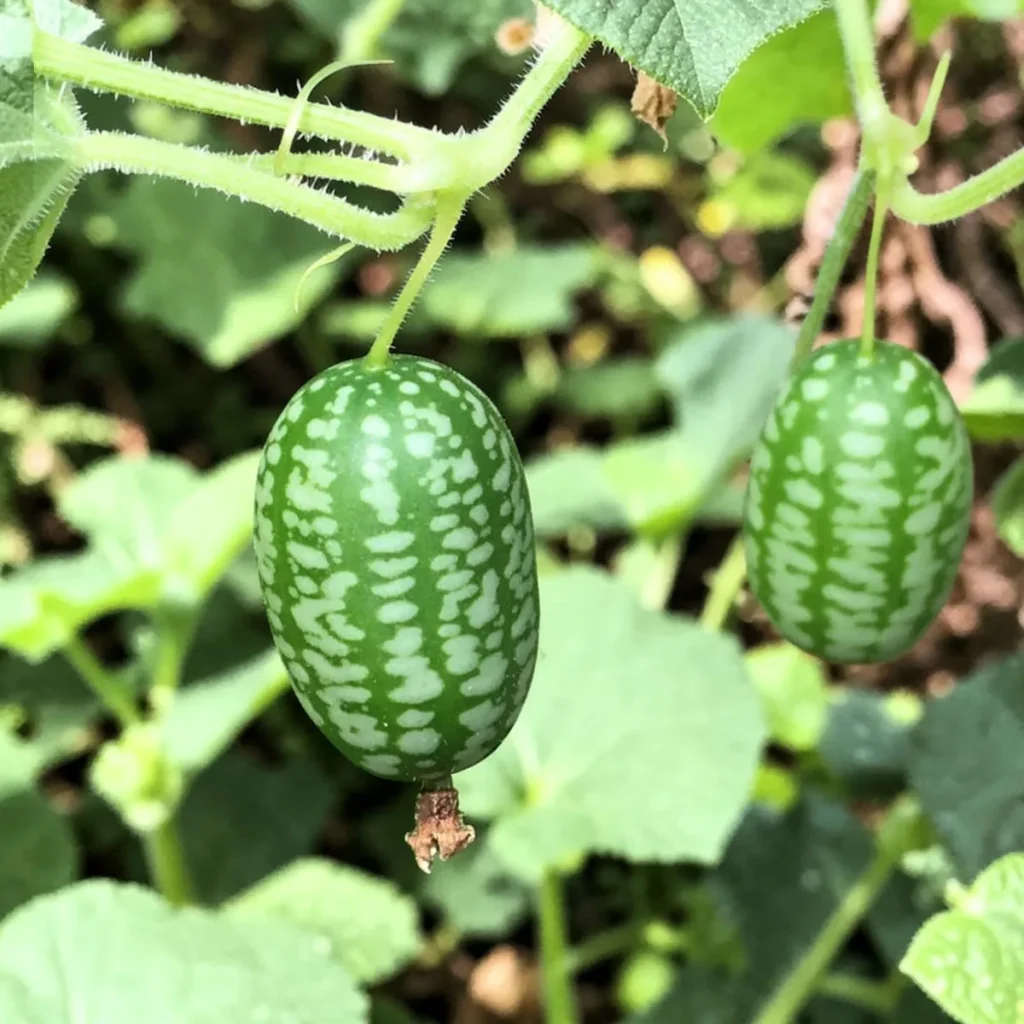
Most gardeners think cucamelons look fussy, but they're actually one of the most forgiving crops you can grow. Growing cucamelons doesn't require a greenhouse, tropical heat, or any special skill. It just requires reading a few simple visual cues, and those cues are easy to learn in a single season.
Cucamelons (Melothria scabra, also called Mexican sour gherkins or mouse melons) regularly produce 100 to 200 fruits per vine once established. As of 2026, that's what experienced growers report across seed catalogs and university extension notes. The trick is knowing what each growth stage looks like.
That's exactly what we're covering here.
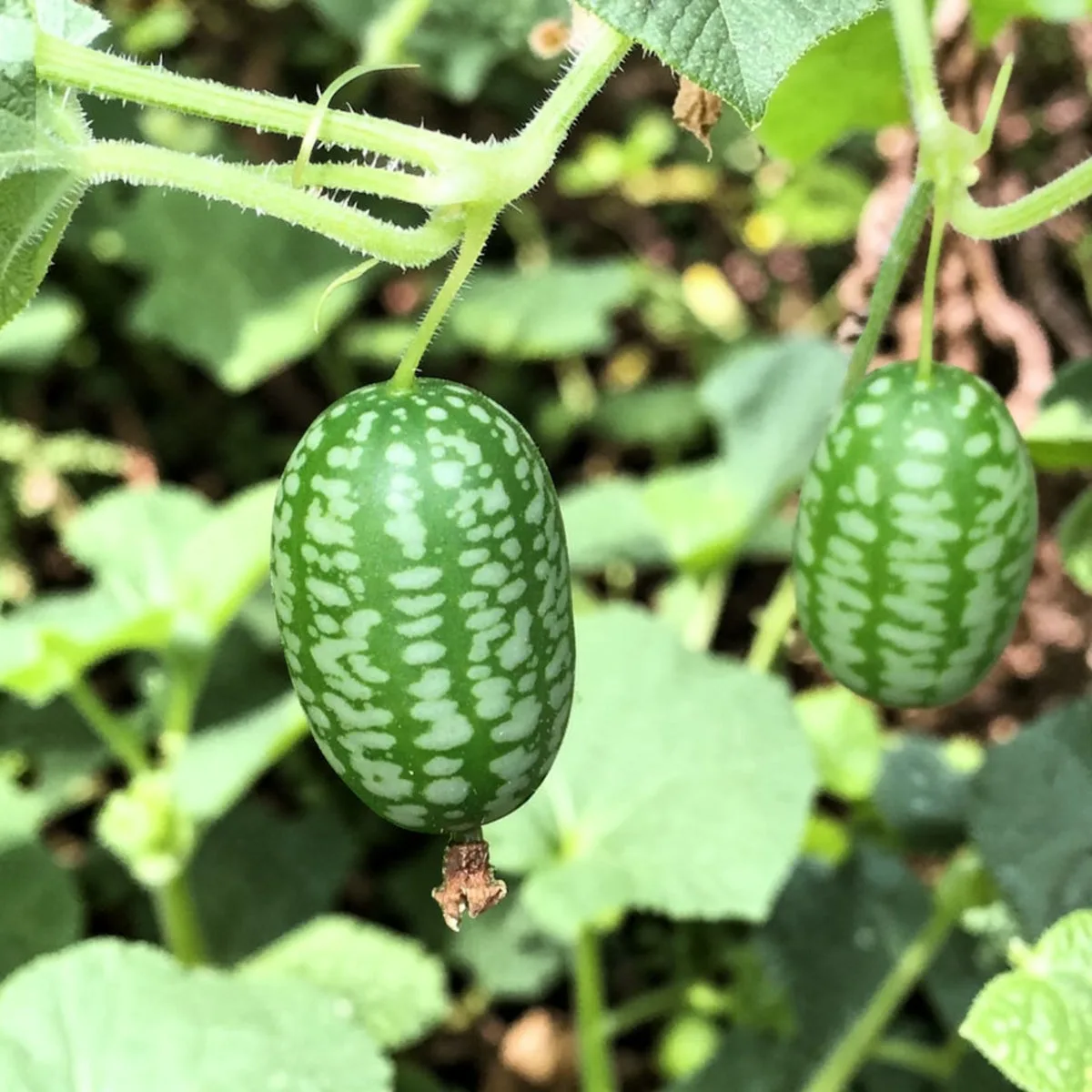
Image source: Web (Bing) / carbethplants.co.uk (Web image (fair-use with source credit))
Why Visuals Matter for Growing Cucamelons
Gardeners fail with cucamelons in predictable ways. They start seeds too early, bury them too deep, or leave ripe fruit on the vine until it turns mushy. Every one of those mistakes is a visual mistake, not a knowledge gap.
The vines are expressive at every stage. Seeds sit quietly in warm soil, then push up a tiny loop of green. Seedlings produce rounded seed leaves first, and the lobed true leaves come later.
At flowering, the male and female blossoms are easy to tell apart once you know the shape difference. And the fruit practically signals its own ripeness through color, size, and a subtle change in firmness.
Reference photos and clear diagrams speed all of this up. These cues are small, and a one-line description rarely sticks. That's why the photos in this guide focus on the key moments: a ripe fruit still on the vine, the first true leaves on a seedling, and the male and female flowers side by side.
Follow the visual milestones in order, with a plant in front of you, and the learning curve gets short fast.
The Quick Success Formula: Sun, Warmth, and a Trellis
If you get three things right, everything else gets easier.
Full sun. Cucamelons need 6 to 8 hours of direct light a day. Anything less and you'll get plenty of leaves but not many fruits.
Warm soil. This matters more than air temperature. Seeds germinate fastest when soil sits between 70°F and 85°F. Below about 60°F, seeds stall or rot in place.
Your local university extension can help you pin down typical soil-warming dates for your area.
A sturdy trellis. These vines are vigorous climbers that will easily scramble 6 to 8 feet. Cattle panels, string supports, and tall cages all work. Put the trellis up before you plant, because a tangled vine on the ground invites mildew and makes harvesting annoying.
| Factor | Minimum | Why it matters |
|---|---|---|
| Sun | 6-8 hours direct | Less light means more leaves, fewer fruits |
| Soil temperature | 70-85°F at planting | Cold soil slows germination or kills seeds |
| Support | 6-8 ft trellis | Climbing vines get better airflow and stay cleaner |
Cucamelons also want consistent moisture and decent drainage, but they're far more forgiving than regular cucumbers when it comes to heat and pest pressure. Water at the base of the plant instead of showering the leaves. Aim for a soil pH between 6.0 and 6.8, which is the same range most garden vegetables enjoy.
Seed Starting: What to Look For at Each Stage
Start seeds indoors 6 to 8 weeks before your last frost date. Cucamelon seeds are not fast starters. Under good conditions, germination takes 7 to 14 days, and sometimes longer.
Don't give up on the tray too early.
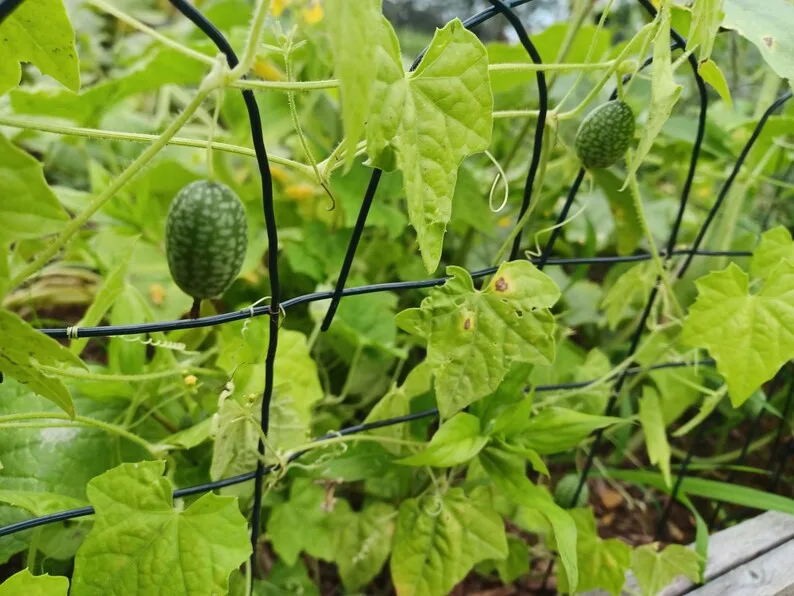
Image source: Web (Bing) / etsy.com (Web image (fair-use with source credit))
Here's what you'll see, stage by stage:
Seed leaves (cotyledons). The first pair of leaves is rounded, smooth, and almost generic-looking. They're not the plant's true leaves, and they don't tell you much yet.
True leaves. These appear a few days later and look like small, lobed cucumber leaves. Deep green color and a compact stem mean your seedling is happy. A pale, stretched stem means it wants more light, so move it closer to the grow light.
Planting depth. Sow seeds about ¼ inch deep, one per cell or two in a larger pot. A fine seed-starting mix works best. Keep the soil lightly moist but never soaked.
Damping off watch. If a seedling suddenly flops at the soil line, that's damping off, a fungal disease. Prevent it by using a sterile mix, running a small fan for airflow, and watering from the bottom.
Cucamelons stretch fast under weak light. Keep a grow light about 2 to 3 inches above the seedlings and run it 14 to 16 hours a day. Your last frost date depends on your region, which you can check through the USDA.
Transplant and Trellising: The Visual Signals Your Plant Sends
Seedlings are ready to move outdoors when they have at least two sets of true leaves and the root ball holds together when you lift it from the pot.
Harden them off first. Over 7 to 10 days, give the plants more outside time each day. Start in shade, then ease them into sun. Bleached or papery leaves mean you pushed them too fast.
Wait for warm nights. Nighttime temperatures should stay above 50°F before transplanting. Cooler than that, and the plants sulk. Cucamelons are frost-tender, so one cold night can set them back weeks.
Spacing. Put them 12 to 18 inches apart in the garden. For containers, use one plant per 5-gallon pot with good drainage. Mulch with straw or wood chips after transplanting, which keeps soil moisture even and roots cool.
Trellis first, plant second. Install the support before you transplant, then guide the plant's main stem toward it.
Use this checklist to stay on track:
- Curling tendrils mean the vine has grabbed the support and is climbing happily.
- Wilting leaves at midday can mean water stress, so check the soil a few inches down.
- Yellow lower leaves are usually normal aging, but if the yellowing spreads upward, the plant needs a nitrogen boost.
The Fruit: How to Know It's Ready (and When to Pick)
Before the fruit comes the flower, and the flowers are easy to read. Male flowers grow on thin, straight stems. Female flowers have a tiny swollen lump behind the petals.
That lump is the future fruit. Learn to spot it, and you can predict exactly where the harvest will show up.
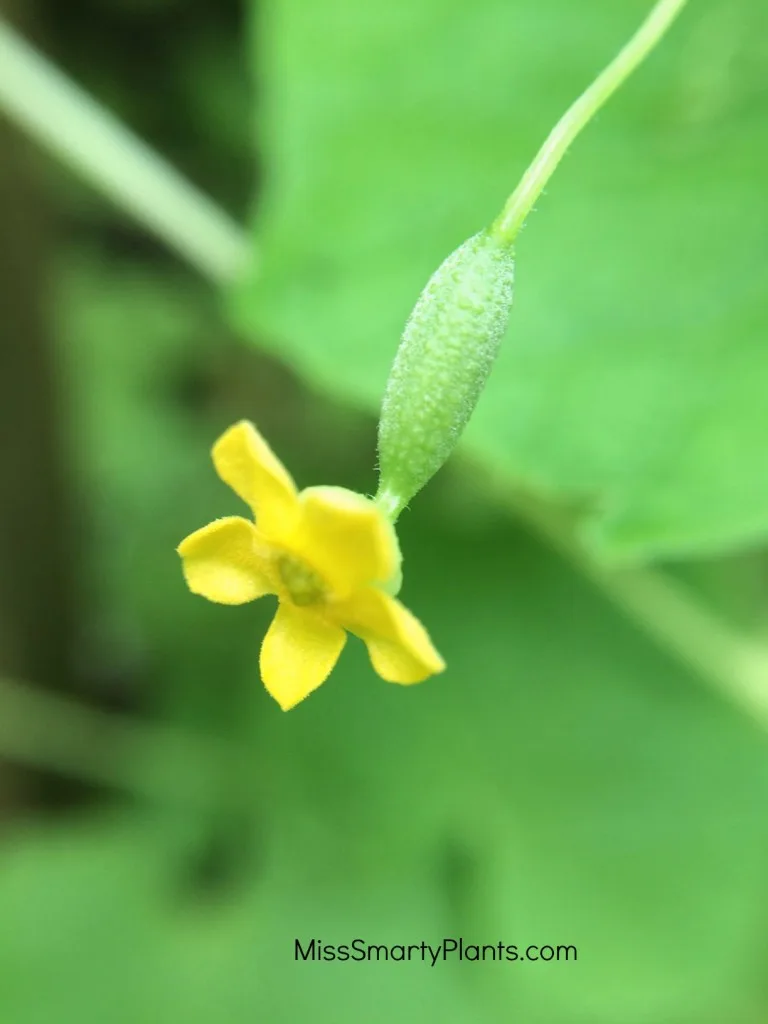
Image source: Web (Bing) / misssmartyplants.com (Web image (fair-use with source credit))
Once pollinated, the fruit swells fast. Within a couple of weeks, you'll see round, striped little orbs, and they're ready sooner than you think.
Here's how to read ripeness:
- Size: about 1 to 2 cm, grape-sized. They don't keep getting bigger, so don't wait.
- Color: pale green with lighter, muted stripes. Dark green with bold stripes means it still needs time.
- Texture: a gentle squeeze gives slightly. Rock-hard means not ready.
- Flavor: crisp cucumber with a bright citrus pop.
Pick every 2 to 3 days once production ramps up. Continuous harvest signals the plant to keep flowering, and that's how you get 100 to 200 fruits per vine. Skip a week, and fruits turn yellow, soft, and seedy.
Fresh cucamelons hold in the fridge for 1 to 2 weeks. Keep them in a loosely closed container and wash right before eating. If flowers are dropping without fruit, your plants may be short on pollinators.
Hand-pollination with a soft brush works, and so does growing a few flowers nearby to attract bees.
Common Visual Mistakes (and What to Do About Them)
Even experienced gardeners misinterpret cucamelon signals at first. Here are the most frequent slip-ups and the visual fix for each.
Mistake 1: Picking too early. Dark green fruit with bold stripes is not ripe. Wait for the color to fade to a pale, muted green with softer stripes. The fruit should give slightly when squeezed, like a ripe grape.
Mistake 2: Picking too late. Yellow or soft fruit means it's past its prime. The seeds inside will be hard and the flavor turns bland. Pick every 2 to 3 days to stay ahead.
Mistake 3: Overwatering seedlings. Yellow leaves on young plants often point to wet soil, not hunger. Let the top inch of soil dry before watering again. Good drainage in the pot prevents the issue entirely.
Mistake 4: Ignoring male flowers. A vine covered in male flowers with no female blossoms is normal early on. Female flowers appear as the plant matures and temperatures warm up. If they never show, your plant may be stressed by cold nights or low light.
Mistake 5: Letting vines sprawl. Leaves on the ground trap moisture and invite powdery mildew. The visual signal is yellow lower leaves with a white dusty coating. Train vines up a trellis and remove the bottom foliage once the plant is 2 feet tall.
Mistake 6: Mistaking seedlings for weeds. Cucamelon seedlings look nothing like mature cucurbits. The rounded seed leaves are unremarkable. Wait for the first lobed true leaf before you assume anything.
Uses, Benefits, and What to Expect from Your Harvest
One plant yields 100 to 200 fruits over a season. That might sound like a lot until you taste them. Grab a handful and toss them straight into a salad, or eat them whole as a snack.
In the kitchen. Use cucamelons anywhere you would use a cucumber. Slice them into salsa, pickle them with dill and garlic, or quarter them into grain bowls. The tart citrus note works especially well in fresh salsas and ceviches.
Yield comparison. A single 5-gallon container plant produces about the same volume as a small patio tomato. For a family of four, three to four plants at 12-inch spacing will keep you in steady supply from mid-summer through first frost.
Nutritional note. These are naturally low in calories and contain modest amounts of vitamin C and potassium. They are not a significant source of any one nutrient, but they add texture and flavor.
What you save. Cucamelons resist many common cucumber pests, so you rarely need insecticide. They also tolerate moderate drought better than regular cucumbers. That translates to less watering in a pinch and lower input costs overall.
Garden novelty. The fruit looks like a tiny watermelon and surprises almost everyone who sees it. Kids gravitate toward them, which makes cucamelons a good entry point for a family garden.
Keeping them fresh. Unwashed cucamelons in a loose container last about 1 to 2 weeks in the fridge. Wash only the amount you plan to eat, since moisture on the skin shortens storage life.
Frequently Asked Questions
How long does it take to grow cucamelons from seed?
Expect 90 to 100 days from seed to first harvest. If you start seeds indoors 6 to 8 weeks before your last frost date, fruit appears by mid to late July in most climates.
Can cucamelons grow in partial shade?
They survive in partial shade but produce far fewer fruits. Full sun, at least 6 hours daily, is the difference between a few dozen fruits and over a hundred per plant.
Do cucamelons need a trellis?
A trellis is not strictly required, but it improves yields and fruit quality. Vines on the ground are harder to harvest and more prone to mildew. A 6-foot trellis is ideal.
Why are my cucamelon flowers falling off without fruit?
That usually means poor pollination. Female flowers that fall off were never pollinated. Hand-pollinate with a soft brush, or plant pollinator-friendly flowers nearby.
How do I save cucamelon seeds for next year?
Let a few fruits fully ripen until they turn yellow and soft. Scoop out the seeds, rinse them, and dry them on a paper towel for a week. Store in a cool dark place.
Are cucamelons perennial or annual?
They are tender perennials in their native Central America and annuals everywhere that frost hits. In zones 8 to 10, you can overwinter rooted cuttings indoors.