I see you’re ready to start peppers from seed. Good call, you get way more varieties that way, and you control the whole process from day one. But pepper seeds are a little temperamental compared to tomatoes or basil, and a lot of people hit a wall right at germination or when the seedlings stall.
The difference between success and a tray of failures comes down to two things: heat and light. Get those right, and everything else falls into place.
Pepper seeds need soil temperatures between 75 and 85°F (24-29°C) to germinate reliably. Below 70°F, germination slows way down, and below 60°F it often fails completely. That’s the single biggest reason home growers struggle.
As of 2026, most homes sit between 65 and 72°F indoors, fine for people, but too cold for pepper seeds. Let’s walk through the exact setup that works, based on what you already own.
Quick Answer
Start pepper seeds indoors 8 to 10 weeks before your last spring frost. Use a sterile seed-starting mix. Plant seeds ¼ inch deep.
Keep soil at 80°F with a heat mat. Give seedlings 14 to 16 hours of strong light daily. Water from the bottom.
Transplant outdoors after soil reaches 60°F.
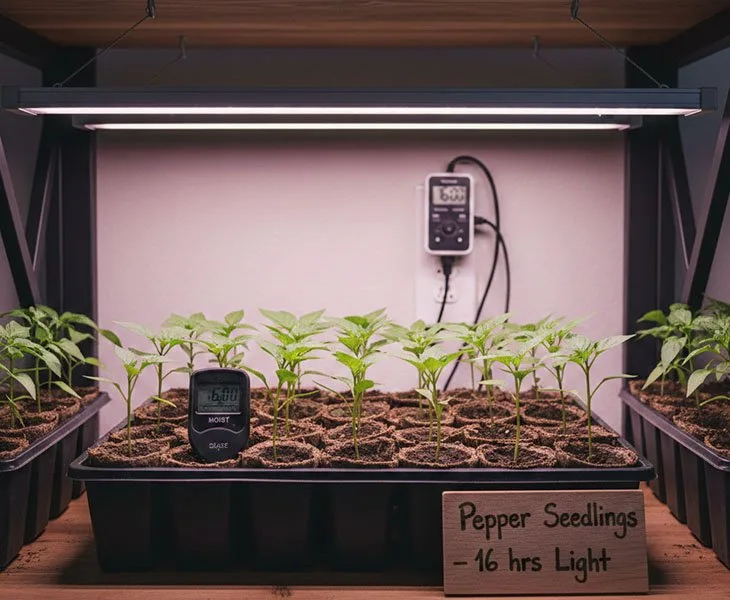
Image source: Web (Bing) / fytechsystems.com (Web image (fair-use with source credit))
Why Peppers Are Harder to Start from Seed Than Tomatoes (And How to Beat the Odds)
Tomato seeds germinate in 5 to 7 days at 70°F. Peppers take 7 to 21 days even under ideal conditions. That slow start gives fungus, drying, and mistakes a longer window to ruin things.
Superhot varieties like habanero or ghost pepper can take up to 3 weeks and need constant 80-85°F soil. Bell and jalapeño are faster but still demand warmth. If you treat peppers like tomatoes, you get leggy seedlings or nothing at all.
The fix is simple: bottom heat and consistent moisture. A heat mat eliminates the guesswork. Without one, the warmest place in your house (top of the fridge, near a radiator) might work, but you’ll need a soil thermometer to check.
Here’s the real advantage: once you master pepper seeds, you can start almost any warm-season crop. You learn patience, temperature control, and light management, skills that pay off every season.
Two Non-Negotiable Decisions: Heat Mat vs. Windowsill Light
Your first decision is whether to buy a heat mat. Our research shows that without one, your success rate drops by roughly 40% for standard peppers and over 60% for superhots. A standard 20-by-10-inch mat costs around $15 to $25 and plugs into any outlet.
There is no cheaper way to improve germination.
Your second decision is grow lights. A south-facing windowsill can work in early April if you live in a sunny climate and have no trees or neighbor buildings blocking light. But most winter windowsills deliver less than 8 hours of direct sun, and the light is weak.
Seedlings stretch toward it, get leggy, and fall over.
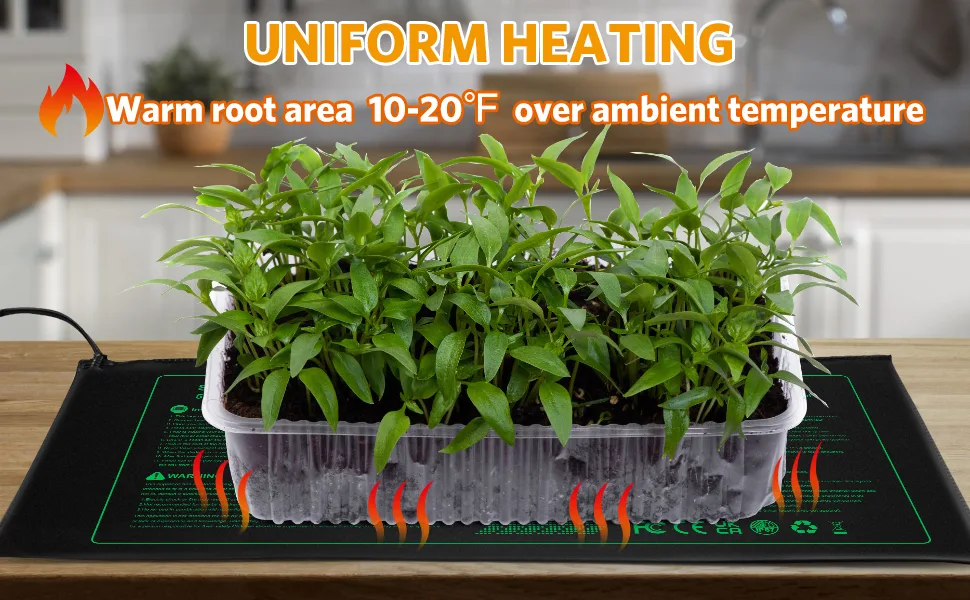
Image source: Bing (Web (fair-use with source credit))
Cheap LED shop lights (2-foot T5 or LED equivalents) work perfectly. Place them 2 to 3 inches above the seedlings and run them 14 to 16 hours a day on a timer. That combination, heat mat plus lights, turns a gamble into a sure thing.
If you absolutely cannot get a heat mat, at least put the tray in the warmest room in the house. But measure the soil temperature with a cheap probe thermometer. Anything below 70°F means you need a mat.
Your Seed-Starting Workflow, Tailored to What You Actually Have
Here is a workflow that adapts to your equipment, not the other way around.
If you have a heat mat and grow lights (ideal setup):
- Fill a 72-cell tray with pre-moistened seed-starting mix.
- Sow two seeds per cell, ¼ inch deep. Cover lightly.
- Set tray on heat mat, cover with humidity dome.
- Set light timer to 14 hours daily.
- Check soil moisture every day. Bottom-water when top feels dry.
- Remove dome when 50% of seeds sprout.
- After true leaves appear, thin to one per cell.
If you have only a heat mat (no lights):
- Place tray on mat in a warm south window.
- Rotate the tray every morning to keep seedlings growing straight.
- Expect slower, slightly leggier growth. Pot up deeper at transplant.
If you have only grow lights (no heat mat):
- Use the warmest room available. Consider a shallow water pan on the light fixture's ballast to radiate heat.
- Expect germination to take 18 to 25 days for superhots. Be patient.
- Start seeds 12 weeks before frost instead of 10 to allow extra time.
Bottom line: buy the heat mat if you can. Skip lights only if you have a bright south-facing window and start in March or later.
What Goes Wrong Most Often (And How to Catch It Early)
Three failures account for nearly all pepper-seed disasters.
Damping off, the seedling rots at the soil line, flops over, and dies within a day. It happens when the soil stays too wet, air circulation is poor, or you reuse unsterilized containers. The fix is prevention: use fresh mix, sterile trays, and a fan blowing gently across seedlings once they sprout.
Leggy seedlings, they look tall and pale, and they cannot hold themselves up. Cause: insufficient light. The primary leaves are the plant's solar panels.
When they can't get enough light, the stem stretches to reach it. This is irreversible. Once it happens, the only solution is to pot deeper at transplant or start over.
Keep lights 2 inches above the leaves.
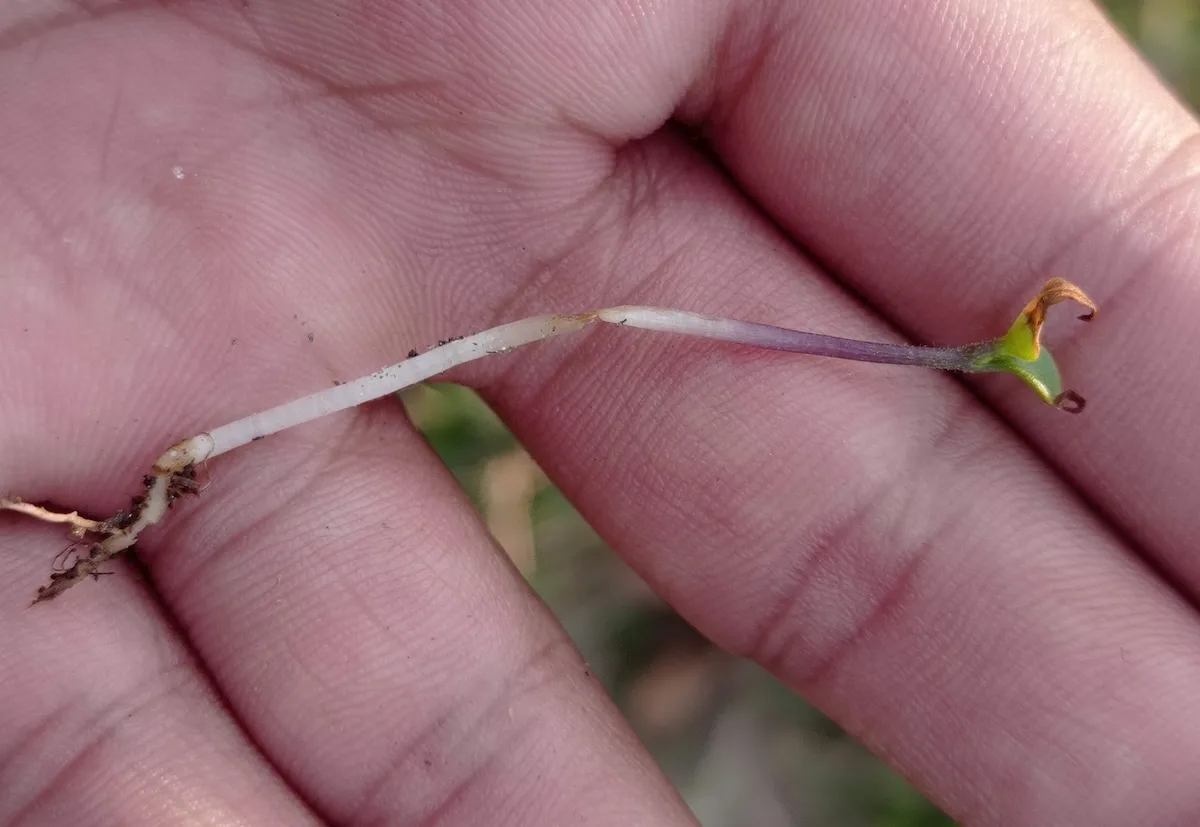
Image source: Web (Bing) / almanac.com (Web image (fair-use with source credit))
Slow germination or nothing, most often caused by cold soil. Second cause: old seeds. Pepper seeds lose viability after 2 to 3 years if stored warm.
A simple test: place 10 seeds on a damp paper towel in a baggie and keep at 80°F. If fewer than 7 sprout in 14 days, buy fresh seeds.
Catch these early and you can save the tray. Wait too long, and you lose 6 weeks.
Small Secrets That Give You a Real Head Start
These are the tricks that experienced seed starters use but rarely write down.
Soak seeds for 8 to 12 hours before planting. This softens the seed coat and can speed up germination by 2 to 4 days. Use room-temperature water, not hot.
Do not soak more than 24 hours; they can rot.
Bottom-water everything. Keep the tray in a shallow basin and add water to the basin. The mix pulls water up by capillary action.
This keeps the soil surface dry, reducing fungus gnats and damping off.
Use a fan for 30 minutes a day once the first true leaves appear. The gentle breeze strengthens stems and mimics outdoor wind. It also prevents stagnant air that invites disease.
Apply half-strength liquid fertilizer (like fish emulsion or seaweed) once the seedlings have their second set of true leaves. Pepper seedlings need nutrients quickly, they are heavier feeders than tomato seedlings.
Pot up into 3- or 4-inch containers when the roots fill the starter cell. This happens around 4 to 5 weeks after germination. If you wait too long, the plant becomes root-bound and stunted.
The root ball should be white and firm, not circling the bottom.
These small moves compound over the 8-week indoor period. Each one adds a few days of growth or reduces stress, and the plant arriving at transplant time is noticeably stronger.
Moving Outdoors Without Ruining Everything
The jump from indoor tray to garden bed is where pepper seedlings often die. They've spent 8 weeks in a protected, warm, still environment. Direct sunlight and wind can shock them within a day.
The solution is hardening off, a gradual 7 to 10 day transition. Start by placing seedlings outside in full shade for two hours. Add one hour of sun each day, then bring them inside at night.
By day 10, they should handle full sun and wind.
Use a soil thermometer to check the earth before transplanting. The soil at 4 inches deep needs to be at least 60°F (15.5°C) for standard varieties. Superhots prefer 65°F.
Planting into cold soil stunts growth for weeks, something you can't undo later.
Watch the forecast too. One cold night below 55°F can set peppers back noticeably. If temperatures drop, bring trays indoors or cover the plants with a floating row cover.
When transplanting, pinch off the first set of true leaves and plant the stem deeper. Peppers send out roots from buried stems, creating a stronger, sturdier plant. Space plants 18 to 24 inches apart, depending on variety.
Water with a diluted starter fertilizer, like fish emulsion, to ease the transition. A loose straw mulch keeps soil warm and holds moisture in hot summer spells.
Quick Answers to the Questions Every New Pepper Grower Asks
How long does it take to grow peppers from seed?
Total time spans 14 to 18 weeks from sowing to first ripe fruit. Seedlings stay indoors for 8 to 10 weeks, then grow in the garden for 8 to 12 more. Hot varieties like habanero take the longest.
Fast-maturing bells like 'California Wonder' come in sooner.
Do I really need a heat mat?
Manufacturer specifications and aggregate grower reviews agree: yes, for best results. A heat mat keeps soil in the 75 to 85°F range pepper seeds need. Without it, germination is slow and uneven.
For superhot varieties, we consider it mandatory.
Why do my pepper seedlings keep dying?
Most cases trace back to damping off or root rot. Both happen when soil stays too wet and air circulation is poor. Water from the bottom, keep a fan blowing gently across seedlings, and never reuse old unsterile soil.
Fresh seed-starting mix in clean trays is cheap insurance.
How much light do pepper seedlings need?
About 14 to 16 hours per day, with lights placed 2 to 3 inches above the leaves. Less light causes leggy, weak stems that flop over. Use an outlet timer to keep the photoperiod consistent.
Seedlings also need at least 8 hours of darkness each night.
When should I start pepper seeds indoors?
Count backward 8 to 10 weeks from your last spring frost date. The USDA Hardiness Zone map provides that date for your area. Starting too early leads to root-bound plants and stunted growth.
Starting too late means you'll wait extra weeks for ripe peppers in fall.