The biggest mistake people make with jade plant watering is following a fixed calendar schedule. You water every Saturday, or every ten days, and figure the plant adapts. It doesn't work that way.
In nature, jade plants grow on dry, rocky South African slopes where rainfall is infrequent but heavy. The water drains fast, then the soil stays bone dry for days or weeks. University extension research shows consistently wet soil for more than 48 hours triggers root rot in succulents.
Understanding this natural rhythm is the real key.
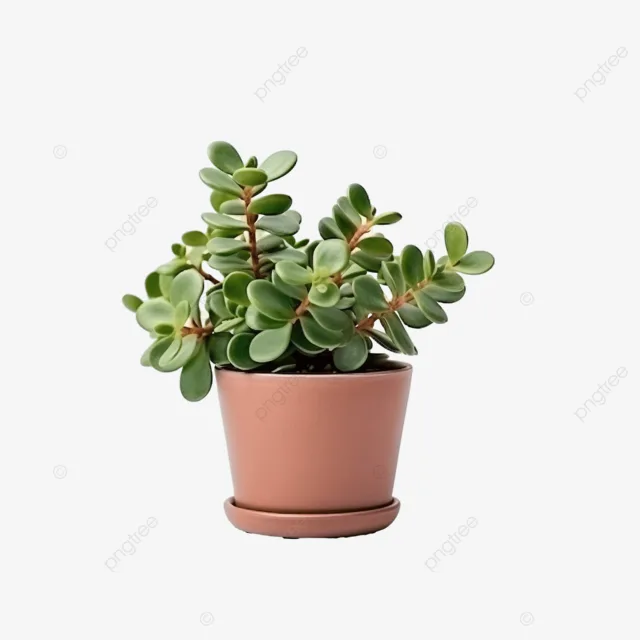
Image source: Web (Bing) / pngtree.com (Web image (fair-use with source credit))
Quick Answer
Water jade plants when the top two inches of soil are completely dry. Use the soak-and-dry method. Water deeply until it runs out the drainage holes.
Empty the saucer immediately. Let the soil dry fully before watering again. Frequency depends on your home's light, pot material, and season.
Why Watering Calendars Kill Jade Plants
A fixed schedule ignores the plant's actual environment. If you water every Sunday in winter and the soil is still damp from last week, you're drowning the roots. If you water every ten days in summer and the pot dries out in five, the plant gets stressed from drought.
Jade plants store water in their thick leaves. They evolved to survive long dry spells. A calendar can't tell you whether the soil is still wet three inches down.
Only a physical check can do that. In our research, the most common cause of jade plant death is overwatering from routine schedules.
Think of it this way: the plant tells you when it's thirsty. Your calendar can't hear it. The fix is simple, stop counting days and start checking soil.
The Taco Test and the Finger Test: How to Read the Plant
Two simple checks tell you everything about your jade's hydration. Use both together for the most accurate read.
The finger test. Stick your index finger into the soil up to the second knuckle. That's about two inches deep. If it feels damp or cool, do not water.
If it feels bone dry, move to the taco test.
The taco test. Gently fold a leaf lengthwise between your thumb and forefinger. A fully hydrated leaf is firm and resists bending. A leaf that needs water bends easily, like a soft taco shell.
If the leaf folds almost flat without cracking, the plant is ready for a drink.
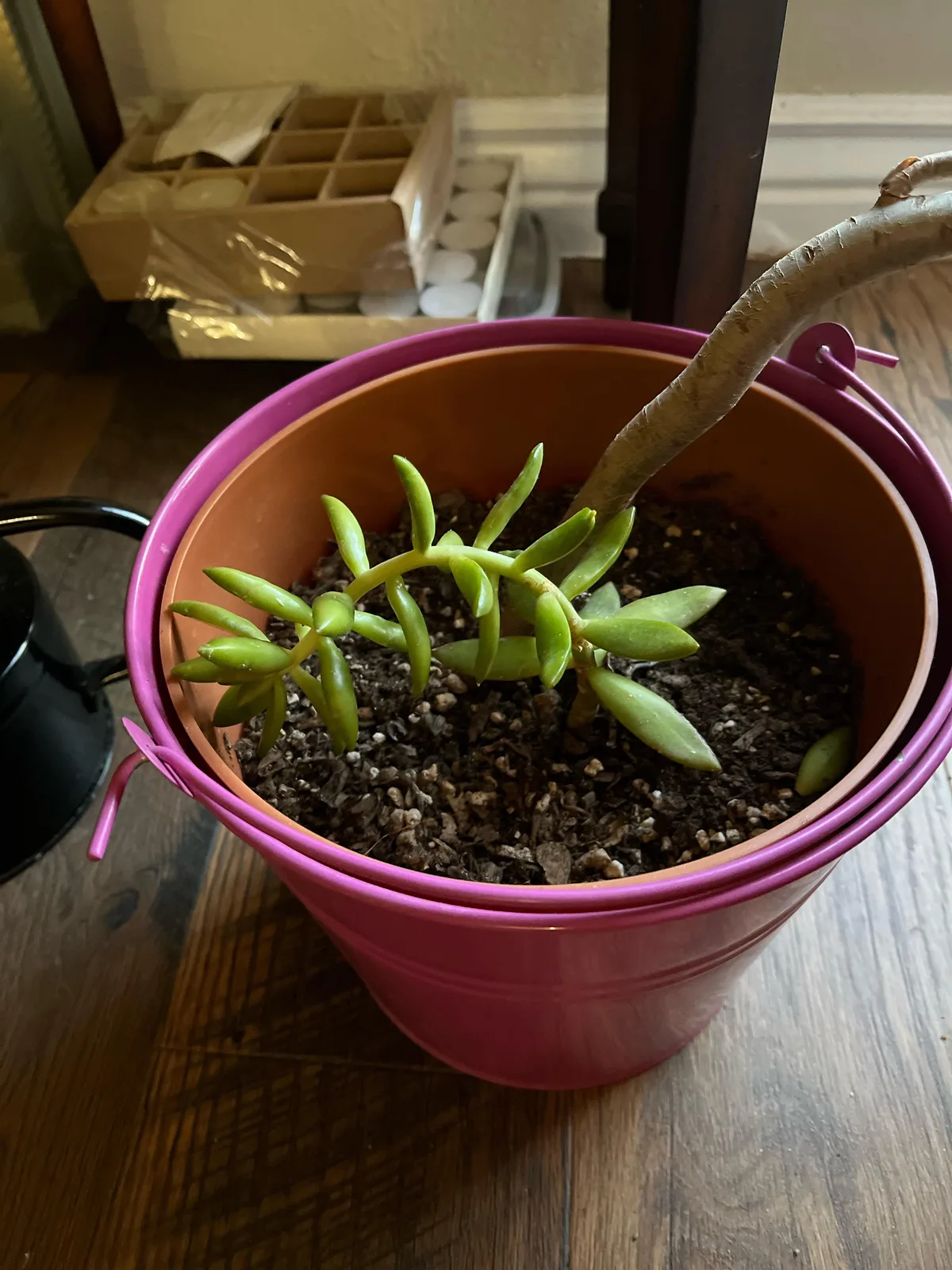
Image source: Web (Bing) / reddit.com (Web image (fair-use with source credit))
These two tests together are more reliable than any moisture meter on the market. Aggregate user feedback reports that inexpensive analog meters often give false readings in dry, gritty soil. Your fingers and the leaves themselves never lie.
Light, Pot Material, and Humidity: The Condition Variables That Change Your Schedule
Three factors determine how fast your jade's soil dries out. Change any one of them, and your watering frequency changes too.
Light intensity is the biggest variable. A jade in a bright south-facing window or under a strong grow light will drink through soil in five to seven days during active growth. A jade in a dim north-facing corner might stay wet for two weeks or more.
Pot material dramatically affects drying speed. Here's how the common options compare:
| Pot Material | Drying Speed | Best For |
|---|---|---|
| Terracotta (unglazed) | Fastest — wicks moisture through walls | Overwaterers, humid climates |
| Plastic | Slow — no moisture wicking | Underwaterers, dry climates |
| Glazed ceramic | Medium — less breathable than terracotta | Balanced conditions |
Humidity and air circulation matter more than most people realize. In a humid environment like a coastal summer kitchen, soil drying slows way down. A dehumidifier, air conditioning, or a small fan nearby helps accelerate drying.
Here's the practical rule: the faster the conditions dry the soil, the more often you water. The slower they dry, the less often. Let the tests guide you, not the number of days.
The Decision Tree: Overwatered vs. Underwatered Symptoms
Most jade plant owners can't tell the difference between too much and too little water. The symptoms look similar at first glance. Here's how to separate them.
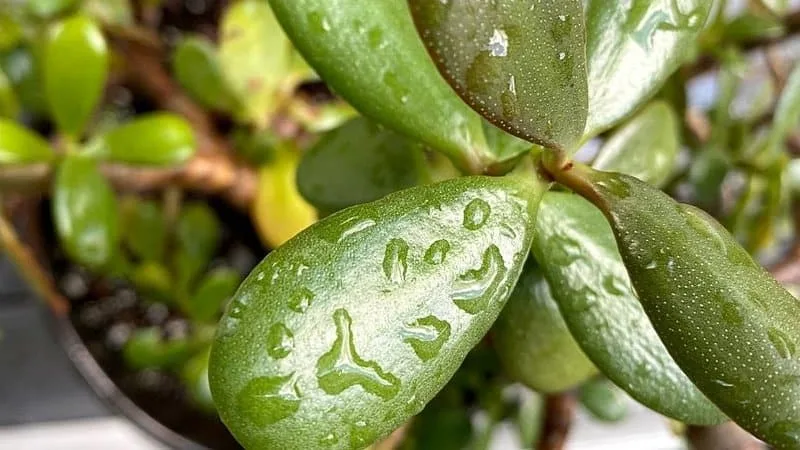
Image source: Web (Bing) / seasonalplant.com (Web image (fair-use with source credit))
If the leaves are yellow and mushy: overwatering is likely. Feel the stem near the soil line. If it's soft or dark brown, root rot has set in.
Stop watering immediately. Unpot the plant and trim away any mushy, brown roots. Repot in dry, fresh soil.
If the leaves are shriveled, thin, or crispy: underwatering is the cause. The plant is using water stored in its leaves. Give it a thorough soak, let water run through the drainage holes for a full minute.
Leaves typically plump back up within 24 to 48 hours. If they don't, the roots may be too tightly bound to absorb water.
If leaves drop suddenly: the most likely cause is inconsistent watering. You let it go too dry, then soaked it too heavily. The plant reacts by shedding leaves to reduce water demand.
Smooth out your schedule by using the tests consistently.
If you see white, bumpy blisters on leaves: that's edema. It happens when the plant absorbs water faster than the leaves can use or release it. The fix is to water more regularly and never let the pot sit in a full saucer.
Let the soil dry out a bit longer between waterings.
Step-by-Step: Using the Soak-and-Dry Method the Right Way
Soak-and-dry is the only watering method that works for jade plants. Done correctly, it mimics the heavy rain and long dry period they evolved with. Here's the exact process.
Step 1: Confirm the plant is ready. Use the finger test and taco test together. Both must indicate dryness before you water. If only one test says dry, wait another day.
Step 2: Water deeply and evenly. Take the plant to a sink or tub. Pour water slowly across the entire soil surface. Keep pouring until water runs freely out the drainage holes.
This ensures the whole root ball gets saturated.
Step 3: Let it drain completely. Leave the pot in the sink until no more water drips from the holes. Do not rush this step.
Step 4: Empty the saucer. If you place the pot back on a decorative saucer, dump out any collected water immediately. A jade plant sitting in standing water for even a few hours can begin to rot.
Step 5: Wait for the next dry signal. Do not water again until the finger and taco tests confirm dryness. This might be three days in summer or three weeks in winter.
One critical warning: never let the pot sit in a tray of water. Manufacturer specifications for plant containers are clear, drainage holes only work if the water has somewhere to go. A waterlogged saucer cancels out the entire soak-and-dry method.
Watering Injuries: Fixing Edema, Root Rot, and Shriveled Leaves
Watering injuries happen to everyone. The good news is that most jade plant problems are fixable if you catch them early.
Root rot is the most dangerous injury. If you see soft, dark stems at the soil line, act fast. Unpot the plant and inspect the roots.
Healthy roots are firm and white. Rotten roots are brown, mushy, and fall apart easily. Trim the rotten roots with clean shears, let the plant dry overnight, and repot in fresh dry soil.
Do not water for at least seven days afterward.
Edema appears as white or corky blisters on the underside of leaves. It happens when roots absorb water faster than leaves can transpire. The usual culprit is irregular watering, like letting the plant dry out for weeks then flooding it.
Another cause is excessive humidity. Fix it by watering steadily, improving airflow, and emptying the saucer immediately. Existing scars stay, but new leaves will look clean.
Shriveled leaves signal prolonged dryness. The plant has drained its leaf reserves. Soak it deeply and let it drain completely.
Most healthy jades plump back within 24 to 48 hours. If leaves don't recover, the roots are likely dead. Gently pull the plant from the pot and inspect the root system.
Seasonal Watering Guide: Active Growth vs. Winter Dormancy
Jade plants follow the seasons. That's true even indoors. Understanding this rhythm prevents most watering mistakes.
Spring and summer are the active growth season. The plant pushes new leaves and stems. Sunlight lasts longer and temperatures rise.
Most jades in normal homes need water every 7 to 14 days during these months.
Fall marks the transition. Days shorten and growth slows. The soil stays wet longer.
Reduce watering frequency gradually.
| Season | Growth Status | Typical Frequency |
|---|---|---|
| Spring-Summer | Active | Every 7-14 days |
| Fall | Transition | Every 2-4 weeks |
| Winter | Dormant | Every 3-6 weeks |
Winter is dormancy. Growth nearly stops, especially in cool rooms. A jade can go 3 to 6 weeks without water.
Water only when leaves wrinkle slightly.
Temperature changes everything. A jade on a bright south sill in winter still gets strong light and warm air. It may need water weekly.
A jade in a dim, cool hallway could go six weeks or more. Grow lights change the equation too. A jade under a strong grow light in winter may skip dormancy entirely.
Always use the tests over the calendar. As of 2026, that's still the guidance university extension programs recommend.
FAQs: What Most People Get Wrong About Jade Watering
How often should I water a jade plant?
There's no universal number. Water when the top two inches of soil are dry and the leaves bend easily. For most homes, that's every 7 to 14 days in summer and every 3 to 6 weeks in winter.
Always check the soil first.
Should I mist a jade plant?
No. Jade plants store water in their leaves and prefer dry air. Misting raises humidity, keeps leaves damp, and invites fungal infections.
It also doesn't hydrate the roots. If leaves look dusty, wipe them with a soft, damp cloth instead.
Can I water a jade plant with tap water?
Yes, but it's not ideal. Hard tap water leaves mineral salts in the soil. Over time, that buildup damages roots and turns leaf tips brown.
Let tap water sit overnight to allow chlorine to dissipate. Filtered or distilled water gives the best results.
Why do jade plant leaves turn yellow?
Yellow leaves almost always mean overwatering. Check the soil immediately. If it's still wet days after watering, the roots are suffocating.
Stop watering and let the soil dry completely. If the stem feels mushy, unpot the plant and trim any rotten roots.
Why is my jade plant dropping leaves?
Sudden leaf drop typically means watering shock. You let the plant get bone dry, then flooded it heavily. The stress triggers shedding.
Move the plant to bright, indirect light and resume a steady dry-wet cycle. New growth will emerge.