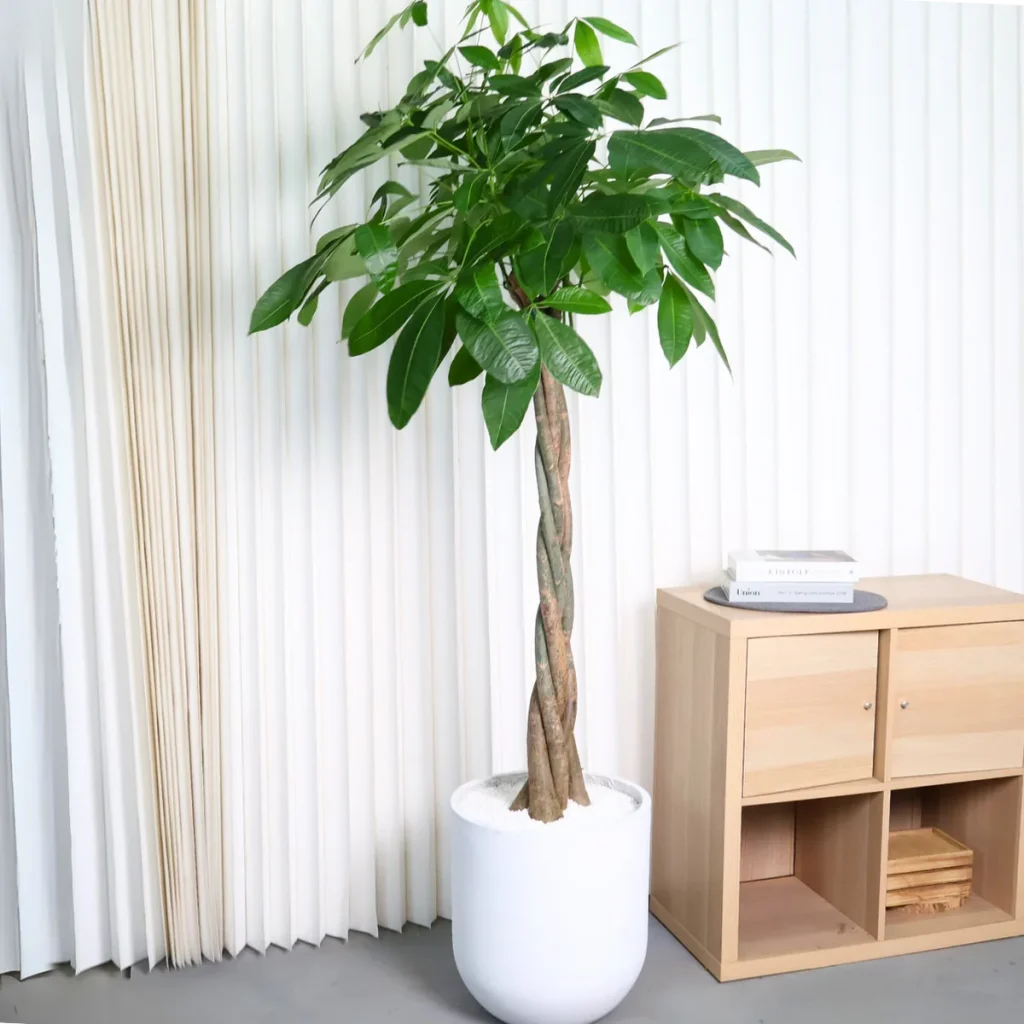
If your money tree is dropping leaves or the stems feel soft, the issue is likely the soil. Getting money tree soil right is the most important thing you can do for this plant. Too many store-bought mixes hold water like a sponge, and that’s a fast track to root rot.
You need a mix that drains fast but still keeps enough moisture between waterings.
University extension research confirms that Pachira aquatica evolved in tropical floodplains with sandy, well-aerated soil. In a pot, that means a blend of coarse perlite, orchid bark, and coco coir. As of 2026, the consensus is clear: a mix that stays damp for more than five days is too heavy.
Let’s break down what your money tree needs.
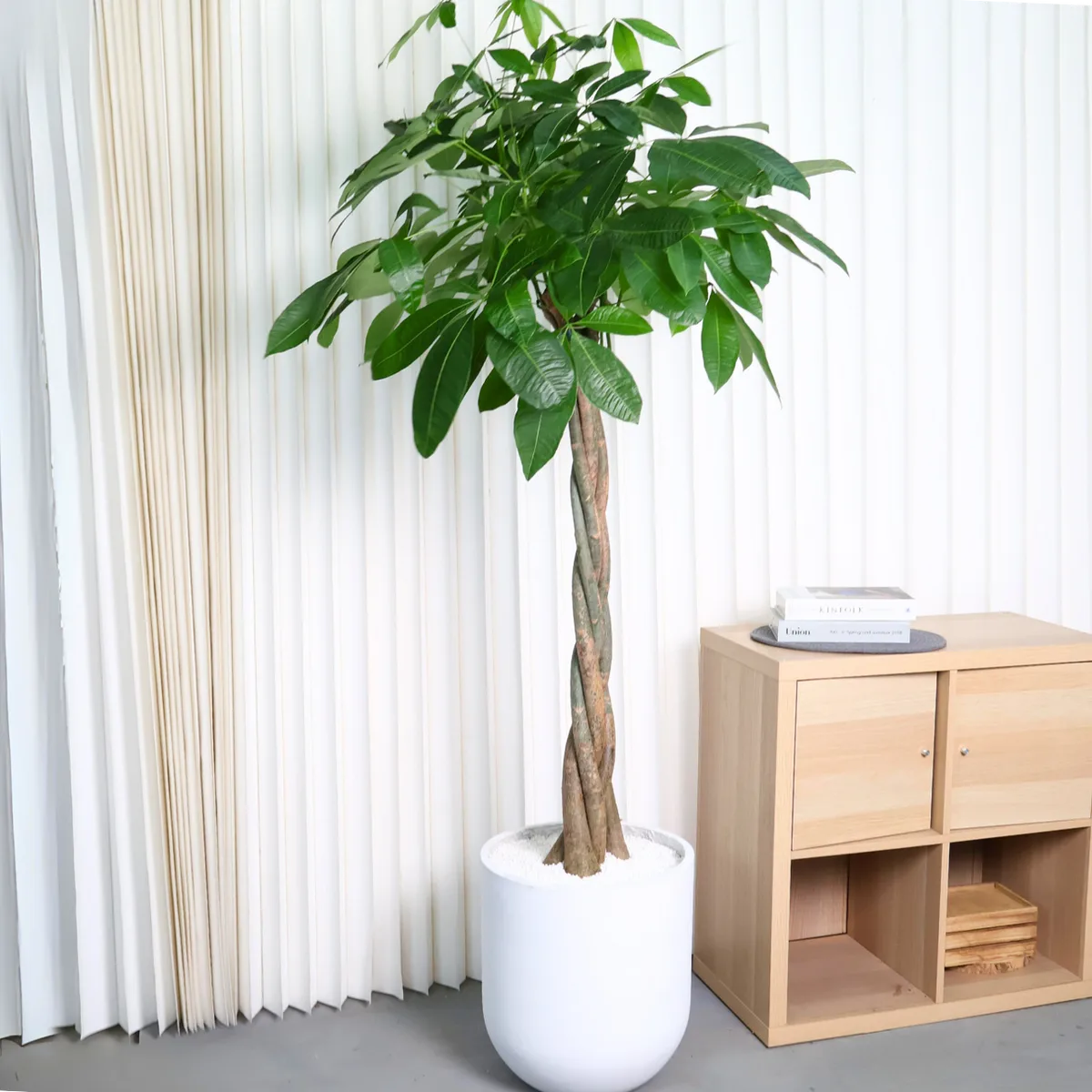
Image source: Web (Bing) / jm.com.sg (Web image (fair-use with source credit))
Quick Answer: The Best Money Tree Soil Mix
The best money tree soil is light, coarse, and fast-draining. A simple recipe uses two parts potting mix, one part perlite, and one part orchid bark. This blend holds moisture without staying soggy.
It gives roots the air they need.
Why Soil Composition Matters: Drainage vs. Moisture Retention
Why does soil composition matter so much? Money trees are prone to root rot if the soil stays wet too long. But they also need consistent moisture.
Too much drainage dries out the roots. Too little drowns them.
The soil structure determines how water moves through the pot. In a heavy, peat-based mix, water sits in the bottom. Roots suffocate and rot.
In a loose, chunky mix, excess water drains away quickly. Air fills the gaps. That’s what your money tree wants.
Here’s a quick comparison of soil properties:
| Property | Heavy Potting Mix | Light Chunky Mix |
|---|---|---|
| Water drainage | Slow | Fast |
| Moisture retention | High | Moderate |
| Air space | Low | High |
| Risk of root rot | High | Low |
The goal is a middle ground. You want fast drainage, but enough water-holding capacity so you don’t have to water every day. That’s why the blend with perlite and bark works so well.
It mimics the sandy, airy soil the plant evolved in. University research from institutions like North Carolina State Extension confirms that Pachira aquatica thrives in a well-aerated medium with plenty of coarse material. Waterlogged soil, on the other hand, invites fungal infections and root death.
How to Choose the Right Mix Based on Your Environment
Your home environment changes the recipe slightly. Humidity, temperature, and your watering habits all matter. The same mix that works for a dry apartment might be too moisture-retentive in a humid greenhouse.
Signs Your Current Soil Is Wrong
Watch for these warning signs:
- Leaves turn yellow or brown at the edges
- Stems feel mushy near the soil line
- Soil stays wet for more than a week
- A musty smell comes from the pot
- Fungus gnats hover around the soil surface
- The plant drops leaves suddenly
If you see any of those, your soil is holding too much water. You need to switch to a mix with more drainage.
Matching the Mix to Your Watering Habits
Think about how often you water. If you tend to water every 5 to 7 days, use the standard 2:1:1 ratio. That gives you a mix that dries out in about a week.
If you water less often, every 10 to 14 days, you can reduce the perlite slightly. Use a ratio of 3 parts potting mix to 1 part perlite and 1 part bark. That holds moisture a little longer.
If you live in a very humid climate or you tend to overwater, increase the drainage materials. Use 2 parts potting mix, 1.5 parts perlite, and 1.5 parts bark. This mix dries out faster and gives you more room for error.
If you live in a dry, air-conditioned home, you may need a touch more moisture retention. Add a small handful of coco coir to the standard mix. Coco coir holds water well but still allows air flow.
Use this if/then guide:
- If you water weekly → standard 2:1:1 ratio
- If you water every 10+ days → 3:1:1 ratio (more potting mix)
- If you tend to overwater → 2:1.5:1.5 ratio (more drainage materials)
- If your home is very dry → add coco coir to the 2:1:1 mix
Step-by-Step: Making Your Own Money Tree Soil
Making your own mix is easy and gives you full control. You only need a few ingredients and a bucket or old pot for mixing.
The Base Mix
Start with a good quality potting mix. Look for one labeled for indoor plants or tropical plants. Avoid mixes that feel very fine and dusty.
Those tend to compact over time. Also avoid mixes with added fertilizer, especially slow-release granules, because they can burn sensitive roots.
The Amendments (Perlite, Bark, Coco Coir)
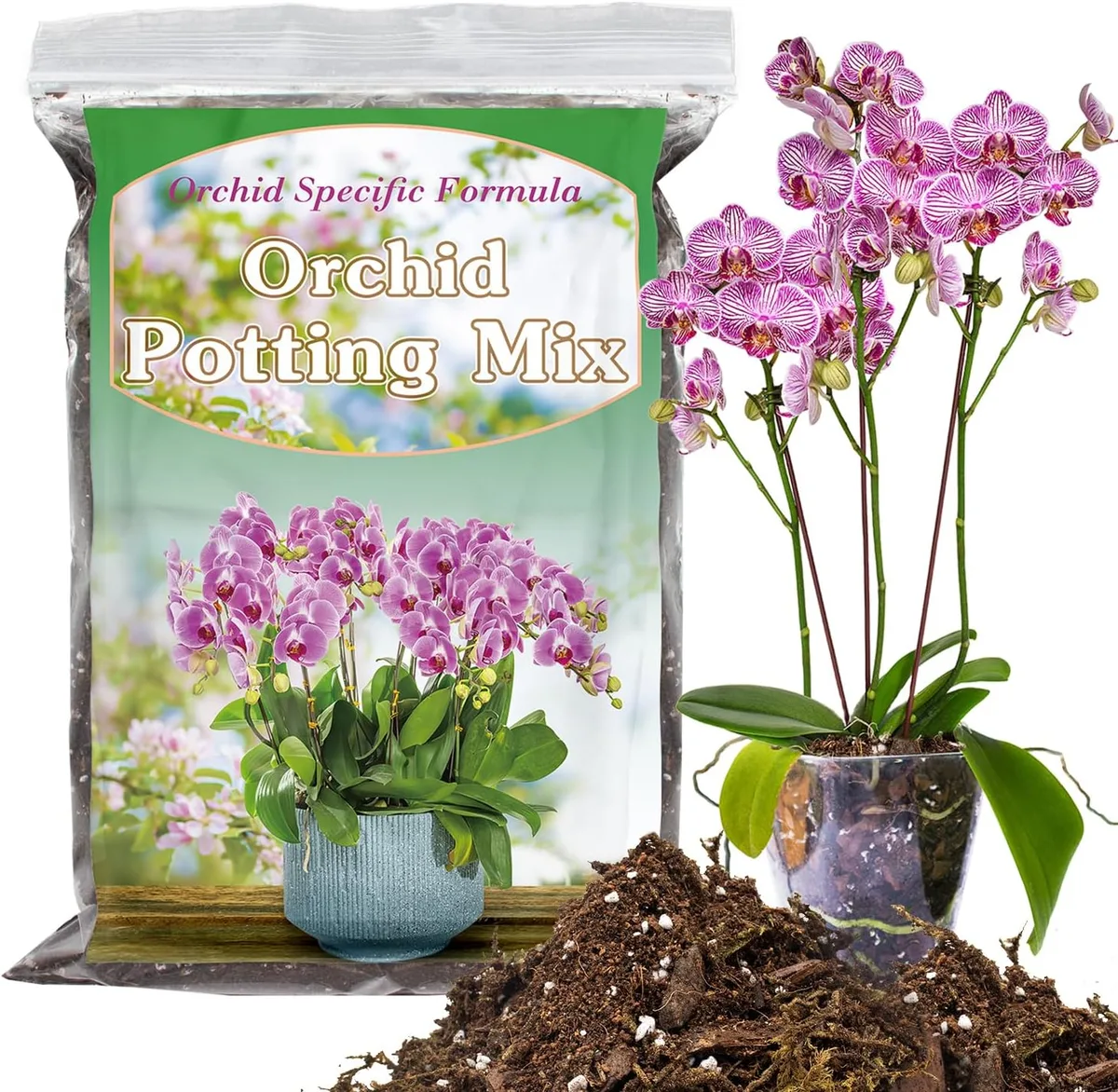
Image source: Web (Bing) / amazon.com (Web image (fair-use with source credit))
Each amendment has a job:
- Perlite, Lightweight volcanic glass. Creates air pockets and improves drainage. It’s the main tool for preventing compaction.
- Orchid bark, Coarse pieces of pine or fir bark. Adds structure and drainage. It also decomposes slowly, feeding beneficial microorganisms.
- Coco coir, Shredded coconut husk. Retains moisture without getting heavy. Good for dry environments. You can use peat moss instead, but coir is more sustainable.
Here’s the standard recipe in a table:
| Ingredient | Amount | Role |
|---|---|---|
| Potting mix | 2 parts | Base, nutrients, moisture |
| Perlite | 1 part | Drainage, aeration |
| Orchid bark | 1 part | Structure, long-term drainage |
Measure using any container, a scoop or a cup. Mix everything together in a bucket. Get it even throughout.
Then moisten the mix lightly with a spray bottle. You want it damp, not wet. The soil is ready to use.
If you don’t have orchid bark, you can use pine bark fines (small chips) or even coarse sand as a substitute. But bark works best because it adds chunky texture that holds shape.
How to Repot Without Stressing the Plant
Repotting can shock a money tree, but with the right steps you can keep stress low. The best time to repot is spring or early summer, when the plant is actively growing.
Pre-Repot Checks
Before you pull the plant out, check a few things:
- Does the pot have drainage holes? If not, drill some or use a different pot.
- Is the new pot only 1 to 2 inches wider than the old one? Too large a pot stays wet and causes rot.
- Are the roots growing through the drainage holes? That means the plant is root-bound and needs a bigger home.
Also, water the plant lightly a day before you repot. Slightly moist roots are more flexible and less likely to break.
Repotting Steps
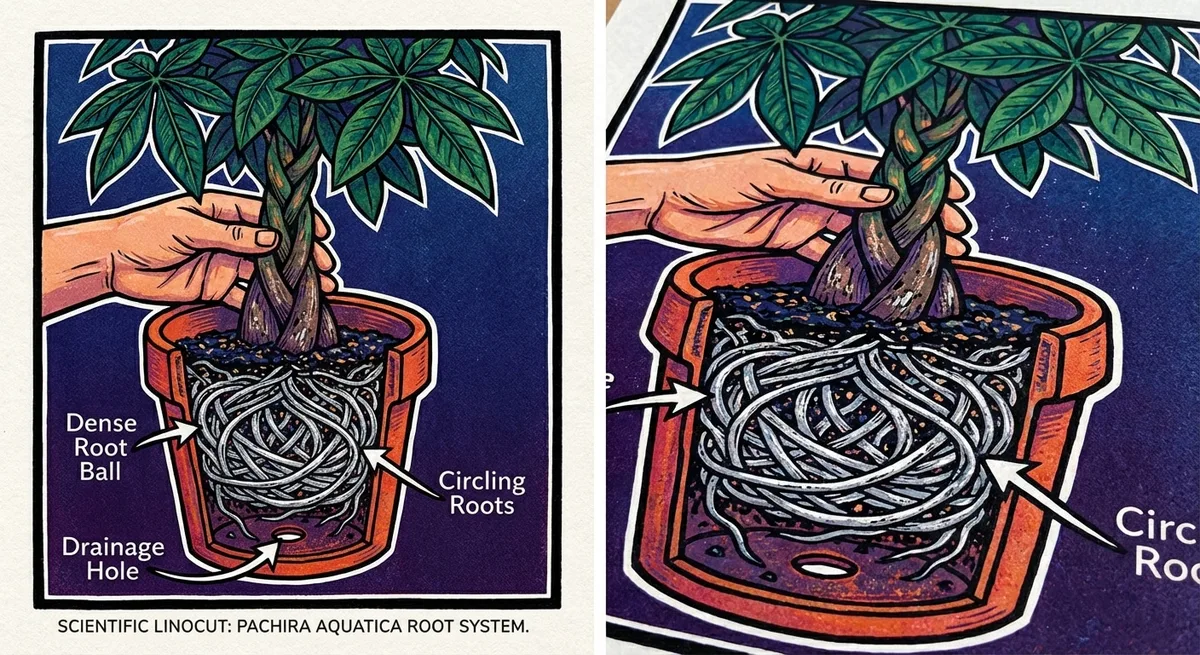
Image source: Web (Bing) / theplantmanual.com (Web image (fair-use with source credit))
Follow these steps:
- Gently remove the plant from its old pot. Tip it sideways and tap the sides. Slide the root ball out.
- Loosen the roots with your fingers. Trim any roots that are brown, mushy, or dead. Use clean scissors or pruning shears.
- Add a layer of fresh soil to the bottom of the new pot. Place the plant in the center. The top of the root ball should sit about an inch below the pot rim.
- Fill in around the roots with your custom mix. Tap the pot to settle the soil. Don’t pack it down.
- Water thoroughly until water drains from the bottom. This settles the soil and removes air pockets.
Aftercare and Watering
After repotting, place the money tree in bright, indirect light. Avoid direct sun for a week. Wait until the top inch of soil feels dry before watering again.
That could be 7 to 10 days, depending on your home.
Don’t fertilize for at least a month. The fresh soil has enough nutrients. Fertilizing too soon can burn the new roots.
Watch the leaves for any signs of stress. A little drooping is normal for a few days. If leaves yellow quickly, check for root rot or too much water.
Common Soil Mistakes (and How to Fix Them)
Even with the right recipe, mistakes happen. Most are fixable if you catch them early.
Using garden soil. Garden soil compacts in containers. It also carries pests and pathogens. Always use a potting mix.
If you already planted in garden soil, repot as soon as possible.
Skipping drainage holes. A pot without drainage traps water at the bottom. Root rot follows quickly. Drill holes or move to a pot that has them.
Packing soil too firmly. Tight soil pushes out the air pockets roots need. Gently tap the pot to settle the mix instead. Leave it loose.
Choosing a pot that's too large. Oversized pots hold more water than roots can absorb. The mix stays wet and rot sets in. Keep the new pot just 1 to 2 inches wider than the old one.
Mold on the soil surface. White fuzz means the soil is staying too wet. Scrape it off, let the top inch dry fully, and improve airflow around the plant.
Letting soil go stale. After 18 to 24 months, even a good mix breaks down. It turns dense and traps water. Refresh the top layer or repot completely.
If you spot any of these problems, act fast. Money trees recover well when you fix soil issues early. The longer roots sit in wet soil, the harder the comeback.
Money Tree Soil FAQs
How do I know if my money tree has root rot?
Root rot shows up in three ways. Stems feel soft near the soil line. Leaves turn yellow and drop.
The soil smells sour. If roots are brown and mushy, trim the damaged parts and repot in fresh mix.
Can I use cactus soil for a money tree?
Yes, but it works best as a base. Cactus soil drains well but holds little water alone. Mix two parts cactus soil with one part orchid bark and one part coco coir.
That balances drainage and moisture.
Should I water right after repotting?
Yes, water thoroughly once. This settles the soil and removes air pockets. Then wait until the top inch dries out.
That usually takes 7 to 10 days.
Why does my money tree soil have white spots?
White spots are usually mineral buildup or mold. Minerals come from tap water, so switch to filtered water. Mold comes from soggy soil, so let the top layer dry and improve airflow.
Both issues are easy to fix.
How often should I repot a money tree?
Every 18 to 24 months works best. Soil breaks down over time and loses its drainage. Repot in spring or early summer.
Use a pot just 1 to 2 inches larger than the current one.
Can I use regular potting soil alone?
Plain potting soil is too heavy for a money tree. It stays wet too long and suffocates the roots. Always mix in perlite and bark.
The chunky additions create air pockets that keep roots healthy.