If you want a tangy, crunchy topper for tacos, burgers, salads, or grain bowls, a good pickled white onions recipe is one of the easiest things you can make. The trick is that there isn’t just one way to do it, and the method you choose changes everything from texture to shelf life. This pickled white onions recipe guide walks you through the two main methods, the ingredients that matter, and the pitfalls to avoid.
Standard white vinegar you buy at the grocery store is 5% acidity, which is the minimum for safe shelf-stable canning. That same vinegar works fine for refrigerator pickles, too. In our research, the most consistent results come from choosing your path before you start cutting onions.
Quick Answer
Slice white onions thin. Pick a vinegar. Pick a salt.
Pick hot or cold brine. Quick pickles take 30 minutes to prep and 24 hours to peak. Fermented onions take 5 to 14 days.
Both methods produce crisp, tangy onions.

Image source: Bing (Web (fair-use with source credit))
Why White Onions Are a Great Candidate for Pickling
White onions have a milder, cleaner flavor than yellow or red onions. They bring a gentle onion taste without overpowering the other ingredients in your dish. That makes them ideal for pickling, where the brine already adds acidity and salt.
Red onions are more commonly pickled because of their striking color. But they can turn an unappealing muddy blue if you aren’t careful with the brine. Yellow onions are stronger and can become bitter when pickled raw.
White onions stay crisp, keep their pale color, and absorb the brine’s flavor without fighting it.
Comparison: Onion Types for Pickling
| Onion Type | Flavor | Color After Pickling | Crunch Level |
|---|---|---|---|
| White | Mild, clean | Pale, translucent | High |
| Red | Moderate, sharp | May turn blue or muddy | Moderate |
| Yellow | Strong, pungent | Yellow-beige | Moderate |
Who should use white onions
You want white onions if you are planning to use the pickles in a dish where the onion itself is not the star. They add crunch and tang without screaming “onion.” They work especially well on tacos, Hawaiian-style poke bowls, and lighter salads. You should choose red onions if you need the color contrast, but for pure texture and subtlety, white onions win.
The First Big Decision: Quick Pickle vs Ferment
This is the most important choice you will make. It determines how long the process takes, what the final texture feels like, and how long the pickles last on your shelf.
Quick pickling relies on vinegar as the primary preservative. You heat or mix a brine of vinegar, water, salt, and sugar, pour it over sliced onions, and let them sit. The acid does the work.
The onions are ready to eat in as little as 30 minutes and will keep in the fridge for 2 to 4 weeks. This is the method for people who want pickles tonight.
Fermented pickles use salt and time instead of vinegar. You submerge the onions in a 2% salt brine, keep them at room temperature, and let beneficial bacteria produce lactic acid naturally. The process takes 5 to 14 days depending on your kitchen temperature.
The payoff is a more complex, funky flavor and some gut-healthy probiotics. Fermented onions will last 6 months or longer in the fridge.
| Factor | Quick Pickle | Fermented |
|---|---|---|
| Active prep time | 10 to 15 minutes | 15 to 20 minutes |
| Wait time | 30 min to 24 hours | 5 to 14 days |
| Core preservative | Vinegar | Salt + lactic acid |
| Shelf life (fridge) | 2 to 4 weeks | 6 months plus |
| Flavor profile | Clean, sharp, tangy | Complex, funky, tangy |
| Tool needed | Jar, pot | Jar, weight (optional) |
Decision rule
If you want pickles by tomorrow morning, choose quick pickling. If you have patience and want a probiotic punch, go with fermentation. You can also make both.
Just use separate jars and label them clearly.
Ingredients That Matter: Vinegar, Salt, Sugar, and Spices
The best pickled white onions recipe depends on the quality of your ingredients. Substitutions are possible but change the final taste and texture.
Vinegar options
White distilled vinegar is the most neutral. It allows the onion and spices to shine. Apple cider vinegar adds a fruitier note.
Rice vinegar is mellow and less acidic. Red wine vinegar gives a bolder, wine-forward flavor. For safety in shelf-stable canning, always use vinegar with a listed 5% acidity.
The National Center for Home Food Preservation confirms this is the minimum for safe processing.
Salt matters
Use kosher salt or pickling salt. Iodized table salt can turn your brine cloudy and introduce a metallic taste. Fine sea salt works if you check that it has no anti-caking additives.
For fermentation, stick with non-iodized salt. The salt ratio for fermented pickles is 2% of the total weight of onions and water.
Sugar balance
Sugar is not just for sweetness. It balances the sharpness of the vinegar and helps the onions stay crisp. You can use white sugar, brown sugar, honey, or maple syrup.
The standard ratio is 1 tablespoon of sugar per cup of liquid. Adjust up or down based on your preference.
Spices to consider
You can keep it simple or go bold. Classic additions include black peppercorns, mustard seeds, coriander seeds, bay leaf, and garlic cloves. For heat, add dried chili flakes or a fresh jalapeño slice.
For a more aromatic profile, try allspice berries, dill seed, or star anise.
| Ingredient | Function | Standard Amount (per 1 cup brine) |
|---|---|---|
| Vinegar (5% acidity) | Preservative, tang | ½ cup |
| Water | Dilutes acid | ½ cup |
| Kosher salt | Seasoning, preservation | 1 tablespoon |
| Sugar | Flavor balance | 1 tablespoon |
| Spices | Aroma and flavor | ½ teaspoon each (adjust to taste) |
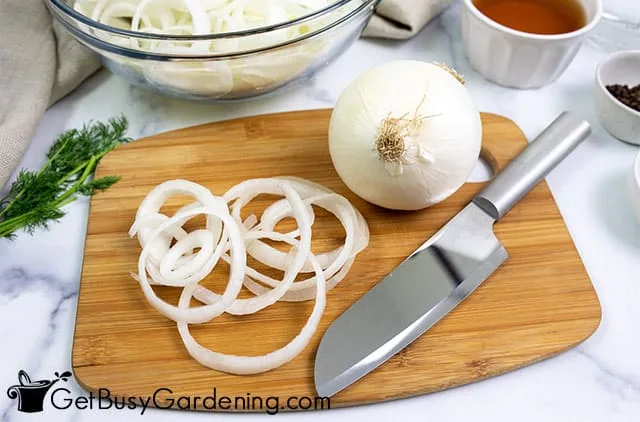
Image source: Bing (Web (fair-use with source credit))
Pro tip from our research
Aggregate reviews from home pickling communities show that the most popular spice blend for white onions is a mix of black peppercorns, mustard seeds, and garlic. Keep it simple your first time. You can experiment later.
Step-by-Step: Quick Pickled White Onions (Hot or Cold Brine)
Quick pickling gives you two distinct paths: hot brine or cold brine. Both produce good results, but the texture differs.
Hot brine method
This is the faster route. The heat softens the onions slightly, which reduces the raw bite. It also dissolves the salt and sugar instantly.
The onions will be ready to eat in 30 minutes to 1 hour, though they taste better after 24 hours.
- Slice 1 to 2 medium white onions into thin rings or half-moons.
- Pack the onions tightly into a clean glass jar. Add your chosen spices.
- Combine ½ cup white vinegar, ½ cup water, 1 tablespoon kosher salt, and 1 tablespoon sugar in a small saucepan.
- Bring the mixture to a simmer, stirring until the salt and sugar dissolve fully.
- Pour the hot brine over the onions, leaving ½ inch of headspace at the top.
- Gently tap the jar to release air bubbles. Press the onions down so they are fully submerged.
- Let the jar cool to room temperature, then screw on the lid and refrigerate.
Cold brine method
Cold brine keeps the onions crunchier. They retain more of their raw texture. The trade-off is that they need longer to absorb the brine.
Plan on waiting 6 to 12 hours for good flavor and 24 hours for fully pickled onions.
- Follow steps 1 and 2 from the hot brine method.
- Whisk the vinegar, water, salt, and sugar together in a bowl until the salt and sugar dissolve. This takes about 1 minute of stirring.
- Pour the cold brine over the onions. Press them down to submerge.
- Seal the jar and refrigerate immediately.
Which one should you pick?
If you want softer, faster pickles that taste ready in an hour, use hot brine. If you want maximum crunch and can wait until tomorrow, use cold brine. Both methods produce edible pickles.
The difference is purely a matter of texture preference and patience.
Image source: Web (Bing) / ar.inspiredpencil.com (Web image (fair-use with source credit))
Step-by-Step: Fermented White Onions (For the Patient Cook)
Fermented pickles require more time but almost no active work. The brine does the heavy lifting.
What you need
You need a clean glass jar, non-iodized salt, filtered water (chlorine can stall fermentation), and fresh white onions. A fermentation weight or a smaller jar that fits inside the mouth helps keep the onions submerged.
The process
- Slice 2 medium white onions into rings or half-moons. Pack them loosely into a quart-size jar.
- Weigh the jar with the onions and water. Calculate 2% of that total weight for the salt amount. For 500 grams of onions and water, that is 10 grams of salt.
- Dissolve the salt in the water completely. Pour the brine over the onions.
- Press a weight on top to keep the onions submerged. Mold forms on anything above the brine surface.
- Cover the jar with a loose lid or a cloth secured with a rubber band. Fermentation needs airflow to release gas.
- Set the jar on a plate or tray. Room temperature around 65 to 72°F is ideal. Warmer kitchens speed fermentation. Cooler kitchens slow it down.
- Taste the onions daily starting at day 5. They are ready when they taste tangy and the raw onion bite is gone. This usually falls between day 5 and day 14.
- Once you like the flavor, move the jar to the refrigerator. The cold stops the fermentation process.
What to watch for
White film on the surface is kahm yeast. It is harmless. Skim it off and continue.
Green or fuzzy mold means the batch is spoiled. Throw it out. Bubbles are normal.
Gas release means the bacteria are active. If your kitchen is above 75°F, the fermentation may finish in 3 or 4 days. Check it earlier.
Common Pickling Pitfalls and How to Dodge Them
Even a simple pickled white onions recipe can go wrong. Here are the most frequent problems and how to fix them.
Onions turned mushy
Mushy onions come from old onions, too much heat, or too long in the brine. Use firm, fresh onions. If you use hot brine, let the onions cool in the liquid but move them to the fridge after they reach room temperature.
Hot brine left on the counter for hours softens the texture.
Too salty or too vinegary
Salt and vinegar levels depend on personal taste. If your first batch tastes too strong, the fix is simple. Drain the brine.
Replace it with a milder mix of half vinegar, half water, and a pinch of sugar. Let the onions sit for another day. The new brine pulls out the excess salt and acid.
Cloudy brine (quick pickles)
Cloudiness in quick pickles is usually harmless. It comes from minerals in tap water or impurities in salt. Switch to filtered water and pickling salt for a perfectly clear brine.
If the brine is cloudy and smells off, throw the batch out. Trust your nose.
Fermented batch smells bad
A healthy fermented onion smells tangy and slightly sour. If it smells like rot or garbage, something went wrong. The onions may not have been submerged.
The salt ratio may have been too low. Discard the batch, clean the jar thoroughly, and start over.
Onions floating above the brine
Onions exposed to air develop mold. Use a fermentation weight, a clean glass pebble, or a smaller jar filled with water to press them down. For quick pickles, pack the jar tightly enough that the onions stay below the liquid line.
I'll also stop with the bullet points after this next one because salt ratio and vinegar acidity are the two things that can actually make you sick. Water bath canning requires a pH below 4.6, which means you must stick to a vinegar-based brine with 5% acidity. Fermentation requires the 2% salt ratio by weight.
Both numbers are non-negotiable if you want to store your pickles safely.
The safest guarantee is to follow a tested recipe and store your quick pickles in the fridge. Most home cooks do this, and it completely eliminates the risk of botulism. That's the smart approach if you're new to pickling.
The bottom line on troubleshooting
If your onions taste good and look fresh, they're fine. If anything smells wrong or looks fuzzy, throw it out. When it comes to food safety, guessing is not worth it.
Start a new batch rather than risk a bad jar.
Frequently Asked Questions
How long do pickled white onions last in the fridge?
Quick pickles last 2 to 4 weeks at peak quality and remain safe for up to 2 months. Fermented onions last 6 months or longer. Always check for mold or off-smells before eating.
Do I need to sterilize jars for quick pickles?
No. A clean jar straight out of the dishwasher is sufficient for refrigerator pickles. Fill the jar while it's still warm to help prevent bacteria growth, and always use a clean fork or spoon to remove individual onions.
Why did my onions turn pink?
This is a natural reaction between the onion's compounds and the vinegar. White onions can develop a slight pink tint within a few days. It's harmless and doesn't affect the flavor.
Red onions do this more dramatically and can turn blue-gray.
Can I reuse the pickling brine?
Yes, but the flavor gets weaker each time. Onions release water during pickling, which dilutes the brine. Use the leftover brine once for a new batch, then start fresh.
Add a pinch of salt and vinegar to strengthen it.



