When you decide to plant cucumber seeds, the first question isn't how, it's when. And that answer changes completely depending on where you live, how long your growing season lasts, and whether you have a sunny windowsill or a heated greenhouse. Get the timing wrong, and you'll either watch seeds rot in cold soil or end up with leggy seedlings that never produce.
Here's the concrete reality: cucumber seeds need a minimum soil temperature of 60°F (16°C) at planting depth to germinate reliably. Anything colder, and they sit there, getting soggy, inviting disease. The ideal range is 70°F to 85°F.
As of 2026, the USDA Plant Hardiness Zone map remains the standard reference for finding your last frost date, which is the anchor point for every cucumber planting decision. Let's walk through what that means for you.
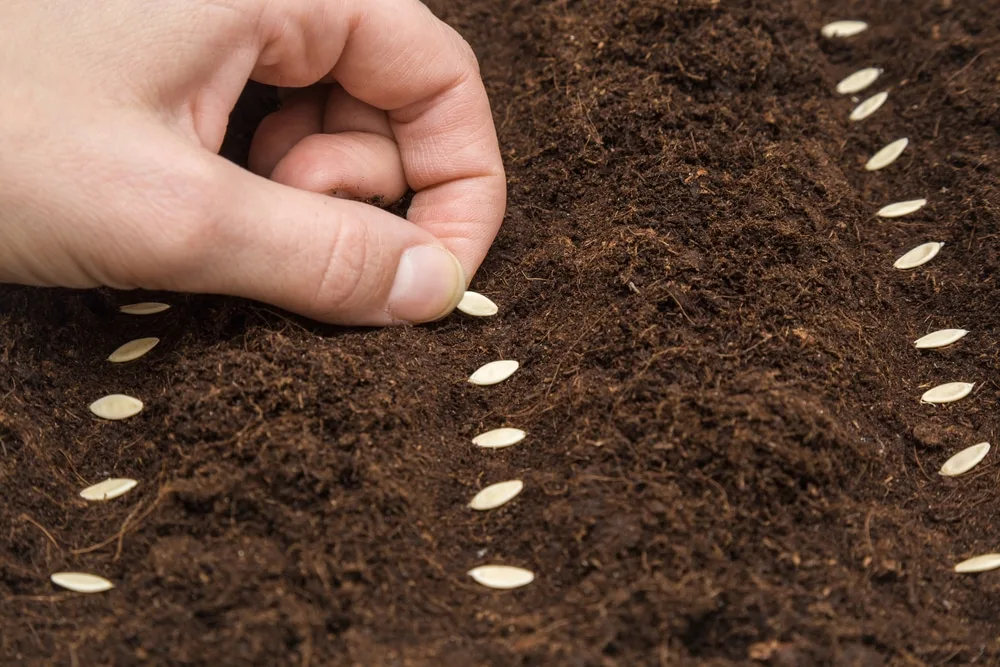
Image source: Bing (Web (fair-use with source credit))
Quick Answer
Plant cucumber seeds after the last frost date when soil reaches 60°F. Sow 1/2 to 1 inch deep. Space plants 12 to 36 inches apart.
Use full sun and consistent water. Start indoors 3 to 4 weeks before transplanting if your season is short. Direct sow in warm soil for best results.
When to Plant Cucumber Seeds: The Real Decision Guide
There is no single "cucumber planting day" that works for everyone. Your neighbor might be sowing seeds while you're still waiting for frost to pass. That's not a mystery, it's simple geography.
The key variable is your local last spring frost date. Cucumbers are tropical plants. They have zero frost tolerance.
A single cold night kills seedlings. The rule is straightforward: wait until the danger of frost has passed and the soil has warmed up.
How do you find that date? The USDA Plant Hardiness Zone map is the standard reference. Enter your zip code.
The map shows your zone and the average date of the last spring frost. That date is your starting point. But it's only the first piece of data.
The second piece is your soil temperature. The air might feel warm. The soil often lags behind.
You need to check the actual dirt. A simple soil thermometer is the right tool for this job. Insert it 2 to 3 inches deep in the morning.
If it reads below 60°F, wait. If it stays at 60°F or higher for a few days in a row, you are clear to plant.
Your growing season length matters too. Cucumbers take 50 to 70 days to produce fruit, depending on the variety. If your frost-free season is shorter than that, you need to start seeds indoors.
If it's longer, direct sowing works perfectly.
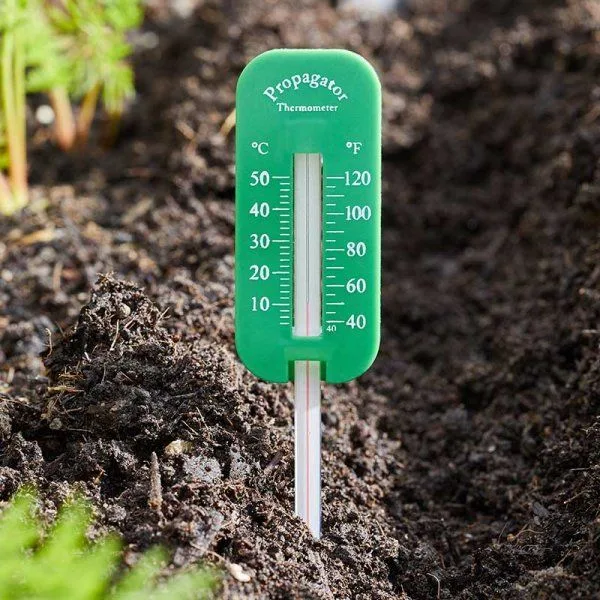
Image source: Web (Bing) / hardwareheaven.ie (Web image (fair-use with source credit))
Direct Sow vs. Start Indoors: The 3 Questions That Decide for You
This is the real fork in the road. Whether you plant cucumber seeds directly in the garden or start them indoors depends on three practical questions. Answer them honestly, and the right path becomes obvious.
Question 1: How long is your growing season?
Count the days between your last spring frost and your first fall frost. That is your frost-free window. Most cucumber varieties need at least 55 days.
Many need 65 to 70 days. If your window is under 60 days, you almost certainly need to start indoors. If it's over 70 days, direct sowing is straightforward.
If you're in the middle, say 60 to 70 days, consider a fast-maturing variety and direct sow.
Question 2: Do you have indoor space with strong light?
Starting seeds indoors sounds simple. Doing it well is not. Cucumber seedlings need 14 to 16 hours of strong light every single day.
A sunny windowsill often isn't enough, the light is too weak and uneven. You get leggy, pale seedlings that struggle after transplanting. A proper grow light solves this, but if you don't have one, direct sowing might give you healthier plants even in a shorter season.
Question 3: Are you willing to harden off seedlings?
"Hardening off" is the process of gradually acclimating indoor-grown seedlings to outdoor conditions. It takes about 7 to 10 days. You move the seedlings outside for a few hours, increase the time each day, and bring them back inside at night during cold spells.
If you don't have the time or patience for this, those indoor-started seedlings will suffer transplant shock. Direct sowing avoids this entirely.
Here is the decision mapped simply for you.
| Your Situation | Recommended Approach | Reason |
|---|---|---|
| Short season (under 60 days), have grow lights | Start indoors | Gains 3-4 weeks of growing time |
| Long season (over 70 days), warm soil | Direct sow | Simpler, no transplant shock |
| Moderate season, no grow lights | Direct sow (use fast variety) | Avoids leggy seedlings |
| Short season, no grow lights | Start indoors anyway | Better than nothing, use windowsill |
| Very short season (under 50 days) | Buy transplants | Too risky to start from seed |
How to Start Cucumber Seeds Indoors (With a Timeline You Can Follow)
If you decided on indoor starting, here is the exact timeline and process. It works. Follow it closely.
When to start: 3 to 4 weeks before your last frost date.
Cucumber seedlings grow fast. If you start them more than 4 weeks before transplanting, they outgrow their pots. They get rootbound and stressed.
Three weeks is ideal for most gardens. Four weeks is the maximum.
Setup and materials.
Use cell trays or small 3-inch pots with drainage holes. Fill them with a sterile seed-starting mix, not garden soil. Garden soil compacts in containers and can carry disease.
Moisten the mix before filling the cells.
Plant the seeds 1/2 inch deep. One seed per cell is fine if the seeds are fresh. Two seeds per cell gives a backup but requires thinning later.
Cover lightly with the seed-starting mix.
Water gently with a spray bottle. You want the mix damp, not soaking wet. Cover the tray with a clear plastic dome or plastic wrap to hold moisture.
Place it in a warm spot. The ideal temperature for germination is 75°F to 85°F. A heat mat under the tray makes a big difference if your house is cool.
Light is critical the moment seeds sprout.
As soon as you see the first loop emerge, usually in 3 to 7 days, remove the plastic dome. Move the tray directly under a grow light. Keep the light 2 to 3 inches above the seedlings.
If the light is too far, the seedlings stretch toward it and become leggy. Leave the light on for 14 to 16 hours per day.
Watering.
Keep the seed-starting mix consistently moist. Not wet. Cucumber seedlings are prone to damping off, a fungal disease that kills seedlings at soil level.
Overwatering and poor air circulation are the main causes. Water from the bottom by adding water to the tray, or water gently from the top.
Timeline overview.
| Stage | Day | Action |
|---|---|---|
| Sow seeds | Day 0 | Plant 1/2 inch deep, cover, warm spot |
| Germination begins | Days 3–7 | Remove dome, add strong light |
| First true leaves | Days 10–14 | Reduce watering slightly |
| Hardening off starts | Day 18–21 | Begin outdoor acclimation |
| Transplant to garden | Day 21–28 | After last frost, soil ≥ 60°F |
Hardening off.
About 7 to 10 days before transplanting, start bringing the seedlings outside. Place them in a sheltered, shady spot for 1 to 2 hours on the first day. Increase the time and sunlight gradually.
Bring them back inside at night if temperatures drop below 50°F. By day seven, they should be able to stay out overnight if the weather cooperates.
Per the University of Minnesota Extension's guidelines on hardening off, the key is gradual exposure. Rushing this step stresses the plants and delays fruiting by weeks.
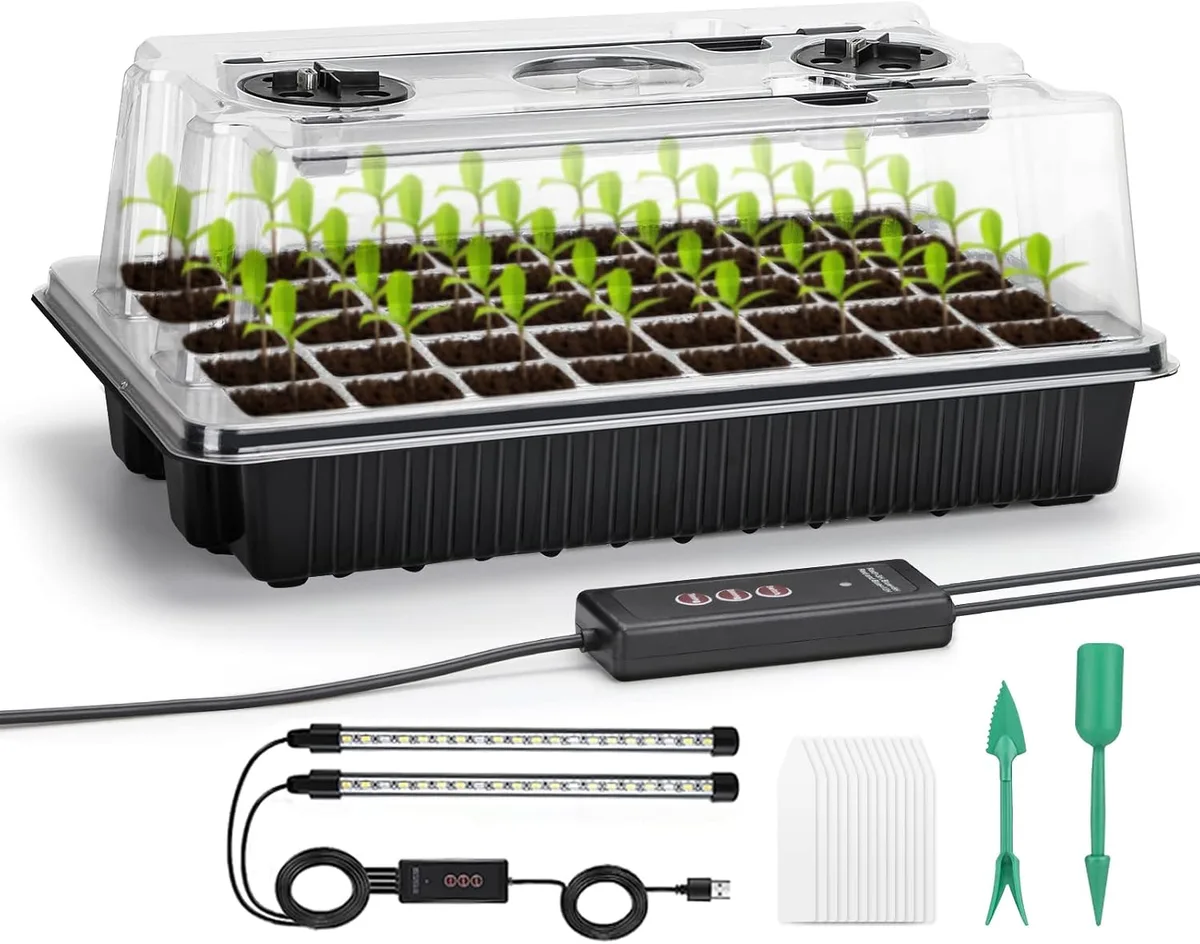
Image source: Web (Bing) / amazon.com (Web image (fair-use with source credit))
How to Direct Sow Cucumber Seeds (And Get Even Germination)
Direct sowing is simpler than starting indoors, but it requires patience. The biggest mistake gardeners make is planting too early. The soil must be warm enough.
Check the soil temperature.
Don't trust the calendar alone. Use a soil thermometer. Insert it 2 to 3 inches deep at mid-morning.
If the temperature is at least 60°F, and the forecast shows no cold rain or frost for the next week, you can plant. Most commercial cucumber growers wait until the soil is consistently 65°F to 70°F for faster, more even germination.
Prepare the soil.
Cucumbers need loose, well-draining soil with a pH between 6.0 and 7.0. Work 2 to 3 inches of compost or well-rotted manure into the top 6 to 8 inches of soil. Remove any large rocks or clods.
Rake the surface smooth.
Consider using raised beds if your native soil is heavy clay or stays wet in spring. Raised beds warm up faster and drain better.
Planting depth and spacing.
Sow seeds 1/2 inch to 1 inch deep. In heavier clay soils, stick to 1/2 inch. In sandy loam, 1 inch is fine.
The "hill" method is traditional for vining varieties. Create a low mound of soil 6 to 8 inches high and 12 to 18 inches wide. Plant 4 to 6 seeds per hill, spaced evenly.
After germination, thin to the 2 or 3 strongest seedlings per hill.
For bush varieties, space seeds 12 inches apart in rows. Rows should be 36 to 60 inches apart, depending on the variety. Check your seed packet for specific spacing recommendations.
Watering at planting.
Water the planting area thoroughly before sowing seeds. Then water gently after covering the seeds. Keep the soil consistently moist during the germination period.
Seeds that dry out will fail to sprout. A light layer of mulch, straw or shredded leaves, helps retain moisture and keeps the soil temperature even.
Protecting seeds.
Cold snaps happen. If a late frost or heavy rain is forecast, cover the planting area with a floating row cover. Row covers are lightweight fabric that protects against cold and pests.
Remove the cover once the seedlings emerge and daytime temperatures stay above 70°F. For direct-sown seeds, row covers also deter cucumber beetles that can decimate young plants.
Common Cucumber Seed Problems (And the Fix That Actually Works)
Even careful gardeners run into trouble. Here are the most frequent problems with detailed, practical fixes.
Damping off.
This is the most common killer of cucumber seedlings, whether started indoors or direct sown. The seedling collapses at the soil line. The stem looks pinched and water-soaked.
The fix starts before planting. Use sterile seed-starting mix for indoor sowing. Avoid overwatering.
Ensure good air circulation with a small fan. For direct sown seeds, plant only when the soil is warm enough, cold, wet soil is a breeding ground for damping-off fungi. Water in the morning so the soil surface dries during the day.
Leggy seedlings.
Leggy seedlings are tall, thin, and pale. They fall over easily. The cause is insufficient light.
The solution is to move the grow light closer, 2 to 3 inches from the seedlings, and run it for 14 to 16 hours. If you're using a windowsill, consider switching to a grow light. Windowsill-grown cucumbers almost always turn leggy.
Poor germination.
Seeds that don't sprout. Usually, the cause is cold soil. Check your soil temperature again.
If it's below 60°F, the seeds will simply sit there and often rot. Other causes are old seeds (cucumber seeds are viable for 3 to 5 years if stored properly) and overwatering that creates a crust on the soil surface. Use a light dusting of vermiculite instead of soil to cover the seeds.
Cucumber beetles and cutworms.
These insects attack young seedlings. Cucumber beetles chew holes in the leaves. Cutworms cut the stem at the soil line.
The best prevention is a floating row cover placed immediately after planting. Remove it when flowers appear so pollinators can reach the blooms. For cutworms, a cardboard collar pushed 1 inch into the soil around each seedling provides a physical barrier.
Uneven germination in direct sow.
Some seeds sprout, others don't. This is usually a watering issue or uneven soil temperature. Water the entire row consistently.
Use a soil thermometer across the planting area to check for cold spots. Full sun helps the soil warm evenly.
Poor fruit set later on.
If the plant grows well but produces few cucumbers, the problem is often pollination. Cucumbers have separate male and female flowers. Pollinators, mainly bees, must move pollen from male to female flowers.
If you used row covers, remove them when flowering starts. If bee activity is low, hand pollinate by touching the male flower's center to the female flower's center.