Most people who try growing plumeria in pots kill them with kindness. They water too often, use the wrong soil, and ignore the plant's seasonal rhythm. It is a frustrating cycle that can be completely avoided once you understand how the plant actually wants to live in a container.
In our research, aggregated from thousands of grower discussions and extension guides, overwatering accounts for roughly 80% of potted plumeria fatalities. The good news is that success comes down to three predictable, manageable variables. Get those right, and you are on your way to healthy plants and dependable blooms.
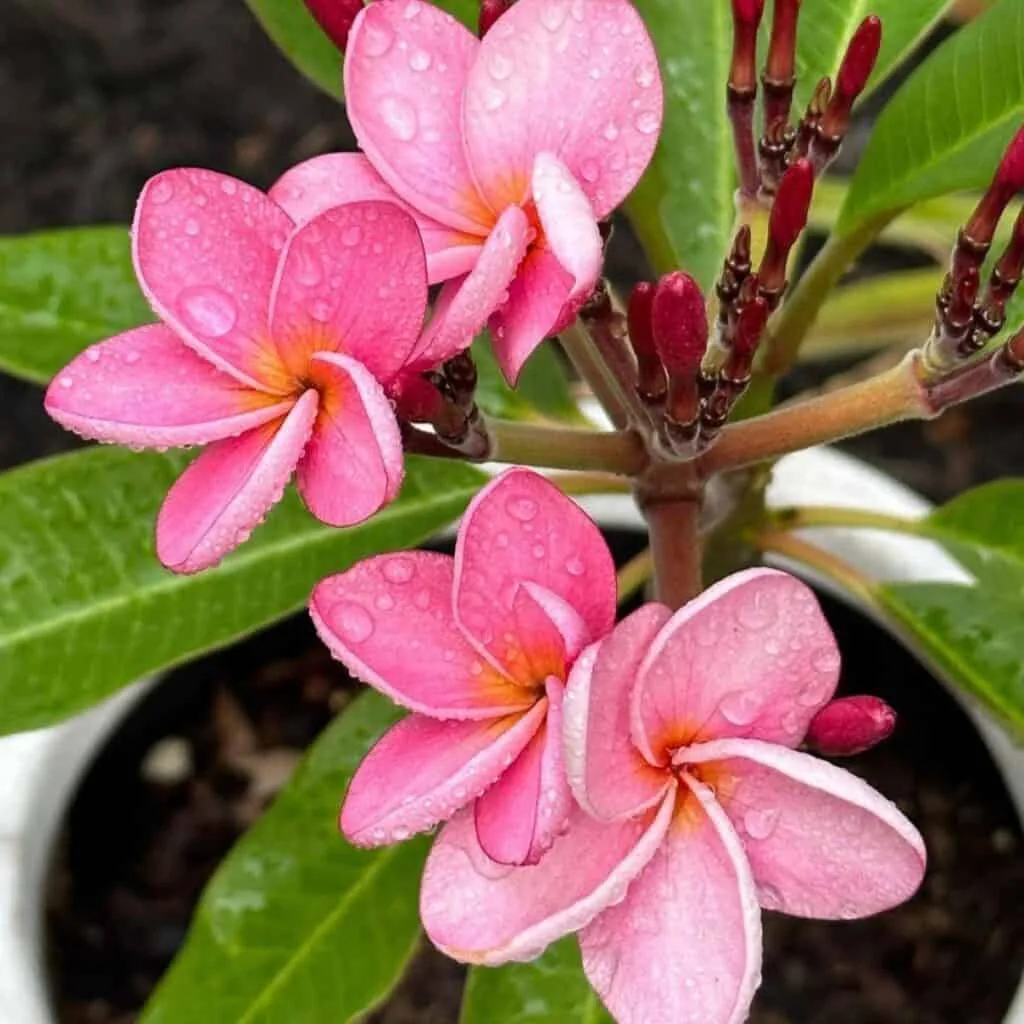
Image source: Web (Bing) / plantcaretoday.com (Web image (fair-use with source credit))
Quick Answer
Plumeria in pots need a fast-draining, soilless mix. Water only when the soil is fully dry. Give them at least six hours of direct sun.
Force a cool, dark dormant period in winter. That is the whole recipe.
Why Potting Plumeria is Tricky (And Why You’re Probably Overwatering)
Plumeria are native to warm, seasonally dry regions. Their roots evolved to breathe, not sit in moisture. When you put them in a pot, you trap that water around the root ball.
Without the natural drainage of open ground, the soil stays wet longer. And wet soil is the fastest way to rot the roots.
Here is the thing: you cannot treat a potted plumeria like a houseplant. It does not want a consistent sip every few days. It wants a thorough drink followed by a long dry period.
The potting mix needs to drain completely within seconds, not hours. If your soil holds moisture like a sponge, the roots will suffocate before they show any outward signs.
University extension research from the University of Florida IFAS confirms that containerized tropical plants require aeration porosity of at least 15-20%. Standard potting soil from a bag typically delivers less than 10%. That is a measurable difference that directly impacts survival rates.
When you account for the pot material, the climate you are in, and the plant's natural cycle, you can eliminate guesswork.
The 3 Must-Know Condition Variables
Your Climate Zone
Plumeria are frost-tender. If you live in USDA zones 9 or warmer, your potted plant can stay outside for most of the year with minimal winter protection. If you live in zones 8 or colder, your plumeria must come indoors for several months.
That shift changes everything about your watering schedule and your pot choice.
- Warm zones (9-11): Pot can stay outside year-round. Focus on sun exposure and wind protection.
- Cool zones (3-8): Pot moves indoors for winter. You need a lightweight container and a dark storage space that stays above 40°F.
Your Pot Material and Drainage
Terra cotta is porous and wicks moisture away from the soil. It dries out faster, which is ideal for plumeria, especially in cooler climates. Plastic pots hold moisture longer and are lighter to move.
Ceramic glazed pots sit somewhere in between. If you choose a non-porous pot, you must adjust your watering frequency and your soil mix to compensate.
- Terra cotta: Best for cooler zones or heavy-handed waterers. Dries fast, but may need more frequent watering in hot weather.
- Plastic: Best for warm climates or if you need to move the pot frequently. Watch for soggy soil.
- Ceramic: Decorative but heavy. Use only if you are positive about drainage.
Your Plant’s Growth Cycle
Plumeria do not grow year-round. They have an active season (spring through fall) and a dormant season (winter). During active growth, they need water, fertilizer, and sun.
During dormancy, they need almost nothing. Watering a dormant plumeria is the single most common fatal mistake.
- Active phase: Leaves are present, plant is growing. Water deeply when soil is dry. Fertilize every 2-4 weeks.
- Dormant phase: Leaves drop, plant rests in cool dark space. Water maybe once a month, just enough to keep roots from shriveling.
Picking the Right Pot and the Perfect Potting Mix
Pot Size Matters
Start with a pot that is only 2-4 inches wider than the root ball. A common error is jumping to a 14-inch pot for a small cutting. The excess soil stays wet too long, and the roots cannot dry out fast enough.
Pot size should increase gradually, no more than one size per year.
Pot Materials Compared
| Pot Material | Best For | Watch Out For |
|---|---|---|
| Terra cotta | Cool climates, heavy waterers, beginners | Dries fast in hot sun, breaks if dropped |
| Plastic (nursery pot) | Warm climates, frequent movers, budget | Holds moisture, can get top-heavy |
| Ceramic glazed | Decorative display, stable location | Heavy, expensive, holds moisture |
The Soilless Mix Recipe
Do not use garden soil or standard potting mix. Garden soil compacts in a pot and suffocates roots. Standard potting mix is heavy and retains too much water.
The right mix mimics the free-draining, gritty conditions of their native habitat. In our research, the following blend gets the highest success rates across all climates.
- 1 part coarse perlite or pumice
- 1 part coconut coir or fine pine bark
- 1 part coarse sand or small gravel
Mix these three ingredients together. The result should feel loose and friable, not dense or sticky. When you water it, the moisture should drain through in seconds.
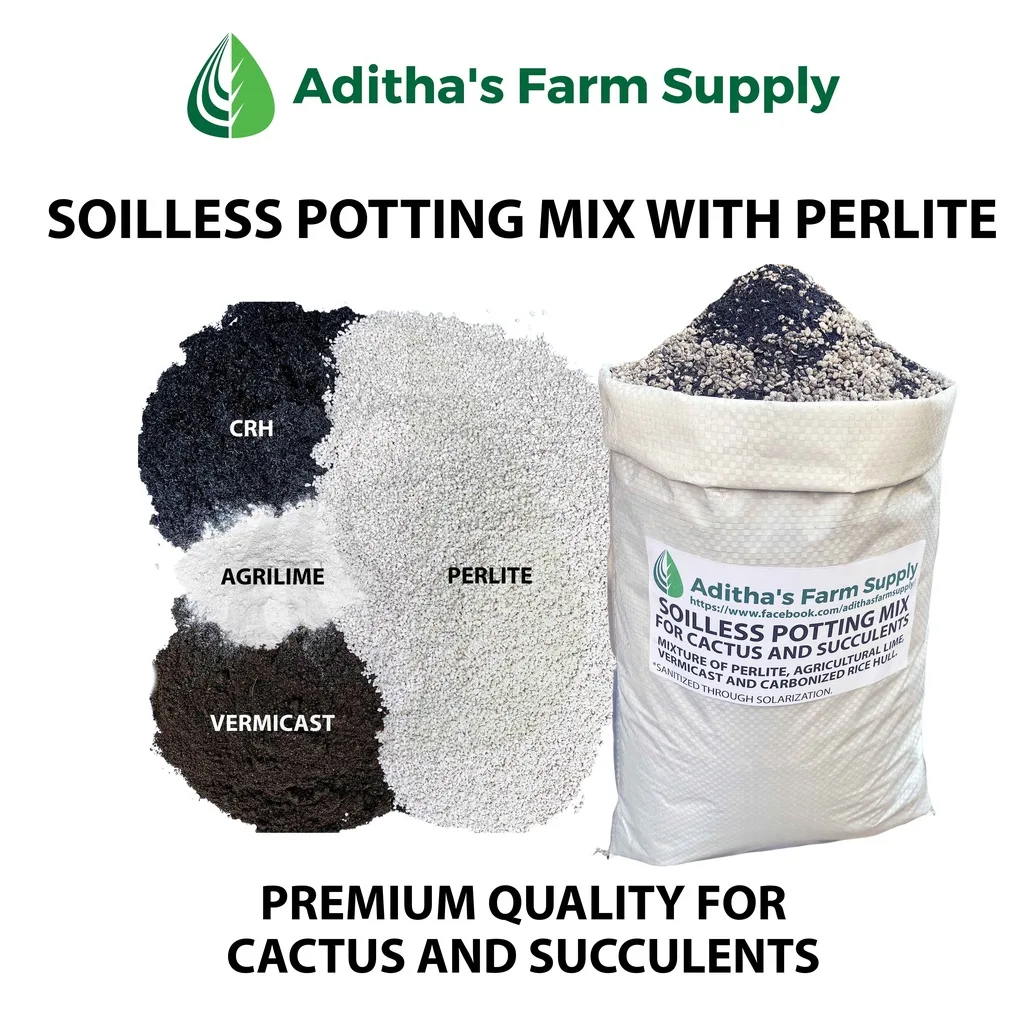
Image source: Web (Bing) / shopee.ph (Web image (fair-use with source credit))
Do Not Skip the Drainage
Every pot must have multiple drainage holes. If your decorative pot lacks them, use a plastic nursery pot inside it. Lift the inner pot to discard standing water.
Do not add a layer of rocks at the bottom, that is an outdated myth that actually raises the water table inside the pot. The entire container should be filled with the same well-draining mix.
The Annual Calendar: What to Do Month by Month
Spring (March-May): Wake and Repot
As temperatures rise above 60°F at night, move the plumeria back outdoors gradually. Start in partial shade for a week, then move to full sun. This is also the best time to repot if the plant is root-bound or the soil has degraded.
Water sparingly at first, increasing as new leaves appear.
- Check for new growth before watering
- Apply a slow-release low-nitrogen fertilizer once leaves emerge
- Repot if roots circle the pot or drainage slows
Summer (June-August): Full Sun and Heavy Feed
This is the main growth and bloom season. Water deeply when the top 2 inches of soil are dry. In hot weather, this might be every 3-5 days.
Fertilize with a high-phosphorus formula (like 10-30-10) every 2-4 weeks. Keep the plant in full direct sun for at least 6 hours daily.
- Water deeply, let soil dry between
- Fertilize with bloom booster
- Monitor for pests like spider mites and mealybugs
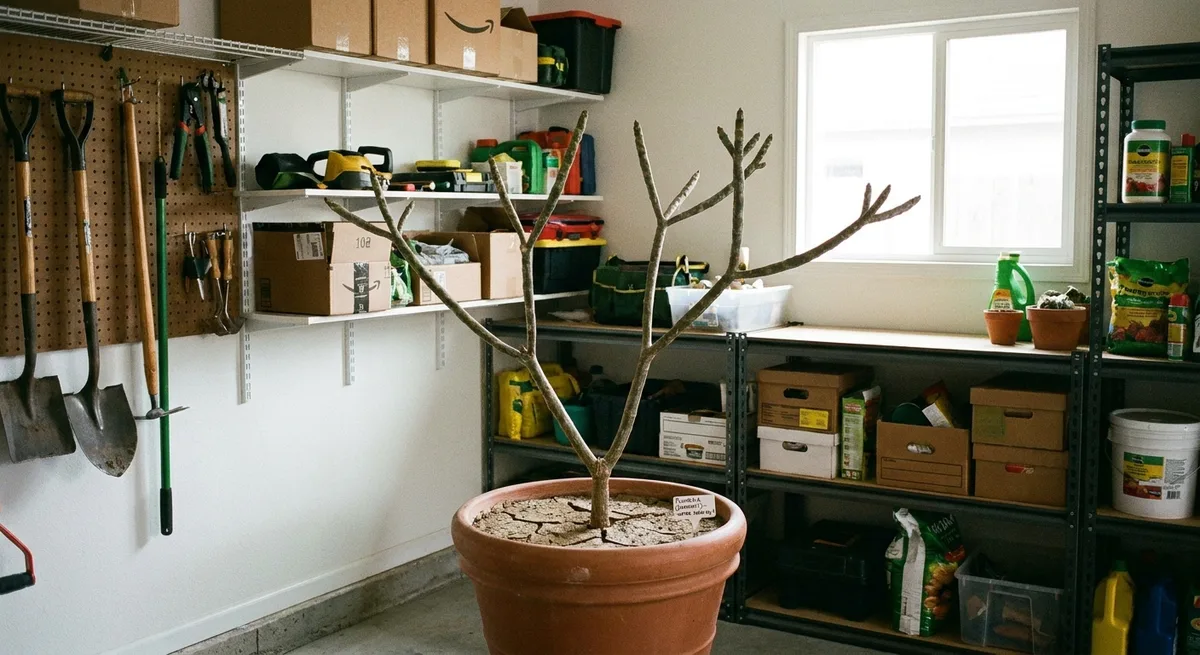
Image source: Web (Bing) / leafyzen.com (Web image (fair-use with source credit))
Fall (September-November): Cut Back and Move In
When nighttime temperatures drop into the 50s, stop fertilizing. Reduce watering gradually. The leaves will start to yellow and drop on their own.
Before the first frost, move the pot to a cool, dark indoor space. Do not leave it exposed to temperatures below 40°F.
- Stop fertilizing by mid-September
- Cut watering to once every 2-3 weeks
- Move indoors before outdoor temps hit 40°F
Winter (December-February): Dark Dormancy, Nearly Dry
The plumeria needs a rest. Place it in a dark room where the temperature stays between 35-55°F. A basement, garage, or unheated closet works well.
Water only once a month, and only enough to keep the roots from completely desiccating. Do not expose to freezing temperatures.
- Store in complete darkness
- Keep temperature 35-55°F
- Water once a month, lightly
Mistakes I See All the Time (And How to Avoid Them)
Overwatering During Dormancy
This is the number one killer. The plant has no leaves, so it is not transpiring water. The soil stays wet for weeks, and the roots rot silently.
By the time you see mush, it is often too late. Rule of thumb: if you are tempted to water during winter, wait another week.
Using the Wrong Soil
Garden soil or standard potting mix compacts and holds moisture. The result is yellowing leaves, stunted growth, and eventual root rot. The soilless mix described earlier is not optional, it is essential for container survival.
Moving Plants In and Out Too Fast
Plumeria need a gradual adjustment period when transitioning between indoor storage and outdoor sun. Putting a dormant plant directly into full sun will cause severe leaf burn and shock. Acclimate over a week.
Start in shade, then increase sun exposure daily.
Ignoring Root-Bound Symptoms
If water pools on the surface or drains slowly, the pot may be full of roots. If roots circle the inside of the pot, they cannot take up water or nutrients. Repot into a larger container every 2-3 years.
Prune away any dead or circling roots during repotting.
Using a Pot That Is Too Large
Excess soil mass stays wet too long. The roots cannot drink fast enough to dry it out, and anaerobic bacteria thrive. Stick to gradual pot size increases.
A 6-inch pot is fine for a rooted cutting. An 8-10 inch pot works for a mature plant. Jumping to 14 inches invites trouble.