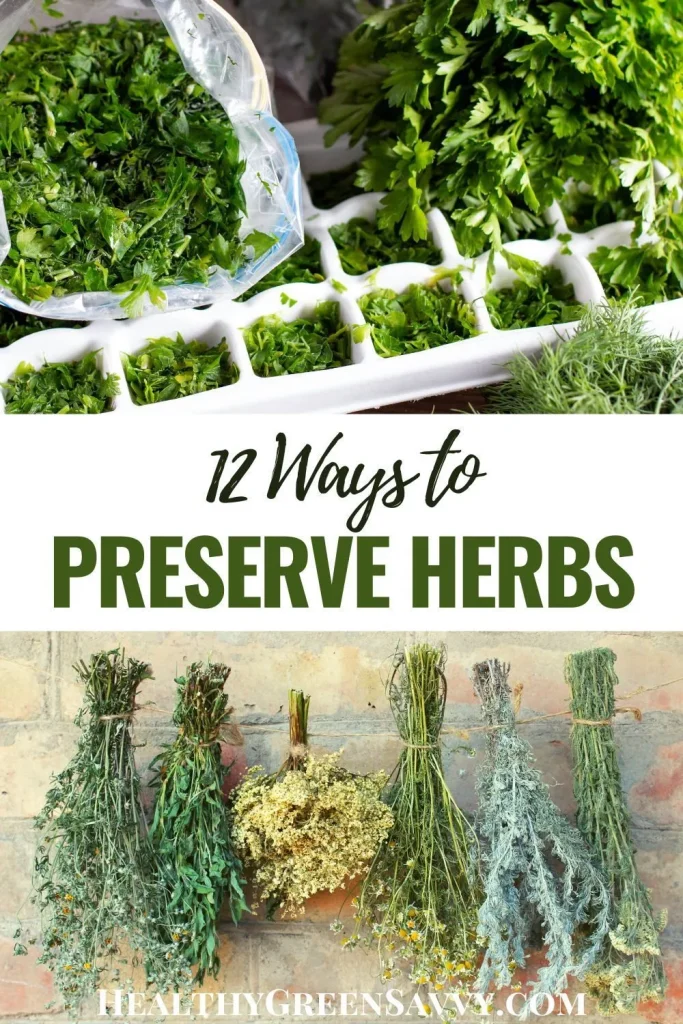
You spent all summer nurturing that basil plant, and now it's producing more than your pasta sauce can handle. Preserving herbs is the obvious solution, but the wrong method turns aromatic leaves into sad, flavorless flakes. The real trick is knowing which technique fits which herb.
According to the National Center for Home Food Preservation, improperly dried herbs can lose 30 to 50 percent of their volatile oils in the first year alone. That's a lot of wasted flavor. Smart preservation isn't about picking one method.
It's about matching the method to the herb. Let's start with the biggest fork in the road.
Quick Answer
Dry woody herbs like rosemary and thyme. Freeze tender herbs like basil and cilantro. Use salt-curing or vinegar infusions for fresh-like flavor in dressings.
Store dried herbs in airtight, dark containers. Label everything with the date. As of 2026, home dehydrators remain the most consistent tool for drying.
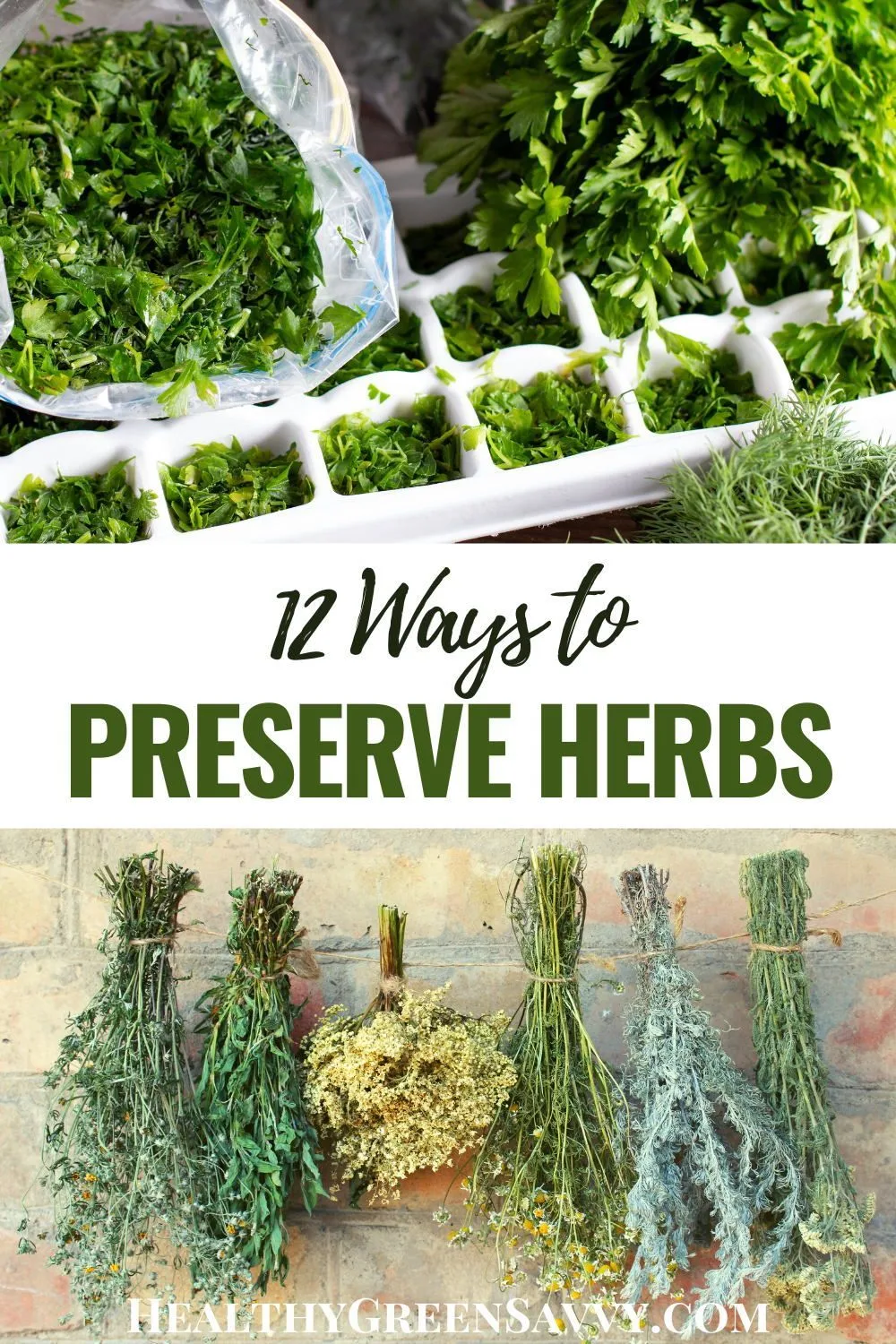
Image source: Web (Bing) / artofit.org (Web image (fair-use with source credit))
Why the Drying vs. Freezing Decision Actually Matters
Here's the thing people get wrong. They treat all herbs the same. Rosemary goes in the same drying rack as basil.
Then they wonder why the basil tastes like hay.
The difference comes down to moisture and oil structure. Woody herbs like rosemary, thyme, oregano, and sage have low moisture content and high essential oil levels. They dry beautifully.
Heat and air movement concentrate those oils. The result is intense, shelf-stable flavor that lasts for years.
Tender herbs like basil, cilantro, mint, and chives are the opposite. They hold a lot of water. Their volatile oils are fragile.
Heat destroys them fast. That's why dried basil from the store tastes like nothing. Freezing captures those delicate oils before they degrade.
The decision framework is simple. If the herb has thick, woody stems and leaves that feel dry to the touch, dry it. If the herb has soft, broad leaves that wilt within hours of harvest, freeze it.
That one rule prevents most preservation failures.
The University of Minnesota Extension confirms that freezing preserves the fresh flavor of tender herbs far better than any drying method. Their research shows frozen herbs retain significantly more aroma compounds after six months than dried equivalents.
Image source: Web (Bing) / alifeonthefarm.com (Web image (fair-use with source credit))
How Drying Works: Air, Dehydrator, and Oven — What Each Really Delivers
Drying isn't one method. It's three, and each gives different results.
Air drying is the oldest approach. Tie herbs in small bundles. Hang them upside down in a dark, dry, ventilated space.
The process takes 5 to 14 days depending on humidity and herb thickness. It works best for woody herbs in low-humidity climates. Below 60 percent relative humidity is ideal.
Above that, mold risk climbs fast.
Food dehydrators are the most consistent option. Set the temperature between 95 and 105 degrees Fahrenheit for delicate leaves. Woody herbs can handle up to 115 degrees.
Drying takes 4 to 12 hours. The even airflow and controlled heat prevent hot spots. Aggregate reviews report that square dehydrators with rear fans dry more evenly than round stackable models.
Oven drying is the fastest but riskiest method. Set the oven to its lowest temperature, usually 140 to 180 degrees. Prop the door open 2 to 4 inches for airflow.
Herbs dry in 2 to 4 hours. The risk is overheating tender herbs and burning off their oils. Only use this for woody herbs in a pinch.
Temperature matters more than you think. Per manufacturer specifications, any heat above 115 degrees starts degrading essential oils in tender herbs. Above 140 degrees, even rosemary loses some punch.
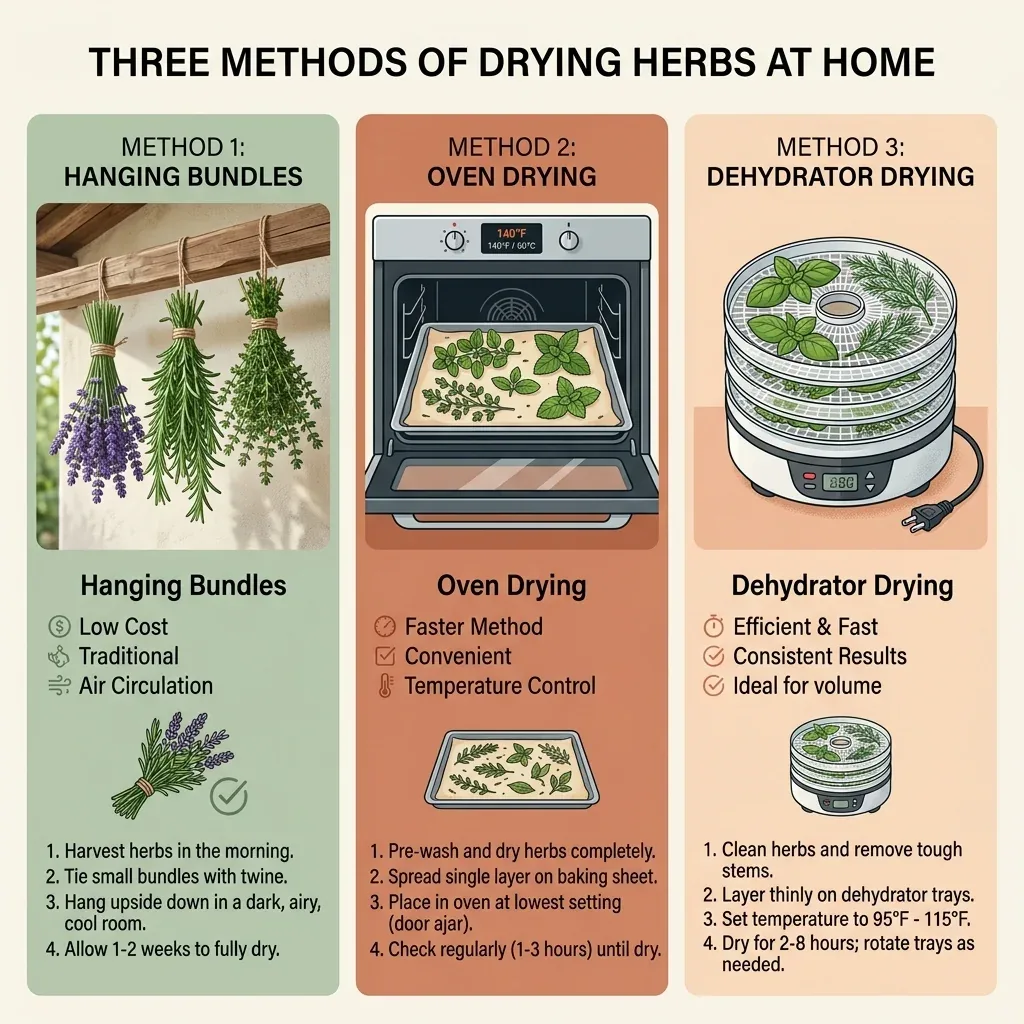
Image source: Web (Bing) / urbanharvestlab.com (Web image (fair-use with source credit))
How Freezing, Salt-Curing, and Vinegar Infusions Compare
Freezing is the best option for tender herbs, but there are three ways to do it.
Freezing in ice cube trays is the most practical. Chop the herbs. Fill each cube halfway.
Top with water or olive oil. Freeze solid, then pop the cubes into a freezer bag. Water cubes work for soups and stews.
Oil cubes work for sautés and dressings. Basil frozen in olive oil stays bright green for months.
Salt-curing is an old technique that deserves more attention. Layer fresh herbs and salt in a jar. Use a ratio of one part salt to four parts herbs by weight.
Press down to release the herbs' natural moisture. Refrigerate for two weeks. The result is a seasoning blend called herbes salées that tastes remarkably fresh.
It lasts up to a year in the fridge.
Vinegar infusions are ideal for herbs you want to use in dressings and marinades. Warm your vinegar of choice. Pour it over bruised herbs in a glass jar.
Cap it and store in a dark place for two to four weeks. Strain and bottle. White wine vinegar works best for delicate herbs.
Apple cider vinegar pairs well with heartier ones like rosemary and thyme.
Each method serves a different purpose. Freezing is for cooking. Salt-curing is for finishing dishes.
Vinegar infusions are for vinaigrettes and marinades.
At-a-Glance Comparison: Time, Shelf Life, and Best Herb Types
| Method | Active Time | Total Time | Shelf Life | Best For |
|---|---|---|---|---|
| Air drying | 15 minutes | 5 to 14 days | 1 to 3 years | Woody herbs in dry climates |
| Dehydrator | 20 minutes | 4 to 12 hours | 1 to 3 years | All herbs in any climate |
| Oven drying | 10 minutes | 2 to 4 hours | 6 to 12 months | Emergency drying of woody herbs |
| Freezing (ice cubes) | 15 minutes | 2 to 4 hours | 6 to 12 months | Tender herbs for cooking |
| Salt-curing | 20 minutes | 2 weeks | 6 to 12 months | Finishing blends and rubs |
| Vinegar infusion | 10 minutes | 2 to 4 weeks | 6 to 12 months | Dressings and marinades |
A few notes on this table. The shelf life for dried herbs assumes proper storage in airtight, UV-protective containers away from heat. Freezer herbs last longer in a deep freeze at zero degrees Fahrenheit or colder.
Salt-cured blends should stay refrigerated.
The yield ratio matters too. Fresh herbs shrink to roughly one quarter their original weight when dried. That means four cups of fresh rosemary becomes one cup of dried.
Plan your harvest accordingly.
Best Preservation Method for Every Common Herb
Not every herb belongs in the same bucket. Here's the breakdown by variety.
Basil. Freeze it in olive oil cubes. Drying turns it into brown cardboard. Pesto also freezes well.
Basil is the single herb where drying is the worst option.
Rosemary and thyme. Air dry or use a dehydrator. These woody herbs dry perfectly and keep their punch for years. Freezing works but the texture turns soft.
Oregano and sage. Dehydrator or air drying. These herbs concentrate their flavor when dried. They are some of the few that actually taste better dried than fresh.
Cilantro. Salt-curing is the best option for fresh-like flavor. Freezing works for cooked dishes. Drying destroys cilantro almost completely.
Avoid it.
Mint. Drying is perfect for tea. Freezing in ice cubes works for cocktails. Sugar preservation is an option for baking.
Mint is versatile but drying for tea is the most practical.
Chives. Freeze them chopped. Drying turns chives into hollow straws with no flavor. Salt-curing also works well.
Dill. Freezing or vinegar infusion. Dill loses its character fast when dried. Vinegar captures its brightness perfectly for pickles and dressings.
Parsley. Freezing or drying depending on use. Dried parsley works for cooked dishes. Frozen parsley keeps more color and works for garnishes.
Neither matches fresh, but freezing comes closer.
Mistakes That Ruin Preserved Herbs (and How to Fix Them)
Most preservation failures come down to a handful of avoidable errors. Here are the most common ones we see in our research.
Storing herbs before they're fully dry. This is the top cause of mold. If a dried herb still has moisture, it rots inside the jar. Test by letting a cooled sample sit in a sealed container for 24 hours.
Condensation means it needs more drying time.
Drying tender herbs with heat. Basil and cilantro lose their volatile oils fast above 115 degrees Fahrenheit. The result is brown, flavorless dust. Stick to freezing for these varieties.
Using clear glass jars in bright light. UV rays break down chlorophyll and essential oils. Dried herbs lose their color and punch within weeks. Use amber glass or store jars in a dark cabinet.
Freezing herbs without protection. Whole leaves in a plastic bag get freezer burn fast. Chop them, pack them in oil or water, and squeeze out every bit of air. A vacuum sealer works even better.
Ignoring the botulism risk with oil infusions. Garlic and herbs submerged in room-temperature oil can breed Clostridium botulinum. Keep infused oils refrigerated and use them within two to three weeks. Acidify to pH 4.6 or below if you want longer storage.
Forgetting to label anything. Six months from now, you won't remember which jar is oregano and which is marjoram. Write the herb name, harvest date, and method on every container.
Frequently Asked Questions About Preserving Herbs
Can you freeze fresh herbs whole?
You can, but they lose their structure. Frozen whole leaves turn limp and release water when thawed. They work fine in soups, stews, and sauces.
For a better result, chop herbs and freeze them in ice cube trays with water or oil. That keeps them portioned and ready to drop into a pan.
How long do dried herbs last?
Fully dried herbs stay safe to use for one to three years. Their flavor peaks in the first six to twelve months. After that, volatile oils fade and you'll need to use more to get the same taste.
Test potency by crushing a leaf and smelling it. If the aroma is weak, it's time to replace the batch.
Is it safe to make garlic-infused oil at home?
Yes, with precautions. Raw garlic can carry botulism spores that thrive in oxygen-free oil at room temperature. Keep infused oils refrigerated and use them within two to three weeks.
For room-temperature storage, acidify the oil with citric acid or vinegar to reach pH 4.6 or below. The National Center for Home Food Preservation offers detailed safe protocols.
Can you dry herbs in a microwave?
Microwave drying works for small batches with mixed results. Place clean, dry leaves between paper towels and microwave in thirty-second bursts. The risk is scorching and uneven drying.
Dehydrators deliver far more consistent results. Microwaves are best for a quick emergency pinch, not bulk preservation.
Do frozen herbs taste as good as fresh?
Not exactly, but they come close. Freezing captures the volatile oils better than any drying method. Basil frozen in olive oil tastes remarkably fresh in sauces.
The main difference is texture. Frozen herbs lose their crispness, so use them in cooked dishes rather than garnishes.
Final Verdict: Which Preservation Method Should You Use First?
Start with freezing if you're preserving tender herbs like basil, cilantro, and chives. It's the easiest method with the least equipment. A set of silicone ice cube trays and a freezer bag is all you need.
Invest in a food dehydrator if you grow woody herbs like rosemary, thyme, and oregano. It delivers consistent results in any climate. Air drying works, but only if your humidity stays below 60 percent.
Oven drying is a last resort for emergencies.
If you want fresh-like flavor for salads and finishing dishes, try salt-curing. Herbes salées is one of the most underrated preservation methods. It keeps herbs tasting bright and vibrant for months.
The takeaway is simple. Match the method to the herb. Dry the woody ones.
Freeze the tender ones. Salt-cure when you want something special. Your future self, cooking in January, will thank you.