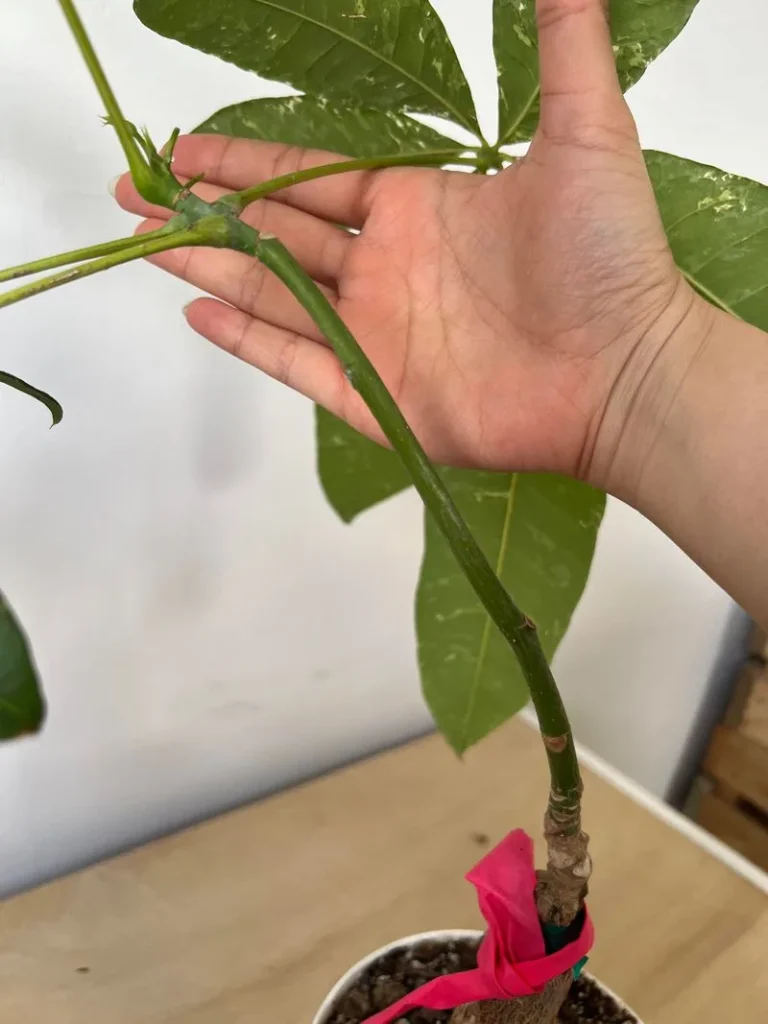
If you're looking into pruning money tree (Pachira aquatica), you've probably noticed something off about yours. Maybe it's getting too tall for the corner where it sits. Or the lower stems look bare while the top is a wild mess of leaves.
You're not alone, this is the number one reason people finally pick up the shears.
Per the Royal Horticultural Society, money trees respond well to structural pruning when done at the right time and with the right technique. The key is knowing what your particular tree needs before you make the first cut. So let's walk through that together.
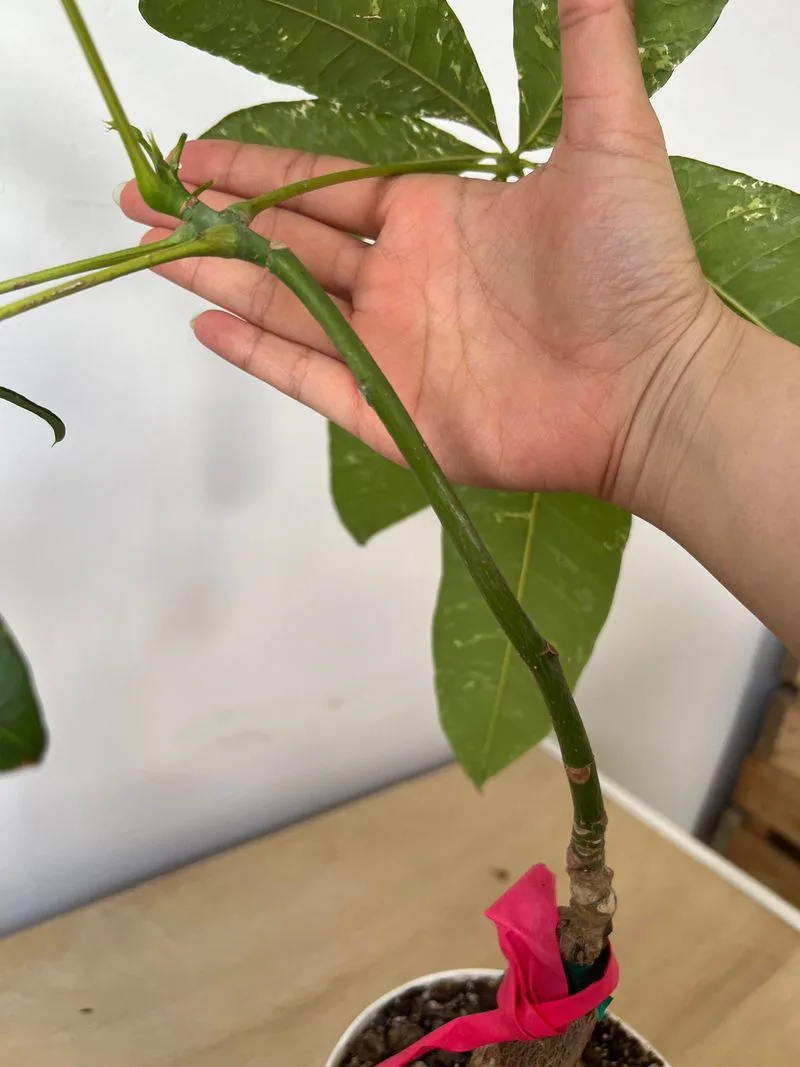
Image source: Web (Bing) / positivebloom.com (Web image (fair-use with source credit))
Quick Answer
Prune money trees in spring or early summer. Cut stems just above a leaf node at a 45-degree angle. Remove no more than one-third of the foliage per session.
This encourages branching and controls height.
How to Tell If Your Money Tree Actually Needs Pruning
Not every money tree needs pruning right now. In fact, pruning a healthy, well-shaped plant can do more harm than good. So how do you know yours is asking for a cut?
Look for these specific signs.
Leggy, stretched-out stems
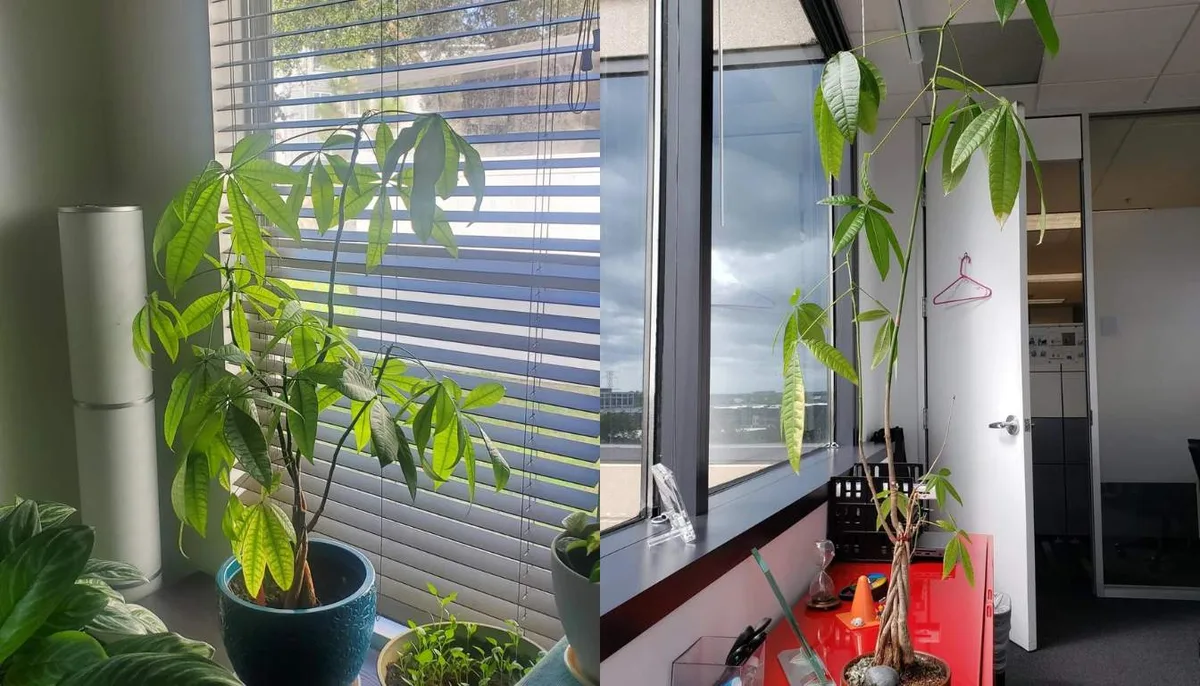
Image source: Web (Bing) / lifeandagri.com (Web image (fair-use with source credit))
If your money tree has long, thin stems with leaves spaced far apart, it's reaching for more light. The plant is putting all its energy into getting taller instead of getting fuller. Our research shows this is the most common reason people start pruning.
If the gaps between leaves on a stem are wider than 2 to 3 inches, that stem needs to come back.
Dead or yellowing branches
A few yellow leaves at the bottom are normal. That's just the plant dropping old growth. But if whole branches are turning brown, crispy, or soft, those need to go.
Dead tissue attracts pests and can spread rot to healthy parts of the plant. Remove dead stems down to the base or to a healthy node.
Top-heavy lean
Money trees with braided trunks can get heavy on top. The braid starts to bend or lean because the canopy is too wide for the root ball to anchor. This is a stability issue.
Shortening the top branches by 20 to 30 percent will balance the weight and protect the trunk from snapping.
Braided trunk losing shape
You might notice the braid loosening at the top. That happens when side branches push the stems apart. Selective pruning of those outward-growing branches keeps the braid tight and the plant looking neat.
If none of these describe your tree, leave it alone for another season. Pruning isn't mandatory. It's a tool for fixing problems.
What Kind of Pruning Does Your Tree Need?
Now that you've spotted the problem, the next step is matching it to the right technique. There are three main scenarios. Pick the one that fits your tree's condition.
Shaping for fullness (tip pinching)
This is for trees that are healthy but a bit sparse. You want a bushier look without reducing the overall height significantly. The technique is simple: pinch off the very tip of each stem, just above the topmost leaf node.
This signals the plant to push out two new shoots from that node instead of one. It's the gentlest form of pruning. You remove less than an inch from each stem.
Cutting back height (major stem removal)
This is for the tall, leggy, or top-heavy tree. You're cutting back longer stems by a significant amount, sometimes half their length. Find a node that faces the direction you want new growth to go.
Cut at a 45-degree angle about a quarter-inch above that node. The plant will branch from that point. You can remove up to one-third of the total foliage in one session.
Removing damage (dead or diseased branches)
No shaping required here. Just clean removal. Cut dead or diseased stems back to their point of origin.
If the branch is completely dead, go all the way to the main trunk. If only part of the stem is damaged, cut back to the nearest healthy node. Dispose of diseased material away from your other houseplants.
Step-by-Step: How to Prune Your Money Tree the Right Way
You've diagnosed your tree. You've picked your technique. Now let's do the actual work.
Step 1: Prepare your tools
Use clean, sharp pruning shears or scissors. Wipe the blades with 70 percent isopropyl alcohol before you start. This prevents transferring disease from other plants.
Dull blades crush the stem instead of cutting cleanly, which slows healing.
Step 2: Identify your nodes
Nodes are the small bumps or rings on the stem where leaves used to attach. New growth emerges from nodes. Always cut above a node, not below it.
Cutting below means that stem will never branch again. It will just die back to the next node down.
Step 3: Make the cut
Position your shears about a quarter-inch above the node. Cut at a 45-degree angle sloping away from the node. This lets water run off instead of pooling on the fresh wound.
A flat cut holds moisture and invites rot.
Step 4: Remove no more than one-third per session
This is the hard limit. Removing more than a third of the foliage at once puts the plant into shock. It can't photosynthesize enough to support its root system.
If your tree needs heavy pruning, spread it out over two sessions a few months apart.
Step 5: After-care
Water the plant normally. Do not fertilize for at least two weeks after pruning. The plant is healing, not growing actively.
Place it in bright indirect light. Direct sun can scorch the new cuts.
The RHS confirms that tropical plants like Pachira aquatica recover best when pruned during their active growing season, which is spring through early summer.
Common Pruning Mistakes That Can Kill Your Money Tree
Most money tree problems after pruning come from these three errors. Avoid them and your tree will bounce back fast.
Cutting below the node
This is the most common mistake. If you cut a stem with no node below the cut, that stem is done. It won't grow new leaves.
It will just turn brown and die back. Always check that there's a healthy node below your cut line before you snip.
Image source: Web (Bing) / smart.dhgate.com (Web image (fair-use with source credit))
Pruning in winter
Money trees don't go fully dormant, but growth slows way down in low light and shorter days. A cut made in December might sit open for months before the plant tries to heal. That window invites infection.
Stick to spring and summer pruning for the best results.
Over-pruning the braided trunk
If your money tree has a braided trunk, don't cut back all the stems at the same height. That makes the braid loosen at the top. Instead, stagger your cuts at different heights.
Let some stems stay a few inches taller than others. This keeps the braid tight and the plant looking natural.
Using dull or dirty tools
A stem cut with dull scissors looks like it was chewed. The crushed tissue dies back further than a clean cut would. Always use sharp shears and always sanitize them between plants.
A quick alcohol wipe takes ten seconds and prevents days of trouble.
What to Do After You Prune (And What to Expect Next)
You made the cuts. Now the real work is supporting the recovery. Money trees are resilient, but they need the right conditions to bounce back.
The first week: leave it alone
After pruning, your money tree needs rest. Don't move it to a new spot. Don't repot it.
Don't fertilize it. Just keep it in bright indirect light and water on the same schedule as before. The tree is redirecting energy toward healing the cuts and activating new buds at the nodes below each cut.
What regrowth looks like
Within two to four weeks, you should see small green nubs forming at the nodes just below your cuts. Those are new buds. They will unfurl into new leaves over the next few weeks.
If you pinched the tips, you'll usually get two new stems from each pruned spot. If you cut back a longer stem, you'll get one or two branches depending on how healthy the node was.
When to fertilize again
Wait at least two weeks after pruning before applying any fertilizer. Use a balanced houseplant fertilizer at half strength. Full strength can burn the fresh cuts and tender new growth.
Resume your normal feeding schedule once you see the new leaves fully open.
Long-term maintenance schedule
Plan to prune your money tree once or twice a year. Spring is the best time because the plant is entering its active growth phase. You can do a light session in early summer if needed.
Avoid pruning after August. The shorter days and lower light slow recovery.
Money Tree Pruning: Quick Decision Guide
Here is a simple way to decide what your tree needs right now. Match your tree's condition to the action.
| If your tree looks like this | Do this |
|---|---|
| Long thin stems, leaves spaced far apart | Cut back long stems by one-third to a node |
| Full but sparse, no dead branches | Pinch stem tips above top node |
| Dead or brown branches on one side | Remove dead branches at the base |
| Top heavy, trunk leaning or bending | Shorten top branches by 20 to 30 percent |
| Braid loosening at the top | Remove outward-growing side branches |
| Healthy and balanced | Do nothing. Wait until next season |
When not to prune
Do not prune if your tree is showing signs of stress from other causes. Recent repotting, pest infestation, or a sudden drop in temperature are all reasons to wait. Let the tree stabilize first.
Pruning a stressed plant can push it over the edge.
Frequency matters
Stick to one major pruning session per year. Minor touch ups like removing a single dead leaf or pinching a tip are fine anytime. But heavy cutting should happen in spring or early summer and only once per season.
Frequently Asked Questions About Pruning Money Trees
Can I prune a money tree in winter?
You can, but it's not ideal. Growth slows in winter, so the cuts will sit open longer. If you must prune, remove only dead or diseased branches.
Save major shaping for spring.
Will pruning make my money tree bushier?
Yes, that's the main reason to prune. Cutting above a node forces the plant to push out two new stems instead of one. Over time, this creates a fuller, denser canopy.
What do I do with the cuttings?
Healthy cuttings can be propagated in water or moist soil. Remove the lower leaves and place the stem in a glass of water. Roots usually appear within three to four weeks.
Change the water every few days to prevent rot.
Should I root prune too?
Only if the tree is root bound. Check for roots growing out of the drainage holes. If you see them, you can trim the root ball by about one-third when you repot.
Do this at the same time as top pruning to reduce shock.
How do I prune a braided trunk without ruining it?
Cut stems at different heights. Stagger the cuts so no two stems are the same length. This keeps the braid tight and natural looking above the cut point.