Trying to prune plants without a plan is like trimming your hair blindfolded. You'll cut something, but probably not what you intended. Pruning plants is about understanding what each cut signals to the plant.
In our research, most pruning mistakes come down to two variables: timing and cut placement. Per International Society of Arboriculture standards, every pruning cut should serve a purpose, and that purpose shifts with season, growth stage, and where you make the cut.
The good news? You don't need a botany degree to figure it out. You just need to ask two simple questions before you pick up your pruners.
Once you know how to answer them, you'll make confident cuts that keep your garden thriving year after year. Let's walk through the process.
Image source: Web (Bing) / gardeningetc.com (Web image (fair-use with source credit))
The Problem: Why Most People Prune Wrong
Most people prune because the plant "looks messy" or "grew too big." That's a mistake right there. Pruning plants without a clear goal is how you end up with a shrub that never blooms or a tree with weak, spindly branches.
The real issue is that generic advice fails. You'll read "prune in late winter," then cut a spring-flowering lilac in February and wonder why it doesn't flower in May. That advice works for some plants, but not all.
Timing depends on when the plant sets its buds, and the wrong cut at the wrong time can wipe out a whole season of flowers or fruit.
The second big mistake is using the wrong tool for the job. Hand pruners on a branch thicker than your thumb usually crush the stem instead of slicing it. A crushed stem becomes an open wound that invites disease.
Manufacturer specifications consistently show that bypass pruners are for live, green wood, while anvil pruners handle dead wood better. Use them the wrong way and you'll damage both the tool and the plant.
Then there's the fear factor. Many people don't prune at all because they're terrified of killing something. So the plant gets leggy, interior branches die off, and you get a bare mess with leaves only at the tips.
That's not healthier. That's a plant begging for a haircut.
Here's the thing. Pruning isn't risky if you understand what a cut does. It's a wound, yes, but plants are built to recover from it.
The goal is to make a clean wound in the right spot, and let the plant's natural healing mechanics do the rest. When you start thinking of each cut as a tiny decision, the whole task gets easier.
Quick Answer: The Two Questions That Decide Everything
Before you make any cut, ask two questions.
When does this plant set its flower buds? The answer tells you when to prune. Spring bloomers set buds the previous summer, so you prune right after they flower. Summer bloomers set buds in spring on new growth, so you prune in late winter or early spring.
Does it bloom on old wood or new wood? Same question, different words. Old-wood bloomers like lilacs and azaleas form buds on the previous year's growth. New-wood bloomers like butterfly bush and hardy hibiscus form buds on this year's growth.
Cut old-wood bloomers late and you slice off the buds. Cut new-wood bloomers early and you encourage more branching, which means more flowers.
That's the core of it. Everything else is picking the right branch, making the correct cut, and avoiding harm. In our research, these two questions resolve ninety percent of pruning confusion.
A quick way to check your plant type is to note when it blooms and whether you've seen flowers yet this year.
Core Explanation: How Plants Respond to Pruning
Pruning plants is a conversation with the plant's hormones. Each cut sends a signal. Understand the signal and you get the result you're after.
Ignore it and the plant responds with spindly regrowth or a pile of water sprouts.
The key player is apical dominance. That's the term for the way the terminal bud, the one at the tip of a branch, suppresses the growth of buds further down. When you cut off that tip, the suppressed buds wake up and start growing.
That's why a heading cut, which removes just the tip, produces a bushier plant. And a thinning cut, which removes a whole branch back to the main trunk or lateral, doesn't stimulate much regrowth at all. It opens up space instead.
Do you want density or airflow? That's the real question behind each technique. Shearing a hedge creates dense outer growth but kills the interior because light can't penetrate.
Thinning a shrub keeps it natural-shaped and opens up the center, which reduces disease pressure.
Another important response is the branch collar. That's the swollen ring of tissue where a branch meets the trunk. It contains specialized cells that seal wounds.
Make a flush cut that removes the collar and the plant can't seal the wound properly, leading to rot and decay. Cut into the collar and you do the same damage. The correct cut is just outside the collar, angled away from the trunk.
Cutting above a bud also matters. The rule is simple: cut about a quarter inch above an outward-facing bud at a 45-degree angle. The angle lets water run off, and the direction tells new growth which way to go.
A bud facing inward will grow inward, creating crossing branches that rub and damage each other. Outward-facing buds open the plant up.
Mistakes to Avoid: Seven Pruning Errors That Set Plants Back
Even experienced gardeners make some of these. The good news is they're all avoidable once you know what to look for. Here are the seven most common errors we see in research and aggregate gardening reviews.
1. Making a flush cut. Cutting right against the trunk removes the branch collar, leaving a wound that can't seal. You'll see decay enter through that open seam.
Correct approach: locate the collar and cut just outside it, not through it.
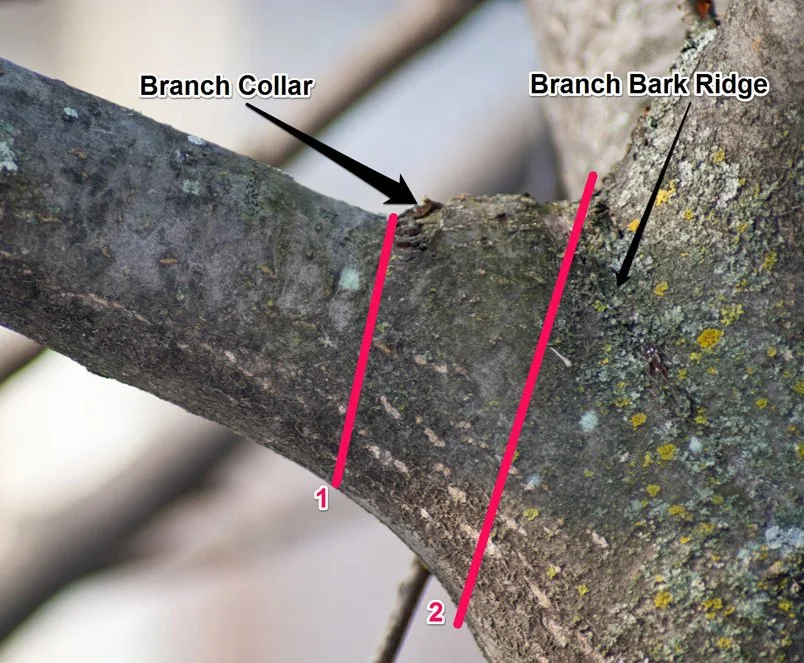
Image source: Web (Bing) / qaqooking.wiki (Web image (fair-use with source credit))
2. Leaving a long stub. Cut too far above a bud and the stub dies back, inviting rot and pests. The dead tip also looks ugly.
Cut just above the bud, not in the middle of the internode.
3. Topping a tree. Removing the central leader or topping large branches to shorten a tree is one of the worst things you can do. It leads to weak, poorly attached regrowth that breaks in storms.
The International Society of Arboriculture lists topping as a serious mistake. Use crown reduction at a lateral branch instead.
4. Pruning spring bloomers in fall or winter. Lilacs, forsythia, and azaleas set their buds the previous season. Winter pruning removes those buds.
You get leaves, no flowers. Prune these right after they finish blooming.
5. Using the wrong tool for the branch size. Small bypass pruners get forced through wood they can't handle. The result is a crushed stem, not a clean cut.
Use loppers for branches up to two inches, and a pruning saw for anything thicker.
6. Skipping tool sanitation. Cut a diseased branch, then cut a healthy one without cleaning. You just spread the problem.
Wipe blades with 70 percent isopropyl alcohol or a diluted bleach solution between plants.
7. Ignoring the plant's natural form. Trying to force an upright tree into a round ball goes against its growth habit. You fight the plant all season.
Work with its natural shape, and you'll prune less and enjoy it more.
Seasonal Decision Guide: What to Prune and When
If you remember only one thing, make it this: pruning timing follows bloom time. It's not a calendar date, it's a growth stage. The right season for pruning plants depends entirely on the plant's flowering cycle.
For spring-flowering shrubs, the golden rule is prune after they bloom. That includes lilac, forsythia, rhododendron, and azalea. Because they set buds on old wood, a late winter cut removes the entire season's display.
Wait until the flowers fade, then thin out old stems.
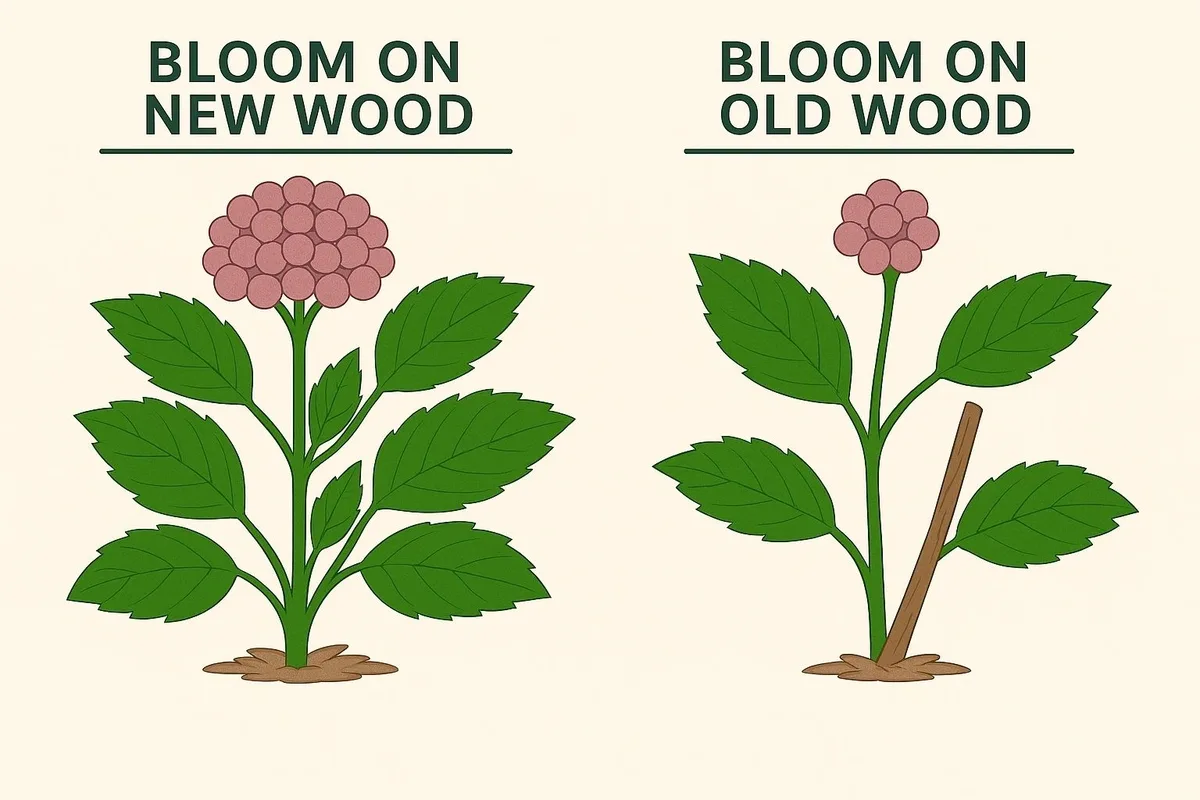
Image source: Web (Bing) / misterhydrangea.com (Web image (fair-use with source credit))
For summer-flowering shrubs, prune in late winter or very early spring while the plant is still dormant. Butterfly bush, hydrangea paniculata, and spirea bloom on new wood. A hard cut now encourages vigorous new growth that will carry the flowers.
Fruit trees are a bit different. Late winter pruning is usually recommended because the tree is dormant and you can see the branch structure. Removing up to a quarter or a third of the canopy is safe for most mature trees.
Just avoid pruning in late summer, which can stimulate tender new growth that winter will kill.
Evergreens hate heavy pruning. They don't regrow from old wood the way deciduous shrubs do. Lightly shape them in early spring, and only cut into green, living foliage.
Cutting into brown, dead zones leaves a permanent gap.
Perennials benefit from a different approach. Cut them back in late fall or early spring. The choice is yours.
Fall cleanup removes hiding places for pests, but leaving them standing gives winter interest and protects the crown. If you're in a cold climate, leave them be and cut in spring.
A quick rule for your region: check your last frost date. Wait two or three weeks past that date for any major pruning on borderline-hardy plants. A late freeze on fresh cuts can cause dieback that a dormant plant would shrug off.
Also, be aware of local bird nesting seasons. In many areas, it's illegal to prune hedges that contain active nests.