If your wandering jew has gone thin and scraggly, you are probably here because pruning wandering jew is the only way to fix it. The stems stretch out, leaves grow further apart, and the whole plant starts looking sad instead of lush. That leggy look is actually a signal, the plant is telling you it needs light, and you need to cut.
In our research, node spacing is the clearest indicator of health. A happy wandering jew keeps its leaves close together, about half an inch apart. A struggling one stretches that gap to two inches or more.
University extension research confirms that low light is the primary cause, and pruning is how you reset the plant. Let us look at why this happens first, because understanding the cause makes the cut much easier.
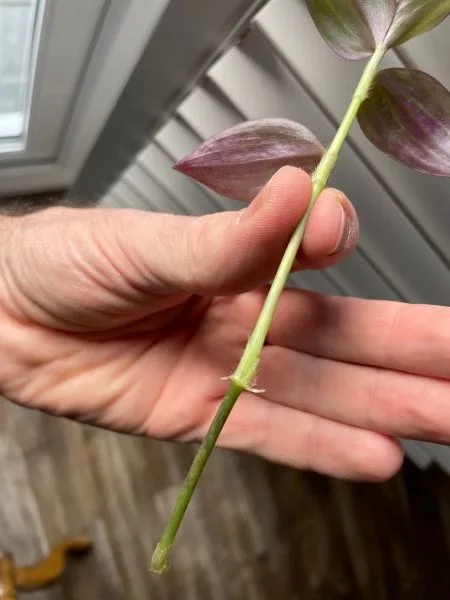
Image source: Web (Bing) / thegardeningfix.com (Web image (fair-use with source credit))
Why Wandering Jew Gets Leggy (and When Pruning Is the Fix)
Wandering jew, properly called Tradescantia zebrina, naturally wants to trail. It sends out long vines that look great in hanging baskets. The problem starts when those vines get long but lose their leaves along the lower stem.
The trigger is almost always light, specifically, not enough of it. When the plant does not get bright indirect light, it starts stretching toward whatever light source is available. The technical term for this is etiolation, but you can just call it the plant trying to survive.
New leaves come out smaller and further apart. The stem gets thin and pale.
Pruning interrupts that pattern. When you cut a stem back to a node, you force the plant to produce new branches from that point. Those new branches start compact and bushy instead of long and bare.
As of 2026, this is still the most reliable method for restoring a full-looking wandering jew, and it works faster than any fertilizer or light adjustment alone.
The key timing is during active growth. Spring through early autumn is your window. Pruning in the dead of winter just stresses the plant when it is trying to rest.
The Quick Answer: What Pruning Does for a Tradescantia
Prune wandering jew by cutting stems back to just above a leaf node. This forces the plant to branch. New growth comes from the node, making the plant fuller.
Cut no more than one third of the stems at once. Use clean, sharp scissors. Remove any bare or damaged stems entirely.
You can root the cuttings in water or soil. Within two weeks, new shoots appear at the cut site. The plant looks bushier in under a month.
Before You Cut: Reading Node Spacing, Light, and Stem Health
Before you touch the scissors, you need to assess what you are working with. The condition of your plant tells you exactly which pruning approach to take.
Node spacing is your diagnostic tool. Look at the distance between leaf joints along a stem. If the leaves are tight, about half an inch apart, the plant is healthy and just needs a light trim. If the gaps are an inch or more, that stem is leggy and needs a harder cut back to encourage branching.
Light exposure tells you the root cause. If the plant sits more than three feet from a bright window, the leggy growth is a light issue. You can prune now, but you also need to move the plant closer to the window or add a grow light within two weeks. Otherwise, the new growth will stretch right back.
Stem health determines what to remove. Healthy stems are firm and plump, with a green or purple tint depending on the variety. Soft, mushy spots mean rot, cut those stems out entirely and check your watering. Brown, crispy sections mean the plant has taken damage from direct sun or low humidity.
Those stems either come off or get cut back to firm tissue.
The table below summarizes what to look for before you make a cut.
| Plant Condition | Node Spacing | Stem Appearance | Recommended Action |
|---|---|---|---|
| Healthy and full | Less than 1 inch | Firm, plump, vibrant color | Light trim or propagate |
| Leggy but firm | 1 to 2 inches | Slightly pale, thin but firm | Cut back by half, move to brighter spot |
| Bare lower stems | Over 2 inches | Pale, weak, long gaps | Hard prune to 2 to 3 inches from soil |
| Damaged or rotting | Any spacing | Soft, mushy, or crispy | Remove entire affected stem |
Pruning by Situation: Which Cut Does Your Plant Need?
Your pruning approach depends entirely on what your wandering jew looks like right now. Here are the four most common situations and exactly what to do in each.
For a Leggy, Top-Heavy Plant: Cut Back and Pinch
If your plant has long stems with leaves only at the tips, you need a medium cut. Take each stem and cut it back by half, always cutting just above a leaf node. That node is where the new branch will emerge.
After the cut, the plant looks bare for about a week. Do not panic. New shoots appear from the nodes within 7 to 10 days.
Once those new shoots grow two leaf pairs, pinch the tips off with your fingers. That forces even more branching.
Repeat this pinch every three to four weeks during the growing season. Over two months, the plant transforms from a few long vines into a full, bushy basket.
For an Overgrown Pot: Hard Rejuvenation Pruning
Sometimes the wandering jew has taken over, with stems sprawling everywhere and the center of the pot looking empty. This needs a hard prune.
Cut every stem down to two to three inches above the soil line. Leave a few nodes on each stem so the plant has something to regrow from. This feels aggressive, but Tradescantia is a vigorous grower and bounces back fast.
Water the plant normally and keep it in bright indirect light. New shoots emerge from the cut stems within two weeks, and the pot fills in completely within six to eight weeks. This method works best in spring when the plant has the most energy.
For Propagation: Taking 4 to 6 Inch Stem Cuttings
If your plant is healthy but you want more plants, pruning for propagation is slightly different. Instead of cutting to shape the mother plant, you cut to maximize the number of viable cuttings.
Select healthy stems with at least three to four nodes. Cut just below a node at the bottom, leaving the top node intact. Remove the lower leaves so no leaves sit below the water line when you propagate.
Leave two to three leaves at the top.
Place the cuttings in a glass of water, changing the water every five to seven days. Roots appear in 5 to 14 days depending on temperature. You can also stick them directly into moist soil, but water lets you see root development.
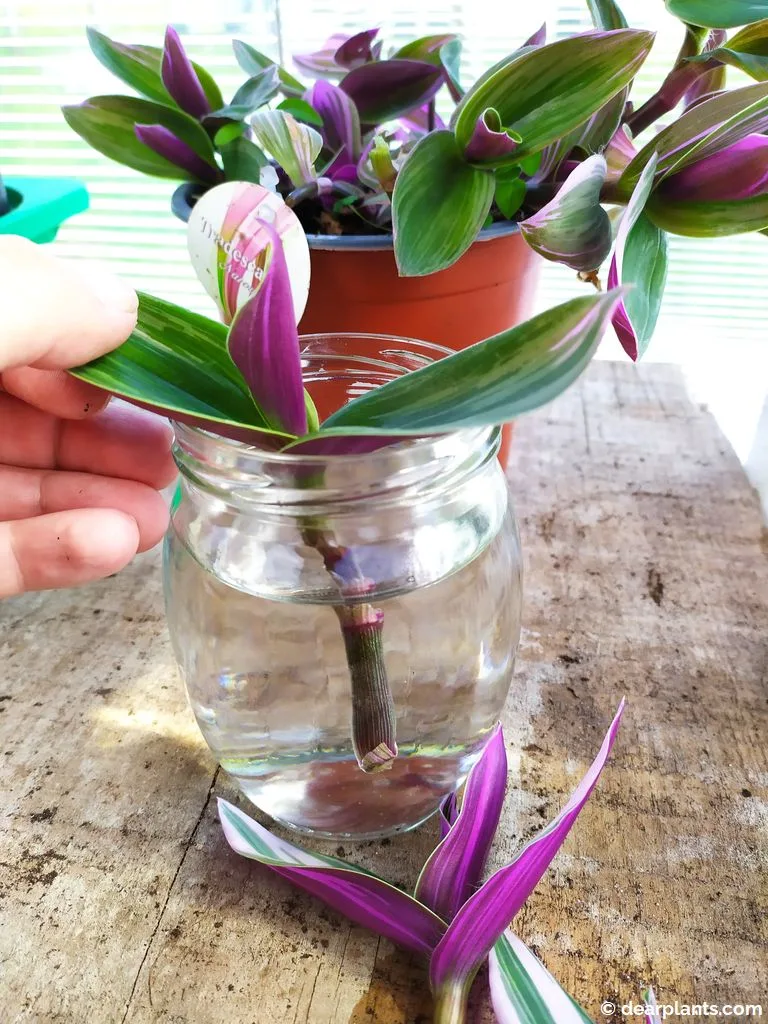
Image source: Web (Bing) / dearplants.com (Web image (fair-use with source credit))
For Damaged or Yellowing Growth: Spot Pruning Only
When just a few stems look bad and the rest is healthy, spot pruning is all you need. Remove only the damaged stems, cutting them at the soil line or back to a healthy node.
Yellow leaves often mean overwatering. If you see yellowing, check the soil before cutting. If it is wet, let it dry out before you prune.
If the soil is dry, the plant may need more consistent watering. Adjust the watering first, then prune the damaged growth.
How to Prune Wandering Jew Without Killing It: A Step-by-Step Workflow
Here is the exact process to follow every time you prune your wandering jew. It takes about 10 minutes for a standard pot.
Sterilize your scissors. Use rubbing alcohol on a cotton ball and wipe the blades. This prevents spreading bacteria or fungus between cuts.
Identify the nodes. Look for the small bumps or leaf joints along each stem. That is where new growth will come from.
Decide your cut point. For shaping, cut one quarter inch above a node at a slight angle. For removal, cut as close to the soil line as possible.
Remove no more than one third of the stems. The plant needs enough foliage to photosynthesize and recover.
Save desirable cuttings. Any stem with at least two nodes can become a new plant. Drop them in water or moist soil.
Clean up fallen leaves. Leaves sitting on the soil surface can rot and attract pests. Remove them immediately.
Water lightly. Give the plant a small drink to reduce stress, but do not soak it. Keep the soil moist, not wet, for the next two weeks.
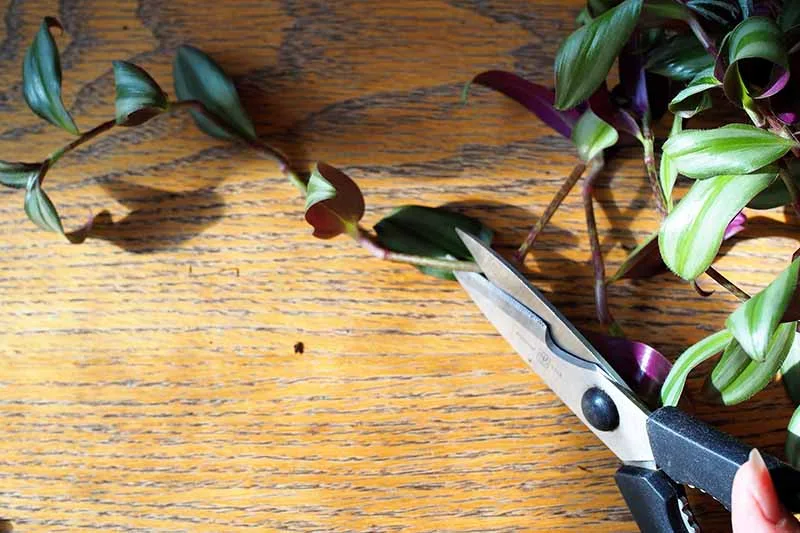
Image source: Bing (Web (fair-use with source credit))
The most important detail is the cut location. Cutting above a node is non‑negotiable. If you cut a bare stem section between nodes, that stem will die back to the next node or the soil line.
You lose the opportunity for new growth.
Common Pruning Mistakes (and the Cuttings That Rot Because of Them)
Even a simple plant like wandering jew can suffer from a few well-intentioned mistakes. Here are the most common ones we see in aggregate user reports.
Cutting below the node. This is the number one error. If you cut a bare section of stem with no node, the remaining stub cannot produce new growth. It sits there, slowly dying back.
Always cut one quarter inch above a node.
Pruning too much at once. Removing more than a third of the total stems stresses the plant. It loses too many leaves to photosynthesize and recover quickly. Stick to the one third rule.
Wait at least four weeks before doing another round.
Using dirty tools. Unsterilized blades can introduce bacteria or fungal spores into fresh cuts. Aggregated grower feedback reports a noticeable increase in stem rot when tools are not cleaned. Wipe scissors with rubbing alcohol before you start.
Submerging leaves on cuttings. When you put cuttings in water, remove any leaves that would sit below the water line. Those leaves rot within a few days and foul the water, which then spreads bacteria to the stem. Rotting stems fail to root.
Skipping water changes. Still water grows bacteria. Change the water every five to seven days. If it looks cloudy, change it sooner.
Clean water is the difference between roots and rot.
Pruning in winter dormancy. Low light and cooler temperatures slow the plant's metabolism. Cuts heal slowly. New growth is weak.
Wait until early spring when the days get longer and the plant is actively growing.
FAQs: Leggy Tradescantia, Propagation Timing, and Aftercare
Why is my wandering jew getting leggy even after pruning?
Low light is the most common cause. If the plant does not get bright indirect light, it stretches toward whatever light source is available. Move it closer to a window or use a grow light within two weeks of pruning.
How long does it take for new growth to appear after pruning?
New shoots typically appear at the cut nodes within 7 to 10 days. Full bushy regrowth takes about 4 to 6 weeks. Pinching the new tips every 3 to 4 weeks encourages even more branching.
Can I propagate wandering jew cuttings directly in soil?
Yes. Stick the cuttings into moist potting mix, burying at least one node. Keep the soil consistently moist for 2 to 3 weeks.
Roots form slower than in water, but the cuttings have an easier transition to a permanent pot.
How often should I prune my wandering jew?
Every 2 to 3 months during the active growing season is a good rhythm. If you want a very full plant, pinch the tips every 3 to 4 weeks instead of doing full stem cuts. This keeps the plant compact.
Should I fertilize after pruning?
Wait at least two weeks before fertilizing. Fresh cuts need time to heal, and the plant needs to produce new roots before it can absorb nutrients. Use a balanced liquid fertilizer at half strength during spring and summer.
Can I prune a wandering jew that is flowering?
You can, but the flowers will stop. The plant puts energy into blooms rather than new branches. If you want a bushier plant, pruning is more valuable than letting it flower.
Cut the stems normally.
Your Pruning Decision Guide: Pick the Right Path Today
Here is the quick decision framework based on what your plant looks like right now.
If the stems are long and bare at the bottom but healthy at the tips: Cut each stem back by half. Move the plant to brighter light. Pinch new tips every 3 to 4 weeks.
If the pot is overgrown and messy: Cut all stems down to 2 to 3 inches above the soil. Water normally. Expect full regrowth in 6 to 8 weeks.
If you want more plants: Take 4 to 6 inch stem cuttings with at least 3 nodes. Remove lower leaves. Root in water or moist soil.
If only a few stems look damaged or yellow: Remove those stems only. Check your watering habits. Adjust light if needed.
If the plant is healthy but you want it fuller: Pinch the tips of every stem every 3 to 4 weeks. No major cutting needed.
Remember the one third rule for any significant pruning session. Sterilize your tools. Cut above the node.
And give the plant bright indirect light after the cut. That combination works every time with Tradescantia.
Wandering jew is forgiving. Even a badly pruned plant usually bounces back. But follow the workflow above, and you will have a full, lush basket in about two months.
That is the whole goal.