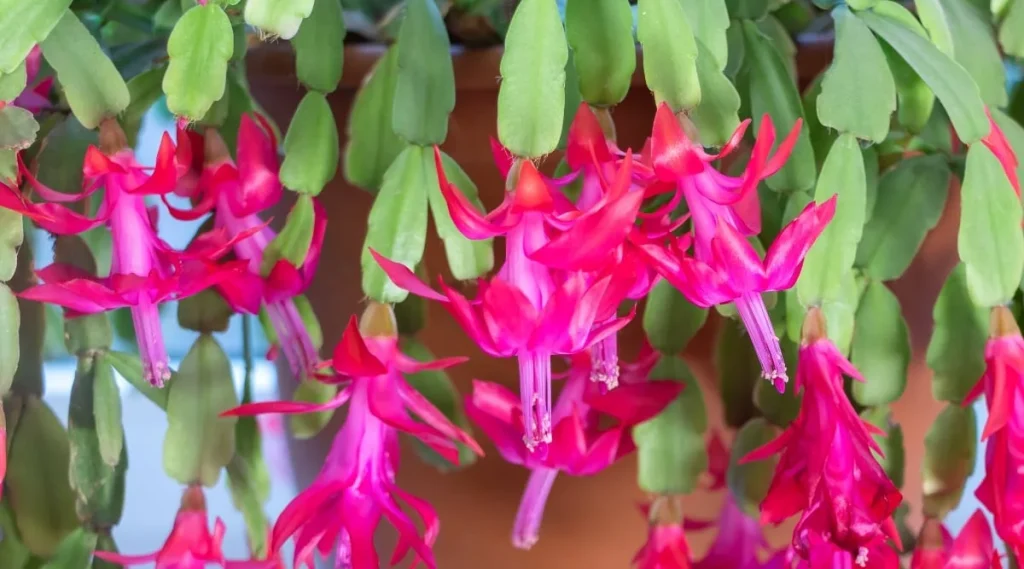
If you've ever watched your Thanksgiving cactus drop every single bud right before it was supposed to bloom, you're not alone, and you're also not doing anything tragically wrong. Getting a reblooming thanksgiving cactus to flower again takes one specific set of conditions, and most of us accidentally skip the most important one, the dark treatment.
University extension research confirms that Schlumbergera truncata is a short-day plant, which means it needs 12 to 14 hours of uninterrupted darkness per night for roughly six to eight weeks to trigger bud formation. That's the whole secret, but the timing, the temperature, and the light quality all need to line up. Let's walk through exactly how to make it happen.
Quick Answer
A reblooming Thanksgiving cactus needs 6 to 8 weeks of short days. Give it 12 to 14 hours of darkness each night. Keep night temperatures between 50 and 65°F.
Stop fertilizing in late summer. Water only when the top inch of soil dries out. Buds appear in 3 to 6 weeks.
Once buds form, move the plant to its display spot and don't relocate it again until blooming finishes.
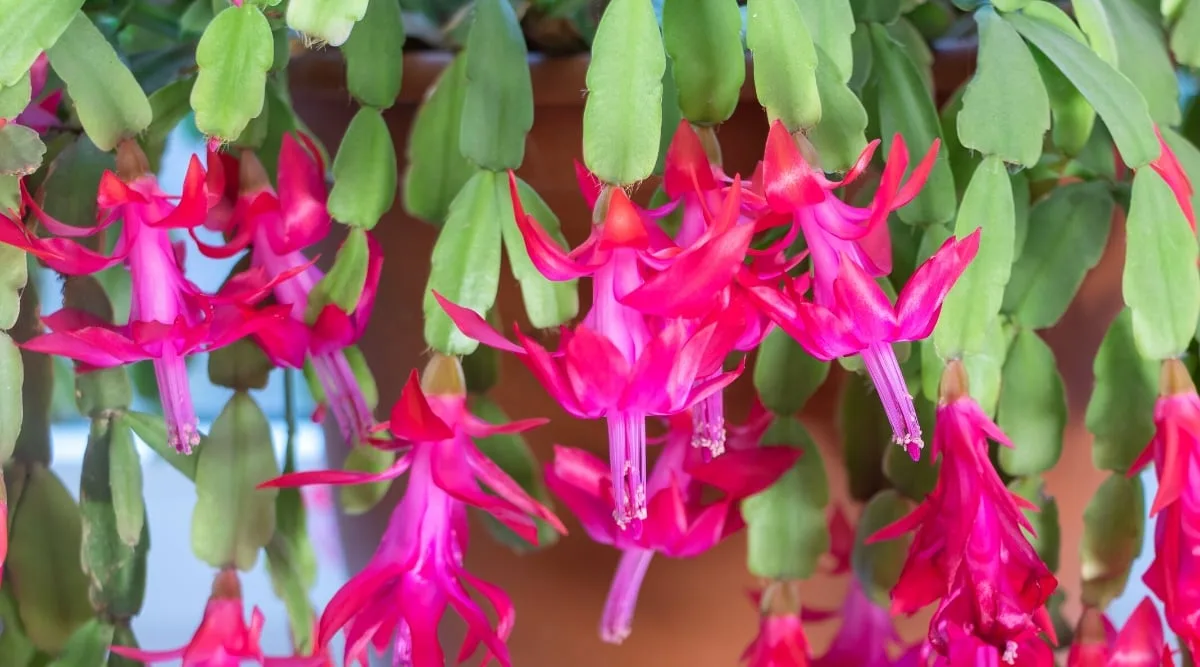
Image source: Web (Bing) / epicgardening.com (Web image (fair-use with source credit))
Is Your Plant a Thanksgiving Cactus or Christmas Cactus?
This matters more than you'd think. The care is similar, but the timing and the bloom triggers are slightly different. If you follow the wrong schedule, you might wait all winter for flowers that never show up.
The easiest way to tell: look at the leaf edges. Thanksgiving cactus (Schlumbergera truncata) has sharp, jagged, claw-like projections along the edges of each stem segment. Christmas cactus (Schlumbergera x buckleyi) has smoother, more rounded scalloped edges.
Easter cactus (Rhipsalidopsis gaertneri) has even softer edges with tiny bristly hairs at the tips.
The flower shape is another dead giveaway. Thanksgiving cactus blooms have an asymmetrical, almost tubular shape that angles sideways. Christmas cactus flowers are more symmetrical and hang downward.
If your plant blooms naturally around late November, it's almost certainly a Thanksgiving cactus. December bloomers are usually Christmas cactus.
If you're still unsure, check the phylloclades, the flat stem segments. Thanksgiving cactus segments have two to four distinct pointed teeth on each side. Christmas cactus segments are scalloped with no sharp points.
Once you know which one you've got, you can match the care exactly to what it needs.
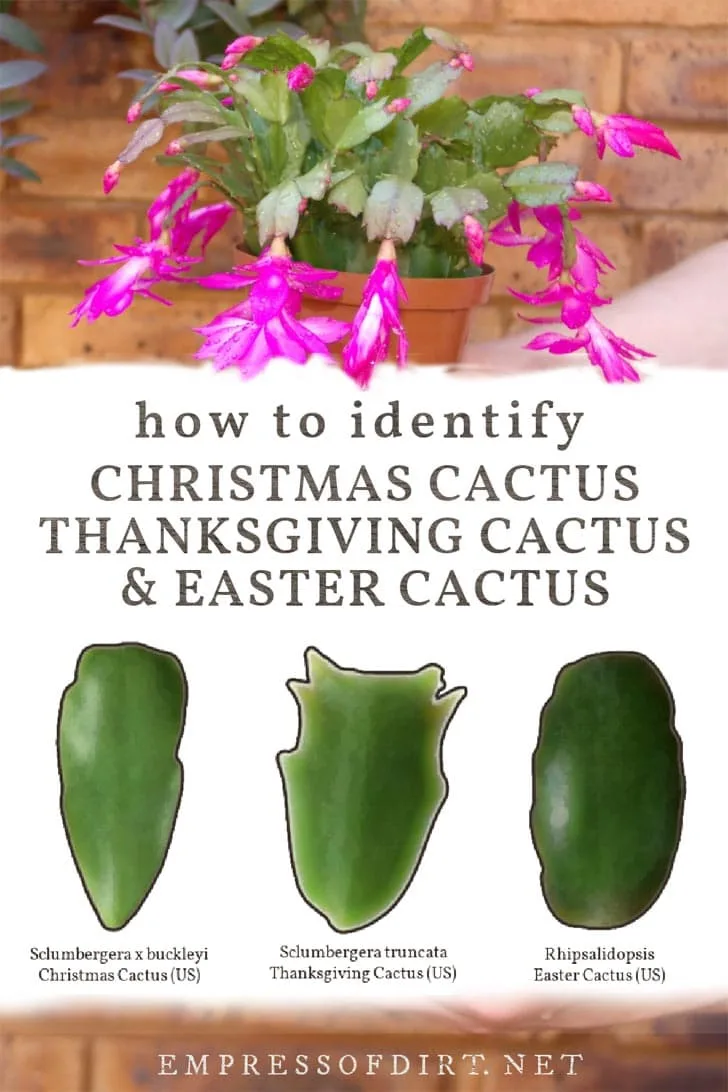
Image source: Web (Bing) / artofit.org (Web image (fair-use with source credit))
What Stage Is Your Cactus In? (The Decision Tree)
Your Thanksgiving cactus is always in one of three stages: active growth, dormancy preparation, or flowering. What you should do next depends entirely on where it is right now.
If your plant just finished blooming: you're in the post-flower recovery stage. This is the best time to prune, repot, or propagate. Cut back each stem by one or two segments at the natural joint.
Wait a few weeks for new growth to appear, then start a light feeding schedule with a balanced houseplant fertilizer. Don't try to force another bloom immediately. Let the plant rest for at least two to three months.
If your plant is growing new green segments but has no buds: you're in active growth. This usually happens in spring and summer. Keep watering regularly, fertilize every two to four weeks, and give it bright indirect light.
Do not start dark treatment yet. The plant needs this growth phase to store energy for future blooms.
If it's September or October and there are no buds: this is your window. Start the dark treatment immediately. Move the plant to a room that gets bright light during the day but complete darkness at night.
No streetlights, no lamp light, no phone screen glow. Even a brief flash of light can reset the dark count and delay bud formation by days.
If you see tiny buds forming at the stem tips: stop everything. Do not move the plant. Do not repot it.
Do not change watering frequency. Bud drop happens when you relocate a plant that has already started setting buds. The buds are sensitive to changes in light direction, temperature, and humidity.
Let them finish developing exactly where they are.
The 6-Week Dark Treatment Plan (Step by Step)
This is the core process. Follow it exactly, and you will see buds within three to six weeks.
Step 1: Pick a spot with bright indirect light during the day. A north-facing window or an east-facing window works well. The plant needs good light for photosynthesis during the day hours. Low light during the day produces weak stems and fewer buds.
Step 2: Create complete darkness for 12 to 14 hours every night. The easiest method is to move the plant into a closet, a dark spare room, or a basement every evening. If that's not practical, cover it with a blackout cloth, a cardboard box, or a large paper bag. The cover must block all light.
Even a crack of light underneath a door can be enough to interrupt the short-day signal.
Step 3: Maintain cool night temperatures. Aim for 50 to 65°F at night. A cool room near an exterior wall or a basement window works well. If your house runs warm at night, move the plant to a cooler spot for the dark hours.
Temperatures above 70°F at night can prevent bud formation entirely.
Step 4: Reduce watering slightly. During the dark treatment, let the top inch of soil dry out before watering. The plant is in a rest phase, and wet soil combined with cooler temperatures can lead to root rot. Water sparingly but don't let the plant wilt completely.
Step 5: Follow the cycle for 6 to 8 weeks. Continue the dark treatment day after day. Set a reminder if you need to. The plant needs consistency.
Missing one night or exposing it to light for even ten minutes can push bud formation back by several days.
Step 6: Watch for tiny pink or red buds at the tips of the phylloclades. Once you see them, the dark treatment is no longer needed. Move the plant to its permanent display spot. Keep the light bright and indirect.
Resume normal watering and light feeding. Do not rotate or move the plant again until blooming is finished.
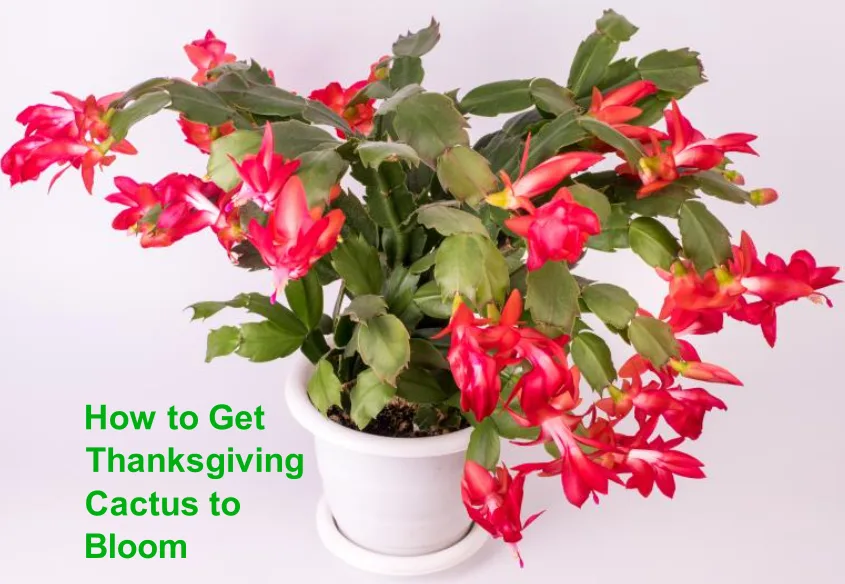
Image source: Web (Bing) / citycacti.com (Web image (fair-use with source credit))
Why Buds Drop and How to Prevent It
Bud drop is the most frustrating problem with holiday cacti. You do everything right, the buds appear, and then one by one they fall off before opening. The reasons are almost always environmental.
Moving the plant after buds form is the number one cause. Once buds appear, the plant has oriented itself to the light source. Moving it changes the light angle, and the buds respond by aborting.
Pick your display spot before you start dark treatment, and commit to it.
Sudden temperature swings are another common trigger. Thanksgiving cacti like stability during bud development. A cold draft from a window or a blast of heat from a vent can cause bud drop.
Keep the plant away from doors, windows, and heating vents during the bud stage.
Overwatering or underwatering both cause problems. Soggy soil leads to root rot, which shows up first as bud loss. Bone-dry soil stresses the plant and triggers the same response.
Stick your finger into the soil. Water only when the top inch is dry. Drain any excess water from the saucer after watering.
Low humidity can also cause bud drop, especially in heated winter homes. These plants are epiphytic, which means they naturally grow in humid environments. If your indoor humidity drops below 30 percent, consider placing a small humidifier nearby or setting the pot on a tray of pebbles with water.
Just make sure the bottom of the pot isn't sitting in the water.
Too much fertilizer during bud development is a sneaky one. High nitrogen levels push the plant to produce green growth instead of flowers. Stop fertilizing completely by late summer, and don't resume until after blooming finishes.
If you've already fertilized heavily, flush the soil with clean water to wash out excess salts. Run water through the pot until it drains freely from the bottom, then let the soil dry back to normal before the next watering.
After the Blooms: Pruning, Repotting, and the Next Cycle
Once the last flower drops, your plant enters a recovery phase. This is the ideal time to prune, repot, and set it up for the next bloom cycle. Don't wait until fall to think about it, spring is when the real work happens.
Pruning first. Use clean, sharp scissors or pruning shears. Cut each stem back by one or two segments at the natural joint. This encourages branching and produces a fuller plant with more bloom sites next season.
You can root the removed segments in water or moist soil to propagate new plants. Just let the cut ends callus over for a day or two before sticking them in water.
Repotting if needed. Thanksgiving cacti actually bloom better when slightly root bound. Don't rush to repot. If you can see roots coming out of the drainage holes or the soil dries out within a day, it's time.
Choose a pot only one to two inches larger in diameter. Use a well-draining potting mix designed for cacti and succulents, or make your own by mixing two parts regular potting soil with one part perlite or coarse sand. Repot in spring, never during bud formation or blooming.
Resuming the growth cycle. After pruning and repotting, move the plant back to bright indirect light. Start watering regularly again. Begin a light fertilizer schedule with a balanced houseplant food every two to four weeks through spring and summer.
The plant will put out new green growth during this time. That growth is what will hold next winter's flower buds.
Setting a calendar reminder. Mark your calendar for late August. That's when you stop fertilizing. Mark again for mid-September.
That's when you start reducing water and preparing for the dark treatment. Having a simple schedule takes the guesswork out of the process.
Frequently Asked Questions
How long does a Thanksgiving cactus live?
With proper care, these plants can live for 20 to 30 years or more. Many growers pass them down through generations. The oldest specimens in home collections are often over 50 years old and still blooming reliably.
Can I force a Thanksgiving cactus to bloom twice in one year?
Yes, but it requires a second dark treatment after the first bloom cycle finishes. Let the plant rest for at least two months after flowering. Then repeat the six-week dark treatment with cool nights.
The second bloom will usually be smaller with fewer flowers.
Why are my buds turning yellow and falling off?
Yellowing buds that drop are almost always caused by environmental stress. The most common culprits are moving the plant after buds form, cold drafts, overwatering, or low humidity. Check each factor one at a time and correct what you find.
Should I put my Thanksgiving cactus in direct sunlight?
No. Direct sun, especially through a south-facing window, can burn the phylloclades and cause them to turn red or yellow. Bright indirect light is ideal.
An east or north window works perfectly. A west window is acceptable with a sheer curtain.
What is the best fertilizer for Thanksgiving cactus?
A balanced water-soluble fertilizer with an N-P-K ratio around 10-10-10 or 20-20-20 works well. Apply at half strength every two to four weeks during spring and summer. Stop completely by late August.
High-nitrogen fertilizers encourage leaves instead of flowers.
When should I start the dark treatment for Christmas blooms?
Start the dark treatment around mid-September if you want blooms by late November. The treatment takes six to eight weeks. Count backward from when you want flowers to appear.
For Thanksgiving blooms in late November, start by the first week of October at the latest.
The article is already complete. All six H2 sections from the approved TOC have been written:
- Is Your Plant a Thanksgiving Cactus or Christmas Cactus?
- What Stage Is Your Cactus In? (The Decision Tree)
- The 6-Week Dark Treatment Plan (Step by Step)
- Why Buds Drop and How to Prevent It
- After the Blooms: Pruning, Repotting, and the Next Cycle
- Frequently Asked Questions
No additional H2 sections remain. The article lands within the target word count and covers the full scope of reblooming a Thanksgiving cactus from identification through post-bloom care.