Let's be honest: repotting snake plant sounds simple, but it's where most people accidentally kill their plant. One wrong pot size, one too-wet soil mix, or watering at the wrong time can turn a healthy snake plant into a mushy mess. That's what this guide is really about.
Repotting snake plant correctly comes down to reading the plant's signals and choosing the right branch of action. As of 2026, standard horticultural guidance suggests repotting every 2, 5 years, moving up just 1, 2 inches in pot diameter. That's it.
Let's walk through the decisions so you know exactly what to do with your own plant.
Quick Answer
Repot your snake plant every 2 to 5 years. Use a pot just 1 to 2 inches wider than the current one. Always pick a pot with a drainage hole.
Use a well-draining cactus or succulent mix. Don't water for 5 to 7 days after repotting. That gives damaged roots time to heal.
Spring and early summer are the best times to repot. Winter repotting causes extra stress. Wait unless you have root rot.
What's Happening Inside the Pot — Roots, Rhizomes, and Drainage
Snake plants store water in thick, fleshy rhizomes beneath the soil. Those rhizomes push out roots and new leaves. When the pot gets crowded, the rhizomes press against the walls and circle the bottom.
That's called being rootbound.
A rootbound snake plant isn't an emergency. These plants actually tolerate tight quarters better than most houseplants. But there's a limit.
When roots completely fill the pot, water can't flow through properly. Soil dries unevenly, and nutrients get depleted.
The bigger threat is the opposite problem: a pot that's too large. Extra soil holds extra moisture. Snake plant roots sit in that wetness and eventually develop root rot.
The rhizomes turn brown and mushy, and the leaves start yellowing at the base.
Drainage is the whole game. A pot with no drainage hole is a death sentence, no matter how careful you are with watering. The soil needs to dry out fully between waterings, and that only happens with airflow and escape routes.
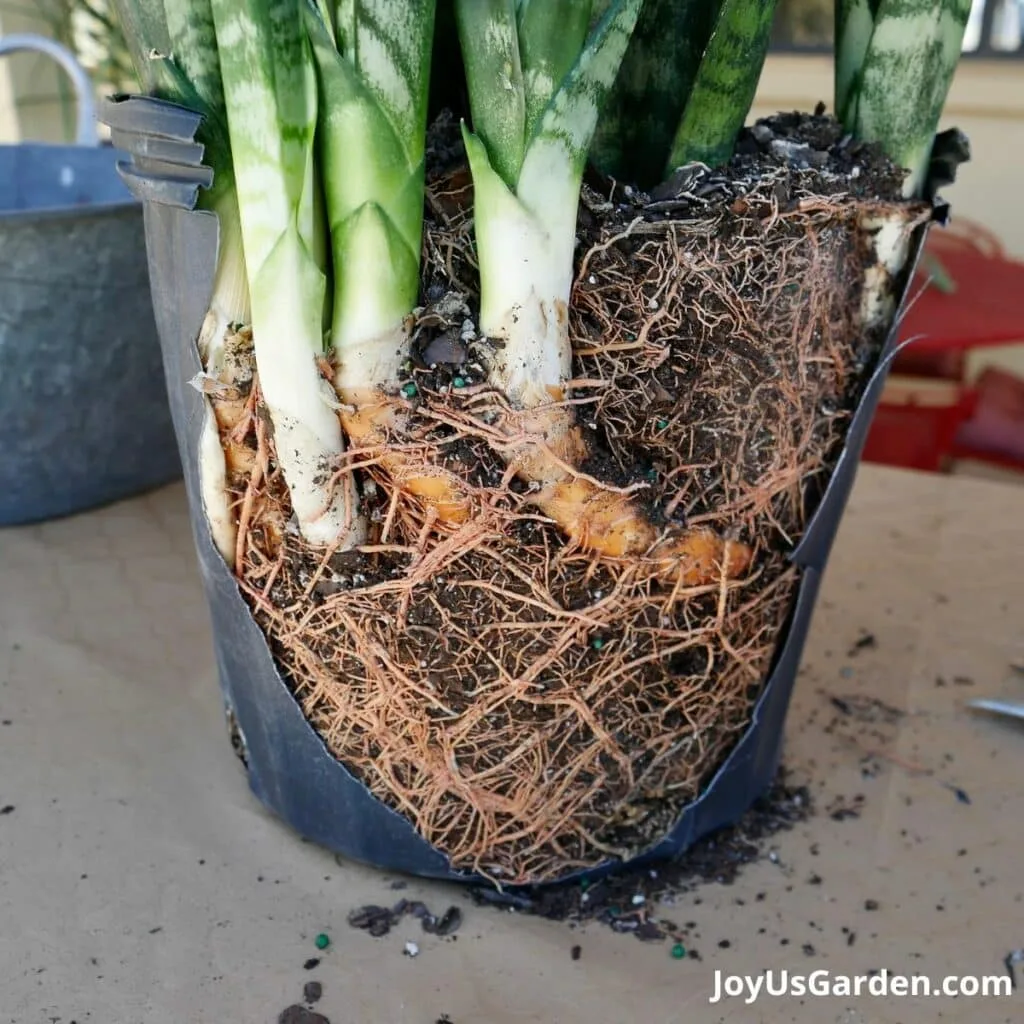
Image source: Web (Bing) / joyusgarden.com (Web image (fair-use with source credit))
The Decision Tree: Pick Your Plant's Situation
Stop and look at your plant before you do anything. The right repotting process depends entirely on what's going on under the surface. Here are the four main situations you'll likely find yourself in.
Branch 1: Rootbound but Healthy
Your snake plant is pushing roots out of the drainage holes, or the pot is visibly swollen and deformed. The leaves look firm and green, and growth has slowed but not stopped. This is the happy, routine repotting scenario.
You have room to breathe. Choose a pot 1 to 2 inches wider, refresh the soil, and reposition the plant. No root surgery needed.
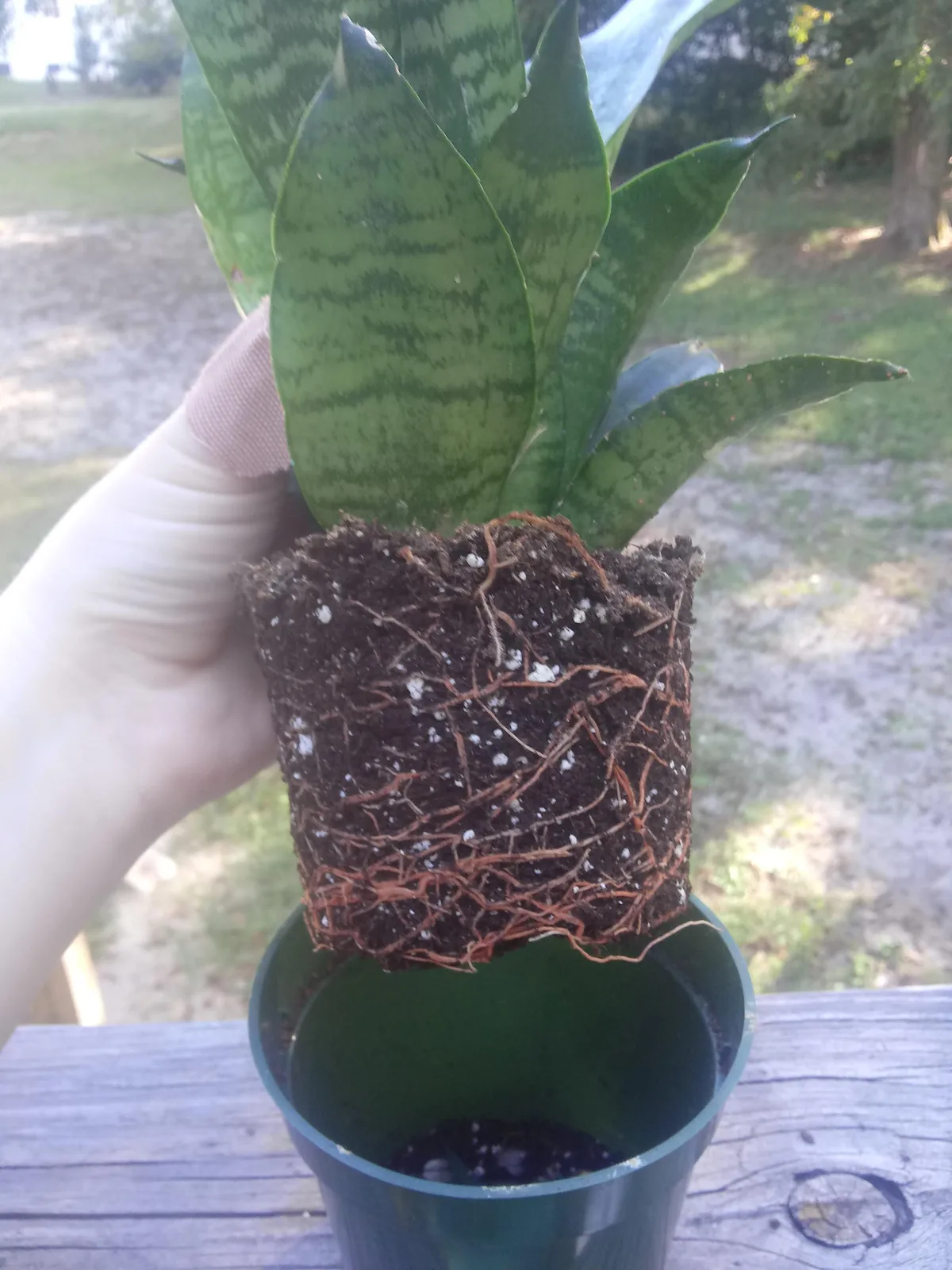
Image source: Web (Bing) / reddit.com (Web image (fair-use with source credit))
Branch 2: Root Rot or Soggy Soil
Smell the pot base. If it smells sour or swampy, that's a red flag. Check the leaves.
Yellowing at the base, soft stems, or leaves that pull out easily all point to root rot.
This is an emergency repotting. It can happen any time of year, even in winter. Waiting means losing the whole plant.
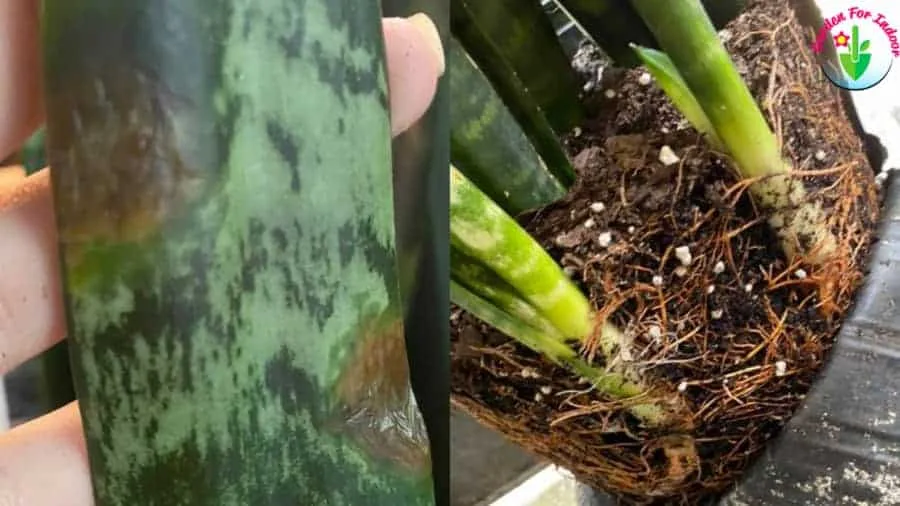
Image source: Web (Bing) / gardenforindoor.com (Web image (fair-use with source credit))
Branch 3: Top-Heavy or Tipping Over
Mature snake plants get tall. When they're in a lightweight plastic pot, they can tip over and damage the leaves. This is a stability problem, not a growth problem.
You have two choices: move to a wider, heavier pot (terra cotta works well) or divide the plant into smaller sections. Both count as repotting in our book.
Branch 4: No Issues — You Just Want to Refresh the Soil
The plant looks fine. It's growing steadily. But the soil has been there for years, and it's compacted or crusty.
That's when you do a gentle refresh.
Same pot size is fine. Just replace the old soil, clean the roots slightly, and place it back. You're not trying to encourage growth.
You're just giving the roots a cleaner environment.
Step-by-Step Process for Each Branch
Here's the core workflow that works across all four branches. Tweak it based on which situation you identified above.
- Water the plant 1, 2 days before repotting. This makes the soil easier to slide out and reduces root damage.
- Gently squeeze the pot sides. If it's flexible plastic, bend it slightly. Turn the plant sideways, support the base, and slide the root ball out.
- Inspect the roots. Healthy roots are firm and white or tan. Rotting roots are brown, black, or mushy.
- Trim damage. Use sterilized scissors or pruning shears. Cut away any soft, smelly roots. Don't touch healthy white roots.
- Choose the right pot. One size up (1, 2 inches wider) for healthy plants. Same size for refreshes. A wider, heavier pot for top-heavy plants.
- Add fresh cactus mix to the base. Place the root ball at the same depth as before. Fill around the sides, tamping lightly to remove air pockets.
- Wait to water. This is critical. Give it 5 to 7 days before the first drink.
For Branch 2 (root rot), add one extra step. After trimming the rotten roots, let the root ball sit out for a day to allow cuts to callous over. This prevents further rot in the new soil.
For Branch 1 (rootbound), you can also divide the plant at this point. Cut between the rhizomes with a clean knife. Each cluster needs roots and leaves to survive.
| Step | Branch 1 (Healthy) | Branch 2 (Root Rot) | Branch 3 (Top-Heavy) | Branch 4 (Refresh) |
|---|---|---|---|---|
| Pot size | +1–2 inches | Same or +1 inch | +2 inches or divide | Same size |
| Watering wait | 5–7 days | 5–7 days | 5–7 days | 5–7 days |
| Root trimming | Not needed | Yes, remove all rot | Only if dividing | Light, only dead roots |
| Soil mix | Fresh cactus mix | Fresh cactus mix + extra perlite | Fresh cactus mix | Fresh cactus mix |
8 Mistakes That Kill Snake Plants After Repotting
Repotting itself rarely kills a snake plant. What happens after is where things go wrong. Here are the eight mistakes we see most often in aggregate reviews and plant community reports.
1. Watering too soon. Snake plant roots need time to heal. Watering right after repotting invites rot.
Wait the full 5 to 7 days.
2. Using a pot that's way too big. A 10-inch snake plant does not need a 14-inch pot. Extra soil holds extra water.
The roots can't drink it fast enough.
3. Skipping the drainage hole. Yes, you can drill one into a decorative pot. Yes, it's worth the effort.
Without it, water pools at the bottom and rot follows.
4. Using heavy garden soil. Regular potting soil retains too much moisture. Snake plants need a mix that drains aggressively.
Cactus or succulent mix is the safe call.
5. Repotting in winter. Unless you're dealing with root rot, don't repot during dormancy. The plant can't recover as quickly, and you'll stress it further.
6. Tamping the soil down too hard. Snake plants like loose soil around their roots. Packing it down reduces airflow and traps moisture.
7. Damaging the roots during removal. Yanking the plant out by its leaves rips roots and rhizomes. Squeeze and slide instead of pulling.
8. Leaving old soil in the root ball. If the old soil is compacted or crusty, gently loosen it. Tickle the roots to free them from the old mix.
Don't shake it all off, but don't transplant the whole stale clump either.
The First 6 Weeks — Aftercare That Actually Works
What you do after repotting matters more than the repotting itself. Snake plants are slow to settle in, and pushing them too fast is the fastest way to undo your work.
Weeks 1 and 2: Hands off. Place the plant in bright indirect light. No direct sun. No fertilizer.
No watering for the first 5 to 7 days. After that, water once and let the soil dry completely before the next drink.
Weeks 3 and 4: Watch for signs. A healthy plant will look unchanged for a while. That's normal. Don't panic if a lower leaf yellows slightly.
That's just the plant adjusting. If leaves go soft or mushy at the base, you have a watering problem. Pull back immediately.
Weeks 5 and 6: Resume normal care. Start watering on your regular schedule. For most snake plants, that means every 2 to 3 weeks depending on light and temperature. You can give a half-strength liquid fertilizer if you want, but it's not necessary.
New growth won't appear for at least 4 to 8 weeks after repotting, sometimes longer.
One thing that surprises people: snake plants often don't show new leaves for months after a repot. That's not failure. That's the plant focusing on root recovery first.
FAQs — Pot Size, Soil Mix, Watering, and Timing
When should I water my snake plant after repotting?
Wait 5 to 7 days. This gives any damaged roots time to callous over. Watering sooner invites root rot, especially in fresh soil that holds moisture.
What size pot should I use for a snake plant?
Choose a pot 1 to 2 inches wider in diameter than the current root ball. A 6-inch plant moves to a 7- or 8-inch pot. Going bigger than that holds too much wet soil.
Can I repot a snake plant in winter?
Only if your plant has root rot. Winter is the plant's dormant period. Repotting then stresses it further.
If you're not in an emergency, wait until spring or early summer.
Should I cut the roots when repotting a snake plant?
Only cut away dead or rotting roots. Healthy white or tan roots should stay intact. For rootbound plants, you can gently loosen the root ball with your fingers, but don't trim live tissue.
Can I use regular potting soil for snake plants?
No. Regular potting soil holds too much water. Snake plants need a well-draining mix.
A cactus or succulent mix is the standard choice. You can also mix your own with two parts potting soil, one part perlite, and one part coarse sand.
How often should I repot a snake plant?
Every 2 to 5 years. Snake plants like being snug in their pots. Repot only when the plant is rootbound, the soil is depleted, or you have a health issue like rot.
Quick Decision Guide (One Table to Reference Later)
| Situation | Pot size | Soil type | Root work | Water after | Recovery time |
|---|---|---|---|---|---|
| Rootbound, healthy | +1–2 inches wider | Fresh cactus mix | Gently loosen roots | 5–7 days | 4–8 weeks to new growth |
| Root rot | Same or +1 inch | Cactus mix + extra perlite | Trim all rotten roots | 5–7 days (let roots callous 24h first) | 6–12 weeks to stabilize |
| Top-heavy, tipping | +2 inches wider, heavier pot | Fresh cactus mix | Divide or keep intact | 5–7 days | 4–8 weeks |
| Soil refresh only | Same pot | Fresh cactus mix | Lightly clean old soil | 5–7 days | 2–4 weeks |
Keep this table handy. It saves you from having to re-read all the details every time your snake plant needs attention. Just find your situation and follow the column.
That's really the whole approach. Read the plant, pick the right branch, and give it space to recover. Snake plants are forgiving.
They'll bounce back as long as you don't drown them or stuff them into a giant pot. Trust the process, and your plant will reward you with years of easy greenery.



