Sago palm care doesn’t have to be fussy, but it does have to be specific. The sago palm, Cycas revoluta, looks like a palm but acts nothing like one. It’s a cycad, a plant line that predates dinosaurs, and it stores water in a thick, woody trunk called a caudex.
That one detail changes everything about how you water it.
In our research, most sago palm problems come from treating it like a leafy tropical fern. This tough plant wants bright light, sharp drainage, and patience. As of 2026, the USDA Plant Hardiness Zone Map places Cycas revoluta in zones 8 through 11, which means winter survival depends heavily on where you live and whether the plant sits in the ground or a pot.
Let’s walk through the care decisions in the order they actually happen.
Quick Answer
Sago palm care needs bright light, dry soil, and slow-release fertilizer. Water only when the top two inches of soil feel dry. Use a gritty, fast-draining potting mix.
Protect the plant from frost and keep pets away from every part. This ancient cycad is tough, but it hates soggy roots.
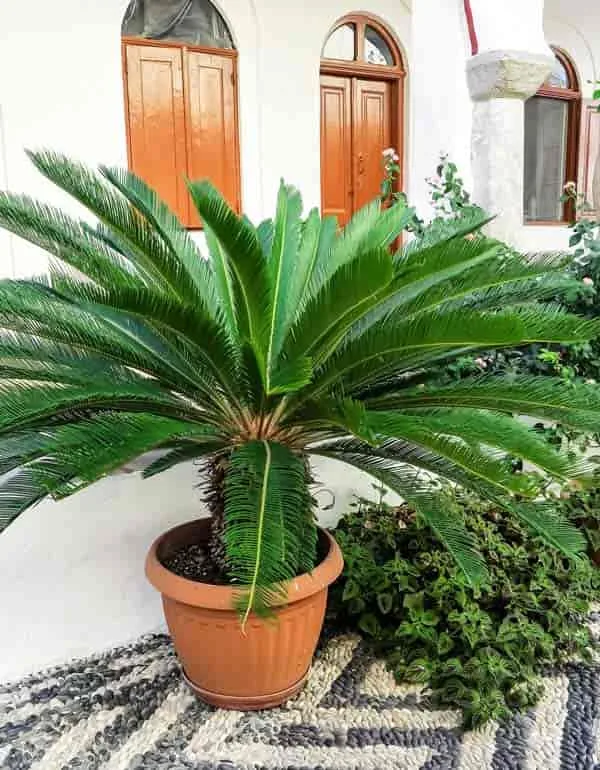
Image source: Web (Bing) / plantcaretoday.com (Web image (fair-use with source credit))
Start Here: Is Your Sago Palm Actually Dying or Just Being Dramatic?
Before you change anything, take a breath. Sago palms are slow, and they love to look dramatic. An outer frond turns yellow and drops every two or three years.
That’s the plant’s natural aging process, not a cry for help.
Cut the yellowed frond off at the trunk with a clean pair of loppers. If the newer center fronds stay green and stiff, your plant is fine. The real red flag is a soft, mushy central spear.
A firm spear means the sago is alive. A mushy one means root rot has likely set in.
Do a ten-second health check:
- Feel the central spear. If it’s firm, the plant can recover.
- Press on the trunk. It should feel hard, not spongy.
- Look at the newest fronds. Rich green and upright means good health.
- Check the soil. If it’s soggy three days after watering, drainage is failing.
From here, the right care path depends on your situation. We used hardiness data from the USDA Plant Hardiness Zone Map along with university extension guides to map out the logic below. Most people panic at the first yellow frond and overwater, which then kills the plant.
The First Big Branch: Where Does Your Sago Palm Live?
The single biggest mistake in sago palm care is skipping this question. A plant that thrives next to a pool in Florida will rot in a dim apartment in Chicago. So start with location.
| Situation | Light | Watering | Cold tolerance |
|---|---|---|---|
| Indoor houseplant | Bright, indirect light | Wait until top 2 in feel dry | Keep above 60°F |
| Container on patio | Morning sun, afternoon shade | Check twice a week in summer | Move inside before frost |
| In-ground landscape | Full sun to light shade | Deep weekly water for first year | Hardy in zones 8–11 |
Use these if/then branches:
- If it’s indoors, treat it like a low-water succulent. Give it the brightest window you have.
- If it’s in a pot outside, watch for summer heat and winter cold. Pots freeze much faster than the ground.
- If it’s in the ground, pick a spot with well-draining soil and good air movement.
Each branch changes your watering cadence, your winter plan, and your fertilizer timing. Get the location nailed down before you do anything else.
Watering and Feeding by Season: A Practical Decision Tree
Watering is where most sago palms die, and it’s almost always from overwatering. The caudex stores moisture, so these plants genuinely like a dry period. The rule of thumb is simple.
Stick your finger into the soil up to the second knuckle. If it feels dry, water. If it feels damp, wait.
Here’s how that plays out by season.
| Season | Container plants | In-ground plants |
|---|---|---|
| Spring–Summer | Water once every 7–14 days | Water deeply every 5–7 days for the first year |
| Fall | Taper to once every 2–3 weeks | Water only during dry spells |
| Winter | Water once every 3–6 weeks | Skip unless very dry |
Feeding is simpler than most people think. Start in spring when new growth appears. Use a slow-release 10-10-10 fertilizer with micronutrients like magnesium and manganese.
Feed monthly at half-strength through summer, then stop in fall and winter. If you use a palm-specific fertilizer, check the label for cycad recommendations.
If the fronds yellow and the trunk feels squishy, you overwatered. If the fronds crisp up and the soil pulls away from the pot, you underwatered. When in doubt, wait another day.
Yellowing Fronds, Pests, and Rot: Sorting the Common Causes
Yellowing fronds are the top reason sago palm owners ask for help. But “yellowing” isn’t one disease. It’s a symptom with several different causes.
Here’s how to sort them out.
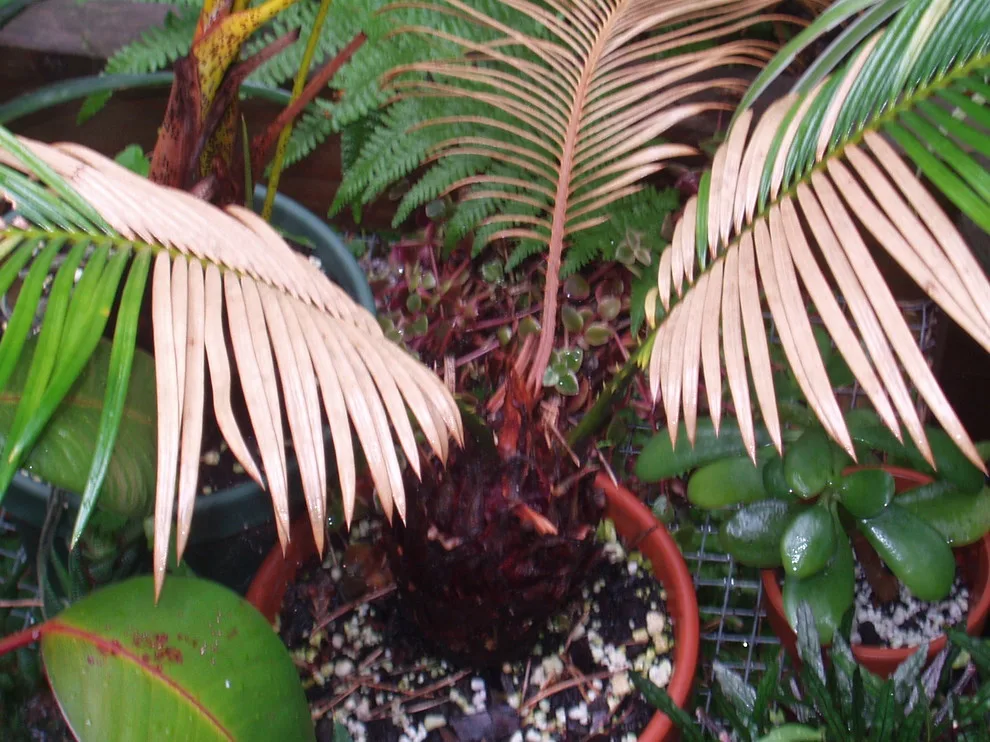
Image source: Web (Bing) / houzz.com (Web image (fair-use with source credit))
| What you see | Likely cause | What to do |
|---|---|---|
| Outer fronds yellow, inner ones green | Natural aging | Cut at the trunk, no stress |
| Whole plant pale, soil soggy | Overwatering / root rot | Stop watering, check roots, repot if mushy |
| Yellow spots or striped fronds | Magnesium or manganese deficiency | Feed with cycad-friendly micronutrient mix |
| Brown scales stuck on undersides | Cycad scale | Scrape off, apply systemic insecticide |
| Brown tips, white crust on soil | Excess fertilizer salts | Flush soil, reduce feeding |
If you see small white or brown armored bumps, that’s scale, by far the most common sago pest. Scrape them off with your fingernail, then drench the soil with an imidacloprid solution. You’ll likely need two treatments about three weeks apart.
Treat it early because scale can spread fast.
Root rot is the other big killer. Stick your finger into the soil. If the root zone is wet and smells sour, unpot the sago, cut away dark mushy roots, and repot in fresh gritty mix.
If the central spear is already soft, the plant is probably gone.
Pups, Repotting, and Pruning: The Maintenance That Matters
Once you’ve sorted out water, light, and pests, maintenance is easy. Three tasks matter: removing pups, repotting, and pruning dead fronds.
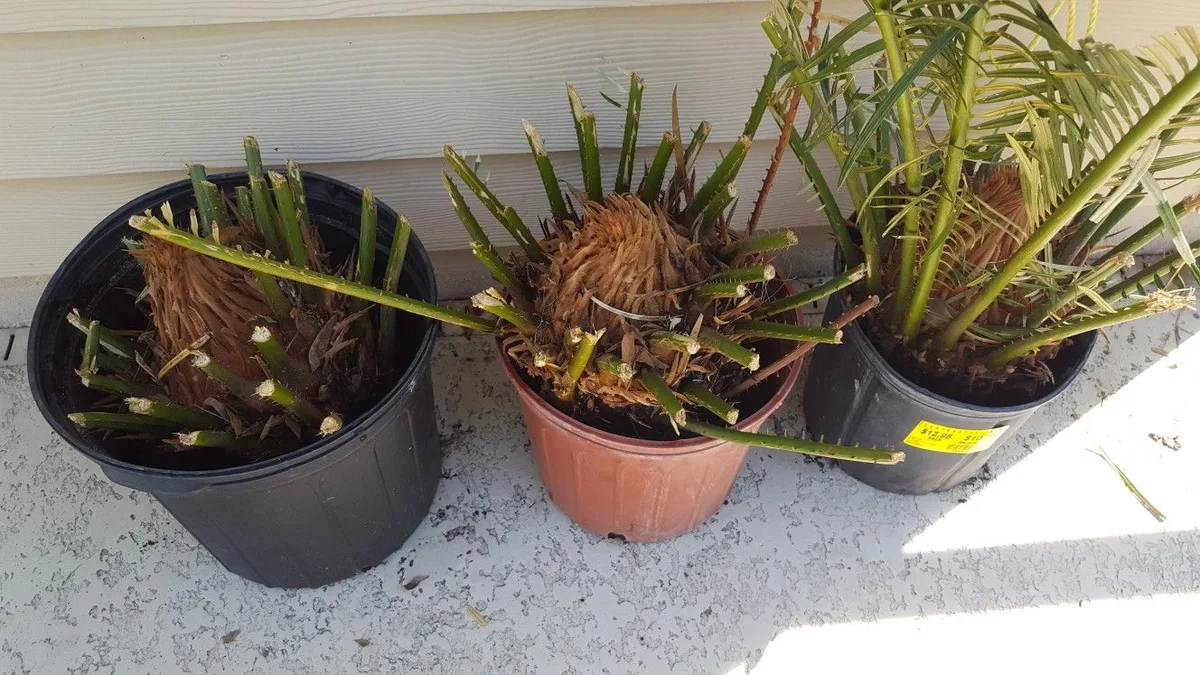
Image source: Web (Bing) / pinterest.com (Web image (fair-use with source credit))
Pups are the little offsets that grow around the base. They’re your free source of new plants. Wait until a pup is at least four inches across.
Cut it cleanly with a sharp knife, keeping as many roots as you can. Let the cut surface dry for two to three days, then plant it in coarse, sandy soil. Don’t overwater it.
Root development takes a few months.
Repotting is only needed every two or three years. Sago palms actually grow better when slightly root-bound. When roots push through the drainage holes, move the plant one pot size up.
Use an unglazed terracotta pot so the soil can breathe.
Pruning is the simplest task of all. Remove only dead or yellowing fronds, cutting as close to the trunk as you can. Never cut green fronds.
Those fronds are fueling the plant and feeding the trunk.
One more thing. Wear thick gloves and long sleeves during all of this. Sago palm sap can irritate skin, and every part of the plant is toxic if eaten.
Keep pups, seeds, and cut fronds away from pets and children.
Pet Safety, Winter Protection, and Cost: What You Need to Know
Every part of the sago palm contains cycasin, a toxin that can cause liver failure in dogs and cats. The seeds are the most dangerous, but the fronds and trunk are also toxic. If your pet chews on any part, call your veterinarian right away.
Winter protection depends entirely on your hardiness zone. Sago palms are reliable in USDA zones 8 through 11. In zone 7, you'll need to wrap the trunk and mulch the roots to survive a hard freeze.
Container plants should move into a garage or bright interior before the first frost.
| Scenario | In-ground plants | Container plants |
|---|---|---|
| Zones 8–11 | No winter protection | Leave outside most years |
| Zone 7 | Wrap trunk in frost cloth, mulch heavily | Move to unheated garage or indoors |
| Zones 6 and below | Not practical year-round | Keep indoors as a houseplant |
Costs are modest for such a long-lived plant. A one-gallon sago palm runs $20 to $40 at most garden centers. A mature three-foot specimen with a thick caudex can cost $100 to $300.
After that, your yearly expense is just a bag of slow-release fertilizer and the occasional pot upgrade.
One more note: the cones on mature cycads can look alarming, but they're normal. Male plants produce a tall, golden pollen cone. Female plants form a rounded seed cone.
No action is needed unless you want to harvest seeds, and even then, gloves are a must.
Sago Palm Care FAQ: Quick Answers for Common Situations
Why are my sago palm fronds turning yellow?
Check which fronds are yellowing. If only the outermost fronds are yellow while the center stays green, that's normal. Old fronds age out every two to three years.
Cut them off at the trunk. If the whole plant looks pale, suspect overwatering, low light, or a manganese deficiency.
How often should I water a sago palm?
Only water when the top two inches of soil are dry. During summer that often means weekly for containers and every five to seven days for young in-ground plants. In winter, space watering out to every three to six weeks.
The trunk stores water, so it prefers dry over soggy.
Is sago palm toxic to dogs and cats?
Yes. All parts of the plant contain cycasin, and the seeds are especially concentrated. Ingesting even a small amount can cause vomiting, liver damage, and in severe cases, death.
Keep sago palms out of reach, or choose a different plant entirely if your pets like to chew.
How do I get rid of scale on my sago palm?
Scale looks like small brown or white armored bumps on the fronds. Scrape off visible scale with your fingernail or a soft brush. Then apply a systemic insecticide containing imidacloprid as a soil drench.
Repeat after three weeks to catch the next generation. Act quickly, because scale multiplies fast.
Can I leave my sago palm outside in winter?
If you live in zone 8 or warmer, yes. In zone 7, you can leave it outside only with heavy protection like frost cloth and thick root mulch. In colder zones, bring it indoors before frost.
Potted sago palms are more vulnerable to cold because roots freeze faster than the ground.



