If you have a spot in your yard where grass refuses to grow, you already know the frustration. The ground stays bare, weeds move in, and every rain turns it into mud. That's where shade ground covers come in.
They are low-growing perennial plants that thrive in low light, spread to form a living carpet, and solve the bare-shade problem permanently.
Cooperative Extension research across several universities confirms that most shade ground covers require less than four hours of direct sunlight per day to establish successfully. Some tolerate as little as two hours of dappled light under a dense tree canopy. The key is matching the right plant to your specific shade conditions, soil type, and maintenance expectations.
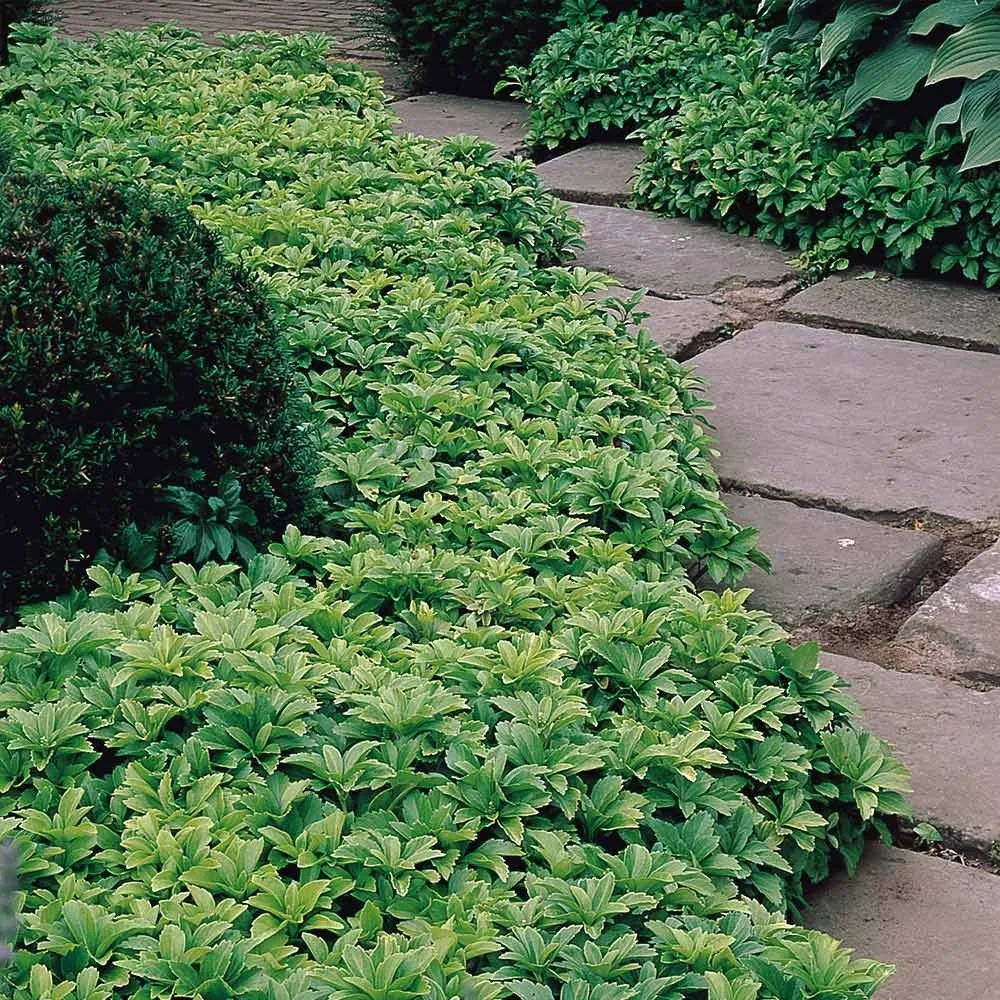
Image source: Web (Bing) / pinterest.com (Web image (fair-use with source credit))
Quick Answer
Shade ground covers are plants that grow in low light and spread to cover bare soil. They replace struggling grass and reduce weeding. Choose evergreen types like pachysandra or vinca for year-round coverage.
Choose deciduous types like hosta or ferns for seasonal texture. Match the plant to your shade level, moisture, and soil type.
Why Your Shady Yard Needs a Ground Cover (and How to Pick the Right One)
The real problem with bare shade soil — and why mulch alone isn't the answer
Bare soil under a tree is not just ugly. It erodes with every heavy rain, and weed seeds blow in and germinate quickly. Mulch helps, but it breaks down over time, needs annual replenishment, and does nothing to stop the most aggressive weeds from rooting through it.
A well-chosen shade ground cover solves all three problems at once. It holds soil in place with a dense root system. It blocks sunlight from reaching weed seeds, preventing germination.
And once established, it requires far less maintenance than replanting mulch every year.
| Benefit | Mulch Alone | Ground Cover |
|---|---|---|
| Erosion control | Moderate | Excellent |
| Weed suppression | Temporary | Long-term |
| Annual maintenance | Replenish yearly | Cut back once |
| Visual interest | Low | High (flowers, texture) |
| Cost over 5 years | Higher (repeated purchase) | Lower (one-time planting) |
The trade-off is patience. Most shade ground covers take one to three growing seasons to fill in completely. During that time, you will need to weed and water consistently.
After year two, the work drops dramatically.
The 6 Best Shade Ground Covers — Honest Breakdown
Not all shade ground covers are created equal. Some spread aggressively. Some stay politely in clumps.
Some need constant moisture. Others handle drought like champs. Here is what you need to know about each one.
Pachysandra
Pachysandra spreads through underground rhizomes and forms a dense, uniform mat of glossy green leaves. It stays evergreen through most winters and grows well in full to deep shade. It struggles in hot, humid southern climates where leaf blight is common.
Pachysandra prefers slightly acidic, well-drained soil and grows best in USDA zones 4 through 8.
Best for: Large areas where you want a uniform green carpet with minimal maintenance after establishment.
Vinca Minor
Vinca minor, also called periwinkle, is a fast-spreading evergreen with purple-blue flowers in early spring. It tolerates dry shade better than most ground covers and roots at every node as it creeps along the ground. Vinca can become invasive in some regions, particularly in the Pacific Northwest and parts of the Midwest.
Check your local invasive plant list before planting.
Best for: Dry shade under mature trees where little else grows.
Ajuga
Ajuga reptans, or bugleweed, offers some of the best foliage color options among shade ground covers. Varieties come in bronze, burgundy, and variegated cream-and-green. It sends up short spikes of blue flowers in late spring.
Ajuga needs consistent moisture and spreads quickly through surface runners. It can smother smaller nearby plants if left unchecked.
Best for: Small to medium areas where you want colorful foliage and early flowers.
Lamium
Lamium maculatum, commonly called deadnettle, has silver-and-green variegated leaves and small pink, white, or purple flowers that bloom from spring through early summer. It grows well in dry shade once established and stays low at 6 to 8 inches tall. Lamium spreads moderately through creeping stems and is not aggressive enough to become invasive.
Best for: Dry shade areas where you want variegated foliage and a long bloom period.
Hosta and Fern Combo
Combining hostas with ferns creates a layered texture that looks natural and lush. Hostas provide broad, bold leaves in shades of green, blue, and gold. Ferns add feathery, fine-textured fronds that contrast nicely.
Both prefer moist, rich soil and will struggle in dry shade under large tree roots. Deer love hostas, so skip this combo if deer are frequent visitors.
Best for: Shady borders and woodland gardens with moist, organic soil.
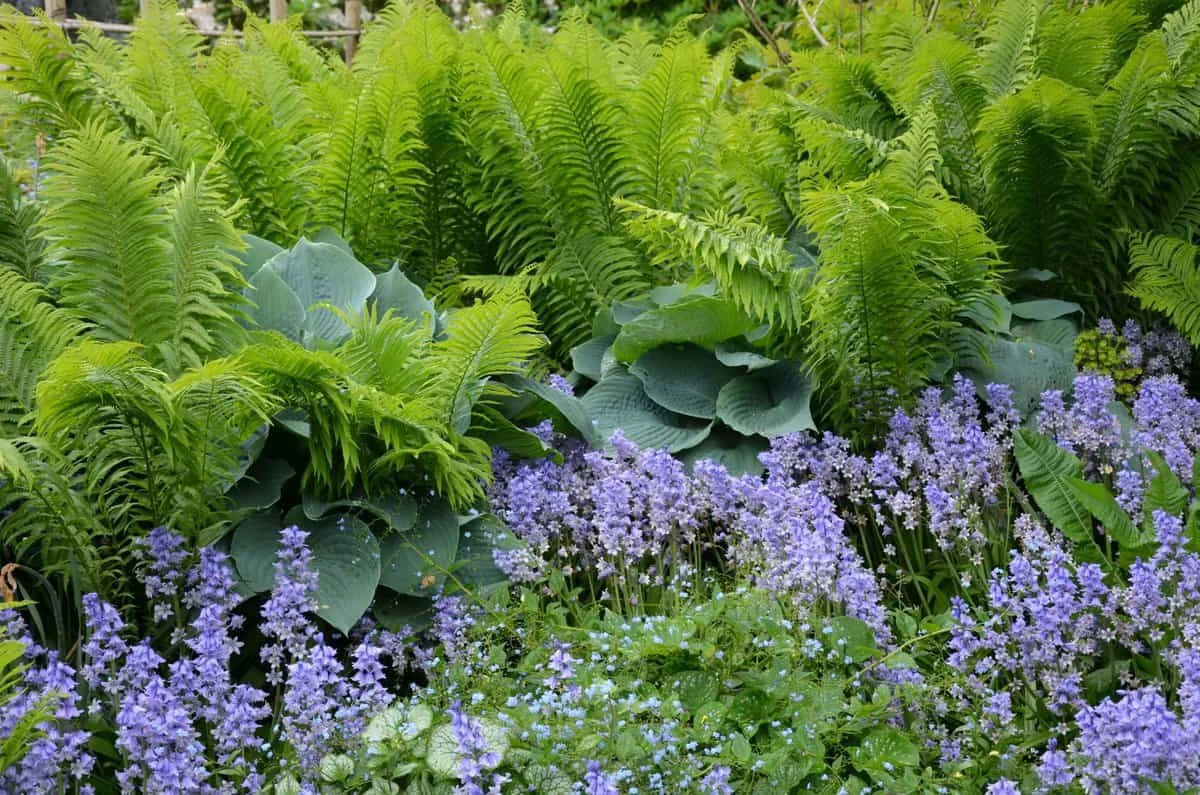
Image source: Web (Bing) / raintreegardens.com (Web image (fair-use with source credit))
Epimedium
Epimedium, also called barrenwort or bishop's hat, is the most shade-tolerant option on this list. It thrives in deep, dry shade where other plants fail. Its delicate, heart-shaped leaves emerge in spring with a bronze tint and turn green by summer.
Small spurred flowers appear above the foliage in late spring. Epimedium spreads slowly and stays well-behaved. It is also deer-resistant and rabbit-resistant.
Best for: The toughest spots, deep, dry shade under dense tree canopies.
Shade Ground Covers at a Glance — Quick Comparison Table
| Plant | Shade Tolerance | Height | Spread Rate | Deer Resistance | Best Use |
|---|---|---|---|---|---|
| Pachysandra | Full to deep | 6-10 in | Moderate | High | Large uniform areas |
| Vinca minor | Full to part | 4-6 in | Fast | High | Dry slopes, under trees |
| Ajuga | Part to full | 4-6 in | Fast | Low | Colorful small areas |
| Lamium | Part to full | 6-8 in | Moderate | Moderate | Dry shade, variegated foliage |
| Hosta & Fern | Part to full | 12-24 in | Slow to moderate | Low (hosta) | Moist woodland gardens |
| Epimedium | Deep shade | 8-12 in | Slow | High | Tough dry shade spots |
The Best Shade Ground Cover for Every Situation
Different spots in your yard call for different plants. Here is how to match the ground cover to your specific conditions.
For Deep, Dark, Dry Shade Under Trees
Root competition makes this the hardest spot in any yard. The tree roots take most of the moisture, leaving little for anything planted beneath. Epimedium and vinca minor are your best bets here.
Both tolerate dry soil once established and do not need rich organic matter. Avoid hostas and ferns in this spot, they will struggle and look tired.
For Shady Slopes and Erosion Control
On a slope, you need a plant that roots deeply and spreads quickly to hold soil in place. Vinca minor is the top choice because it roots at every stem node. Pachysandra works well too, though it spreads more slowly.
Both will stabilize the soil within two growing seasons.
For Pollinator-Friendly Yards
If you want to support bees and butterflies, prioritize plants that flower. Ajuga and lamium both produce abundant blooms in spring and early summer. Sweet woodruff (Galium odoratum) is another option for partial shade with white flowers that pollinators visit.
Avoid English ivy and pachysandra if pollinator support is a priority, their flowers are negligible.
For Pet Owners (Non-Toxic Options)
Several common ground covers are toxic to dogs and cats. Vinca minor, English ivy, and ajuga all appear on the ASPCA toxic plant list. Safer choices include lamium, sweet woodruff, and most ferns.
Epimedium is also considered non-toxic for pets. Always verify with your veterinarian before planting, especially if your dog likes to dig or chew.
For Fast Coverage on a Budget
If you need results quickly and cost is a concern, vinca minor or ajuga will fill in fastest from standard nursery plugs. Both can cover bare ground within one growing season if spaced properly. Pachysandra and lamium are moderate speed.
Epimedium, hostas, and ferns are slowest, expect two to three years for full coverage.
How to Plant Shade Ground Covers (And Make Them Thrive)
Getting ground covers established takes some upfront work. Do it right, and you save yourself years of frustration.
Step 1 — Test Your Shade and Soil
Measure the sunlight your spot actually receives. Full shade means less than three hours of direct sun per day. Partial shade means three to six hours, usually in the morning or late afternoon.
Dappled shade means filtered light through a tree canopy all day. Then test your soil pH. Most shade ground covers prefer slightly acidic soil between 5.5 and 7.0.
Step 2 — Smother the Weeds First
This is the step most people rush, and it causes the most problems later. Remove all existing weeds, including the roots. Lay down a 3-inch layer of compost or aged manure.
Then cover with 2 inches of shredded bark mulch. Wait two weeks before planting. The mulch layer smothers any remaining weed seeds and gives your ground covers a clean start.
Step 3 — Spacing and Planting
Spacing depends on the plant's mature spread and how fast you want coverage. For fast fillers like vinca and ajuga, space plants 12 to 18 inches apart. For slow growers like epimedium and hostas, space them 6 to 12 inches apart.
Dig a hole slightly wider than the root ball. Set the plant at the same depth it was growing in the pot. Backfill and press the soil gently around the roots.
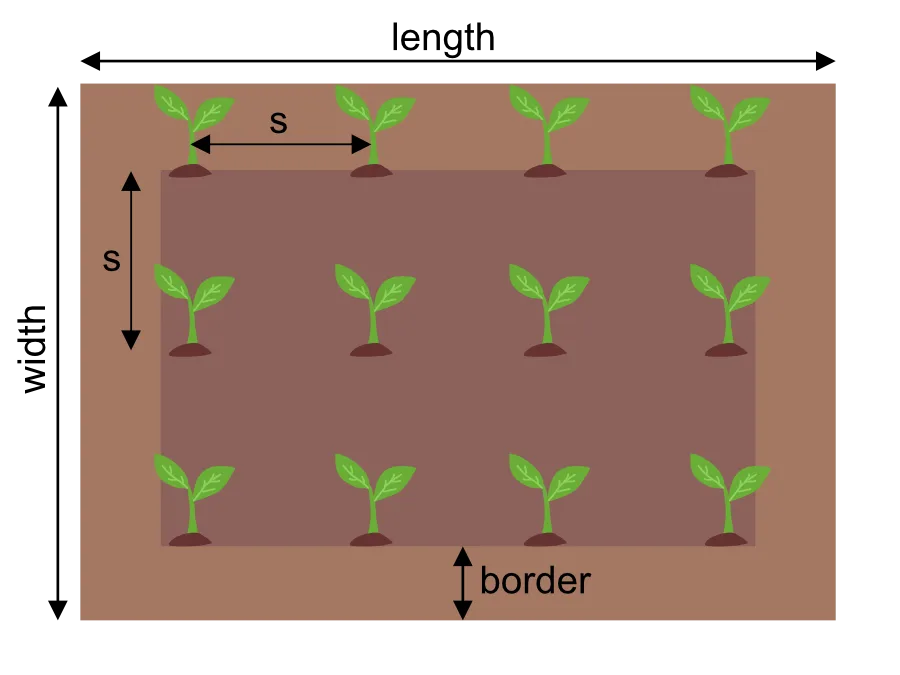
Image source: Web (Bing) / omnicalculator.com (Web image (fair-use with source credit))
Step 4 — Watering and Mulching
Water thoroughly after planting. Keep the soil consistently moist for the first six to eight weeks, about 1 inch of water per week if rain is scarce. Apply a 2-inch layer of shredded bark mulch between plants to retain moisture and suppress weeds.
Keep mulch about an inch away from plant stems to prevent rot.
Step 5 — First-Year Maintenance
Weed regularly during the first growing season. The ground cover cannot outcompete weeds until it fills in. Water during dry spells, especially the first summer.
Do not fertilize the first year. Most shade ground covers need no extra nutrients if you prepared the soil with compost. If you must fertilize, use a balanced slow-release formula in early spring only.
Common Ground Cover Mistakes (And How to Avoid Them)
One mistake can cost you a full season of growth. Here are the ones I see most often.
Planting too deep or too shallow. Roots planted too deep rot. Roots left exposed dry out fast. The top of the root ball should sit level with the soil surface.
This is the most common error with nursery-grown perennials.
Overwatering after establishment. Once ground covers are rooted in, they need far less water than people think. Most shade plants prefer soil that is moist but not soggy. Soggy soil leads to root rot, especially in clay-heavy ground.
Choosing the wrong plant for the light level. A plant labeled "partial shade" will not survive in deep shade under a maple tree. Read the tag carefully. If you are unsure, start with the most shade-tolerant options like epimedium or pachysandra.
Skipping the weed prep. Weeds will outcompete young ground covers every time. A single season of inattention can set you back two years. Do the heavy weeding and mulching before you plant, not after.
Letting aggressive spreaders escape. English ivy and vinca can jump fences and invade natural areas. If you choose these plants, install an edging barrier or commit to trimming the border twice a year. Better yet, pick a clumping ground cover instead.
Frequently Asked Questions About Shade Ground Covers
Will ground covers kill my lawn?
Shade ground covers will not kill a healthy lawn, but they will outcompete grass that is already struggling in low light. If your lawn is thinning under a tree, a ground cover is usually the better long-term solution.
How long until it fills in?
Fast spreaders like vinca and ajuga can fill in within one growing season. Moderate spreaders like pachysandra and lamium take one to two seasons. Slow growers like epimedium and hostas take two to three seasons to form a solid carpet.
Can I mix different ground covers together?
Yes, mixing works well as long as all plants share similar light and moisture requirements. A hosta-and-fern combo is classic. You can also mix epimedium with lamium for varied texture and bloom time.
How do I stop it from spreading into my grass?
Install a physical edging barrier. You can use metal landscape edging or a deep trench. Alternatively, trim the border with a spade twice a year.
Aggressive spreaders like vinca need more vigilance than clumping types like hosta.
Do I need to fertilize shade ground covers?
Most do not need fertilizer if you prepared the soil with compost or aged manure before planting. If you want a boost, apply a balanced slow-release fertilizer in early spring. Do not fertilize after mid-summer, it encourages tender growth that winter will kill.
Are shade ground covers invasive?
Some are. English ivy, vinca, and liriope are considered invasive in parts of the United States. Always check your state's invasive plant list before planting.
Safe alternatives include epimedium, wild ginger, and most ferns.
My Honest Verdict — The Best All-Around Shade Ground Cover
If I had to pick one shade ground cover for the widest range of conditions, it would be pachysandra. It stays evergreen through most winters. It spreads at a manageable pace.
It handles full to deep shade. It is deer-resistant. And it looks clean and uniform across large areas.
That said, pachysandra has limits. It struggles in hot, humid climates where leaf blight is common. It needs well-drained soil.
And it takes patience, about two seasons to fill in completely.
For the toughest spots, deep, dry shade under dense tree roots, epimedium is the real hero. It survives where pachysandra sulks. It is slow, but it is steady.
For fast coverage and early spring color, vinca minor wins. Just keep an eye on it so it does not take over more than you planned.
No single ground cover is perfect for every yard. But with the information in this guide, you now know exactly which plant matches your shade, your soil, and your maintenance style. Pick the right one, do the prep work, and you will have a weed-free, low-maintenance carpet of green for years to come.
Common Ground Cover Mistakes (And How to Avoid Them)
One mistake can cost you a full growing season. Here are the most common errors we see in garden forums, extension Q&As, and nursery feedback.
Choosing the wrong plant for the light level. A plant labeled "partial shade" will not survive in deep shade under a maple. Read the tag carefully. When in doubt, start with epimedium or pachysandra, which handle the toughest conditions.
Skipping weed prep. Weeds will outcompete young ground covers every time. If you skip the smothering step, you will spend two years fighting crabgrass and creeping charlie instead of watching your plants fill in.
Planting too deep. The crown of the plant needs to sit at soil level. Bury it deeper and it rots. Leave it higher and the roots dry out.
This is the most common killer of new nursery perennials.
Overwatering after establishment. Once rooted in, most shade ground covers prefer slightly dry to consistently moist, not soggy. Soggy clay soil leads to root rot, especially for pachysandra and epimedium.
Letting aggressive spreaders escape. Vinca and English ivy can jump borders and invade neighboring beds. Install edging or plan to trim twice a year. Clumping options like hostas and ferns never have this problem.
Fertilizing too much. Extra nitrogen creates soft, leggy growth that flops and attracts pests. Most shade ground covers need zero fertilizer if you prepared the soil with compost. If you must feed, use a balanced slow-release formula once in early spring.
Frequently Asked Questions About Shade Ground Covers
Will ground covers kill my lawn?
No, healthy grass outcompetes most ground covers. But if your lawn is already thinning due to shade, ground covers will finish the job. They thrive where grass struggles, which is exactly why you are planting them.
How long until it fills in?
Fast spreaders like vinca and ajuga can cover bare ground in one season. Pachysandra and lamium take one to two seasons. Epimedium and hostas take two to three.
Spacing matters too: close spacing fills faster but costs more upfront.
Can I mix different ground covers together?
Yes, mixing works well if all plants share similar light and moisture needs. Pair hostas with ferns for texture contrast. Mix epimedium with lamium for varied foliage and staggered bloom times.
Avoid mixing an aggressive spreader with a slow clumper.
How do I stop it from spreading into my grass?
Install a physical edging barrier sunk several inches into the soil. Metal landscape edging works well. Alternatively, trim the border with a sharp spade twice a year.
Vinca needs the most vigilance; clumping ground covers stay put naturally.
Are shade ground covers invasive?
Some are. English ivy, vinca, and liriope appear on invasive lists in parts of the U.S. Check your state's noxious weed list before planting.
Safe, well-behaved options include epimedium, wild ginger, lamium, and most ferns. When in doubt, ask your local cooperative extension office.
My Honest Verdict — The Best All-Around Shade Ground Cover
If you want one plant that handles the widest range of conditions, pick pachysandra. It stays evergreen through most winters. It spreads at a manageable pace.
It tolerates full to deep shade. And deer rarely touch it.
The downsides? It takes about two seasons to fill in. It dislikes hot, humid climates where leaf blight is common.
And it needs well-drained soil, so forget pachysandra in heavy clay that stays soggy.
For the toughest spot in your yard, deep dry shade under tree roots, epimedium is the hero. It spreads slowly, but it survives where everything else sulks. It is also deer-resistant and drought-tolerant once established.
For fast coverage and spring flowers, vinca minor delivers quickly. Just contain it, because it will spread far beyond where you plant it.
There is no single perfect ground cover. But match the plant to your shade level, soil, and maintenance style, and you will get a weed-suppressing, low-maintenance carpet that lasts for decades.