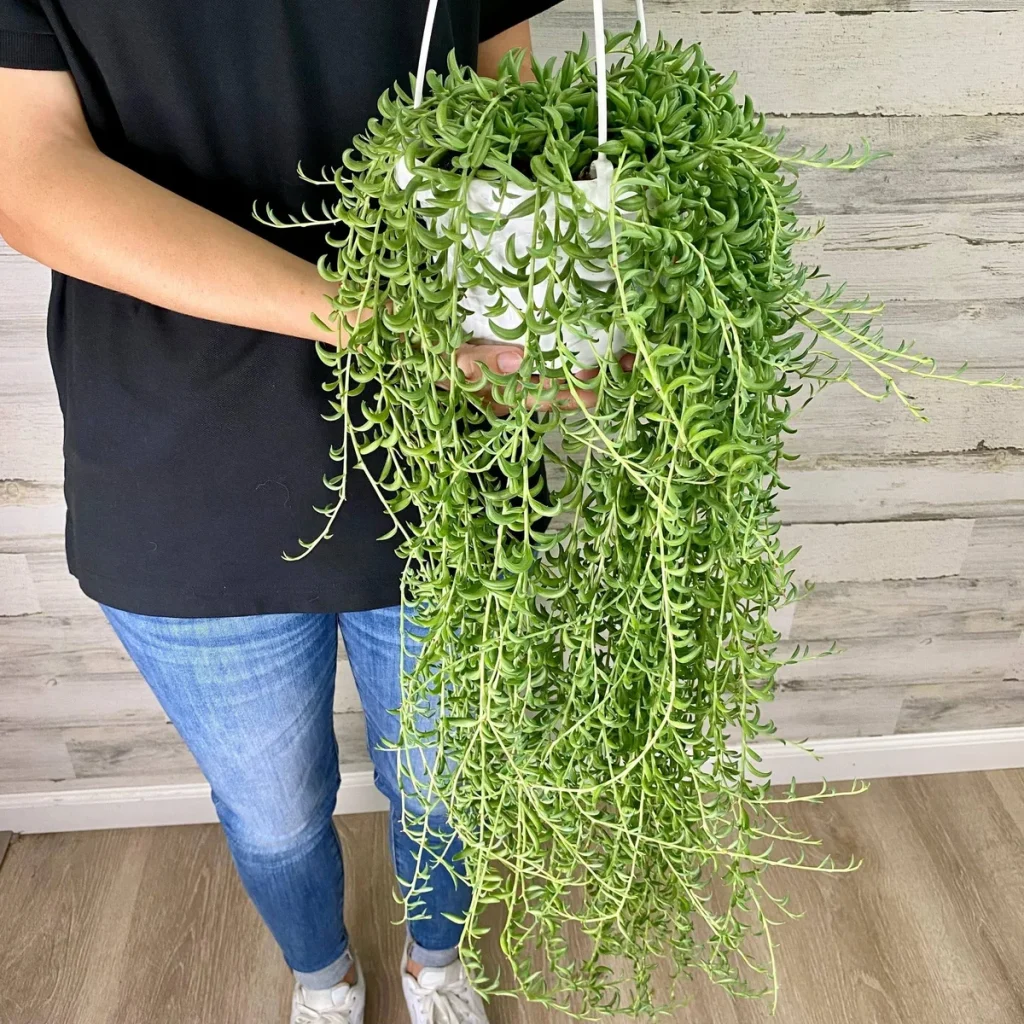
Most people don't kill their string of bananas with neglect. They kill it with kindness. If you've been watering on a schedule or guessing when the soil feels "kinda dry," you might be sending this plant to an early grave.
Getting string of bananas care right means learning to read the plant instead of the calendar.
This trailing succulent, botanically classified as Curio radicans (formerly Senecio radicans), stores water in those banana-shaped leaves. Native to South Africa's dry regions, it evolved to survive long stretches between drinks. As of 2026, it remains one of the most popular hanging basket plants for beginners and seasoned collectors alike.
But its forgiving nature has a limit, and that limit is soggy soil.
Quick Answer
String of bananas needs bright indirect light. Water only when the soil is completely dry. Use a pot with drainage holes.
Give it a gritty, well-draining soil mix. These four rules cover 90 percent of what the plant requires to thrive.
Light First: The Decision Branch Most People Get Wrong
Where you place this plant determines whether you get a lush cascade or a bald mess. Light is the single most influential variable in string of bananas care.
Too little light produces etiolation. That's the technical term for stretched, leggy growth with wide gaps between leaves. The plant reaches for brighter spots and sacrifices its compact appearance.
If your vines look sparse with leaves spaced far apart, insufficient light is the likely cause.
Too much direct afternoon sun causes sunburn. The leaves develop pale patches or brown scorch marks. They can also turn reddish or purple as a stress response.
This is especially common when you move an indoor plant outside without a gradual transition.
The sweet spot is bright indirect light for about six hours daily. A south-facing window works, but pull the plant back a few feet or use a sheer curtain. East-facing windows deliver gentle morning sun that the plant handles beautifully.
West-facing windows work in most climates if you keep the plant at least two feet from the glass.
If you're unsure, here's the decision tree:
- Is the plant getting less than four hours of bright indirect light? Move it closer to a window or supplement with a grow light.
- Are leaves showing pale or brown patches? Move it back from the window or filter the light.
- Are leaves turning reddish? This is usually mild stress from bright light. It's not dangerous, but if it bothers you, reduce light exposure slightly.
Many owners make the mistake of placing string of bananas on a bookshelf across the room from a window. That works for pothos. It does not work for this succulent.
If you cannot provide bright light naturally, a small LED grow light positioned six to eight inches above the plant will keep it happy through winter months.
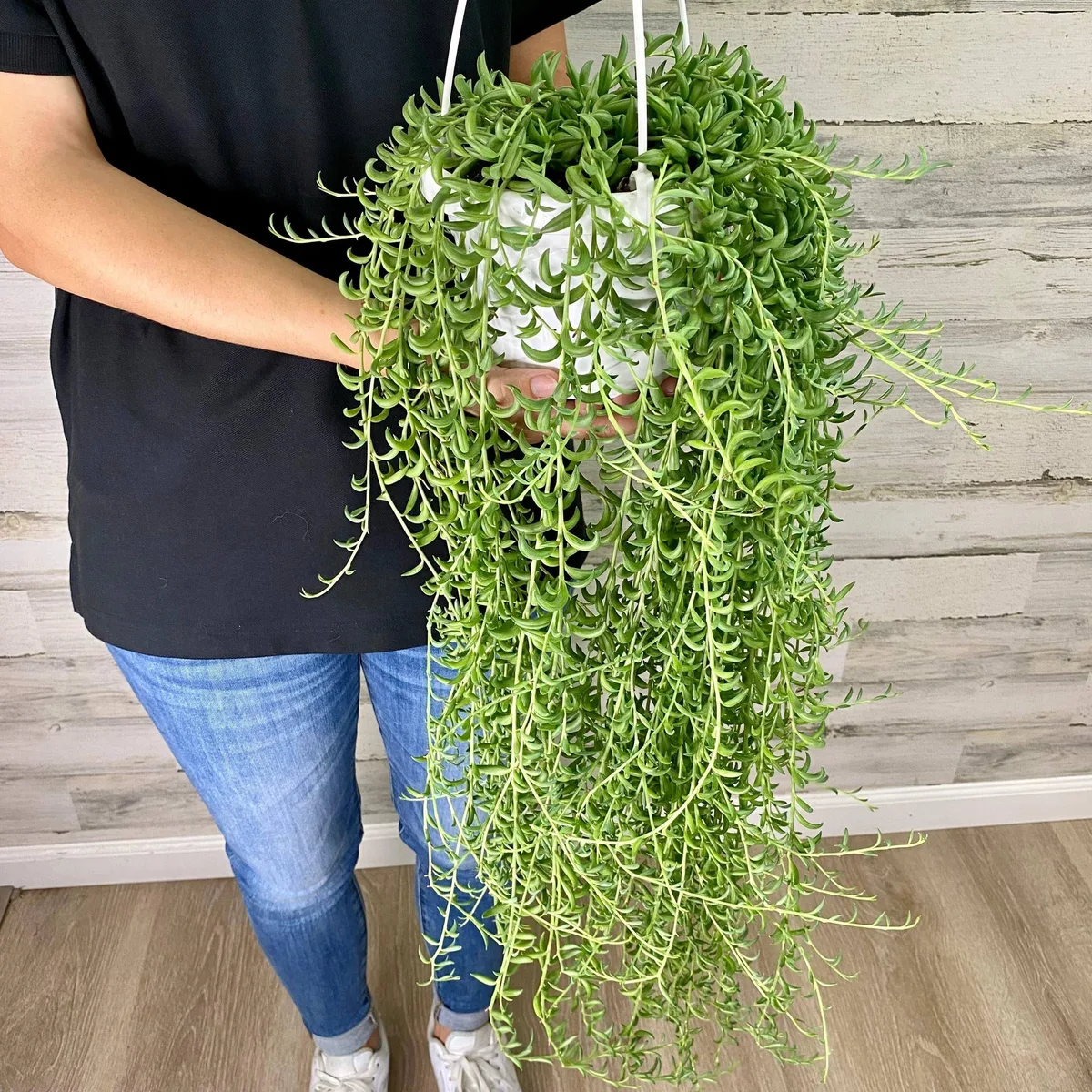
Reading the Leaves: Shriveled, Mushy, or Dropping? A Diagnostic Flow
The leaves tell you exactly what's wrong. You just need to know what each symptom means.
Mushy or Translucent Leaves → Overwatering
This is the most common killer. When leaves turn mushy, soft, or look like they're holding too much water, the roots are likely rotting. The leaf tissue breaks down because it cannot get oxygen in waterlogged soil.
What to do: Stop watering immediately. Remove the plant from its pot and inspect the roots. Healthy roots are firm and pale.
Rotten roots are brown, black, or slimy. Trim away all rotten roots with clean scissors. Repot into dry, fresh soil in a clean pot.
Wait at least one week before the first light watering.
If the rot has spread to the stems, take stem cuttings from healthy parts and propagate them. The original plant may not recover.
Shriveled, Flat Leaves → Underwatering or Root Damage
When leaves look deflated, wrinkled, or feel thin and papery, the plant is thirsty. But here's the tricky part: damaged roots from a previous overwatering episode can also cause shriveled leaves. The roots can't take up water even when the soil is moist.
How to tell the difference: Stick your finger one to two inches into the soil. Bone dry? Water thoroughly and wait 24 hours.
The leaves should plump back up. If the soil is damp but the leaves stay shriveled, root damage is the problem. That requires the same repotting steps as overwatering recovery.
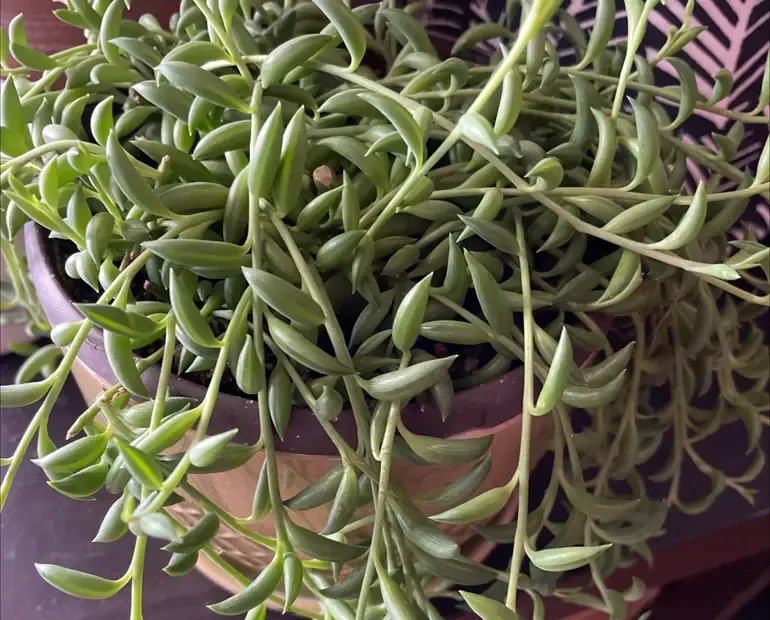
Dropping Leaves → Relocation Shock or Cold Drafts
If leaves fall off at the slightest touch, the plant is stressed. Common triggers include moving it to a new spot, cold drafts from windows or air conditioning vents, and sudden temperature drops below 50°F (10°C).
What to do: Identify the stressor. Move the plant away from drafts. If you just brought it home, give it two weeks to adjust before making any care changes.
Leaf drop from relocation usually stops once the plant acclimates.
Step-by-Step Care Workflow: Potting, Watering, and Seasonal Adjustments
Now that you can read the symptoms, let's build a care routine that prevents them in the first place.
Choosing the Right Pot and Soil Mix
Terracotta pots are ideal for string of bananas. The porous clay wicks moisture away from the roots and helps soil dry faster than plastic or ceramic. Whatever pot you choose, it must have at least one drainage hole.
For soil, standard potting mix holds too much moisture. Mix two parts cactus or succulent soil with one part perlite or pumice. This creates a gritty, fast-draining medium.
You can also buy a pre-made succulent mix and add extra perlite.
Soil mix formula (by volume):
| Ingredient | Amount |
|---|---|
| Cactus or succulent soil | 2 parts |
| Perlite or pumice | 1 part |
| Coarse sand (optional) | 0.5 parts |
Watering on the Soak-and-Dry Cycle
Water thoroughly until it runs out the drainage hole. Then do not water again until the soil is completely dry. This usually takes 7 to 14 days, depending on your climate, pot size, and light levels.
Test dryness by sticking your finger one to two inches into the soil. If it feels even slightly damp, wait. A wooden skewer inserted to the bottom of the pot is another reliable test.
If it comes out with damp soil clinging to it, hold off.
Seasonal watering guideline:
| Season | Watering frequency |
|---|---|
| Spring / Summer (active growth) | Every 7–10 days |
| Fall / Winter (dormant period) | Every 14–21 days or less |
Reduce watering in winter even if the soil feels dry sooner. The plant's metabolism slows with shorter days, and it uses less water.
Seasonal Adjustments for Indoor and Outdoor Plants
If you move your plant outdoors for summer, acclimate it gradually. Start with one hour of morning sun and increase exposure by one hour each day over a week. Direct all-day sun will scorch it.
Bring outdoor plants back inside before nighttime temperatures drop below 50°F (10°C). Cold damage shows up as mushy, darkened leaves that look similar to overwatering.
Common Mistakes That Kill String of Bananas
Knowing what not to do is just as important as knowing what to do.
Watering on a fixed schedule. This plant does not care that it's Tuesday. It cares whether the soil is dry. Check the soil before every watering.
Using a pot without drainage holes. Water collects at the bottom. Roots sit in moisture. Rot follows.
This is non-negotiable.
Misting the leaves. Succulents do not need humidity. Misting keeps the leaves wet, which can cause rot and fungal spots. If your home is dry, the plant will be fine.
Just water the soil.
Fertilizing in winter. The plant is resting. Applying fertilizer pushes growth the plant cannot support with limited light. Stick to feeding only during spring and summer, using a balanced houseplant fertilizer diluted to one-quarter strength.
Ignoring pests early. Mealybugs look like white cottony clusters in leaf joints. Spider mites create fine webbing. Scale appears as small brown bumps on stems.
Catch them early. A cotton swab dipped in rubbing alcohol removes mealybugs and scale. A strong spray of water knocks off spider mites.
Propagation: Turning Leggy Vines Into a Fuller Plant
Propagation is the best trick for fixing a sparse or leggy string of bananas. It also gives you backup plants if the original ever struggles. The process is simple and reliable.
Take stem cuttings about four to six inches long. Remove the bottom two or three leaves so you have a bare stem section. Let the cuttings sit on a paper towel for one to two days until the cut end calluses over.
This prevents rot when you place them in water or soil.
For water propagation, set the callused cuttings in a small jar with just the bare stem submerged. Keep the leaves above the water line. Change the water every five to seven days.
Roots usually appear within two to four weeks. Once roots reach about one inch long, transplant into damp succulent soil.
For soil propagation, insert the callused cuttings directly into moist potting mix. Bury the bare stem section about half an inch deep. Water lightly and place the pot in bright indirect light.
Roots form in three to five weeks. You will know it worked when you see new leaf growth at the tips.
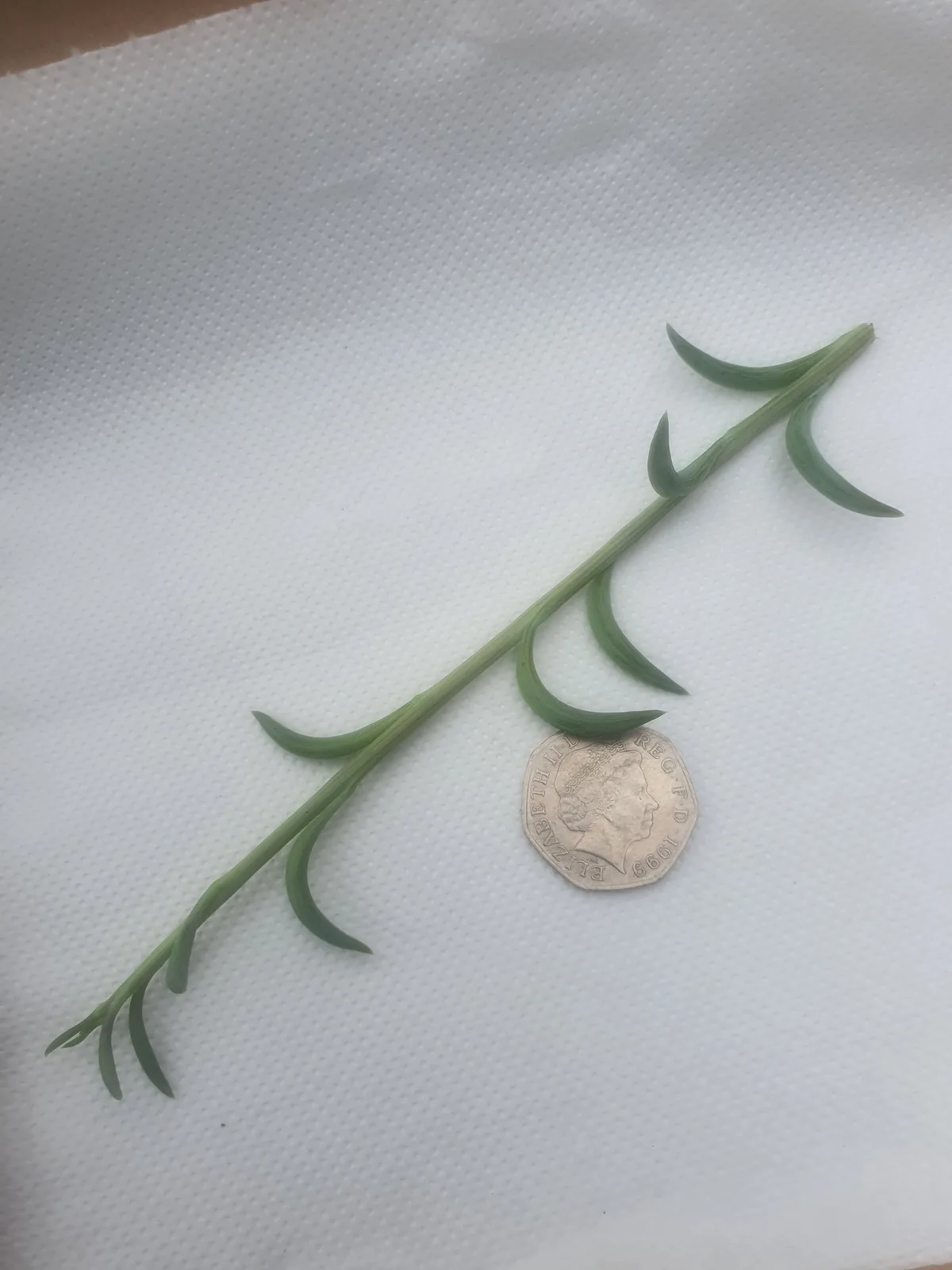
How to fill out a sparse pot: Take six to ten cuttings from the healthiest vines. Plant them all around the edge of the same pot, spacing them evenly. The new plants will grow and cascade, creating a full, lush look in a few months.
This method works far better than trying to train a single vine to cover the whole pot.
String of Bananas FAQs
How often should I water string of bananas?
Water only when the soil is completely dry. That usually means every 7 to 14 days during active growth and every 14 to 21 days in winter. Always check soil moisture with your finger before watering.
Never water on a strict schedule.
Why are my string of bananas leaves shriveling?
Shriveled leaves usually mean underwatering or damaged roots. Check the soil first. Bone dry soil means the plant needs a thorough soak.
Damp soil with shriveled leaves suggests root rot. In that case, unpot the plant, trim rotten roots, and repot in fresh dry soil.
Can string of bananas grow outdoors?
Yes, in USDA hardiness zones 10 through 12. It thrives outdoors in frost-free climates with bright shade or morning sun. In cooler zones, grow it in a container and bring it inside before temperatures drop below 50°F (10°C).
Cold damage shows up quickly as mushy leaves.
Is string of bananas toxic to pets?
Yes, it is toxic to cats and dogs if ingested. The plant contains compounds that can cause vomiting, drooling, and gastrointestinal upset. The ASPCA lists it as toxic.
Keep hanging baskets out of reach or choose a pet-safe alternative like string of hearts.
Why is my string of bananas growing leggy?
Leggy growth with wide spaces between leaves means insufficient light. The plant stretches toward the nearest light source. Move it to a brighter spot with at least six hours of bright indirect light daily.
A grow light can help during winter months.
How do I make my string of bananas fuller?
Take stem cuttings from the longest vines and propagate them. Plant the rooted cuttings back into the same pot around the edges. More plants in one pot create a denser, fuller appearance.
Regular pruning also encourages branching and new growth.
Final Verdict: Is String of Bananas Right for You?
String of bananas suits anyone who can follow one simple rule: water less than you think you should. It thrives on a bit of neglect. If you tend to overwater or want a plant that needs daily attention, this is not the right choice.
It does well in bright indoor spaces, hanging baskets, and warm outdoor areas in suitable climates. Growth is fast during spring and summer, and propagation is straightforward. The main challenge is resisting the urge to water too often.
For beginners, it offers a forgiving introduction to succulent care. For experienced growers, it provides reliable trailing greenery that fills a basket in one season. Just give it bright light, a gritty soil mix, and patience between waterings.
The plant will do the rest.



