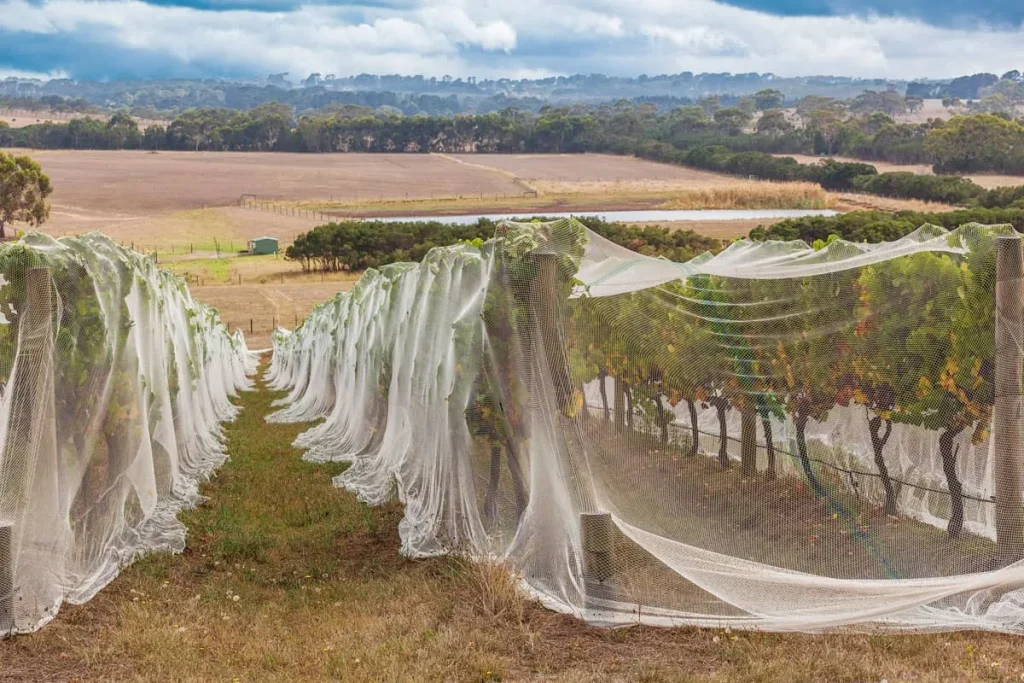
You have poured time, money, and effort into your grapevines. You pruned carefully in winter, watered through dry spells, and watched the tiny green berries form in spring. Then the birds show up.
Then the bugs. Suddenly you are losing clusters by the day.
If you've ever stood in your vineyard wondering whether to throw a net over everything or just spray something and hope, you are not alone. The problem with protecting grapes from birds and bugs is that the wrong method wastes money and the wrong timing wastes your entire crop. As of 2026, research from the USDA Agricultural Research Service shows that unprotected table grape vineyards can lose 40 to 60 percent of their crop to birds alone before harvest.
But here is the good news: you do not need to try everything. You need the right thing for your specific situation.
Quick Answer
Protecting grapes from birds and bugs requires matching the method to the threat. Use bird netting for small to medium vineyards if birds are the main problem. Use yellow sticky cards and insecticidal soap for early bug detection.
Spinosad works for spotted wing drosophila. Kaolin clay spray confuses thrips and leafhoppers. Combine netting with traps when both birds and bugs attack.
The Real Problem: Why Most Grape Protection Fails (and What Works Instead)
Walk into any gardening forum during harvest season and you will see the same story. Someone hung reflective tape. The birds ignored it after three days.
Someone put out an owl decoy. The crows perched on its head. Someone sprayed a general pesticide.
The Japanese beetles died but so did the bees.
The core issue is that grape protection is not a one-size-fits-all game. Your neighbor's solution might fail completely on your property because you have different bird species, different pest pressure, and different trellis setup. The methods that work for a 50-vine home arbor fall apart at a 5-acre commercial scale, and vice versa.
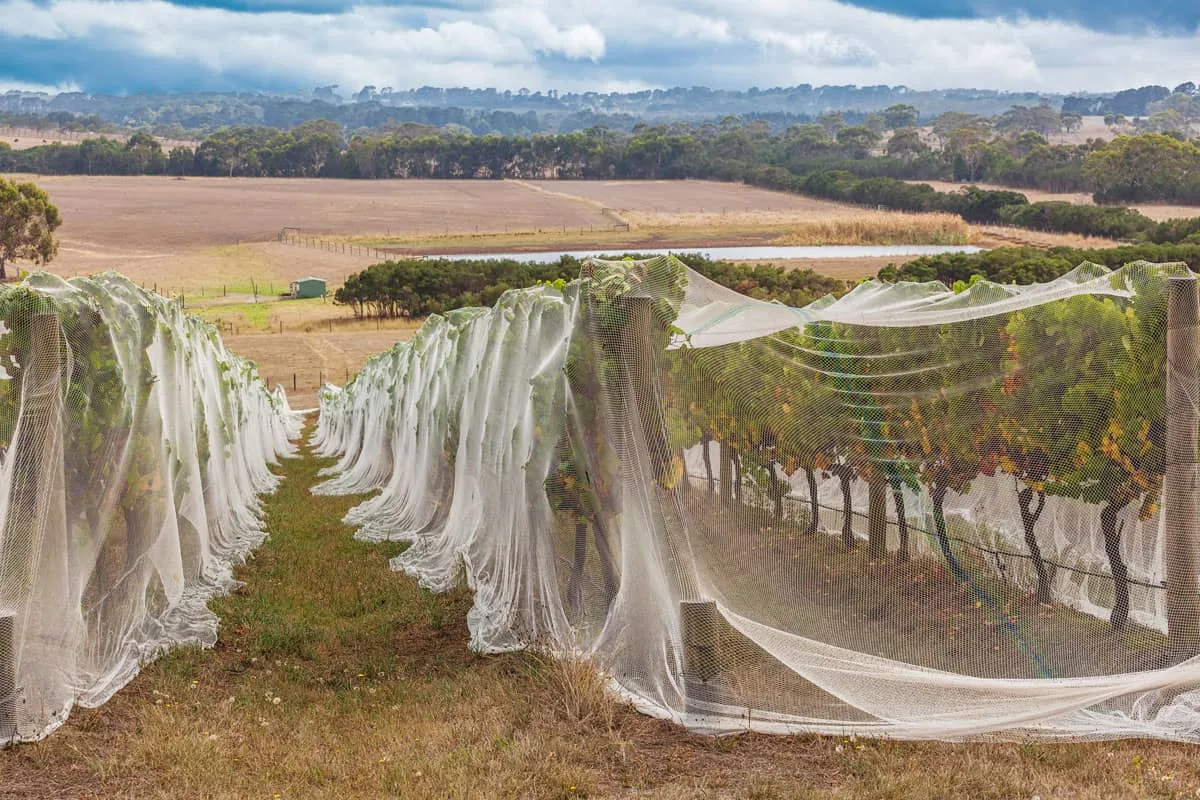
Image source: Web (Bing) / storage.googleapis.com (Web image (fair-use with source credit))
Our research across university extension programs and grower case studies shows three consistent failure patterns. First, growers act too late. Birds learn the location of your vineyard weeks before you notice them.
Second, growers rely on a single method and never rotate it. Birds and bugs both adapt. Third, growers buy the cheapest option first, then spend more money replacing it than they would have on the right product from the start.
The real solution starts with understanding what you are up against. Birds are visual and pattern-based. Bugs are species-specific and life-cycle driven.
You cannot fight both the same way.
Here is a simple breakdown of how the approach changes based on your setup:
| Grower Type | Primary Bird Threat | Primary Bug Threat | Best First Method |
|---|---|---|---|
| Home arbor (under 10 vines) | Robins, starlings | Aphids, Japanese beetles | Row cover netting + sticky cards |
| Small vineyard (1-3 acres) | Starlings, blackbirds | SWD, grape berry moth | Full netting + spinosad sprays |
| Large commercial (10+ acres) | Starlings, crows | SWD, thrips, leafhoppers | Exclosure netting + kaolin clay |
| Organic operation | All species | All species | Netting + BT + spinosad (OMRI) |
The mistake most growers make is reaching for a spray when a physical barrier would solve the problem permanently.
The Quick Decision Tree: Birds vs. Bugs vs. Both
If you are standing in your vineyard right now trying to decide what to do first, ask yourself three questions. Answer them honestly and you will have your game plan in 60 seconds.
Question one: Can you see birds actively eating grapes?
If yes, birds are your immediate problem. A flock of starlings can strip a row of table grapes in under an hour. Your first move is exclusion, not repellent.
Bird netting or exclusion cages.
If no, move to question two.
Question two: Do you see damaged berries with small holes, webbing, or leaking juice?
Berry damage from bugs looks different than bird damage. Bird pecks leave large, ragged tears. Bug damage looks like tiny pinprick holes, shriveled berries, or brown spots.
If you see these signs, look closer at the fruit with a magnifying glass or your phone camera on zoom. Spotted wing drosophila leaves a small puncture and the berry collapses within days.
If you see bug damage, skip the netting for now and focus on traps and sprays. Your window for treatment is short, usually 7 to 10 days.
If you see neither, move to question three.
Question three: Is it between veraison and harvest?
Veraison is the stage when grapes stop being hard green berries and start softening and coloring. This is when sugars rise. This is also when birds and bugs both notice your vineyard.
If you are past veraison, you need both bird protection and bug protection. If you are pre-veraison, you probably only need to monitor for bugs.
Here is the decision tree in plain terms:
- Birds only → Netting or exclusion cage. Scare devices are a temporary backup at best.
- Bugs only → Identify the specific pest using sticky cards or trap lures. Apply targeted treatment.
- Both birds and bugs → Install netting first, then apply bug treatment under the netting before it is fully closed.
- Neither visible but post-veraison → Set up monitoring traps and install netting as a preventive measure. Do not wait for visible damage.
The single most common regret I hear from growers is "I should have netted earlier." Do not be that person.
Bird Protection: Netting, Scare Tactics, and When Each Actually Works
Let us get this out of the way first. Scare devices work for about 7 to 14 days. Then the birds figure out the owl is plastic, the balloon never moves, and the reflective tape is just shiny garbage.
Per university extension research, bird habituation to static decoys occurs within 10 days on average. After that, your scare device is decoration.
Netting is the gold standard. Full stop.
If you have a home arbor or a small vineyard, woven polyethylene netting with a 3/4-inch mesh is your best bet. That mesh size keeps out starlings, robins, blackbirds, and most other grape-eating birds while still allowing airflow and light penetration. Knotted netting offers better tear resistance if you are reusing it season after season.
Extruded netting is cheaper but more brittle under UV exposure and typically lasts only two to three seasons.
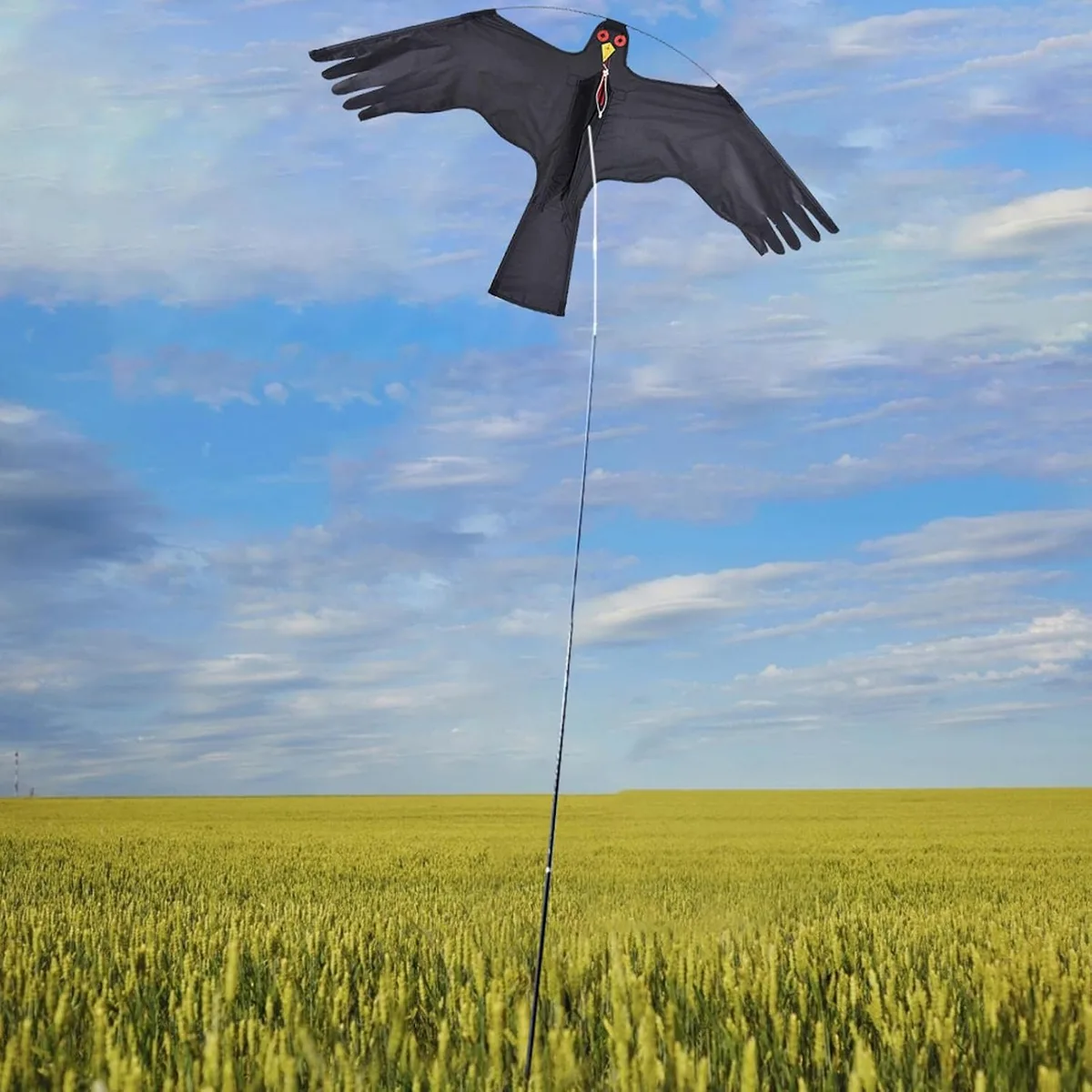
Image source: Web (Bing) / amazon.co.uk (Web image (fair-use with source credit))
Installation matters more than the netting itself. The biggest mistake is leaving gaps at the bottom. Birds will find a gap the size of your fist and walk right under.
Bury the bottom edge in soil or secure it with landscape staples. Drape the netting loosely enough to allow for vine growth but taut enough that birds cannot push through from the side.
When do scare devices actually make sense?
Only in two scenarios. First, as a temporary measure while you wait for netting to arrive. Second, in very large commercial vineyards where full netting is cost-prohibitive.
In that case, you need a rotating arsenal. Hawk kites that actually move in the wind. Propane cannons on timers that shift location every few days.
Lasers at dawn and dusk. The key is unpredictability. If a bird sees the same thing in the same place at the same time for a week straight, it stops being afraid.
Here is when each tool is worth your money:
| Method | Best For | Lifespan | Cost per Year (per vine) |
|---|---|---|---|
| Woven netting | Small to medium vineyards | 4-7 seasons | $0.12-$0.20 |
| Knotted netting | High wind areas, heavy use | 6-10 seasons | $0.15-$0.25 |
| Predator eye balloons | Short-term fear response | 10-14 days | $0.05 (negligible) |
| Hawk kite | Open vineyards with wind | 2-3 weeks | $0.03 |
| Propane cannon | Large commercial only | Season-long with rotation | $0.10-$0.15 |
| Laser deterrent | Large commercial, urban areas | Season-long | $0.20-$0.30 |
One more thing. Never use netting with a mesh smaller than 1/2 inch or larger than 3/4 inch. Smaller mesh traps heat and increases rot.
Larger mesh lets small birds through. And always check your netting weekly during the season. Birds, squirrels, and snakes can get tangled in loose netting.
Taut, properly installed netting reduces wildlife entanglement significantly.
Bug Protection: From Japanese Beetles to Spotted Wing Drosophila
Bugs are trickier than birds because there are many species, each with its own life cycle and preferred treatment. You cannot spray one thing and call it done. You need to identify the pest, then hit it at the right time.
Japanese beetles are the most visible and destructive. They skeletonize leaves, not the fruit directly, but heavy defoliation weakens the vine and reduces sugar development. The standard control method is a combination of hand-picking in small plantings and targeted insecticidal soap or neem oil sprays in larger ones.
Bag traps are controversial. Research from Michigan State University Extension shows that bag traps can attract more beetles to your vineyard than they catch. If you use them, place them at least 50 feet away from your vines.
Spotted wing drosophila (SWD) is the one that keeps vineyard managers up at night. Unlike other fruit flies that attack rotting fruit, SWD attacks ripening fruit on the vine. The female saws a small slit in the berry skin and lays eggs inside.
Larvae hatch and the berry collapses from the inside out. You cannot see the damage until it is too late.
The only reliable control for SWD is a rotation of spinosad-based sprays during the ripening period, combined with monitoring traps. Yellow sticky cards catch adults but you need a specific SWD lure trap to get accurate counts. University of California IPM guidelines recommend one trap per five acres, checked weekly once the fruit starts coloring.
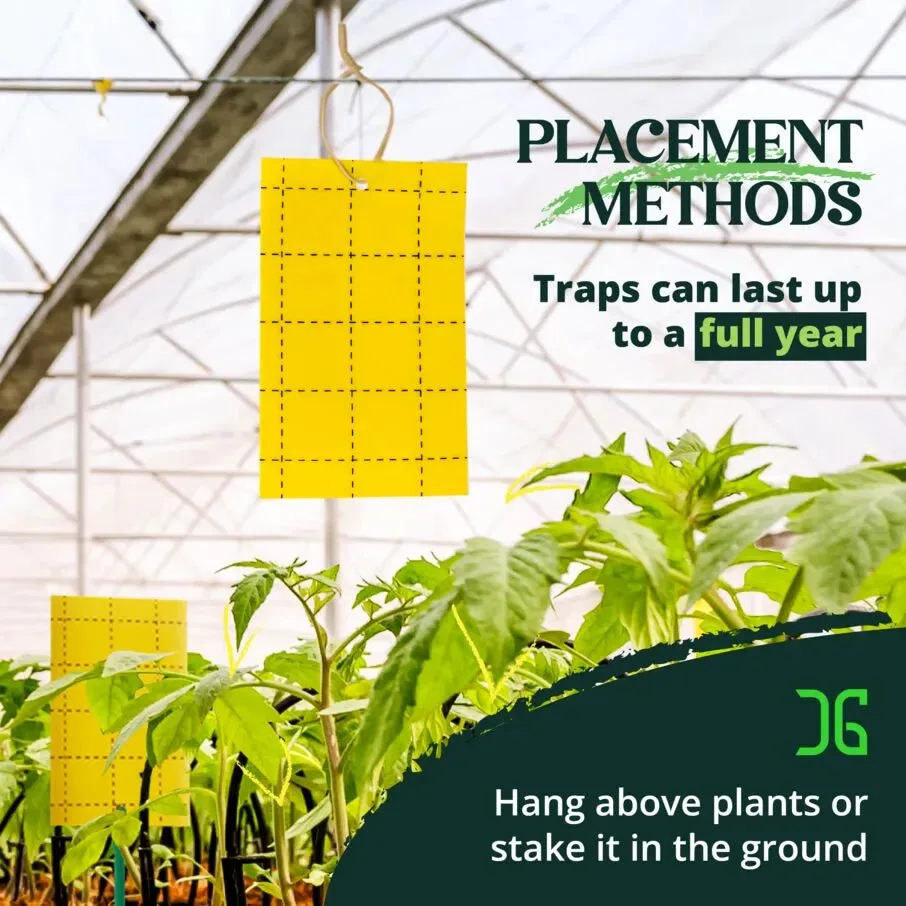
Image source: Web (Bing) / catchmaster.com (Web image (fair-use with source credit))
Other common grape bugs and their controls:
| Pest | Damage | Best Control | Timing |
|---|---|---|---|
| Japanese beetle | Skeletonized leaves | Insecticidal soap, neem oil, hand-picking | Mid-summer, peak adult emergence |
| Spotted wing drosophila | Collapsing berries | Spinosad, sanitation, netting | Veraison through harvest |
| Grape berry moth | Webbed clusters, wormy berries | BT (Bacillus thuringiensis), pheromone disruption | Bloom through fruit set |
| Leafhoppers | Stippled leaves, reduced vigor | Kaolin clay, insecticidal soap | Early season, pre-bloom |
| Thrips | Scarred berry skins, russeting | Kaolin clay, spinosad | Bloom through fruit set |
| Aphids | Stunted growth, sooty mold | Insecticidal soap, beneficial insects | Early season |
The rule for bug control is simple. Never spray without knowing what you are spraying for. Broad-spectrum insecticides kill beneficial insects and often make pest problems worse in the long run.
Targeted treatments, applied at the right life stage, cost less and work better.
When You Need Both: How to Layer Bird and Bug Control Without Wasting Money
If you have both bird and bug pressure, you are in the most common situation. Almost every vineyard deals with both. The trick is layering the protections so they do not interfere with each other.
Step one: Install bird netting first. Netting is your physical barrier. It takes the most labor and the most time, so do it when you have good weather and daylight. Install it loosely enough that you can still walk the rows and spray underneath.
Leave one end open or use a zippered netting system if you anticipate multiple spray passes.
Step two: Apply bug treatments before the netting is fully closed. If you install netting and then try to spray through it, you will waste product and miss coverage. Do your spinosad or kaolin clay application first. Let it dry.
Then close the netting.
Step three: Set monitoring traps inside the netting. You cannot assume netting keeps all bugs out. SWD adults are tiny enough to pass through 3/4-inch mesh if they find a gap. Place a couple of yellow sticky cards under the netting near the fruit zone and check them weekly.
Step four: Time your maintenance. Bird netting needs to be checked for tears after every wind event. Bug traps need to be refreshed every four to six weeks. Coordinate these checks into a single weekly walkthrough.
Otherwise you will miss something.
Here is a real-world timeline for a typical 1-acre mixed-threat vineyard:
| Week from Veraison | Bird Action | Bug Action |
|---|---|---|
| Week 1 | Install netting | Apply kaolin clay, set SWD traps |
| Week 2 | Check netting for gaps | Monitor traps, spray spinosad if SWD detected |
| Week 3 | Tighten sagging netting | Reapply kaolin clay if rain occurred |
| Week 4 | Walk perimeter for wildlife entanglements | Check traps, spray if threshold reached |
| Week 5 | Pre-harvest netting inspection | Stop sprays if within PHI |
| Week 6 (Harvest) | Remove netting carefully, roll for storage | Final trap check, note pest pressure for next season |
The biggest cost mistake I see growers make is buying cheap netting that tears in the first season and then spending more on repairs than they saved. Per manufacturer specifications, UV-stabilized woven netting rated for 4 to 7 seasons of outdoor use costs about 20 to 30 percent more upfront but pays for itself by year three. Do the math on your labor hours for patching tears and you will see the same thing.



