Indoor herb gardening fails for most people not because they lack a green thumb, but because they pick the wrong setup. The reason is a mismatch between what they try and what they actually have to work with. Get the setup right, and growing basil, mint, and parsley indoors becomes almost routine.
As of 2026, the most common failure points are overwatering, insufficient light, and poor drainage. University of Minnesota Extension notes that most culinary herbs need at least 4 to 6 hours of direct sunlight or 12 to 16 hours under a grow light. Before you buy a single seed, let's match the method to your light, space, time, and budget.
Image source: Bing (Web (fair-use with source credit))
Quick Answer
Indoor herb gardening means growing edible herbs inside your home. You need light, water, soil or hydroponic medium, and proper drainage. Start with easy herbs like basil, chives, mint, and parsley.
Match your setup to your window space and budget. That's the whole secret.
Step 1: Match Your Indoor Herb Garden to Light, Space, Time, and Budget
First, answer four quick questions. Your answers will point you to the right path.
Light. Look at your windows. A south-facing window gives the most direct sun. East and west windows give moderate light for part of the day.
North windows get almost none. A quick hand test at noon tells you more: sharp shadow means strong sun, faint shadow means indirect light, no shadow means low light.
Space. Measure your countertop or shelf. A windowsill holds two to three medium pots. A grow light shelf needs about 1 foot of depth.
A hydroponic unit takes 1 to 2 square feet.
Time. Soil-based herbs need watering every 1 to 3 days. Hydroponic systems need weekly water and nutrient checks. If you travel often, pick a self-watering planter.
Budget. Basic pots, soil, and seeds cost under $20. A decent LED grow light runs $25 to $60. All-in-one hydroponic systems range from $50 to $200 or more as of 2026.
If your light is solid and your budget is tight, windowsill gardening works. If light is weak, artificial light fixes it. If you want a compact, low-mess setup, hydroponics is worth the money.
Per University of Minnesota Extension, the best herb garden is the one you can actually maintain.
The Three Paths to Indoor Herbs
Every indoor herb setup falls into one of three categories. Here's how they stack up.
Path A: Windowsill Gardening (Natural Light Only)
This is the classic approach. You place pots on a bright sill and let the sun do the work. It costs almost nothing and takes minutes to set up.
The catch is light reliability. Winter sun angles and short days cut your daily light significantly. When that happens, herbs get leggy and slow.
Best for: anyone with a south or east-facing window who wants a low-cost start.
Path B: Grow Light Setup (DIY or Shelf System)
A full-spectrum LED grow light removes the window from the equation. Run it 12 to 16 hours a day and your herbs get consistent light regardless of season. The light needs to sit 2 to 6 inches above the plants and move up as they grow.
A freestanding shelf or a simple clamp lamp works fine. This path costs a bit more, but it gives you full control over the environment.
Best for: dim homes, winter growing, and anyone who wants dependable year-round harvests.
Path C: Hydroponic Countertop System (All-in-One)
These self-contained units combine a water reservoir, a pump, a built-in grow light, and a soil-free growing medium. You fill the tank, add liquid nutrients, and let the system run. They're tidy, compact, and produce fast growth.
The downsides are the upfront price and the cleanup. You'll need to scrub the reservoir and change the water every couple of weeks. Many models include a timer and preset settings for herbs.
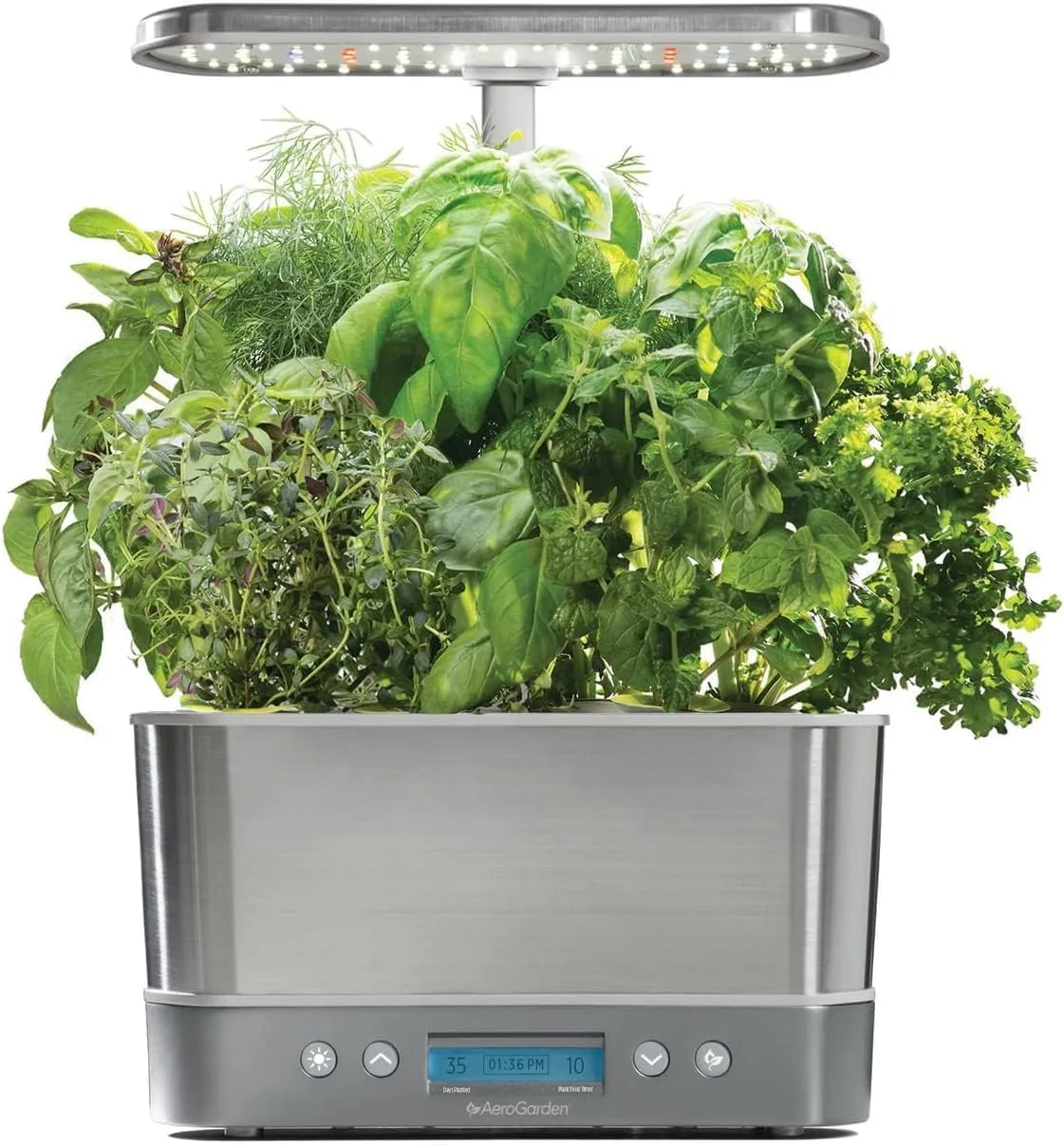
Image source: Web (Bing) / amazon.com (Web image (fair-use with source credit))
Best for: countertop gardeners who want convenience and a polished look.
| Path | Light Source | Upfront Cost | Maintenance Level |
|---|---|---|---|
| Windowsill | Natural sun | $10 to $20 | Low |
| Grow Light | LED | $35 to $80 | Medium |
| Hydroponic | Built-in LED | $50 to $200+ | Medium-High |
Pick based on your Step 1 answers. Windowsill works for bright windows. Grow lights work for any room.
Hydroponics works for countertop gardeners who want convenience.
How to Execute Your Chosen Path
Once you've picked a path, follow these steps to get from seed to harvest.
Prep your containers. Make sure every pot has drainage holes. If it doesn't, drill some or use a pot liner. Place a saucer underneath to catch runoff.
Use the right growing medium. Garden soil is a no. It packs down and can carry pests. Use a light potting mix for pots, or a soil-free mix like perlite and coco coir for hydroponics.
Plant at the right depth. A common rule is to sow seeds at a depth of two to three times their diameter. Tiny seeds like basil go on the surface because they need light to germinate.
Water correctly. Keep the soil moist but not soggy. Use a spray bottle until seedlings appear. Bottom-watering helps prevent overwatering, because it pulls moisture up evenly.
Set the light. If you're using a grow light, keep it 2 to 6 inches above the canopy. Set a timer for 12 to 16 hours on, with 8 to 12 hours of darkness for the plant's rest cycle.
Thin seedlings. When seedlings have two sets of true leaves, snip the weakest ones. Leave the strongest one per pot. Crowded herbs compete for light, water, and nutrients.
From there, stay consistent. Herbs respond to routine. Water when the top inch of soil feels dry.
Rotate pots a quarter turn every few days so each side gets equal light.
Mistakes That'll Kill Your Herbs Before You Get a Single Harvest
Even experienced gardeners lose herbs indoors. These are the usual suspects.
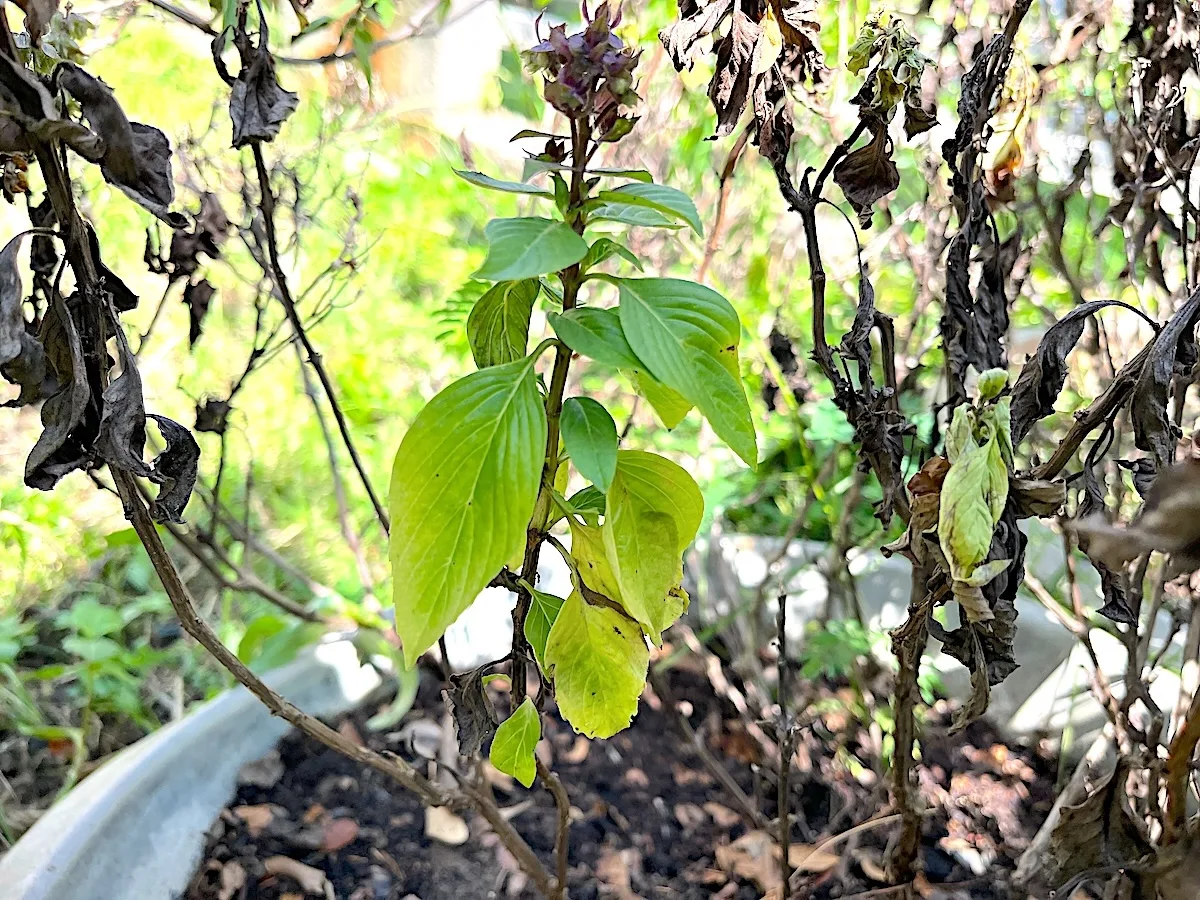
Image source: Web (Bing) / almanac.com (Web image (fair-use with source credit))
Overwatering. This is the number one killer. Waterlogged soil drowns roots and invites fungus gnats. Let the top inch of soil dry before watering again.
If the pot feels heavy, skip the water.
Insufficient light. Herbs stretch toward weak light. The result is pale, spindly stems with few leaves. Move them to a brighter window or add a grow light.
Poor drainage. A pot without holes turns into a swamp. Always use drainage holes and a saucer to catch the runoff.
Skipping the harvest. Letting herbs flower triggers bolting. The leaves turn bitter and the plant focuses on setting seeds. Pinch off flower buds and harvest regularly to keep the plant in leaf-production mode.
Starting with the wrong herbs. Some herbs are tough indoors. Rosemary, sage, and dill need lots of light and often sulk in dim rooms. Start with basil, chives, mint, parsley, or thyme instead.
Nutrient depletion. Potted herbs run out of food quickly. Feed with a diluted liquid fertilizer every 2 to 4 weeks to keep growth steady.
Mistakes are normal on the first attempt. The key is catching them early. A plant that looks weak usually recovers once you fix the light or watering.
Keeping Your Herbs Happy Long-Term
Once your herbs are thriving, the work shifts to maintenance. Here's what long-term care looks like.
Prune often. Cut just above a node, where leaves emerge. This encourages bushier growth instead of a tall, spindly stem.
Rotate the pots. Plants lean toward the light. Give them a quarter turn every few days so they stay upright and grow evenly.
Repot when needed. If roots poke out the bottom or water runs straight through, the plant is root-bound. Move up one pot size and refresh some of the soil.
Watch for pests. Aphids and spider mites love dry indoor air. Check the undersides of leaves weekly. A strong spray of water handles the first wave.
The EPA lists neem oil as a low-toxicity option for indoor pest control.
Fertilize lightly. Use a balanced liquid fertilizer at half strength every 2 to 4 weeks during the growing season. Over-fertilizing makes herbs grow fast but taste bland.
Refresh the soil. Every 6 to 12 months, remove the top inch of stale soil and replace it with fresh mix.
Mind the season. Fall and winter bring drier air and shorter days. Raise humidity with a pebble tray and consider supplemental light. Adjust watering as growth slows.
Your Decision Guide: Path Recommendations in a Snapshot
Here's where everything comes together. Let's match your situation to the right setup in three simple if/then branches.
Pick Windowsill Gardening if: you have a south or east-facing window, you're on a tight budget, and you're okay with slower growth in winter. Use 4 to 6 inch pots with drainage holes and a quality potting mix.
Pick a Grow Light Setup if: your room is dim, you want winter harvests, or you're willing to invest $35 to $80 for a full-spectrum LED panel. This path gives you the most control over the entire growing environment.
Pick a Hydroponic System if: you want a tidy countertop unit, you don't mind the price tag, and you prefer minimal soil mess. Just be ready to clean the reservoir every two weeks.
| Your Situation | Best Path | Why |
|---|---|---|
| Bright window, low budget | Windowsill | Nearly free, minimal gear |
| Dim room, year-round harvests | Grow light | Consistent light, reliable growth |
| Countertop, fast results | Hydroponic | Quick growth, compact footprint |
If you're still torn, start with one pot of basil on a sunny sill. It's the lowest-risk test. If that works, expand.
If it gets leggy, buy a grow light. You'll learn more from one real plant than from any guide.
Frequently Asked Questions
How long does it take to grow herbs indoors from seed?
Fast herbs like basil and cilantro sprout in 3 to 7 days. Most are ready for a first harvest in 4 to 6 weeks. Slower herbs like rosemary can take 2 to 4 weeks to germinate and 10 weeks or more to harvest.
What are the easiest herbs to grow indoors?
Basil, chives, mint, parsley, and thyme are the most reliable. They tolerate average humidity and bounce back from minor mistakes. Mint grows so aggressively that it deserves its own pot.
Can I use regular potting soil for indoor herbs?
Yes, but pick a well-draining mix. Heavy garden soil compacts quickly and holds too much water. A potting mix with perlite or coco coir gives roots the air they need.
Always check that your pot has drainage holes.
How often should I water indoor herbs?
Water when the top inch of soil feels dry to the touch. That usually lands between every 1 to 3 days. Stick a finger in the soil before watering.
If it's moist, wait another day. Overwatering kills more herbs than underwatering.
Do I need a grow light for indoor herbs?
Only if your windows don't provide 4 to 6 hours of direct sun. Most apartment windows fall short in winter. A basic full-spectrum LED light fixes this for under $40.
Run it 12 to 16 hours a day on a timer.
Why are my herbs growing long and spindly?
That's called "leggy" growth, and it's a light problem. The plant stretches toward a weak light source. Move it to a brighter spot or lower your grow light closer to the canopy.
Pinch off the stretched tips to encourage bushier regrowth.



