Harvesting tomatoes at the right moment is the difference between a mealy disappointment and a sweet, juicy triumph. Most gardeners pick too early or too late because they rely on color alone. The truth is, timing depends on what you plan to do with the fruit and the variety you're growing.
Tomatoes go through six recognized ripening stages: mature green, breaker, turning, pink, light red, and full red. Each stage serves a different purpose. Picking at the breaker stage extends shelf life by up to two weeks.
That's a game-changer if you're selling at market or storing for sauce day. Let's walk through the variables so you can decide exactly when to harvest.
Image source: Web (Bing) / pngtree.com (Web image (fair-use with source credit))
When to Pick? A Tomato Harvest Decision Guide
Here is the short version: pick when the fruit is firm but yields slightly to gentle pressure. The skin should be glossy, not dull. But that is just the starting point.
Your actual harvest decision depends on these four conditions:
- Are you eating fresh within 24 hours? Wait for full color on the vine.
- Do you need to store or transport? Pick at breaker stage (first blush of color).
- Are you making fried green tomatoes? Harvest at mature green stage.
- Is frost forecast in the next three days? Pick everything mature green or above.
Each path leads to a different harvest window. Why do you need a decision tree? Because there is no single right answer for every gardener.
A chef growing San Marzanos for sauce wants fully ripe fruit with high Brix levels. A weekend farmer selling at the Saturday market needs tomatoes that stay firm for three days. A gardener in northern Minnesota with an early frost date must harvest everything before temperatures drop.
Your situation determines the rule.
The key is to match your harvest stage to your end use. Vine-ripened fruit tastes best for fresh eating, but it bruises easily and rots fast. Breaker-stage fruit ripens indoors with nearly the same flavor profile but lasts twice as long.
Understanding these trade-offs is the foundation of good harvest planning.
What "Ripe" Actually Looks Like (and Why It Matters for Your Decision)
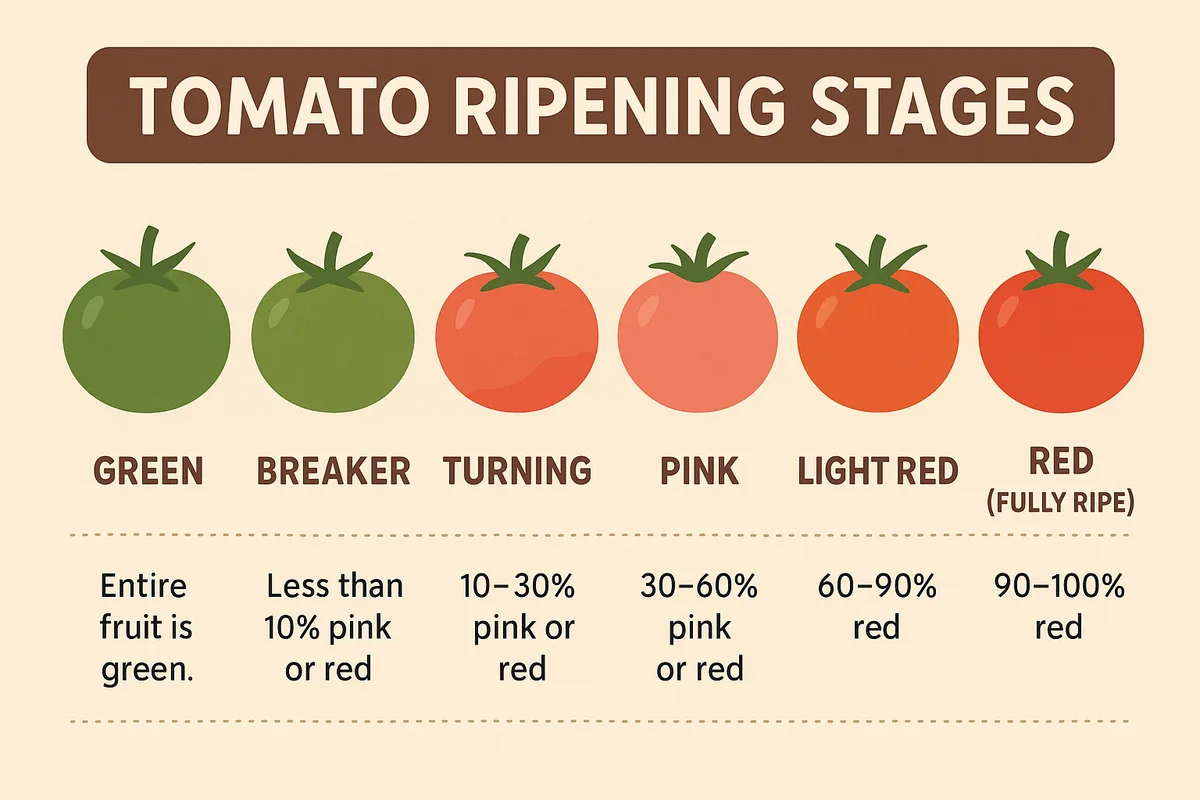
Image source: Web (Bing) / tomatodirt.com (Web image (fair-use with source credit))
Visual cues are your best friend, but color alone can trick you. Some heirloom varieties keep green shoulders even when fully ripe. Others turn yellow or purple at maturity.
Always pair color with a gentle squeeze test. A ripe tomato yields slightly under pressure without feeling mushy.
Here are the six recognized stages with their key traits:
| Stage | Appearance | Firmness | Stem Separation | Best Use |
|---|---|---|---|---|
| Mature Green | Full size, light green | Very firm | Hard to separate | Fried green tomatoes, pickling |
| Breaker | First blush of pink or red at blossom end | Firm | Moderate | Shipping, storage, indoor ripening |
| Turning | 10 to 30 percent color change | Firm but yielding | Easier | Short-term storage (3 to 5 days) |
| Pink | 30 to 60 percent pink or red, green shoulders possible | Gently yields | Easy | Fresh eating within days |
| Light Red | 60 to 90 percent red | Softens further | Very easy | Immediate fresh use, sauces |
| Full Red | Complete color, no green | Soft | Falls off easily | Peak flavor, same-day use |
Understanding these stages lets you pick with purpose. If you need tomatoes for next weekend's party, pick at the breaker stage today. They will ripen on your counter by Saturday.
If you want peak flavor for tonight's salad, wait for full red. Per University of Minnesota Extension guidelines, the breaker stage is the optimal compromise between flavor development and storage life.
Your Harvest Decision Tree: Pick Now or Wait?
Are you eating fresh or cooking?
If you are eating fresh, wait for the fruit to reach full color on the vine. Flavor compounds develop in the final hours of sunlight. For sauces, salsas, or canning, you can pick at the light red stage.
The fruit continues to ripen on the counter without sacrificing much sugar content.
Do you need to store or transport?
Pick at the breaker stage. The fruit is firm enough to stack in a single layer without bruising. It will ripen fully over 7 to 14 days depending on temperature.
Store at 55 to 70 degrees Fahrenheit. Never refrigerate tomatoes destined for ripening.
Are you frying green tomatoes?
Harvest at the mature green stage. The fruit must be fully sized but completely green. A slight blush of color means the seeds have already begun to develop.
True mature green tomatoes have firm flesh and a tart flavor that holds up to frying.
Is frost coming in the next three days?
Do not wait. Pick every fruit that has reached the mature green stage or beyond. Even a light frost ruins the texture of ripening fruit.
Frost-damaged tomatoes turn watery and bland. You can ripen green fruit indoors if it is mature enough.
Wait, What About Frost? That Changes Everything
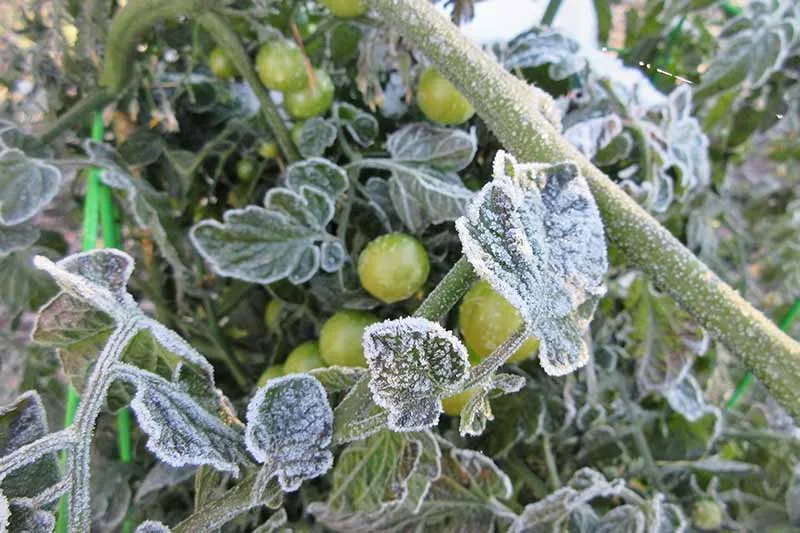
Image source: Web (Bing) / storage.googleapis.com (Web image (fair-use with source credit))
Frost is the emergency override for every other harvest rule. You can ignore all the nuances about stage selection when the temperature forecast shows 36 degrees Fahrenheit or lower. Here is what you need to do.
Check the forecast daily once nighttime temperatures drop below 50 degrees. When frost threatens, harvest every fruit that has reached the mature green stage or larger. Small, immature green fruit smaller than a golf ball will not ripen.
Compost them or feed them to chickens.
Frost damage appears as water-soaked patches on the skin. The affected fruit becomes soft and translucent within hours. Do not try to ripen frost-damaged fruit.
Use it immediately for cooking or discard it.
If you harvest green fruit before frost, sort by size. Large green fruit ripens well. Small fruit does not.
Store the large green fruit in a cool, dark place around 55 degrees. Check weekly for color change.
Many university extension services offer frost date calculators for your specific zip code. It is worth checking these as part of your end-of-season planning.
Mistakes That Ruin Your Harvest (and How to Avoid Them)
- Picking based on days to maturity alone. Days listed on seed packets are averages. Weather, soil, and sun exposure change the timeline. Always use visual and tactile cues.
- Pulling fruit off the vine by force. This damages the plant and the fruit. Use pruners or snips for stubborn stems. Twist gently for fruit that separates easily.
- Washing tomatoes before storage. Moisture promotes rot. Wash only before eating or processing. Store unwashed fruit at room temperature.
- Stacking tomatoes in deep piles. The weight bruises fruit on the bottom. Store in a single layer or two layers maximum.
- Refrigerating unripe tomatoes. Cold slows or stops ripening permanently. Keep ripening fruit at 55 to 70 degrees.
- Ignoring pest damage. Birds, squirrels, and insects target ripe fruit. Pick at the first sign of color if pests are a problem. Finish ripening indoors.
Each of these mistakes is easy to avoid once you know what to look for. Aggregate grower feedback from university extension surveys confirms that the single most common error is picking too late and losing fruit to rot or pests. Spending a few extra minutes checking for these traps will save you entire harvests.
How to Harvest and What to Do With Each Stage
Harvest in the cool early morning. Fruit is firmest then, and it bruises far less easily than it does in afternoon heat. Use sharp snips to cut the stem about half an inch above the calyx.
That little stem stub protects the fruit from moisture loss and rot.
Each stage you pick needs different handling:
- Mature green: Use immediately for fried green tomatoes or pickling. Store unwashed at 55 to 60 degrees Fahrenheit if you need to delay.
- Breaker stage: Place in a single layer in a ventilated basket. No stacking. Check every two days and pull out any fruit showing signs of rot.
- Turning and pink: These ripen within three to five days on the counter. Keep them out of direct sunlight, which causes uneven ripening.
- Light red: Great for sauces, salsas, or canning within a day or two. The flavor is close to full vine-ripened.
- Full red: Eat as soon as possible. This is peak flavor, but it also degrades fastest. Do not wash until right before eating.
Sort your harvest immediately after picking. Mixing stages in the same container is a common mistake. A single rotting fruit at the bottom of a basket can spoil several pounds of tomatoes within 48 hours, especially in warm kitchens.
For storage, keep ripening tomatoes at 55 to 70 degrees Fahrenheit with good airflow. Humidity around 85 to 90 percent prevents shriveling without inviting rot. A cool basement or pantry works far better than a countertop in direct sun.
Frequently Asked Questions
Can tomatoes ripen off the vine?
Yes. Tomatoes picked at the breaker stage or later ripen fully indoors. The fruit produces its own ethylene gas, which drives the ripening process.
Flavor won't match vine-ripened fruit exactly, but the difference is minimal after a day or two.
Should you refrigerate tomatoes?
No. Refrigeration stops the ripening process and kills flavor. The cold breaks down volatile compounds that give tomatoes their sweetness and aroma.
Keep them at room temperature unless they are fully ripe and you need to pause ripening for a few days.
How long do tomatoes last at room temperature?
Breaker-stage tomatoes last one to two weeks at 55 to 70 degrees Fahrenheit. Fully red tomatoes last only two to three days before turning soft and mealy. Paste varieties hold longer than beefsteaks because their flesh is denser.
How do you speed up ripening?
Put green or breaker-stage tomatoes in a paper bag with a ripe banana or apple. The fruit releases ethylene gas, which accelerates ripening. Check daily to prevent the bag from trapping excess moisture.
Can you freeze ripe tomatoes?
Yes. Core them and freeze whole on a baking sheet, then transfer to freezer bags. Frozen tomatoes work great for sauces, soups, and stews.
The texture changes after thawing, so they are not ideal for fresh salads.



